Table of Contents >> Show >> Hide
- What is an ambivert?
- Why “ambivert” makes sense (and why you’re not imagining it)
- Core ambivert traits
- 10 signs you might be an ambivert
- 1) You enjoy social plans… but you also schedule recovery time
- 2) You can be outgoing, but it depends on who’s there
- 3) You’re good at small talk… but you don’t want to live there
- 4) You can lead a group and also love working solo
- 5) You often switch between “spotlight” and “background” modes
- 6) You’re energized by the right social settingand drained by the wrong one
- 7) You like people, but you don’t always want people to like… follow you home
- 8) You can talk a lot… and also listen deeply
- 9) You may relate to both introverts and extroverts
- 10) You don’t feel “stuck” in one label
- Ambivert strengths: where the middle can win
- Ambivert challenges (yes, there are a few)
- Ambiverts at work, at home, and in relationships
- How to tell where you land on the spectrum
- How to thrive as an ambivert (without turning life into a spreadsheet)
- Common ambivert myths
- Conclusion
- Ambivert Experiences : What it can feel like in real life
- References
If you’ve ever thought, “I love people… until I don’t,” congratulations: you may have discovered your social battery.
Some days you’re the one starting conversations, telling stories, and turning awkward silences into light comedy.
Other days, your dream weekend plan is “me, snacks, and absolutely nobody asking what I’m thinking.”
That push-pull doesn’t mean you’re confused or “two-faced.” It often means you’re an ambivert.
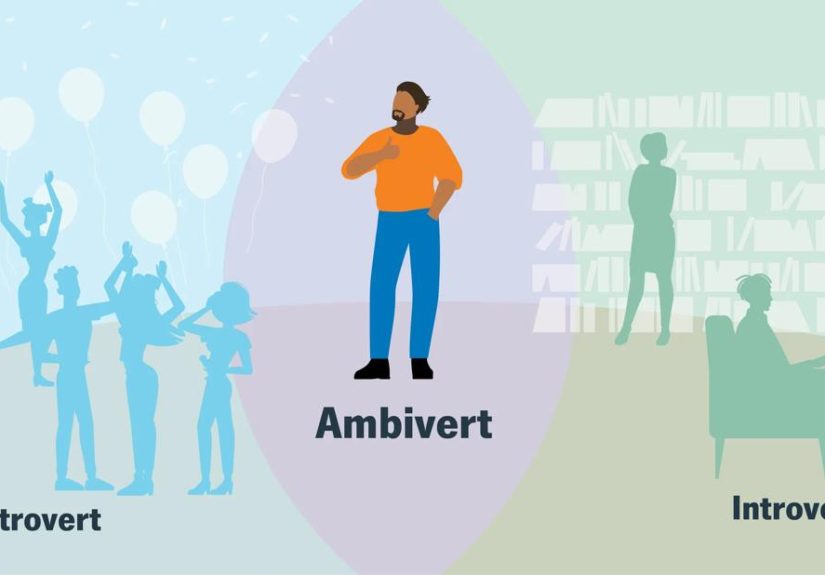
In real life, most people aren’t 100% introvert or 100% extrovert. Personality is usually a spectrum, and an ambivert sits somewhere
in the middleable to enjoy social time and solitude, depending on the moment, the setting, and the energy required.
The fun part? Ambiverts can be incredibly adaptable. The tricky part? You might not always notice what’s draining you until your battery hits 1%.
What is an ambivert?
An ambivert is someone who shows meaningful traits of both introversion and extroversion. In plain English: you can be outgoing,
talkative, and energized by people sometimesand just as capable of recharging alone sometimes.
The related term ambiversion describes that balanced tendency on the introversion–extraversion continuum.[1]
Think of introversion and extroversion less like two separate boxes and more like a dimmer switch. You can slide along it depending on the day,
the group, and your mood. Many psychologists describe introversion and extraversion as a continuum (a range),
not a strict either/or identity.[2]
Ambivert vs. introvert vs. extrovert (quick clarity)
- Introvert: Often recharges with solitude and may feel drained by a lot of social stimulation.
- Extrovert: Often feels energized by external stimulationpeople, activity, and social engagement.
- Ambivert: Can enjoy both, and the “right amount” of social time varies by context and energy level.
Why “ambivert” makes sense (and why you’re not imagining it)
Personality research commonly treats extraversion/introversion as a core trait dimension. In modern models like the Big Five,
extraversion is measured on a spectrum, which helps explain why a lot of people don’t feel like a perfect fit at either extreme.[3]
Popular science writing has also highlighted that many people land in the middle more often than personality stereotypes suggest.[4]
Translation: If your personality seems to “change,” it may not be changing at all. You might just be responding appropriately to different environments:
a small group of close friends feels energizing, while a packed networking event feels like doing cardio in dress shoes.
Core ambivert traits
Ambiverts aren’t “half introvert, half extrovert” like a perfect smoothie recipe. They’re more like a playlist with both hype songs and lo-fi tracks
and they know (sometimes instinctively) which one to play for the situation.
1) Social flexibility
Ambiverts can often read a room and adjust: they can talk when it’s helpful and listen when it matters. This flexibility can make social interactions smoother,
especially when a situation needs both confidence and restraint.[5]
2) A “selective” social battery
You may love people but hate certain kinds of people-ing. For example: you might enjoy meaningful conversation but dislike small talk marathons.
Or you might be fine at a partyuntil it turns into a shouting match with background music.
3) Comfort with both connection and solitude
Many ambiverts feel most like themselves when they can get both: time with others and time to decompress.
If you only get one side for too long, you can feel off-balanceeither lonely or overstimulated.
4) Balanced communication style
Ambiverts often know when to take the lead and when to step back. In group settings, you might speak up when you have something useful,
but you’re also comfortable letting someone else drive when you’re not feeling it.
10 signs you might be an ambivert
1) You enjoy social plans… but you also schedule recovery time
A dinner with friends sounds great. Two dinners, a birthday party, and a “quick coffee” all in one weekend sounds like a personal attack.
2) You can be outgoing, but it depends on who’s there
With people you trust, you’re warm and animated. With strangers, you may start reserved and open up gradually (or not at all, if the vibe is weird).
3) You’re good at small talk… but you don’t want to live there
You can do the “So what do you do?” dance, but you’re happiest when the conversation becomes real: ideas, stories, feelings, goals, opinions.
4) You can lead a group and also love working solo
You’re not afraid to speak up in a meeting, present, or coordinateyet you also produce your best work with focus time and fewer interruptions.
5) You often switch between “spotlight” and “background” modes
Sometimes you’re the storyteller. Other times you’re the observer. Neither feels fakeboth feel useful.
6) You’re energized by the right social settingand drained by the wrong one
A small group with good conversation can recharge you. A loud crowd with shallow chatter can drain you fast.
7) You like people, but you don’t always want people to like… follow you home
You enjoy connection, but you also protect your downtime. Your ideal friendship respects both closeness and space.
8) You can talk a lot… and also listen deeply
You’re capable of being expressive and social, but you’re also comfortable listening, reflecting, and responding thoughtfully.
That “talk-and-listen balance” is often described as a social strength of ambiverts.[5]
9) You may relate to both introverts and extroverts
You understand introverts who need quiet and extroverts who love stimulation. You’ve been both peoplesometimes in the same week.
10) You don’t feel “stuck” in one label
Introvert memes are relatable… and extrovert memes are also relatable. Your personality feels more “it depends” than “always.”
Ambivert strengths: where the middle can win
Ambiverts can be strong persuaders (because they’re not always “on”)
One well-known research finding suggests that people with moderate levels of extraversioncloser to an ambivert stylecan perform especially well
in roles that require influencing others, partly because they’re more likely to balance assertiveness with listening.[6]
They adapt well to mixed social demands
Many jobs and relationships require both connection and independence: teamwork and deep focus, empathy and boundaries,
speaking up and giving others space. Ambiverts often have practice doing both.
They’re often good “bridges” between personality styles
In friend groups, families, and workplaces, ambiverts can sometimes translate between the quiet folks and the loud folks.
You might be the person who makes the introvert feel included and helps the extrovert feel understood.
Ambivert challenges (yes, there are a few)
1) Mixed signals to other people
If you’re chatty one day and quiet the next, people may misread it as moodiness, disinterest, or inconsistency.
You might simply be responding to your energy level and environment.
2) Overcommitting when you feel social
In a high-energy moment, you may say yes to plans. Later, when your battery drops, you’ll wonder why you agreed to anything involving shoes and driving.
3) Decision fatigue around social boundaries
Because you can enjoy both solitude and social time, deciding the “right” amount can take mental effort:
“Should I go out tonight or stay in?” (An ambivert classic.)
4) Feeling misunderstood by extreme stereotypes
“Introverts hate people.” “Extroverts never need alone time.” Both are oversimplifications.
Medical and mental health educators often emphasize that people can show traits of both styles and still be healthy and normal.[7]
Ambiverts at work, at home, and in relationships
At work: build a schedule that matches your rhythm
- Batch social tasks: Put meetings, calls, and collaboration blocks together, followed by focus time.
- Protect recharge time: Even 10–15 minutes of quiet between high-interaction tasks can help.
- Choose your “high-social” moments: Presentations, client meetings, interviewsambiverts can shine when they prepare and recover.
At home: explain your needs without apologizing for them
Try a simple script: “I had fun today, and I’m also maxed out. I need an hour of quiet so I can be fully present again.”
That’s not rejectionit’s energy management.
In relationships: balance closeness and space
Ambiverts often thrive with partners and friends who respect both togetherness and alone time. Clear communication helps:
say what fills you up, what drains you, and how others can support you.
How to tell where you land on the spectrum
There’s no official “ambivert diagnosis,” and you don’t need one. But if you want clarity, focus on patterns:
what energizes you, what drains you, and what kinds of social settings feel best.
Try an “energy audit” for one week
- After social events, rate your energy from 1–10.
- Note the setting: small group, large group, one-on-one, work meeting, party, online chat.
- Track what you did afterward: needed quiet? wanted more connection? felt neutral?
- Look for your sweet spot: how much social time feels good before you need to recharge.
Many people also explore personality frameworks like the Big Five to understand how extraversion shows up for them on a continuum.[3]
Just remember: tests can be informative, but they don’t replace real-life self-awareness.
How to thrive as an ambivert (without turning life into a spreadsheet)
1) Plan “bookends” around social events
If you’re going out, give yourself a quiet buffer before and after. A calm morning, a solo lunch, a decompression walkwhatever works.
2) Choose the right kind of socializing
Ambiverts often do best with quality over quantity: fewer events, better people, more meaningful conversations.
3) Use a “soft no” when you need it
“I’m in for next week, but I need a quiet night tonight.” Clear, kind, and honest. No dramatic explanations required.
4) Don’t confuse being quiet with being broken
Needing space is normal. Enjoying company is normal. Wanting both is also normal.
The goal isn’t to pick a sideit’s to respect your real needs.
Common ambivert myths
Myth: Ambiverts are indecisive
Reality: You can enjoy both solitude and social energy. That’s range, not confusion.
Myth: Ambiverts are “fake” because they change by situation
Reality: Adapting your behavior to context is a normal human skill. It’s called being socially aware.
Myth: Everyone is an ambivert
Reality: Many people fall somewhere in the middle, but some truly lean strongly introverted or strongly extroverted.
The point is to use the spectrum to understand yourself, not to erase differences.[4]
Conclusion
Being an ambivert means you’re not locked into one social mode. You can enjoy connection and solitude, and you can shift depending on what life demands.
Your biggest advantage is flexibilityyour biggest responsibility is noticing your energy before it runs out.
Learn your patterns, protect your recharge time, and choose the kind of social life that actually fits you (not the one that looks impressive on a calendar).
Ambivert Experiences : What it can feel like in real life
The experiences below are common, realistic “snapshots” many ambiverts describe. They’re not a diagnosisjust relatable moments that show how
ambivert traits and signs play out in everyday situations.
1) The “great time… now please don’t speak to me” evening
You go to a friend’s birthday dinner and it’s genuinely fun: you’re laughing, telling stories, and keeping the table conversation flowing.
Someone even says, “You’re so social!” and for a moment you think, “Maybe I’m an extrovert after all.”
Then you get home, close the door, and feel your energy drop like a phone battery in the cold.
You’re not sad. You’re not mad. You’re simply done. The best part is that nothing is wrongyou enjoyed the event.
Your brain just wants quiet to reset. Ambiverts often feel this contrast: capable of being fully engaged socially, then needing solitude to recharge.
2) The small-group sweet spot
Put you in a massive crowd and you might fade into the background. Put you with two to five people you trust, and suddenly you come alive.
You can talk, listen, joke, and go deeper than “So, weather!” without forcing it.
This is a common ambivert pattern: you’re social, but you prefer settings where connection feels real.
You might even be the person who turns a polite hangout into a meaningful conversationthen you leave feeling energized instead of drained.
It’s not the number of people that matters most; it’s the quality of the interaction and how safe the environment feels.
3) The meeting MVP… who needs quiet afterward
At work, you can present, pitch, or facilitate a discussion without panic. You ask good questions, you summarize clearly, and you can read the room.
People assume you must love nonstop collaboration, so they schedule you into back-to-back meetings.
That’s where the ambivert lesson arrives: being good at social performance doesn’t mean it’s free.
After a heavy meeting day, you may crave deep focus timeheadphones on, notifications offjust to feel like yourself again.
When you protect your “recharge time,” your social skills stay strong instead of turning into forced politeness.
4) The weekend tug-of-war
Friday afternoon: you want plans. Friday evening: you want pajamas.
Ambiverts often feel this tug-of-war because both needs are real. You might scroll messages thinking,
“I miss everyone,” and five minutes later think, “If anyone texts me again, I will become a houseplant.”
The win is not choosing one side foreverit’s choosing what fits today.
Some weekends you’ll be out exploring, meeting up, and trying new things.
Other weekends you’ll be home, recharging, and loving every quiet second.
The more you notice your pattern, the easier it becomes to pick a plan you won’t regret.
5) The “people person” who still needs boundaries
Ambiverts can be warm, supportive friendsoften the one who checks in, listens, and helps others feel included.
But because you can be socially capable, some people assume you’re always available.
That can lead to overstimulation, resentment, or the feeling that you’re “on call” emotionally.
Learning to set boundaries is a core ambivert skill: saying yes to what energizes you and no to what empties you.
The healthiest version of ambiversion isn’t constant flexibilityit’s flexible engagement with clear limits.
When you get that balance right, you don’t just show up for othersyou show up for yourself, too.
References
- APA Dictionary of Psychology: “Ambiversion”
- APA Dictionary of Psychology: “Introversion–Extraversion”
- Verywell Mind: Big Five personality dimensions (Extraversion)
- Scientific American: Ambiverts and the introvert–extrovert spectrum
- Healthline: Signs you may be an ambivert
- Wharton/University of Pennsylvania research (Psychological Science): ambivert advantage in sales
- Cleveland Clinic: Introvert vs. extrovert and the spectrum
- WebMD: Ambivert traits, signs, and benefits
- Merriam-Webster Dictionary: “Ambivert”
- National Geographic: Personality types and ambiverts (overview)
- Health.com: Introvert vs. extrovert and where ambiverts fit
- PMC (NIH): Research background on extraversion–introversion as a core trait dimension