Table of Contents >> Show >> Hide
- Art Therapy, Explained Like You’re Busy
- How Art Therapy Works (And Why It’s Not Just “Arts & Crafts”)
- What Happens in an Art Therapy Session?
- Who Is Art Therapy For?
- The Science: What Does Research Say?
- Art Therapy vs. Art Class vs. “I Bought a Coloring Book”
- Who Provides Art Therapy? Credentials, Training, and “Yes, You Can Ask”
- How to Know If Art Therapy Is Right for You
- What to Expect Before Your First Appointment
- Art Therapy in Medical Settings: “Arts at the Bedside” vs. Clinical Art Therapy
- FAQ: Quick Answers to Common Questions
- Real-World Experiences: What Art Therapy Can Feel Like (Extra)
- Conclusion
Imagine therapy, but your feelings don’t have to show up in complete sentences. That’s art therapy in a nutshell: a real mental health treatment where
making art isn’t about being “good,” it’s about getting unstuck. You’re not auditioning for a gallery. You’re giving your brain another way to talk.
Art therapy is a mental health profession that uses active art-making, the creative process, and a therapeutic relationship to help people work toward
emotional, psychological, and sometimes physical goals. It’s used in hospitals, schools, community programs, private practice, and many other settings.
And yes, adults are absolutely invited.
Art Therapy, Explained Like You’re Busy
At its core, art therapy blends two things: psychotherapy (the part where you grow, heal, and occasionally say “wow, I didn’t realize that”)
and art-making (the part where your hands help your brain do the hard stuff).
According to major professional and clinical organizations, art therapy is facilitated by a trained art therapist and can support goals like reducing distress,
improving coping skills, increasing self-awareness, strengthening social skills, and building emotional resilience. The artwork isn’t “graded.” It’s explored.
How Art Therapy Works (And Why It’s Not Just “Arts & Crafts”)
A common misconception is that art therapy is basically a fun craft night with glitter and vibes. It can be enjoyablebut the point is clinical.
The therapist is using your creative process as a pathway to assessment, insight, emotion regulation, and behavior change.
What makes it therapy?
- A therapeutic relationship: You’re working with a qualified professional, not just “doing art.”
- Intentional goals: Sessions are shaped around needs like anxiety reduction, trauma processing, grief support, pain coping, and more.
- Clinical skills: The therapist chooses materials and prompts strategically and helps you process what comes up.
- Reflection and meaning-making: The conversation about the artwhat it represents, what you felt making itoften matters as much as the finished piece.
Think of the art as a bridge. Some people can cross that bridge into words quickly. Others cross it slowly. Either way, the bridge counts.
What Happens in an Art Therapy Session?
Sessions vary by setting and therapist style, but here’s a realistic flow you might recognizeespecially in outpatient therapy or hospital-based programs:
1) A check-in (aka: “How’s your week been, honestly?”)
You and the therapist review what’s going on: mood, stressors, symptoms, and goals. If you’re in a medical setting, it may include pain, fatigue, sleep,
or how treatment is affecting you.
2) The art-making portion
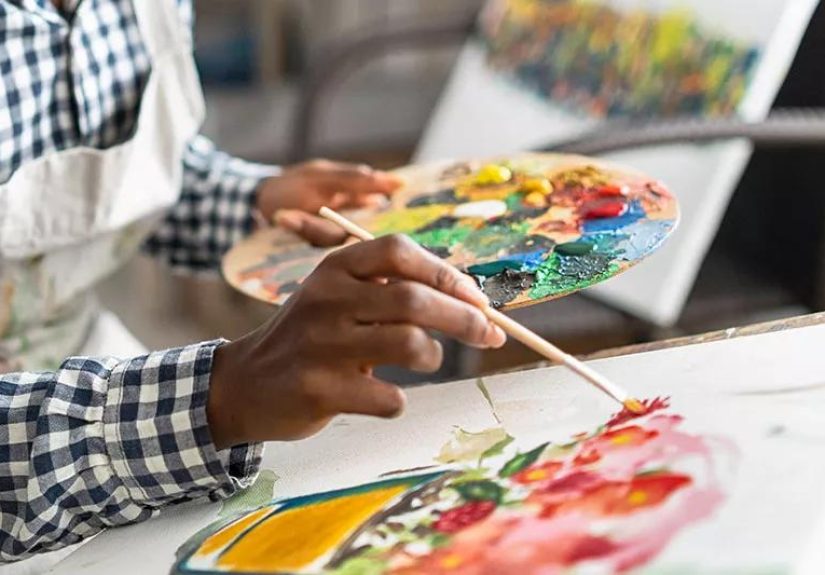
This could include drawing, painting, collage, sculpture/clay, fiber arts, mask-making, or mixed media. You might get a prompt (“Create an image of what anxiety feels like”),
or a more open invitation (“Make something that represents ‘safe’ today”).
Therapists often choose materials based on the goal. For example, flowing materials like watercolor can support relaxation, while more hands-on materials like clay can help
release tension and support sensory grounding. The medium isn’t randomit’s part of the intervention.
3) Processing and integration
You and the therapist talk about what you made and what the process was like. Questions may include:
- What felt easy or hard about making this?
- What emotions showed up (or tried to hide)?
- If this image could speak, what would it say?
- What does this tell us about what you need right now?
4) A grounded wrap-up
Many sessions end with a calming step: naming takeaways, choosing a coping tool to practice, or creating a small “bridge” from session to real life
(like a quick sketch you can repeat when stress spikes).
Who Is Art Therapy For?
Art therapy can be used with children, teens, adults, older adults, individuals, couples, families, and groups. It’s often helpful when:
you feel overwhelmed, you struggle to put feelings into words, you’ve been through something painful, or you’re dealing with a major life or health change.
Common reasons people try art therapy
- Anxiety and chronic stress: learning grounding, relaxation, and emotional regulation skills.
- Depression: reconnecting to motivation, pleasure, identity, and self-expression.
- Trauma and PTSD: processing sensory/emotional memories in a supported way when words feel unavailable.
- Grief and loss: expressing complicated feelings and keeping bonds/meaning while moving forward.
- Medical illness and hospitalization: coping with pain, fear, uncertainty, and loss of control.
- Neurocognitive challenges: supporting communication, mood, engagement, and quality of life.
- Substance use recovery: building insight, coping strategies, and emotional tolerance.
It’s also used in settings that serve survivors of violence, military service members and veterans, people in hospice, and caregivers who are running on fumes.
The Science: What Does Research Say?
The short version: research suggests art therapy can help with mood, anxiety, trauma symptoms, coping, and quality of lifeespecially when integrated into broader care.
The longer version is more honest (and more useful): results vary by population, program quality, and what outcomes researchers measure.
Where the evidence is promising
- Anxiety reduction: Many studies report decreases in anxiety symptoms after structured art therapy interventions, particularly in children and adolescents,
and in medical settings where stress is high. - Depression symptoms: Reviews and trials in different populations suggest art therapy can reduce depressive symptoms and improve functioning,
often as a complementary approach. - Trauma support: Trauma-focused art therapy approaches are being studied for PTSD and related symptoms, with attention to how nonverbal,
sensory-based processing may help when talk alone feels too direct. - Hospital and medical care: Bedside and clinical creative arts interventions have been linked with improved mood and reduced stress in some studies,
and many hospitals use arts programs to support coping during treatment.
What “art therapy helps” really means
It doesn’t mean everyone feels better after one session. It means the approach can:
create emotional distance (so you can look at your experience instead of drowning in it),
build coping skills through sensory regulation, and offer a safe structure for exploring what feels unnameable.
The safest expectation is this: art therapy is often most effective when it’s part of a broader planlike counseling/psychotherapy, medical care, or
trauma-informed treatmentrather than a standalone miracle tool. (No therapy modality gets to be a miracle, unfortunately. The universe loves paperwork.)
Art Therapy vs. Art Class vs. “I Bought a Coloring Book”
Let’s clear up the confusion without insulting anyone’s colored-pencil collection:
Art class
Focus: skills, technique, art concepts, feedback, and finished pieces. Great for creativity and confidence. Not inherently therapy.
Art as self-care
Focus: relaxation, enjoyment, flow, mindfulness. Also great. Still not the same as therapybecause there’s no clinical assessment, treatment plan, or therapeutic processing.
Art therapy
Focus: mental health goals within a therapeutic relationship, using art-making and reflection as interventions.
It can feel soothing, but it can also bring up big emotionsbecause that’s sometimes the work.
Who Provides Art Therapy? Credentials, Training, and “Yes, You Can Ask”
In the U.S., professional art therapists typically complete graduate-level training and clinical supervision. Credentialing and licensure can vary by state and setting,
but many qualified clinicians hold credentials through recognized bodies (for example, Registered Art Therapist and Board Certification designations).
Common credentials you may see
- ATR / ATR-P: “Registered Art Therapist” (and provisional status in the credentialing pathway).
- ATR-BC: Board-certified credential earned by passing a national examination, demonstrating advanced knowledge and clinical skills.
- State licensure: Some states have specific art therapy licenses or protected titles; others regulate practice through broader counseling licenses.
When you’re looking for a therapist, it’s okay to ask direct questions: What is your training? What populations do you work with? How do you structure sessions?
Do you coordinate with other providers if needed? This is your mental healthcuriosity is a feature, not a bug.
How to Know If Art Therapy Is Right for You
Art therapy might be a strong fit if you:
- feel emotionally flooded and need a grounding way in
- struggle to describe what’s happening internally
- are dealing with trauma, grief, medical stress, or chronic anxiety
- want a therapy approach that engages your senses and body, not just your brain
- keep saying, “I don’t know how I feel,” and you actually mean it
It may not be the best first step if you’re seeking only technical art instruction, or if you need urgent crisis care (in that case, immediate mental health support is the priority).
For many people, art therapy works well alongside other treatments rather than replacing them.
What to Expect Before Your First Appointment
Do I need to be artistic?
No. Being “good at art” is not the entry fee. Most art therapy is about process, choice, and meaningnot realism. Stick figures are welcome.
Abstract blobs are also welcome. Even a single line can be meaningful if it’s honest.
Will I have to talk?
Usually, yesbut the art can do some of the talking first. Many people find it easier to begin with making something, then put words to it once the pressure drops.
Do I take my artwork home?
Sometimes. In private practice, you often can. In hospitals and some programs, artwork may stay onsite for safety, privacy, or storage reasons.
Therapists typically explain policies up front.
Is it covered by insurance?
Coverage varies depending on your insurance plan, the therapist’s credentials/licensure, and how services are billed. If you’re hoping for coverage, ask:
“Are you in-network?” “What are your fees?” “Do you provide superbills?” and “How is art therapy coded in your practice?”
Art Therapy in Medical Settings: “Arts at the Bedside” vs. Clinical Art Therapy
Many major hospitals and health systems offer arts programming because it helps patients cope with stress, boredom, fear, and pain during treatment.
These programs can be profoundly supportivebut they’re not always the same as clinical art therapy.
Some hospitals differentiate between:
arts-at-the-bedside programs (often led by artists or facilitators to support comfort and engagement) and
art therapy (provided by credentialed therapists to support clinical goals as part of care planning).
Both can matter. They just have different purposes.
FAQ: Quick Answers to Common Questions
Is art therapy only for kids?
Nope. Adults use art therapy for anxiety, trauma, grief, burnout, medical stress, life transitions, and more. Kids may be more comfortable starting nonverbally,
but adults benefit from it all the time.
Is art therapy evidence-based?
Research supports benefits for certain outcomes (like anxiety, mood, coping, and quality of life), though results vary. The most reliable approach is to treat it like
a clinically informed tool that can complement broader mental health or medical treatment.
Can art therapy be done online?
Yesmany therapists offer telehealth. Sessions might involve materials you have at home, simple prompts, and processing via video. Some programs use kits or structured at-home activities.
Is it safe if I’ve experienced trauma?
It can be, especially with a trauma-informed therapist who uses pacing, choice, and grounding. Art can bring up intense feelings; a qualified therapist helps you stay within a “tolerable” range
so you’re processing, not re-living.
Real-World Experiences: What Art Therapy Can Feel Like (Extra)
If you’ve never tried art therapy, it can sound mysteriouslike you’ll be asked to paint your “inner child” and then immediately understand your entire personality.
In reality, the experience is often simpler, more human, and (sometimes) surprisingly funny.
Experience #1: “I don’t know what to draw.”
Many first sessions start with hesitation. People worry they’ll do it “wrong.” A good art therapist usually responds with some version of:
“Great. Let’s start there.” You might begin with a warm-upscribbles, shapes, a color choiceanything that gets your hands moving.
The goal isn’t a masterpiece; it’s noticing what happens in you when you face a blank page: anxiety, perfectionism, shutdown, curiosity, relief.
That reaction is often clinically useful all by itself.
Experience #2: The materials do something your words couldn’t.
Someone working through anger might be offered claybecause it can be squeezed, pounded, reshaped, and repaired. The physicality matters.
Another person overwhelmed by racing thoughts might try watercolor washes, repeating strokes until their breathing slows.
A teen who can’t describe panic may create an abstract storm of sharp lines, then gradually add a boundary around it.
The art becomes a visual “map” that makes the problem feel more workable: contained enough to examine, not so huge it swallows you.
Experience #3: You discover a metaphor you didn’t plan.
People often make something and then realize it mirrors their life. A collage about “support” might contain one tiny image holding up an entire page.
A painting about grief might have a bright color trapped under layers. A mask-making exercise might reveal the difference between what you show the world and what you protect.
The moment isn’t magical because the therapist “analyzes” you; it’s powerful because you recognize your own truth in the imageand that recognition tends to stick.
Experience #4: In medical settings, art can give back a sense of control.
Hospitalization can make people feel like everything is decided for them. Art-making offers small choices that matter:
“Which color?” “Which material?” “What story do you want to tell today?” Sometimes a patient spends the whole time talking while sketching.
Sometimes they barely talk at all and still leave calmer. In longer stays, people may build projects over timecards for family, simple jewelry, small sculptures
and feel something return that illness tends to steal: purpose, identity, and agency.
Experience #5: Group art therapy is quietly brave.
In groups, people often start guardedthen soften. Someone shares a drawing that represents anxiety, and another person says, “That’s exactly it.”
Without anyone forcing a big speech, connection happens. You realize you’re not “weird,” you’re human.
And sometimes the group laughsbecause healing also includes realizing your brain has been dramatic, and you’re allowed to be kind about it.
Experience #6: You don’t leave “fixed,” you leave equipped.
A practical outcome of art therapy is having a repeatable way to regulate yourself: a grounding sketch, a color practice, a collage prompt you can return to,
or a quick “draw the feeling, then draw the need” routine. Over time, people often report they can name emotions faster, recover from spikes sooner,
and approach hard topics with less avoidancebecause they’ve practiced facing them through a gentler doorway.
Conclusion
Art therapy is not about talentit’s about access. It gives people a structured, evidence-informed way to express, process, and cope when words feel too small,
too sharp, or simply unavailable. Whether you’re navigating anxiety, trauma, grief, illness, or life changes, art therapy can offer a practical path:
make something, notice what it reveals, and use that insight to healone honest mark at a time.