Table of Contents >> Show >> Hide
If the stock market were a big pizza party, common stock would be the regular cheese slice.
It’s what most people order, it’s what most companies serve, and it’s usually the first thing beginners try
when they start investing. But behind that simple slice is a lot of important detail: ownership, voting
rights, dividends, and risk.
In this guide, we’ll break down what common stock is, how it works, how it compares with preferred stock,
and how real people actually use it to build wealth over time. No Wall Street jargon degree required.
Common Stock, in Plain English
Common stock is a type of security that represents ownership in a company. When you buy a
share of common stock, you are literally buying a tiny slice of that business. You don’t get to take a desk
in their office, but you do get certain rights and a claim on the company’s future profits.
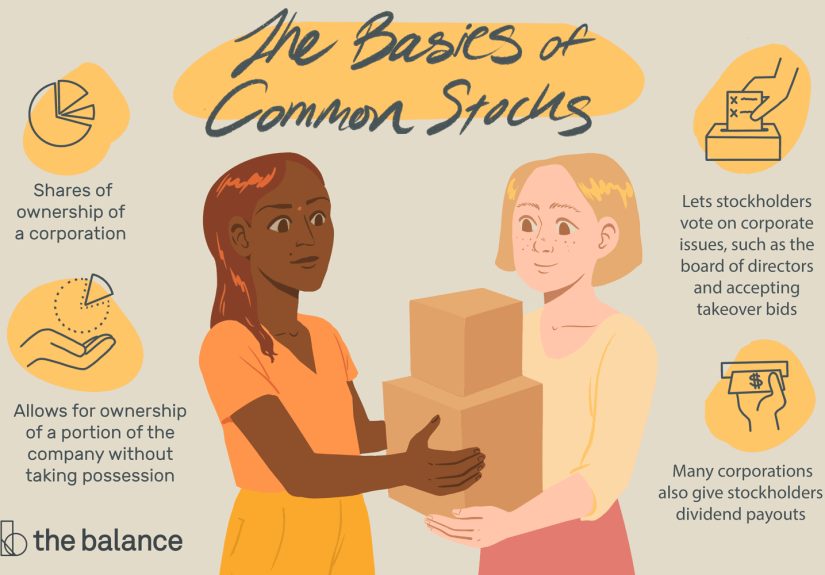
At a high level, common stock usually means:
- Ownership: You are a partial owner of the company.
- Voting rights: You can usually vote on major company decisions, like board elections.
- Potential dividends: You may receive cash payments when the company shares profits.
- Capital gains potential: If the stock price goes up, the value of your shares rises.
- Last in line in a crisis: If the company goes bankrupt, everyone else gets paid before you.
Most stocks you see quoted on major exchangeslike the NYSE or Nasdaqare common stock. When people say,
“I bought stock in Company X,” they almost always mean common stock unless they specify otherwise.
How Common Stock Works
1. Ownership and Voting Power
Think of a company as a giant pie cut into millions (sometimes billions) of slices. Each share of common
stock is one slice. The more slices you own, the bigger your share of the business and its potential profits.
Common shareholders typically get voting rights, often one vote per share. These votes are
used to:
- Elect the board of directors.
- Approve major corporate actions (like mergers in some cases).
- Weigh in on executive compensation or other shareholder proposals.
If you only own a few shares of a giant company, your vote is a tiny whisper in a huge crowdbut it’s still a
voice. Large investors, like mutual funds and pension funds, often own enough shares to influence corporate
decisions in a meaningful way.
2. Dividends: Getting Paid to Hold
Many companies share part of their profits with shareholders through dividends. For common
stock, dividends:
- Are not guaranteed. The company can reduce or stop them at any time.
- Are typically paid in cash, but sometimes in additional shares.
- Are often paid quarterly in the United States.
Some companiesespecially fast-growing tech firmspay no dividends at all, choosing instead to reinvest every
dollar back into the business. Others, like mature utilities or consumer staples companies, may pay steady,
predictable dividends for decades.
3. Liquidation Order: Last in Line
Here’s the part of common stock that’s less glamorous. If a company fails and must liquidate (sell everything
off to pay what it owes), there’s an order to who gets paid:
- Creditors (banks, bondholders, vendors).
- Preferred shareholders.
- Common shareholdersif anything is left.
In many bankruptcies, common shareholders get little or nothing. That “last in line” status is a key reason
why common stock is considered higher risk than bonds or preferred stock.
Common Stock vs. Preferred Stock
Common stock isn’t the only type of equity. Many companies also issue preferred stock, which
has its own mix of pros and cons. Here’s a side-by-side comparison:
| Feature | Common Stock | Preferred Stock |
|---|---|---|
| Ownership | Yes, you’re an owner. | Yes, you’re an owner. |
| Voting Rights | Usually yes. | Usually no. |
| Dividends | Not guaranteed, can change or stop. | Often higher, more predictable, paid first. |
| Priority in Liquidation | Last in line. | Paid before common shareholders. |
| Growth Potential | Higher long-term upside. | More like a steady income product. |
| Risk Level | Higher risk, more volatility. | Somewhat lower risk than common stock, but still equity. |
In practice, everyday investors mostly buy common stock. Preferred stock is more like a hybrid between a bond
and a stock and is often used by institutions or niche investors who want income and priority over common
shareholders.
How Investors Make Money With Common Stock
There are two main ways to earn a return from common stock:
1. Capital Gains (Price Increases)
When the company grows and becomes more valuable, the market often bids up the stock price. If you buy low and
sell high, the difference is your capital gain.
Example:
- You buy 100 shares at $20 per share. Your total cost is $2,000.
- Several years later, the stock trades at $30 per share.
- You sell your 100 shares for $3,000.
- Your capital gain is $1,000 (ignoring taxes and fees).
That gain came from the market’s belief that the company’s future cash flows and earnings are worth more now
than when you bought in.
2. Dividends (Cash Flow While You Wait)
Dividends are like getting “rent” on your shares. Imagine that same 100-share investment:
- The company pays a $2 dividend per share each year.
- You own 100 shares, so you receive $200 per year.
- Over two years, you collect $400 in dividends.
If you later sell your shares for a $1,000 capital gain, you’ve earned both ongoing income and a final profit
at sale. Over the long term, reinvested dividends can be a huge driver of total returns.
Risks of Common Stock
Common stock has helped millions of people grow wealth, but it’s not a guaranteed winning lottery ticket. Here
are some key risks to understand before you dive in.
1. Price Volatility
Stock prices can move up and down dramaticallysometimes for reasons that seem completely unrelated to what
the company actually does. Economic news, interest rate changes, political events, and investor sentiment can
all cause short-term swings.
If you panic every time your stock drops 5% in a week, you may be more comfortable with less volatile assets
like bonds or cash equivalents. Common stock is usually best suited for money you can leave invested for
years, not months.
2. Business Risk
Companies can make bad decisions, face new competitors, lose key customers, or get hit by unexpected events.
Profits might shrink, debt could pile up, and in severe cases the company might fail altogether. As a common
shareholder, you’re tied to that business realitygood or bad.
3. No Guaranteed Income
Unlike a bond that promises interest payments (assuming no default), common stock dividends are not promised.
A company can cut or suspend dividends during tough times, even if you bought the stock specifically for
income.
4. Dilution
A company can issue more shares in the future to raise money or compensate employees. When that happens, the
ownership percentage represented by each share shrinks, a process called dilution. If profits
don’t grow fast enough to offset the new shares, earnings per share and sometimes the stock price can suffer.
Where Common Stock Fits in Your Portfolio
For most long-term investors, common stock (either individual companies or funds that hold them) is the
primary engine of growth in a portfolio. Historically, stocks have offered higher average returns than bonds
or cash over long periods, but with more short-term bumps along the way.
Many people choose to invest in common stocks through:
- Index funds and ETFs: These hold hundreds or thousands of common stocks at once, spreading out risk.
- Mutual funds: Professionally managed portfolios of many stocks.
- Individual stocks: Buying specific companies you’ve researched and believe in.
The right mix for you depends on your goals, time horizon, and risk tolerance. Aggressive investors may lean
heavily into common stock. More conservative investors may hold a blend of stocks, bonds, and cash.
Quick reminder: Nothing here is personal financial advice. It’s education to help you ask sharper questions and make more informed decisions.
Key Terms to Know
- Share: A single unit of ownership in a company.
- Equity: Another word for ownership in a business.
- Ticker symbol: The short code used to identify a stock on an exchange (like AAPL or MSFT).
- Market capitalization (market cap): The total value of all a company’s shares (share price × number of shares).
- Dividend yield: Annual dividend per share ÷ current share price, expressed as a percentage.
- Blue-chip stock: A large, well-established company with a solid reputation.
Real-World Experiences With Common Stock
Theory is helpful, but common stock really comes to life when you look at how people actually interact with
it. Here are a few composite scenarios based on common investor experiences.
The Long-Term Index Investor
Jamie is 28, has a stable job, and wants to retire comfortably one day. Instead of hand-picking individual
stocks, Jamie buys a broad-market index fund composed entirely of common stocks from hundreds of companies.
Every paycheck, a percentage automatically goes into this fund through a retirement plan.
In the short term, the account balance bounces up and down. Some years, it’s up 20%. Other years, it drops
15%. But Jamie doesn’t obsess over daily fluctuations. The focus is on decades, not days.
After 10–15 years, the power of compounding becomes obvious. Dividends are reinvested, and the value of the
fund grows alongside the companies in it. Jamie’s experience shows how common stock, held through diversified
funds, can fuel long-term wealth with relatively low effortas long as you stay consistent and resist panic
selling.
The Single-Stock Roller Coaster
Alex decides to buy individual common stock in a well-known tech company after reading exciting news about a
new product launch. The stock jumps 30% in a few months, and Alex feels like a genius. But then competition
intensifies, a disappointing earnings report hits, and the stock falls sharply.
Over several years, the price swings are dramatic. At times, Alex is tempted to sell during dips, but learns
to focus on the company’s fundamentals instead of headlines. Eventually, the business innovates successfully,
and the stock trends higher.
This experience highlights both the thrill and stress of owning individual common stocks. There is real upside
potential, but it comes with emotional and financial volatility that not every investor enjoys.
The Employee Shareholder
Taylor works for a public company that offers an employee stock purchase plan (ESPP) and occasional stock
grants. Over time, Taylor accumulates common shares in the employer. It’s excitingif the company grows, both
the paycheck and the stock portfolio may rise together.
But there’s also concentration risk: a lot of Taylor’s financial life is tied to a single company. A downturn
in the business could threaten both job security and portfolio value. After learning about diversification,
Taylor decides to slowly sell some company stock and reinvest in broad-based funds.
The lesson here is that common stock is powerful, but you don’t want all of it coming from one sourceeven if
you know that source very well.
Big Takeaways From These Experiences
- Time in the market matters more than perfect timing. Long-term holders of diversified common stock portfolios tend to have better odds than frequent traders.
- Diversification is your friend. Owning common stock across many companies and sectors usually reduces risk.
- Emotion is the hidden enemy. Fear and greed can push investors to buy high and sell low.
- Know your comfort level. Some investors are happy with index funds; others enjoy researching individual stocks. Both are valid paths if used thoughtfully.
At the end of the day, common stock is simply a tool. Used wiselyaligned with your goals, time frame, and
risk toleranceit can be a powerful way to participate in the growth of the global economy.
Conclusion
Common stock is the everyday investor’s gateway to ownership in businesses around the world. It offers voting
rights, potential dividends, and the chance for long-term growthbalanced by real risks like volatility and
the possibility of loss.
Understanding what common stock is, how it compares to preferred stock, and how it fits into a diversified
portfolio can help you move from guessing to investing with intention. You don’t have to become a Wall Street
pro, but you do need a basic roadmapand now you’ve got one.