Table of Contents >> Show >> Hide
- HFpEF in plain English: When the heart squeezes okay, but fills poorly
- Why HFpEF happens: It’s usually a “team sport” of conditions
- Symptoms: What HFpEF feels like in real life
- How HFpEF is diagnosed: It’s not just one test
- Available treatment options for HFpEF: What actually helps
- 1) Diuretics: The “decongest” button for fluid overload
- 2) SGLT2 inhibitors: A modern cornerstone for HFpEF
- 3) Blood pressure control: Because stiffness hates high pressure
- 4) Mineralocorticoid receptor antagonists (MRAs): Helpful in selected patients
- 5) Atrial fibrillation (AF) management: Rhythm matters in a stiff heart
- 6) Obesity and diabetes: Treating the engine, not just the warning light
- 7) Sleep apnea screening and treatment
- 8) Exercise training and cardiac rehabilitation: Training the body to use oxygen better
- 9) Pulmonary artery pressure monitoring (CardioMEMS) for selected high-risk patients
- 10) Treatments that are generally not helpful in routine HFpEF
- Lifestyle and self-management: Small moves that prevent big flare-ups
- Prognosis: What to expect over time
- Questions to ask your clinician about HFpEF treatment options
- Experiences with HFpEF: What it can look like day-to-day (and what tends to help)
If you’ve ever heard someone say, “My heart failure is the kind where my heart still pumps fine,” you’ve met one of the
most confusing names in cardiology: HFpEFHeart Failure with Preserved Ejection Fraction.
It sounds like a contradiction, like ordering a “decaf espresso with extra caffeine.” But HFpEF is very real, very common,
and (good news) increasingly treatableespecially when you tackle the whole picture, not just the heart.
In this guide, you’ll learn what HFpEF actually is, why it happens, how it’s diagnosed, and the most up-to-date treatment
options clinicians use to help people breathe easier, stay out of the hospital, and get more life out of life.
HFpEF in plain English: When the heart squeezes okay, but fills poorly
The key phrase in HFpEF is “preserved ejection fraction.” Ejection fraction (EF) is the percentage of blood
the left ventricle pumps out with each beat. In HFpEF, EF is usually 50% or higher, meaning the “squeeze”
(pumping function) is relatively normal.
So why the “heart failure” label? Because heart failure doesn’t only mean weak squeezingit means the heart can’t meet the
body’s needs without pressure building up. In HFpEF, the left ventricle often becomes stiff. It
doesn’t relax and fill as well between beats. Less filling can mean less blood available to send forward, and higher filling
pressures can back blood up into the lungs. That’s when people feel short of breath, tired, swollen, and limited.
A simple analogy: imagine your heart is a balloon. In some heart failure types, the balloon is floppy and can’t push air out.
In HFpEF, the balloon is more like a tough, thick balloon that won’t stretch. It can still push air out, but it can’t
easily fill up in the first place.
Why HFpEF happens: It’s usually a “team sport” of conditions
HFpEF rarely shows up alone. It’s often the end result of multiple long-term stresses that remodel the heart and affect the
whole body. Common contributors include:
- High blood pressure (the heart thickens to push against higher pressure, then becomes stiffer)
- Obesity (inflammation, higher blood volume, and higher workload)
- Diabetes (metabolic and vascular changes that affect heart muscle and small vessels)
- Atrial fibrillation (loss of coordinated filling and often faster heart rates)
- Sleep apnea (oxygen drops and pressure changes that strain the heart)
- Kidney disease (fluid balance and blood pressure challenges)
- Coronary artery disease (reduced oxygen delivery and stiffness over time)
Some people also have specific heart muscle conditionslike amyloidosis or other infiltrative diseasesthat can mimic or cause
HFpEF. The important takeaway: HFpEF is often less about a single “broken part” and more about an entire system that’s been
running hot for years.
Symptoms: What HFpEF feels like in real life
HFpEF symptoms can creep in slowly, and many people chalk them up to “getting older,” being out of shape, or stress. Common
symptoms include:
- Shortness of breath with activity (and sometimes at rest)
- Getting winded when lying flat or waking up short of breath
- Fatigue and reduced stamina (“I run out of gas fast”)
- Swelling in legs, ankles, feet, or belly
- Rapid weight gain over a few days from fluid retention
- Coughing or wheezing, especially when fluid backs up into the lungs
- Exercise intolerance (you can’t do what you used to, even if motivation is there)
When symptoms are urgent
Seek urgent care if you have severe breathing trouble, chest pain, fainting, confusion, blue lips, or sudden swelling with
fast weight gainespecially if you already have a heart failure diagnosis.
How HFpEF is diagnosed: It’s not just one test
Diagnosing HFpEF can be tricky because symptoms overlap with lung disease, deconditioning, anemia, thyroid issues, and more.
Clinicians typically combine symptoms, exam findings, imaging, and lab tests.
Common pieces of the puzzle
- History and physical exam: signs of congestion (crackles in lungs, swelling), blood pressure patterns,
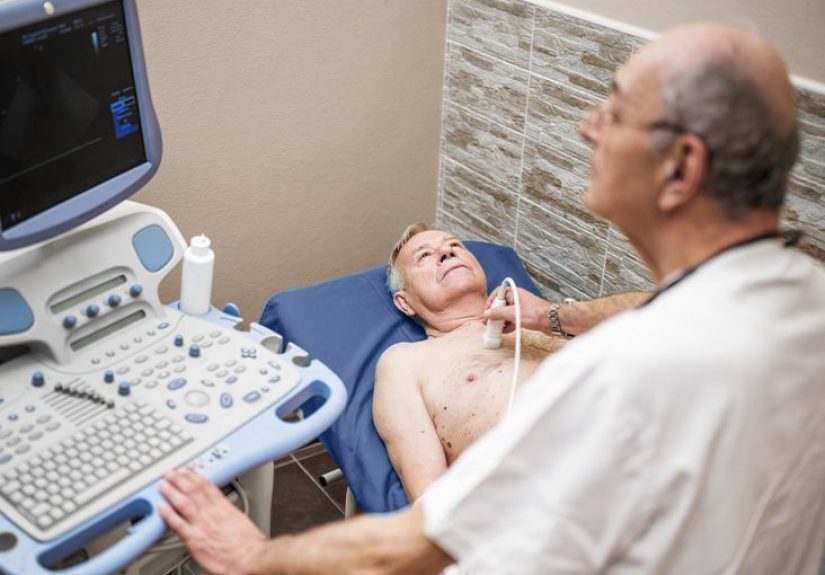
irregular rhythm, and symptom triggers. - Echocardiogram (ultrasound of the heart): EF is preserved, but there may be evidence of diastolic
dysfunction, thickened heart muscle, enlarged left atrium, or high filling pressures. - Natriuretic peptides (BNP or NT-proBNP): often elevated when the heart is under strain. (Important nuance:
obesity can sometimes lower these values even in true HFpEF, so clinicians interpret them in context.) - Exercise testing: some people show normal pressures at rest but abnormal filling pressures during exertion.
- Additional testing as needed: stress testing for coronary disease, sleep studies for sleep apnea, and blood
work to check kidney function, anemia, thyroid disease, and more.
In borderline cases, specialists may use scoring tools and structured diagnostic pathways to estimate the likelihood of HFpEF.
The bottom line: the diagnosis is most reliable when symptoms, objective evidence of cardiac filling pressure problems, and a
preserved EF all line up.
Available treatment options for HFpEF: What actually helps
HFpEF treatment is best thought of as a strategy, not a single miracle pill. The goals are to:
(1) relieve congestion, (2) control blood pressure, (3) treat key comorbidities, (4) reduce hospitalizations, and (5) improve quality of life.
1) Diuretics: The “decongest” button for fluid overload
If you have swelling, lung congestion, or rapid weight gain from fluid retention, diuretics (“water pills”) are often the
fastest way to feel better. They don’t “cure” HFpEF, but they’re extremely effective for symptom relief by lowering filling
pressures and reducing fluid backup.
Clinicians tailor diuretic choice and dose to symptoms, kidney function, electrolytes, and blood pressure. Many HFpEF flare-ups
are essentially “volume problems,” and volume problems respond to volume solutions.
2) SGLT2 inhibitors: A modern cornerstone for HFpEF
One of the biggest shifts in HFpEF care is the rise of SGLT2 inhibitors (such as empagliflozin and
dapagliflozin). Originally designed for diabetes, these medications have shown meaningful benefits in HFpEFincluding lower
risk of worsening heart failure events and hospitalizationsin large clinical trials.
Many expert recommendations now support starting an SGLT2 inhibitor for eligible HFpEF patients, even if they do not have
diabetes, as long as there are no contraindications and kidney function is considered.
3) Blood pressure control: Because stiffness hates high pressure
High blood pressure is a major driver of HFpEF. Lowering it reduces the workload on the heart and can improve filling dynamics
over time. A common clinical target is keeping systolic blood pressure below about 130 mm Hg for many patients,
individualized to tolerance and overall health.
Medication options often include:
- ARNI (angiotensin receptor–neprilysin inhibitor, such as sacubitril/valsartan) for selected patients
- ARB (angiotensin receptor blocker) or ACE inhibitor (especially if ARNI isn’t feasible)
- Diuretics (particularly when congestion and hypertension overlap)
Practical example: two people can have the same EF and the same “HFpEF” label, but if one has uncontrolled hypertension and the
other doesn’t, their best treatment plans will look very different.
4) Mineralocorticoid receptor antagonists (MRAs): Helpful in selected patients
MRAs (like spironolactone) have shown mixed results across HFpEF populations, but evidence suggests they can reduce heart
failure hospitalizations in some patientsespecially when filling pressures and biomarkers are elevated or EF is on the lower
end of the “preserved” range.
These medications require careful monitoring of potassium and kidney function. In other words:
they can help, but they’re not a “set it and forget it” prescription.
5) Atrial fibrillation (AF) management: Rhythm matters in a stiff heart
AF is common in HFpEF and can make symptoms worse by disrupting coordinated filling and by speeding up the heart rate (less
filling time between beats). Treatment often includes:
- Rate control with medications (to prevent “too fast, too long”)
- Rhythm control in selected patients (medications or procedures) when symptoms persist
- Anticoagulation when stroke risk is elevated (to prevent clots)
Think of HFpEF as a filling problem: if the rhythm is chaotic, filling gets even harder. Restoring or optimizing rhythm can be
a big quality-of-life win.
6) Obesity and diabetes: Treating the engine, not just the warning light
Because HFpEF is strongly linked to obesity and metabolic disease, treatment often includes structured weight-loss and diabetes
management plansnot as “extra credit,” but as central therapy.
Beyond SGLT2 inhibitors, newer evidence shows that semaglutide 2.4 mg improved symptoms, physical limitations,
and exercise function in people with HFpEF and obesity in a large randomized trial. This supports a growing approach: for
patients with obesity-related HFpEF, meaningful weight loss can translate into meaningful symptom relief.
Also worth noting: some diabetes drugs are avoided in heart failure care because they may worsen heart failure risk in certain
contexts. Clinicians routinely review diabetes medications specifically through a “heart failure lens.”
7) Sleep apnea screening and treatment
Sleep apnea is common in HFpEF and can worsen blood pressure control and heart strain. If symptoms suggest sleep apnea (loud
snoring, witnessed pauses in breathing, daytime sleepiness), clinicians may recommend a sleep study. Treating sleep apnea can
improve energy and may support overall cardiovascular stability.
8) Exercise training and cardiac rehabilitation: Training the body to use oxygen better
Supervised exercise training can improve functional capacity in HFpEF. This isn’t about running a marathon (unless that’s your
thing); it’s about improving how muscles use oxygen and how the cardiovascular system responds to activity. Many people notice
better stamina and less breathlessness with a well-designed, gradual program.
9) Pulmonary artery pressure monitoring (CardioMEMS) for selected high-risk patients
For people with recurrent hospitalizations or difficult-to-manage volume status, some experts consider pulmonary artery
pressure monitoring devices (such as CardioMEMS). The idea is simple: rising pressures can show up before symptoms explode.
With early detection, clinicians can adjust therapy sooner and potentially reduce hospitalizations.
10) Treatments that are generally not helpful in routine HFpEF
HFpEF has been the “graveyard” of many once-promising therapies. Current guidance warns against routine use of certain
approaches (for example, long-acting nitrates or phosphodiesterase-5 inhibitors) for HFpEF symptom improvement in most
patientsbecause trials have not shown consistent benefit for the typical HFpEF population.
Lifestyle and self-management: Small moves that prevent big flare-ups
Medication helps, but daily habits often determine whether HFpEF stays stable or becomes a repeat visitor to the emergency room.
A clinician may recommend:
- Daily weights (catch fluid retention early)
- Salt awareness (not necessarily “no salt,” but avoiding high-sodium ambush foods)
- Activity pacing (short bouts of movement often beat one heroic overexertion)
- Vaccinations (respiratory infections can trigger decompensation)
- Limiting alcohol and avoiding smoking
- Medication review (some drugs can worsen fluid retention or blood pressure control)
A helpful mindset is “HFpEF is managed in seasons.” Some weeks are stable; some weeks need adjustments. The earlier you spot a
shift (swelling, weight changes, breathlessness), the easier it is to correct course.
Prognosis: What to expect over time
HFpEF is a chronic condition, but it’s not a single straight line. Many people live for years with good function when
comorbidities are controlled and treatment is consistent. Outcomes vary depending on age, kidney function, blood pressure
control, rhythm issues (like AF), weight, diabetes control, and whether hospitalizations happen frequently.
The most practical goal for most patients is: fewer flare-ups, fewer hospital stays, and more “normal days.”
Modern therapyespecially adding evidence-based medications and addressing obesity, blood pressure, diabetes, and AFhas made
that goal more achievable than it was a decade ago.
Questions to ask your clinician about HFpEF treatment options
- Do my symptoms fit HFpEF, or could something else be contributing (lung disease, anemia, thyroid, deconditioning)?
- What is my ejection fraction, and do I have evidence of elevated filling pressures?
- Should I be on an SGLT2 inhibitor, and is my kidney function appropriate for it?
- Do I need a diuretic plan for “flare days” (and what should trigger a call)?
- How aggressively should we target blood pressure, and which medications make the most sense for me?
- Should we screen for sleep apnea, iron deficiency, or coronary disease?
- Would weight-loss interventions (including medications) likely improve my HFpEF symptoms?
- If I have AF, should we consider rhythm control strategies?
Experiences with HFpEF: What it can look like day-to-day (and what tends to help)
The tricky thing about HFpEF is that it often looks like “life got harder” rather than “a dramatic medical event.”
Below are real-world-style experiences (composite stories inspired by common clinical patterns) that show how HFpEF is
discovered, treated, and lived withbecause sometimes the most useful medical information comes disguised as ordinary life.
Experience #1: “I thought I was just out of shape… until stairs became a negotiation”
Marsha, 67, didn’t feel “sick.” She felt limited. Grocery bags got heavier. Stairs required strategic breathing.
She started sleeping propped up on pillows because lying flat made her feel like she couldn’t get a full breath. She blamed
age, stress, and “maybe my allergies.”
At a routine visit, her blood pressure was consistently high. An exam suggested fluid retention, and an echocardiogram showed
preserved EF but signs pointing toward impaired filling. A diuretic helped quicklywithin days, her breathing improved and
swelling eased. Then the longer game began: controlling blood pressure, creating a realistic activity plan, and building habits
to catch early fluid shifts.
What helped most wasn’t one magic medicationit was a system: daily weights, less sodium ambush (restaurant soups were the
sneakiest culprit), and consistent blood pressure control. Her biggest surprise? A gradual exercise program made her feel
stronger within weeks, even though she started with short, slow walks. She didn’t “push through” symptoms; she trained around
them.
Experience #2: “My heart was fine… except for the part where it wasn’t relaxing”
Daniel, 59, had type 2 diabetes and carried extra weight. He’d been told for years to “watch his numbers,” but he felt okay
until he didn’t. He developed breathlessness during normal chores and noticed his legs were swelling by evening.
After evaluation, HFpEF was added to the problem list. His clinician explained that diabetes and obesity can drive a body-wide
inflammatory and metabolic environment that makes HFpEF more likely. The treatment plan included an SGLT2 inhibitor (chosen for
combined heart failure and diabetes benefits), diuretics as needed for congestion, and a structured approach to weight loss.
Daniel’s “aha moment” was realizing that improving HFpEF symptoms wasn’t only about the heartit was about making the whole
system easier to run. As his weight decreased and his activity improved, he described breathing as “less tight” and his energy
as “more reliable.” He didn’t become a different person overnight, but he stopped feeling like his body was arguing with him
every morning.
Experience #3: “Atrial fibrillation turned my ‘good days’ into a coin toss”
Priya, 72, had HFpEF and intermittent atrial fibrillation. On some days she was fine; on others, her heart rate ran high and
she felt short of breath even while sitting. Her symptoms weren’t purely fluid-relatedrhythm changes were a major driver.
Once her team focused on AF managementrate control, monitoring triggers, and discussing rhythm-focused optionsher good days
became more predictable. She also learned that sleep quality mattered: untreated sleep apnea can worsen blood pressure and
rhythm instability. After a sleep study and treatment, her daytime fatigue improved, and she reported fewer “mystery bad days.”
The common thread across experiences
HFpEF care tends to work best when it’s personalized and layered:
- Quick relief (often via diuretics when congestion is present)
- Core therapies that reduce flare-ups (commonly including SGLT2 inhibitors when appropriate)
- Comorbidity mastery (blood pressure, diabetes, obesity, AF, sleep apnea)
- Behavioral “early warning” habits (daily weights, symptom tracking, salt awareness)
- Fitness as medicine (graded exercise that builds capacity without triggering setbacks)
And yesHFpEF can be frustrating. It’s a condition where you can look “fine” while feeling anything but. But the upside of a
whole-system approach is that every improvement stacks: better blood pressure makes the heart’s job easier; better sleep
stabilizes rhythm and energy; weight loss can reduce inflammation and workload; exercise improves oxygen use; and modern
medications reduce the risk of heart failure events. In HFpEF, progress is often less like flipping a switch and more like
turning down a dozen tiny volume knobsuntil life stops feeling so loud.