Table of Contents >> Show >> Hide
- What “interprofessional care” actually means
- Who’s on a type 1 diabetes care team?
- The shared goals of the team
- Where each professional makes the biggest difference
- Endocrinology: strategy, complexity, and technology decisions
- DCES: turning “recommendations” into real-world habits
- Dietitian: matching insulin to eating patterns (not forcing your life into a spreadsheet)
- Pharmacist: safety, access, and insurance problem-solving
- Behavioral health: the part nobody can “power through” forever
- How the team coordinates: the care plan that keeps everyone aligned
- Technology is powerfulwhen the team supports it
- Special situations where team-based care is especially important
- Common breakdownsand how to prevent them
- How to get the most out of interprofessional care
- Bottom line
- Experiences from real life: what interprofessional care looks like day to day
Type 1 diabetes is a full-time job with surprisingly terrible benefits and absolutely no paid vacation.
The good news? You don’t have to clock in alone.
Interprofessional care (also called team-based or multidisciplinary care) is the idea that managing type 1 diabetes works best
when multiple health professionals coordinate around one central expert: you (and, for kids, you and your caregivers).
This matters because type 1 diabetes isn’t just “take insulin and call it a day.”
It touches nutrition, physical activity, mental health, school or work routines, technology, insurance, and long-term prevention.
A coordinated team helps you make smarter decisions fasterwithout turning every question into a medical scavenger hunt.
What “interprofessional care” actually means
Interprofessional care is more than “a bunch of people in white coats.” It’s a shared plan with clear roles, regular communication,
and consistent messagingso you’re not hearing five different opinions about the same carb count.
The goal is to prevent gaps, reduce burnout, and improve outcomes like A1C, time in range (if you use a continuous glucose monitor),
safety from severe lows, and fewer emergencies like diabetic ketoacidosis (DKA).
The big idea: one plan, many skills
Think of diabetes care like running a restaurant. One person can’t shop, prep, cook, plate, serve, handle allergies, and do the books
without something catching on fire. (Sometimes literallyask anyone who has tried to bolus while microwaving.)
Interprofessional care spreads the workload across specialized skills, while keeping the plan unified.
Who’s on a type 1 diabetes care team?
Teams vary by age, setting, and access. Some people see a large specialty clinic; others rely on primary care plus targeted referrals.
The ideal team is the one you can actually reachespecially when the pump is beeping at 2 a.m.
Core team members you’ll commonly see
- Primary care clinician (PCP): Helps coordinate general health, preventive care, vaccines, referrals, and “non-diabetes” problems that still affect diabetes.
- Endocrinologist: Specializes in hormones and diabetes; often leads insulin regimen adjustments, technology decisions, and complex cases.
- Diabetes care and education specialist (DCES): Teaches practical daily skillscarb counting, insulin timing, device use, troubleshooting, and problem-solving.
- Registered dietitian nutritionist (RDN): Builds a realistic eating plan (not a fantasy meal plan from a food photo shoot), supports weight/fitness goals, and helps match insulin to food patterns.
- Pharmacist: Helps with insulin options, device supplies, drug interactions, insurance prior authorizations, and safe medication use.
Specialists who may join depending on needs
- Mental health professional (psychologist, therapist, counselor): Supports diabetes distress, burnout, anxiety, depression, fear of hypoglycemia, and coping strategies.
- Social worker/care navigator: Helps with insurance, supply access, financial assistance, transportation, and community resources.
- Ophthalmologist/optometrist: Screens for eye complications and protects vision.
- Nephrologist: Manages kidney concerns if screening shows issues.
- OB-GYN / maternal-fetal medicine: For pregnancy planning and management, where glucose targets and monitoring become especially time-sensitive.
- School nurse / trained school staff (for children and teens): Supports daily management and emergency response in school settings.
The shared goals of the team
Interprofessional care isn’t about “being perfect.” It’s about being safer, steadier, and more supported.
A good team will personalize targets based on age, hypoglycemia risk, lifestyle, comorbidities, and preferences.
Glycemic outcomes: A1C and (increasingly) CGM metrics
Many clinics still use A1C as a key metric because it’s standardized and tracks average glucose over roughly three months.
If you use CGM, your team may also look at time in rangecommonly defined as the percent of time between 70 and 180 mg/dL for many people.
Why it helps: it shows patterns (overnight highs, post-meal spikes, exercise dips) that an average can hide.
Safety outcomes: preventing severe lows and DKA
Severe hypoglycemia and DKA are the “big bads” your team is trying to prevent.
That means you’ll hear a lot about:
insulin timing, backup plans for pump failures, when to check ketones, how to use glucagon, and how to manage illness.
It may feel repetitiveuntil the one time it saves you a trip to the ER.
Life outcomes: fewer disruptions, more confidence
Great care also means fewer missed school days, safer sports participation, less “diabetes math” anxiety, fewer supply crises,
and more confidence adjusting insulin for real lifelike pizza, exams, travel, and the common cold that arrives uninvited.
Where each professional makes the biggest difference
Endocrinology: strategy, complexity, and technology decisions
Endocrinology often drives high-level insulin strategy: basal/bolus structure, insulin-to-carb ratios, correction factors,
and how settings change with growth, hormones, stress, or shift work.
Endocrinologists also help decide whether CGM, insulin pump therapy, or automated insulin delivery (AID) systems fit your goals and budget.
DCES: turning “recommendations” into real-world habits
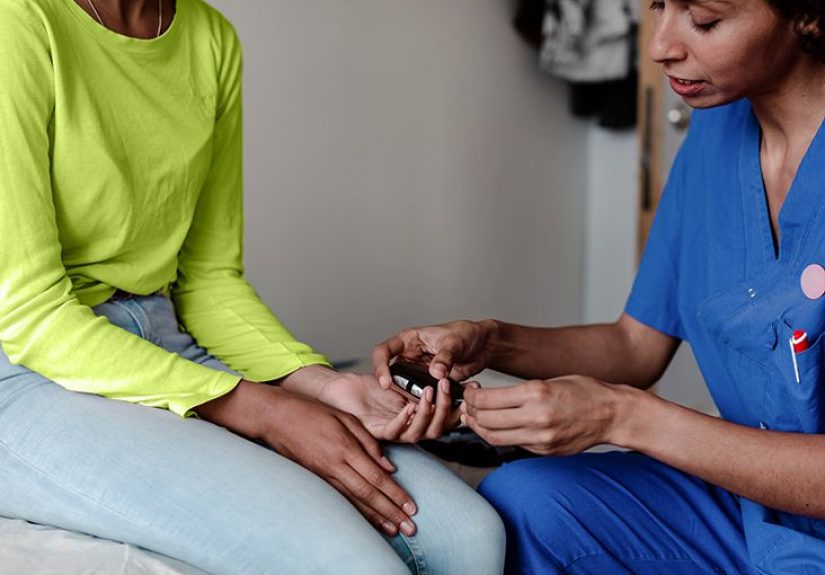
The DCES is the “how-to” engine of your care. This role is especially valuable at diagnosis, during technology starts,
and anytime you feel stuck. Examples of what DCES visits often cover:
- How to treat highs and lows without panic-bolusing (or over-snacking).
- How to rotate injection or infusion sites to prevent absorption problems.
- How to interpret CGM trend arrows and when to confirm with a fingerstick.
- How to plan for gym class, a long flight, or a stomach bug.
- How to build a “backup kit” so you’re never one lost charger away from chaos.
Dietitian: matching insulin to eating patterns (not forcing your life into a spreadsheet)
Nutrition is not about banning foods; it’s about predictability and flexibility.
A dietitian can help you:
estimate carbohydrates more accurately, plan balanced meals that reduce extreme swings,
and create strategies for tricky foods (high-fat meals, sugary drinks, “I forgot to bolus” moments).
Pharmacist: safety, access, and insurance problem-solving
Insulin, CGM sensors, pump supplies, ketone strips, glucagontype 1 diabetes is a supply chain.
Pharmacists often help resolve:
formulary changes, prior authorizations, substitution options (without switching you to something that doesn’t match your device),
and safe use of medications that can affect glucose (like steroids).
Behavioral health: the part nobody can “power through” forever
Type 1 diabetes asks you to make decisions all day longfood, insulin, activity, corrections, alarms.
Decision fatigue is real. Diabetes distress is real. Fear of hypoglycemia is real.
Mental health support can teach coping strategies, reduce burnout, and help families navigate conflict around care.
In pediatrics, confidential “one-on-one time” with the teen and clinician can also support independence and honest communication.
How the team coordinates: the care plan that keeps everyone aligned
The glue of interprofessional care is a shared planoften documented in your chart and updated over time.
A strong plan usually includes:
- Insulin regimen: doses or pump settings, correction rules, and timing guidance.
- Monitoring plan: how often to check, CGM alerts, and what to do with the data.
- Hypoglycemia plan: symptoms, treatment steps, and glucagon instructions.
- Sick-day plan: when to check ketones, hydration guidance, and when to seek urgent care.
- Activity plan: how to adjust insulin and carbs for exercise.
- School/work accommodations: for kids, this may include a Diabetes Medical Management Plan (DMMP) and a 504 plan.
Pro tip: consistency beats complexity
A plan that’s too complicated doesn’t get used. A plan that’s too vague doesn’t help.
The best teams build “simple enough to follow on a busy day” rules, then refine over time.
Technology is powerfulwhen the team supports it
CGMs, pumps, and automated insulin delivery systems can reduce burden and improve glucose outcomes.
But technology is not magic; it’s a tool that needs training, troubleshooting, and ongoing adjustment.
That’s where interprofessional care shines: the endocrinologist sets strategy, the DCES teaches workflows,
the pharmacist helps you get supplies, and the mental health professional helps you manage alarm fatigue.
What good tech support looks like
- Start-up education: insertion, calibration (if relevant), alerts, and data review basics.
- Pattern management: adjusting settings based on trends, not one “weird Tuesday.”
- Backup planning: what to do if a sensor fails or a pump site goes bad.
- Data sharing: deciding who sees what (family, school, clinic) and setting boundaries.
Special situations where team-based care is especially important
New diagnosis: the “information firehose” phase
Early on, people often feel overwhelmed: dosing, carbs, ketones, supplies, alarms, emotionsall at once.
A coordinated team helps break learning into steps:
first safety (treat lows, prevent DKA), then skills (bolusing, carb counting), then optimization (patterns, tech upgrades).
School, sports, and after-school activities
For children and teens, school planning is a cornerstone of interprofessional care.
A diabetes management plan for school often includes target ranges, symptoms of low/high glucose,
treatment instructions, and how to handle field trips and sports.
Written accommodations (like a 504 plan) can help ensure access to supplies, safe testing, and emergency response.
Illness and sick days
Sick days raise the risk of ketones and DKA, even if you’re not eating much.
Most sick-day plans emphasize frequent glucose checks and ketone monitoring, plus fluids and clear thresholds for calling the care team or seeking urgent care.
If you’ve ever tried to interpret a ketone strip while shivering under a blanket, you know why having clear instructions matters.
Transition from pediatric to adult care
Transitions can create gaps in carenew clinic systems, new insurance, new routines, and suddenly you’re the one scheduling appointments.
Teams that start planning early (often in the teen years) can build readiness:
prescription management, making appointments, recognizing emergencies, and communicating needs without a parent translating the whole situation.
Hospitalization and procedures
In the hospital, glucose management can get complicated due to stress hormones, steroids, changing meals, and interruptions.
Interprofessional coordination is critical so insulin is managed safely, technology is handled appropriately, and discharge instructions are clear.
If you use a pump or CGM, ask about the hospital’s policy and how staff will coordinate device use and point-of-care testing.
Common breakdownsand how to prevent them
Problem: everyone gives different advice
Fix: ask the team to document the “official” plan in one place and clarify who owns which decisions
(for example, insulin adjustments vs. nutrition planning vs. school accommodations).
Problem: you only get help during crises
Fix: schedule proactive education visits (especially after technology starts, dose changes, puberty growth spurts, pregnancy planning, or repeated lows).
Prevention visits feel boringin the best way.
Problem: burnout gets ignored until it’s severe
Fix: treat mental health as routine care, not an “emergency-only” service.
Bring up alarm fatigue, fear of lows, or feeling overwhelmed as early as possible.
How to get the most out of interprofessional care
Show up with the right data (and the right questions)
- Bring your device downloads or know how your clinic accesses them.
- Write down your top 3 questions before the visit.
- Note recent patterns: overnight highs, post-breakfast spikes, frequent afternoon lows, etc.
- Ask for “one change at a time” if you feel overwhelmed.
Ask for a “what if” plan
A great team helps you plan for real life:
what if you vomit, what if the pump fails, what if you’re running a marathon, what if you’re pulling an all-nighter for finals.
These scenario plans reduce anxiety because you’re not improvising in the moment.
Use the team between visits
Many clinics offer portals, phone triage, or educator messaging. Don’t wait until things are unbearable.
Small course-corrections early are easier than giant resets later.
Bottom line
Type 1 diabetes interprofessional care works when it feels like a coordinated pit crew, not a relay race where the baton keeps getting dropped.
The best teams treat diabetes management as both medical and human: insulin and education, technology and access,
glucose targets and mental health. If your current setup feels lonely or chaotic, that’s not a personal failureit’s a systems problem,
and team-based care is one of the best ways to fix it.
Experiences from real life: what interprofessional care looks like day to day
The easiest way to understand interprofessional care is to see how it shows up in ordinary momentsbecause diabetes doesn’t only happen in clinics.
Consider “Maya,” a 15-year-old who was diagnosed last year. At first, her family thought the endocrinologist would be the main lifeline.
But the first few weeks were mostly educator-driven: learning how to treat lows, how to dose for meals, and how to check ketones during illness.
The DCES helped Maya practice the routine until it felt less like a pop quiz and more like muscle memory.
When Maya started using CGM, the educator also helped the family adjust alerts so they weren’t waking up for every harmless wiggle in glucose.
School added a new layer. Maya’s parents assumed the school would “just handle it,” but they quickly learned that good school care is planned care.
A school nurse (and trained staff) needed a clear diabetes medical management planwhat a low looks like for Maya,
how to treat it, and when to use emergency medication. The team approach mattered: the clinic provided medical instructions,
the family communicated routines and preferences, and school staff supported Maya without making her feel like a walking science experiment.
The result wasn’t perfectionthere were still surprise lows during PEbut it was safer and less stressful.
Then came the classic diabetes plot twist: a stomach bug. Maya couldn’t keep much food down, and her glucose did something rude and unpredictable.
The sick-day plan was the difference between panic and action: check glucose more often, check ketones, drink fluids,
and use specific thresholds for when to call the clinic. The endocrinology team helped adjust insulin,
while the educator reinforced step-by-step troubleshooting. Nobody tried to wing it based on internet comments from 2011.
Interprofessional care also shows up in quieter, long-game ways. Maya’s dietitian didn’t “ban sugar.”
Instead, they worked on breakfast options that didn’t cause big spikes during first-period math (because nobody needs algebra plus a glucose roller coaster).
Meanwhile, a pharmacist helped the family navigate an insurance switch that changed which insulin was covered.
Without that help, they might have faced delays or unsafe substitutions.
It wasn’t glamorous workmostly phone calls and paperworkbut it protected continuity of care.
The most underestimated experience is emotional. Some weeks Maya felt fine; other weeks she felt exhausted by decisions and alarms.
A therapist familiar with chronic illness helped her name diabetes distress and build coping toolslike setting boundaries around data-sharing,
practicing calming strategies when alarms triggered anxiety, and reframing “a high number” as information, not a personal verdict.
That mental-health support also helped her parents shift from “diabetes police” to “diabetes partners,” which improved family peace dramatically.
Now zoom out to adulthood. “Chris,” a 28-year-old with type 1 diabetes, moved cities and learned the hard way that transitions are a medical event.
He had to transfer records, find a new endocrinology clinic, and rebuild his supply pipeline. A care coordinator helped him line up refills so he didn’t run out,
and the DCES helped him re-check pump settings after the move disrupted routines and sleep.
The lesson: interprofessional care isn’t only about adding more professionalsit’s about making sure the right person helps at the right time.
In both stories, the theme is the same. When care is team-based, problems get handled at the level they belong.
Technology questions don’t have to wait three months for an endocrinology appointment.
Insurance surprises don’t become dangerous gaps. Mental health doesn’t get treated as an afterthought.
And patients don’t have to be a one-person customer service department for their own condition.