Table of Contents >> Show >> Hide
- What You’ll Learn
- The Quick Answer
- First: Know Which Type of Peony You Have
- Deadheading vs. Cutting Back: Two Totally Different Jobs
- When to Cut Back Herbaceous Peonies
- When to Cut Back Itoh Peonies
- A Simple Cut-Back Calendar (By Cue, Not by Date)
- How to Cut Back Peonies (Step-by-Step)
- When (and How) to Prune Tree Peonies
- Common Mistakes That Shrink Next Year’s Bloom Show
- FAQ: Quick Answers to Popular Peony Cut-Back Questions
- Conclusion
- Experience Notes from Real Gardens (The Stuff People Learn the Hard Way)
Peonies are the divas of the spring garden: big, fragrant, dramatic… and absolutely convinced
they’re the main character. The good news? They’re also long-lived, tough, and surprisingly easy
to care foras long as you don’t get scissor-happy at the wrong time.
If you’ve ever stood over a peony clump in July, holding pruners like a barber who’s had too much coffee,
wondering, “Should I cut this mess down now?”you’re in the right place. Let’s talk timing, technique,
and the one big rule peonies will enforce with next year’s bloom count.
What You’ll Learn
- When to cut back herbaceous peonies (the classic “dies to the ground” type)
- When to cut back Itoh (intersectional) peonies (the “best of both worlds” type)
- When (and how) to prune tree peonies (the woody shrub type)
- Deadheading vs. cutting back (they’re not the same, no matter what your neighbor says)
- How to cut back peonies step-by-step to reduce disease and boost next spring’s flowers
The Quick Answer
For most gardens, cut back herbaceous and Itoh peonies in late fallafter the first hard frost
(or when the foliage has yellowed and collapsed). That’s usually somewhere between October and
November in many U.S. regions, later in milder climates.
Tree peonies are different. They’re woody shrubs and generally should not be cut
back to the ground. Instead, they get light pruning for shape and dead woodtypically in early spring
or right after flowering, depending on your goal.
The core principle: leave peony foliage alone through summer so it can photosynthesize and
feed the roots for next year’s blooms. Cutting too early often means fewer flowers laterpeonies don’t get mad,
they get even.
First: Know Which Type of Peony You Have
“When to cut back peonies” depends on what kind of peony you’re growing. The timing changes because the plant’s
structure changessome die down each year, and some keep woody stems.
Herbaceous Peonies (Paeonia lactiflora and hybrids)
The classic garden peony. It pops up in spring, blooms, then keeps leafy growth through summer before dying back
in fall. These are the ones you cut back hard in late fall.
Itoh Peonies (Intersectional Peonies)
A hybrid between herbaceous and tree peonies. They usually die back like herbaceous peonies, but can have thicker,
semi-woody lower stems. Most gardeners cut them back in late fall too, often leaving a short stub.
Tree Peonies (Woody peonies)
These are shrubs with woody stems that remain above ground year-round. They bloom on woody growth,
so chopping them down in fall can remove future flowers. With tree peonies, think “selective pruning,” not “buzz cut.”
Not sure which you have? In winter, herbaceous peonies disappear to ground level. Tree peonies
keep woody stems like a small shrub. Itohs usually die back but may leave chunky stem bases.
Deadheading vs. Cutting Back: Two Totally Different Jobs
Deadheading (After Bloom)
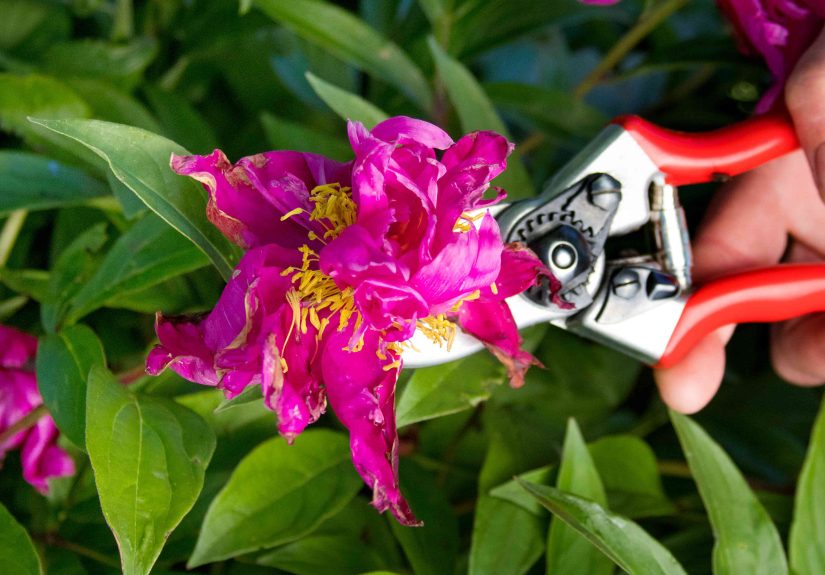
Deadheading means removing spent flowers after bloomingusually late spring to early summer, depending on variety
and region. The goal is to prevent seed formation and keep the plant tidy, so it puts energy into roots instead of
making seed pods (peonies are not trying to win the “Most Productive Seed Pod” award anyway).
How: Snip the faded flower stem down to a set of healthy leaves so you’re not leaving awkward bare
sticks poking up. Keep as much foliage as possible.
Cutting Back (End-of-Season Cleanup)
Cutting back happens much latertypically in fallwhen foliage has yellowed, browned, or been hit by frost. This is
more about sanitation and overwintering health than looks.
When to Cut Back Herbaceous Peonies
Best time: Late fall, after foliage is damaged by a hard frost or has naturally yellowed and started
collapsing. This timing lets the plant store energy in its roots for next year’s bloom show.
What “Late Fall” Looks Like in Real Life
- Leaves turn yellow or brown and start looking tired (relatable).
- Stems flop or blacken after frost.
- The plant stops looking like a lush shrub and starts looking like compost-in-waiting.
Why You Shouldn’t Cut Back Right After Bloom
After flowering, peony leaves keep working all summercapturing sunlight and storing carbohydrates in the root system.
That stored energy is a big part of next spring’s flower production. If you remove foliage too early, you’re basically
canceling next year’s performance while the plant is still backstage prepping.
What If the Foliage Looks Ugly in August?
Some peonies get leaf blotch, powdery mildew, or general late-summer grunge. If the plant is severely diseased, you can
remove the worst affected leaves and dispose of them (don’t compost diseased material). But try not to strip the plant
bare while it’s still green and actively feeding the roots.
When to Cut Back Itoh Peonies
Itoh peonies generally follow the herbaceous schedule: cut back in late fall after frost or dieback.
Because they can have thicker lower stems, many gardeners leave about 2–4 inches above the soil line,
especially if the base is semi-woody.
The big idea is the same: keep foliage through summer, then clean up in fall to reduce disease carryover and give the
plant a fresh start in spring.
A Simple Cut-Back Calendar (By Cue, Not by Date)
Instead of obsessing over the calendar, use the plant (and the weather) as your signal.
| Peony Type | Deadhead When | Cut Back / Prune When |
|---|---|---|
| Herbaceous | After blooms fade | After first hard frost or foliage yellows in fall |
| Itoh (Intersectional) | After blooms fade | After frost/dieback in fall (often leave short stubs) |
| Tree peony | After blooms fade | Light pruning for shape/dead wood (often early spring or after flowering) |
How to Cut Back Peonies (Step-by-Step)
Cutting back peonies is quick, but do it cleanly. Your future self (and your future blooms) will thank you.
1) Pick the Right Day
- Wait until foliage is yellow/brown or frost-damaged.
- Choose a dry day if possiblewet cleanup can spread fungal spores.
2) Use Clean, Sharp Tools
Clean pruners reduce disease spread. If you’ve had fungal issues, disinfect pruners between plants.
3) Cut to the Correct Height
- Herbaceous: Cut stems to ground level or leave about 1–3 inches.
- Itoh: Cut down similarly, often leaving 2–4 inches if the base is woody.
4) Remove Debris (Don’t Baby It)
Gather and remove all fallen leaves and stems from around the plant. If you’ve had disease (leaf blotch, botrytis,
mildew), don’t compost that materialbag it or dispose of it to reduce overwintering pathogens.
5) Optional: Mulch (But Don’t Smother)
In most established plantings, peonies don’t need heavy mulch. In colder areas or first-year plants, a light mulch can
help, but keep it off the crown. In spring, pull mulch back so emerging shoots don’t stay damp (peonies prefer “fresh air”
over “spa humidity”).
When (and How) to Prune Tree Peonies
Tree peonies are woody shrubs, and their stems don’t die back to the ground each winter. That means you usually
do not cut them back like herbaceous peonies.
What You Can Do in Fall
- Remove spent flowers after blooming (deadhead).
- Clean up fallen leaves around the base for sanitation.
- Avoid major pruning that removes lots of woody stems.
Best Time for Pruning
For most gardeners, tree peony pruning is light and strategic:
- Early spring: Remove dead wood and winter-damaged stems as buds begin to swell.
- Right after flowering: Light shaping can be done without sacrificing as many future blooms.
How to Prune Tree Peonies Without Nuking Next Year’s Flowers
- Start by removing dead, broken, or crossing branches.
- Cut back to healthy buds (not random stubs).
- Don’t “tidy” the shrub into a lollipoptree peonies aren’t boxwoods.
Common Mistakes That Shrink Next Year’s Bloom Show
Mistake #1: Cutting Back Too Early
If foliage is still green, it’s still feeding the roots. Cutting back in summer is the fastest way to trade next year’s
blooms for a few months of tidy mulch.
Mistake #2: Composting Diseased Leaves
If your peonies had fungal issues, composting infected debris can reintroduce problems next season. Sanitation is a
big part of peony disease prevention.
Mistake #3: Treating Tree Peonies Like Herbaceous Peonies
Tree peonies keep woody stems and bloom on that structure. Cutting them down can remove the very growth that would have
produced flowers.
Mistake #4: Using Dirty Tools
It’s not glamorous, but clean pruners matter. If you’ve dealt with botrytis or other fungal diseases, tool hygiene can
help prevent spreading problems plant-to-plant.
FAQ: Quick Answers to Popular Peony Cut-Back Questions
Can I cut back peonies in spring instead of fall?
For herbaceous and Itoh peonies, you can remove dead growth in early spring if you missed fall cleanup.
However, fall removal is often recommended for better disease control and a cleaner start.
Should I cut back peonies if they have powdery mildew?
If mildew shows up late in the season, you can remove the worst leaves and improve airflow, but try not to strip all foliage
while it’s still doing useful work. Once fall dieback arrives, remove and dispose of the affected foliage thoroughly.
Do peonies need to be cut back every year?
Herbaceous and Itoh peonies benefit from annual fall cleanup because it reduces disease carryover and keeps beds tidy. Tree peonies
don’t require annual hard pruningjust selective maintenance.
What if I live somewhere warm with little frost?
Use foliage condition as your cue. When leaves yellow/brown and growth collapses, that’s your window. In mild-winter climates, this
might be later in the year than your colder-climate gardening friends brag about.
Conclusion
If you remember one thing, make it this: peonies want their leaves all summer. Deadhead after bloom, then wait until late fall
to cut back herbaceous and Itoh peoniesideally after frost or obvious dieback. Clean up debris like you mean it, because good sanitation is
one of the easiest ways to reduce peony disease and improve next year’s performance.
Tree peonies play by different rules: keep the woody framework, prune lightly for health and shape, and avoid a fall haircut that removes buds.
Do that, and your peonies will keep showing up each spring like they own the placewhich, honestly, they kind of do.
Experience Notes from Real Gardens (The Stuff People Learn the Hard Way)
Gardeners who grow peonies for years tend to repeat the same “wish I’d known that earlier” lessonsusually right after making one of the classic
mistakes. Here are practical, experience-driven takeaways that come up again and again in peony-growing circles.
The biggest aha moment: late-summer peony foliage can look rough, and that makes people reach for pruners. But seasoned growers
learn to treat peony leaves like a solar panel. Even when leaves are a little spotted or tired, they’re still capturing energy for next year.
Many gardeners who cut their peonies down in July or August report the same result: fewer blooms the next spring. The plant survives (peonies are
stubborn like that), but the flower count often takes a noticeable hit.
Timing is more forgiving than people thinkuntil it isn’t. If you cut back in late fall after foliage collapses, peonies usually
don’t care whether it’s “exactly October 20th” or “the first Saturday after football season starts.” What they do care about is whether the foliage
had time to finish its job. In mild climates, gardeners often wait later than their northern friends, using yellowing leaves as the signal rather
than chasing a frost that may barely show up.
Clean-up matters most where disease has been an issue. Gardeners dealing with leaf blotch or botrytis often notice that thorough
fall cleanupcutting stems down, removing every fallen leaf, and disposing of debrisreduces problems the following year. The “lazy cleanup” approach
(leaving a ring of dead leaves around the crown) tends to correlate with the same diseases returning. People who garden in wetter springs are especially
vocal about this: sanitation plus airflow becomes the low-effort, high-impact strategy.
Itoh peonies confuse everyone at least once. Because Itohs can have thicker, semi-woody bases, gardeners sometimes hesitate: “Do I cut
these like herbaceous peonies or treat them like shrubs?” The shared wisdom is to cut them back in fall like herbaceous peonies, but don’t stress if
you leave a couple inches of stubespecially if the base feels woody. Gardeners also mention that Itohs often look best with a consistent cut height,
because uneven stubs can make spring cleanup feel like a scavenger hunt.
Tree peonies teach respect. People who accidentally cut a tree peony down like an herbaceous one rarely forget it. The common lesson:
identify your peony type before you prune. Experienced gardeners also note that tree peonies respond better to selective pruningremoving dead wood and
awkward crossing branchesthan to heavy reshaping. And if you do want to reduce size, many gardeners prefer pruning right after flowering so they can
see what they’re removing and avoid sacrificing too many future buds.
Finally: peonies reward consistency, not fussing. Many long-time growers say their best peony years came after they stopped over-managing.
They deadheaded, fed the soil lightly, let foliage run its course, cleaned up in fall, and resisted the urge to “fix” every cosmetic issue. Peonies are
the kind of plant that thrives when you do the right basicsthen step back and let them be fabulous.
Sources synthesized (U.S.-based): university extensions, botanical gardens, and major U.S. garden publications.