Table of Contents >> Show >> Hide
- What happened with the Wicked poster edit?
- Why did the edit go viral in the first place?
- Why Cynthia Erivo’s response hit so hard
- Homage vs. imitation: the marketing tightrope
- What Ariana Grande and the broader Wicked team signaled
- The internet’s real argument: Who gets to control an image?
- Lessons for studios, fandoms, and anyone with a Photoshop subscription
- Why this poster controversy will keep happening
- Conclusion
- Bonus: of real-world experience around viral poster edits (and why they’re never “just for fun”)
When a fan edit tries to “fix” a movie poster, the internet usually hands out trophies, not trauma. But in the Wicked-verse, one viral tweak turned into a full-blown debate about art, identity, and why the brim of a hat can start a culture war.
What happened with the Wicked poster edit?
In October 2024, Universal dropped a sleek, high-gloss Wicked movie poster featuring Cynthia Erivo’s Elphaba and Ariana Grande’s Glinda in a clear nod to the iconic Broadway artwork. Same vibe: Glinda whispering, Elphaba looming, mischief implied. Different choice: the film poster let Elphaba stare directly at you—eyes visible, face present, unmistakably a real person, not an illustration.
Then came the internet’s favorite sport: “Improving” things nobody asked them to improve. A TikTok-style “fix” made the rounds, editing the film poster to more closely match the Broadway image. The biggest change was also the loudest: Elphaba’s eyes were obscured under the brim of her hat, shifting the focus away from Erivo’s face.
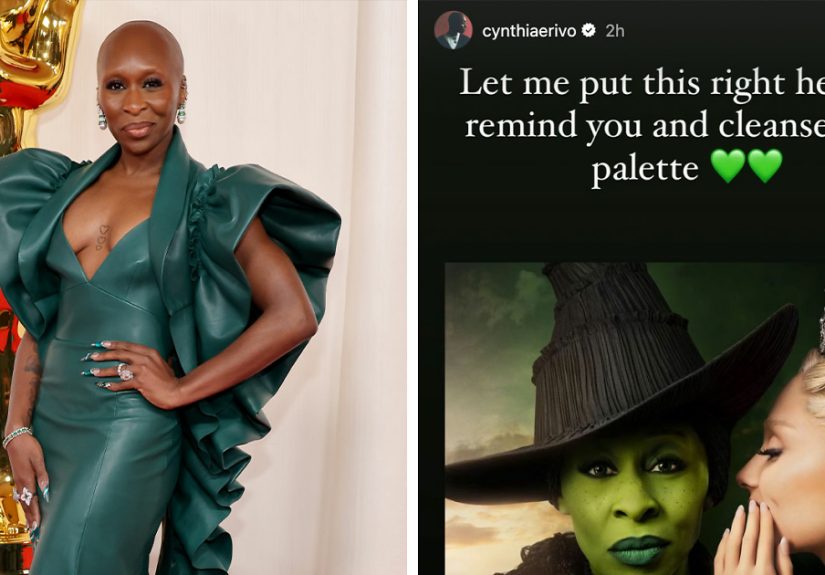
Erivo saw the edit, and she did not do the polite-celebrity-laugh. She called it the “wildest, most offensive thing” she’d seen, describing it as degrading and hurtful—and saying that hiding her eyes felt like erasing her. The reaction spread just as fast as the edit, because nothing travels faster online than an argument with good lighting.
Why did the edit go viral in the first place?
If you want to understand why this happened, you have to understand fandom logic: when people love something, they don’t just buy tickets. They remix, meme, stitch, duet, and Photoshop it until their group chat runs out of storage. A viral fan edit isn’t always an insult; it’s often a love language with chaotic spelling.
1) The Broadway poster is basically pop culture scripture
The original Wicked stage poster has been around for two decades, burned into the collective brain alongside “Defying Gravity” and the color green that launched a thousand Halloween costumes. Its design is instantly recognizable: a stylized, mysterious Elphaba with her eyes hidden—not because she’s being silenced, but because the illustration trades realism for myth.
2) “Fixing” posters is a meme format now
Online, the phrase “fixing the poster” is practically a genre. Sometimes it means adjusting typography. Sometimes it means moving a face two pixels to the left like you’re defusing a bomb. Either way, the format invites dunking, and dunking invites engagement. Engagement invites algorithms. Algorithms invite… well, your aunt asking why the witch looks different on Facebook.
3) The edit played into a familiar internet temptation
People love a side-by-side comparison. It makes everyone feel like a design professor, even if their last artistic achievement was selecting a Zoom background that didn’t clip their ears off. The moment the edit circulated as “better,” it wasn’t just fan art anymore—it became a public judgment call on the official marketing.
Why Cynthia Erivo’s response hit so hard
On paper, the change seems small: “It’s just the hat brim.” In context, it’s huge. Erivo’s key argument was simple and emotional: the Broadway poster is an illustration, while the film poster features a real human being. When you hide a real person’s eyes—especially after they chose to look straight into the camera—it can feel less like homage and more like removal.
Eyes are not just decoration; they’re communication
A movie poster is basically a handshake between the film and the audience. Erivo’s face-forward gaze says: Meet Elphaba as a person. Not a silhouette. Not a symbol. Not a mysterious green shape who exists only to be whispered about. So when an edit covers her eyes, Erivo read it as a statement: We liked you better when you were less visible.
There was more than one “thing” happening online
Erivo’s rant didn’t exist in a vacuum. She also referenced other viral content surrounding Wicked, including crude, invasive memes about Elphaba’s green skin and AI-generated imagery. When someone is already dealing with dehumanizing jokes, a “harmless” edit can land like the final straw, not a standalone incident.
Fandom can accidentally recreate the very themes Wicked warns about
Wicked is a story about how narratives get twisted, how a person becomes a symbol, and how a crowd decides what to believe. The irony is spicy: a fandom trying to celebrate Wicked stumbled into a mini version of its message—where one character’s humanity got lost in a more “iconic” image.
Homage vs. imitation: the marketing tightrope
Film marketing has two jobs that constantly fight like siblings in the back seat:
(1) reassure longtime fans that you respect the original, and
(2) convince new audiences this isn’t homework, it’s entertainment.
The official poster tried to do both. It echoed the Broadway composition while modernizing it for a movie star era. Letting Erivo’s eyes show is not a random choice; it’s a signal. This is a cinematic Elphaba with interiority, presence, and the kind of face recognition studios pay for.
The fan edit leaned hard into nostalgia: it flattened the film poster back into the familiar Broadway silhouette. That’s a classic fan impulse—comfort through sameness. But it clashes with the studio’s goal: introduce a new interpretation without making the lead actress feel like she needs to disappear to become “authentic.”
What Ariana Grande and the broader Wicked team signaled
In the days after the blow-up, the conversation expanded beyond the single image. Co-star Ariana Grande addressed the general idea that fans will remix promotional materials, suggesting that edits are part of modern fandom culture. She also touched on how complicated the AI era is—where some creations are playful and others cross lines fast.
Meanwhile, Erivo later reflected on her reaction in follow-up interviews, acknowledging that she was being protective and human, and implying she might have handled it differently if she’d paused before posting. That second beat matters because it shows the emotional arc: initial sting, public vent, then a more measured look at what set her off.
The internet’s real argument: Who gets to control an image?
Strip away the emerald glitter and you get a very modern question: when you put an image online, do you lose the right to feel anything about what people do to it?
The internet often answers, “Yes, welcome to the thunderdome.”
Humans answer, “I still have feelings, actually, thanks.”
Both can be true at once:
- Fans weren’t necessarily trying to harm Erivo; many were chasing nostalgia and consistency with the Broadway branding.
- Erivo wasn’t necessarily “overreacting”; she was responding to a pattern of dehumanizing commentary that made the edit feel like erasure.
- The public wasn’t only debating design; they were debating respect, authorship, and how quickly humor becomes cruelty online.
The key issue is consent and context. A poster edit in a vacuum is an aesthetic choice. A poster edit in a noisy ecosystem of memes, AI fakes, and invasive jokes can look like another attempt to control the way a performer’s body and identity are presented.
Lessons for studios, fandoms, and anyone with a Photoshop subscription
1) Nostalgia is powerful, but it’s not neutral
Recreating classic imagery feels like a compliment. But sometimes classic imagery came from a world where performers were less visible, less protected, and more easily replaced by “icons.” If a modern poster chooses visibility, that’s a statement worth respecting.
2) “It’s just a joke” doesn’t erase impact
The internet loves to treat sincerity like a crime. But marketing materials are tied to real people and real labor. When someone says something is hurtful, the grown-up response isn’t “lol cope.” It’s curiosity: Why did that land that way?
3) Fan art thrives when it’s additive, not corrective
The word “fixing” is the spark that lights the fuse. “Here’s my tribute” invites conversation. “Much better” invites a scoreboard. Once there’s a scoreboard, somebody loses—and in this case, Erivo felt like the one being marked down.
4) AI makes everything louder (and riskier)
Even when a specific edit is handmade, it lives in an era where AI fakes circulate effortlessly. That atmosphere raises everyone’s guard. Performers are navigating a landscape where their faces can be altered, weaponized, or sexualized at scale. Sensitivity isn’t fragility; it’s self-defense.
Why this poster controversy will keep happening
This wasn’t the first time a fandom remixed a major studio image, and it won’t be the last. The tools are too easy, the platforms are too hungry, and attention is too profitable. Every big release now comes with an unofficial shadow campaign: fan edits, meme templates, reaction videos, and parody posters that can outpace the studio’s own rollout.
The Wicked poster drama is a case study in what happens when three forces collide:
legacy branding (Broadway iconography),
celebrity marketing (face recognition and star power),
and participatory culture (fans who don’t just watch—they create).
And because Wicked itself is about perception versus reality, it’s almost too perfect that a single image sparked a debate about who Elphaba is allowed to be: a symbol in shadow, or a person seen clearly.
Conclusion
The viral Wicked poster edit didn’t just tweak a hat brim; it exposed a fault line in modern pop culture. Fans wanted a familiar homage. Cynthia Erivo wanted recognition of her humanity and her artistic choices. The internet, as usual, wanted a winner and a loser, preferably by lunchtime.
The more useful takeaway is softer: images aren’t just images anymore. They’re identity, labor, branding, and emotion compressed into a rectangle that gets judged in half a second. When Erivo called the edit the “wildest, most offensive thing,” she wasn’t only talking about design—she was talking about what it feels like to be visible in a world that constantly tries to remix you into something more palatable.
And if you’re tempted to “fix” the next poster that crosses your feed, maybe try this revolutionary approach: make something new, make it kind, and let the real person in the picture keep their eyes.
Bonus: of real-world experience around viral poster edits (and why they’re never “just for fun”)
If you’ve ever worked anywhere near marketing, design, community moderation, or even a mildly chaotic fandom Discord, you’ve probably seen the same pattern play out: a studio posts Official Art, fans post Unofficial Art, and suddenly your Monday becomes a graduate seminar on symbolism, respect, and whether a PNG can have moral intent.
One common “experience lesson” from these moments is that the caption matters as much as the image. Fans can create gorgeous tributes that get celebrated—but the second an edit is framed as a correction (“fixed it,” “much better,” “they should’ve done this”), it stops being a love letter and starts being a review. Reviews are fine, but they land differently when the “problem” being corrected is a performer’s face, body, or identity markers. That’s when a fandom accidentally turns aesthetic preference into something personal.
Another recurring reality: virality flattens nuance. The person who made the Wicked edit may have been thinking, “I miss the Broadway poster,” while the person seeing it (Erivo) was thinking, “I am watching my presence get minimized again.” Both reactions can be honest. The issue is that the internet rewards the hottest take, not the most accurate one. By the time anyone says, “Hey, can we slow down and talk about context?” the algorithm has already strapped roller skates onto the discourse and shoved it down a hill.
Then there’s the practical, behind-the-scenes truth: official posters are rarely arbitrary. Studios test images, swap layouts, adjust facial angles, and obsess over where a viewer’s eye goes first. When Wicked chose to show Erivo’s eyes, it wasn’t a random departure from Broadway tradition; it was a modern storytelling signal. In entertainment marketing, showing a lead’s face is often about recognition, agency, and the promise that this version of the character has depth. When fans edit that away, they may be aiming for nostalgia, but they’re also undoing a deliberate decision about visibility.
Finally, in the current era, creators and public figures carry an extra burden: AI has poisoned the well. Even when a viral edit is handmade, it travels alongside AI mashups, deepfake clips, and invasive memes. People become understandably protective, sometimes quickly, because the boundary between play and harm is thinner than it used to be. That’s why the smartest fandom spaces now encourage a simple guideline: celebrate what you love, don’t “correct” real people, and if you’re riffing on an image, avoid framing it as an improvement on someone’s humanity.
The Wicked poster moment is memorable because it’s relatable: we all want to join the conversation. The trick is joining without turning someone else into the punchline. And yes, that includes letting Elphaba keep her eyes.