Table of Contents >> Show >> Hide
- Quick Comparison: 10 Top Under-Sink Filters at a Glance
- How We Chose the “Best” Under-Sink Water Filters
- 10 Best Under-Sink Water Filters for Clean H2O
- 1) Aquasana Claryum® 3-Stage Max Flow (AQ-5300+)
- 2) Brondell H2O+ Coral UC300
- 3) Multipure Aquaversa (MP750)
- 4) Culligan US-EZ-4 EZ-Change
- 5) Filtrete™ Maximum Under Sink (3US-MAX-S01)
- 6) GE Single-Stage Under-Sink (GXK185KBL + FQK1K)
- 7) Waterdrop WD-15UA
- 8) Frizzlife MK99
- 9) iSpring RCC7 (Tank RO)
- 10) Waterdrop G3P800 Tankless Reverse Osmosis
- Buying Guide: How to Pick the Right Under-Sink Filter
- Installation & Maintenance Tips (So You Don’t Hate Your New Filter)
- FAQ
- Real-World Experiences & Lessons Learned (The Part Most Guides Skip)
- Wrap-Up
- SEO Tags
Your kitchen sink is basically your home’s busiest hydration stationcoffee, pasta water, pet bowls, “just one sip” at 2 a.m.
So when your tap water tastes like it took a scenic tour through a public pool, it’s time for a glow-up.
An under-sink water filter is the “set it and forget it” upgrade that keeps countertops clear, cuts down on bottled water,
and helps you target what’s actually in your water (instead of guessing and hoping for the best).
This guide covers 10 standout under-sink systemsmixing high-flow carbon filters, quick-change cartridges, and reverse osmosis (RO) setups.
You’ll also get a practical buying guide (with a quick reality check on certifications), installation tips, and real-world lessons people tend to learn the hard way.
Spoiler: “I’ll remember to change the filter” is a lie we all tell ourselves.
Quick Comparison: 10 Top Under-Sink Filters at a Glance
Not all under-sink filters do the same job. Some are built for taste and chlorine; others are aimed at lead, VOCs, and “emerging contaminants.”
Reverse osmosis goes even further by reducing dissolved solids (great for some needs, overkill for others).
| System | Type | Best For | Filter Life (Typical) | Notable Notes |
|---|---|---|---|---|
| Aquasana Claryum® 3-Stage Max Flow (AQ-5300+) | Multi-stage carbon | High-performance filtration without RO | ~6 months / ~800 gallons | Strong certification profile; solid flow for cooking |
| Brondell H2O+ Coral UC300 | 3-stage carbon | Broad contaminant reduction + nice faucet | ~12 months / ~600 gallons | WQA-certified performance; tidy under-sink layout |
| Multipure Aquaversa (MP750) | Carbon block | “Set it and sip” premium carbon filtration | ~12 months / ~750 gallons | Longstanding brand; emphasis on certifications |
| Culligan US-EZ-4 EZ-Change | Cartridge carbon block | Easy filter changes (no tools, less mess) | ~6 months / ~500 gallons | Twist-on/twist-off convenience |
| Filtrete™ Maximum Under Sink (3US-MAX-S01) | High-flow inline filter | Filtering from your existing faucet | ~6 months (varies) | Fast flow (great for filling pots) |
| GE Single-Stage Under-Sink (GXK185KBL + FQK1K) | Single-stage carbon | Small cabinets, simple setup | ~6 months (often capacity-limited) | Compact + reputable appliance ecosystem |
| Waterdrop WD-15UA | Direct-connect carbon | Big capacity for city water taste/odor | Up to ~24 months (use-dependent) | Often chosen for long life + simple fittings |
| Frizzlife MK99 | Quick-change multi-stage | Low-fuss maintenance + modern design | Varies by stage/use | Designed for fast cartridge swaps |
| iSpring RCC7 | RO (tank) | Lower TDS + broad reduction | Filters 6–12 months; membrane longer | Classic RO value; widely supported |
| Waterdrop G3P800 Tankless RO | RO (tankless) | Fast RO + space-saving | Varies by filter; smart reminders | High output; better pure-to-drain efficiency than many RO |
How We Chose the “Best” Under-Sink Water Filters
“Best” isn’t one-size-fits-allyour water, plumbing, and tolerance for maintenance all matter. To build this list,
we prioritized systems that are widely available in the U.S., supported by clear performance documentation, and designed for real kitchens.
We also favored filters that publish (or are tested to) recognized certification standards and that have replacement filters you can actually buy without a scavenger hunt.
10 Best Under-Sink Water Filters for Clean H2O
1) Aquasana Claryum® 3-Stage Max Flow (AQ-5300+)
If you want a high-performing under-sink filter without committing to reverse osmosis, this is a strong “do-it-all” pick.
It’s designed to reduce a wide range of common contaminants while keeping water flow friendly for daily usebecause nobody wants to wait all day to fill a pasta pot.
Best for: Households that want broad reduction (taste/odor plus more) and a dedicated drinking-water faucet.
Watch-outs: Like most carbon-based systems, it won’t reduce total dissolved solids (TDS). If your main issue is very high TDS, hard-water minerals, or salinity,
look at RO instead.
2) Brondell H2O+ Coral UC300
This three-stage system is popular for a reason: it’s built to target a big list of contaminants, and it comes with a polished faucet that looks like it belongs in your kitchen (not your garage).
It’s also neatly designed for under-sink storagebecause your cabinet is already holding cleaning supplies, mystery lids, and that one pan you refuse to throw away.
Best for: People who want a broad-performance under-sink filter with a filter-life indicator and clean aesthetics.
Watch-outs: Multi-stage systems have multiple filters to track. It’s not hard, but you do have to remember you own it.
3) Multipure Aquaversa (MP750)
The Aquaversa is a premium carbon-block option with a long track record and a “serious hardware” vibethink sturdy metal housing and performance-first design.
If you like buying once and keeping something for a long time (instead of playing subscription roulette with replacements), this style of system can be appealing.
Best for: Buyers who prioritize published testing and certifications and want a durable, dedicated-faucet system.
Watch-outs: Higher upfront cost than many quick-change plastic housings, though long-term value can still pencil out.
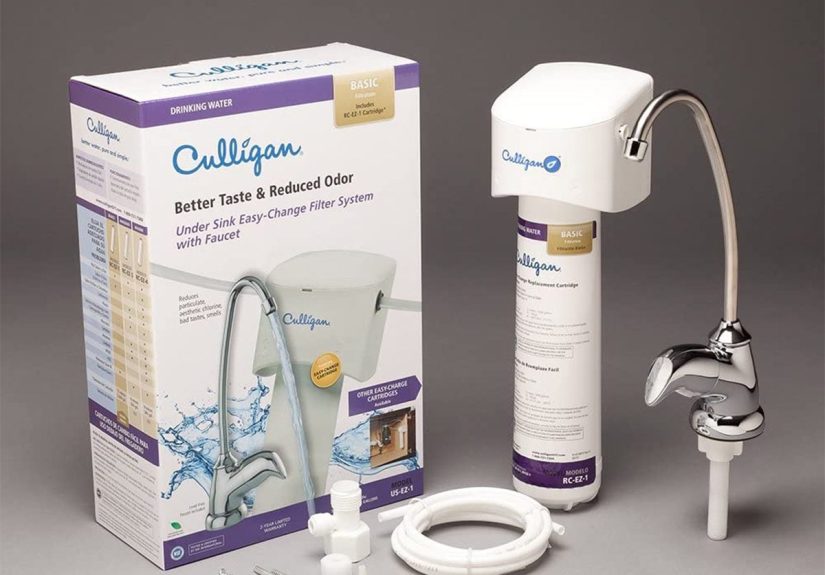
4) Culligan US-EZ-4 EZ-Change
If “maintenance” makes you yawn, this one’s for you. The EZ-Change design is built around quick cartridge swapsless tool-wrangling, fewer leaks, fewer accidental “spray the cabinet” moments.
It’s a straightforward way to improve taste and target common contaminants with a trusted name behind it.
Best for: Anyone who wants a simple under-sink upgrade with easy filter changes.
Watch-outs: Capacity is often modest compared with high-capacity systems, so large households may replace more frequently.
5) Filtrete™ Maximum Under Sink (3US-MAX-S01)
This is a smart pick if you want filtered water from your existing kitchen faucet (no extra faucet hole required) and you care about flow rate.
High-flow systems can feel more “normal” for cooking and filling water bottlesno dedicated tap, no slow trickle, no patience practice.
Best for: Renters/homeowners who want a fast-flow, faucet-based under-sink filter.
Watch-outs: Make sure replacement filters are easy to source where you liveand set a calendar reminder so you don’t run it past its prime.
6) GE Single-Stage Under-Sink (GXK185KBL + FQK1K)
Tight cabinet? Minimalist approach? This compact, single-stage system is designed to be unobtrusive and relatively simple to live with.
It’s often recommended when space is limited but you still want meaningful improvements in taste/odor and select contaminant reduction.
Best for: Small kitchens, small cabinets, and people who prefer a simpler system.
Watch-outs: Single-stage systems can have lower capacity; if you’re filling big water bottles all day, expect more frequent changes.
7) Waterdrop WD-15UA
The WD-15UA is frequently chosen for its long service life (depending on your water and usage) and straightforward direct-connect setup.
It’s especially popular for city water where the top complaints are chlorine taste/odor and occasional sediment.
Best for: High-use households that want fewer filter changes and an easy install.
Watch-outs: Like many non-RO systems, it won’t reduce dissolved solids the way RO canso match it to your goals.
8) Frizzlife MK99
Frizzlife systems often lean hard into “maintenance made easy,” with quick-change cartridges designed to reduce the hassle factor.
The MK99 line is a good example of that approachmodern fittings, user-friendly swaps, and a focus on everyday drinking and cooking water improvements.
Best for: People who want quick cartridge changes and a tidy under-sink setup.
Watch-outs: Check replacement filter costs before you buysome systems win on convenience but cost more long-term.
9) iSpring RCC7 (Tank RO)
This is a classic “bang for your buck” reverse osmosis system. RO is the heavy hitter when you want broad reduction, including dissolved solids.
You get a dedicated faucet and a storage tank, so you have a reserve of filtered water ready to go.
Best for: Homes that want RO-level reduction at a reasonable price.
Watch-outs: RO systems create wastewater. Also, installation is more involved than a simple inline carbon filter (still doable for many DIYers).
10) Waterdrop G3P800 Tankless Reverse Osmosis
Want RO without giving up half your cabinet to a storage tank? Tankless RO systems aim to solve that.
The G3P800 is known for fast output and smart features like filter-life reminders.
It’s a strong fit for busy kitchens where you want RO performance without the bulky footprint.
Best for: People who want RO, high output, and a space-saving design.
Watch-outs: Tankless RO can cost more upfront. Also double-check compatibility with your water pressureRO systems are picky about pressure.
Buying Guide: How to Pick the Right Under-Sink Filter
Step 1: Learn what’s in your water (before you buy a filter “for everything”)
Start with your local water quality report (often called a Consumer Confidence Report). It can tell you what was detected and at what levels.
If you’re on a private well, testing is even more important because you’re the “water utility” now.
Your best filter choice depends on whether you’re dealing with chlorine taste, lead concerns, VOCs, or high TDS/minerals.
Step 2: Understand certifications (they’re not just alphabet soup)
Filters often advertise “NSF certified,” but the standard matters. In plain English:
- NSF/ANSI 42: Aesthetic issues like chlorine taste/odor (the “my water tastes weird” standard).
- NSF/ANSI 53: Health-related contaminants (often includes lead claims, cyst reduction, and more).
- NSF/ANSI 401: “Emerging compounds” (some pharmaceuticals and other trace contaminants).
- NSF/ANSI 58: Reverse osmosis system performance (including TDS reduction).
- NSF/ANSI 372: Lead content compliance for materials (about what the product is made of).
Translation: pick the certification that matches your concern. If lead is your main worry, NSF/ANSI 53 (or RO under NSF/ANSI 58) is the headline you want to see.
Step 3: Choose a filtration type that matches your goals
- Carbon / multi-stage carbon:
Great for chlorine taste/odor and many common contaminants; usually keeps a natural mineral taste. - Ultrafiltration (UF):
Similar convenience to carbon systems; can target particulates and some microbes (not a substitute for disinfection if water is unsafe). - Reverse osmosis (RO):
Best for reducing dissolved solids and broad contaminant reduction, but wastes some water and may reduce minerals (some systems add minerals back).
Step 4: Don’t ignore “boring” specs (they affect daily happiness)
- Flow rate: Higher flow feels more normal for cooking and bottle filling.
- Filter life: Pay attention to gallons and months. Your household size matters.
- Replacement cost: A bargain system can get expensive if filters are pricey.
- Installation: Some use your existing faucet; others need a dedicated faucet hole.
Installation & Maintenance Tips (So You Don’t Hate Your New Filter)
- Measure your cabinet space first. RO tanks and multi-stage systems need room.
- Check your water pressure. RO systems typically need adequate pressure to perform well.
- Use a tray or towel on first install. The first time you open a valve is when leaks like to audition.
- Put filter changes on a calendar. Future-you will not remember. Future-you is busy.
- Flush new filters as instructed. It’s normal to run water for a bit to clear carbon fines and air.
FAQ
Do under-sink filters remove PFAS?
Some doif they’re tested/certified for specific PFAS reduction claims (often shown in performance data).
Don’t assume “PFAS” just because a filter is expensive or has five stages. Look for verified claims tied to recognized testing standards.
Is reverse osmosis “better” than carbon filtration?
Not automatically. RO is powerful, especially for high TDS or broad reduction including dissolved solids.
But carbon systems often have higher flow, less wastewater, and can taste more “like water” to many people.
The best system is the one that matches your water and your habits.
Will an under-sink filter fix hard water?
Not usually. Hard-water scale is typically a whole-house softening issue. Some RO systems can reduce dissolved minerals,
but that’s not the same as softening all household water.
Real-World Experiences & Lessons Learned (The Part Most Guides Skip)
If you read enough reviews, you’ll notice a theme: people don’t regret buying an under-sink filterthey regret the parts they didn’t plan for.
Here are the most common “wish I knew that earlier” experiences that pop up across households, from tiny apartments to chaotic family kitchens.
1) Flow rate is an everyday mood.
Lots of people shop based on contaminant lists and forget that you’ll interact with the flow rate constantly.
If you cook a lot (pasta, soups, rice, anything involving “fill a big pot”), a slow dedicated faucet can feel like a tiny daily tax on your patience.
In those homes, higher-flow carbon systemsor faucet-fed under-sink filterstend to make people happier long-term.
RO users often say they love the taste and clarity, but they also learn to fill the storage tank before hosting friends or meal-prepping.
2) “Easy filter changes” is not marketing fluffit’s your future.
Quick-change cartridges are popular because they reduce the chance of leaks and the temptation to procrastinate.
People with twist-and-lock systems often replace filters on time because it takes minutes, not a toolbox and a prayer.
Multi-stage systems can be great, but some owners admit they delayed changing one stage because they weren’t sure which one was due.
The best hack is simple: set recurring reminders and label the filter stages with a marker (month/year).
3) The cabinet under your sink is a chaos zone. Plan accordingly.
Under-sink space is precious. The moment you install a system, you realize how much stuff you’ve been storing down there
cleaning sprays, sponges, a fire extinguisher you forgot existed, and maybe a small civilization of lost grocery bags.
Tank RO systems can take up a noticeable footprint, so people who love cabinet storage sometimes wish they’d chosen a more compact filter
or gone tankless.
4) Taste changes are realand sometimes surprising.
Many people expect water to taste “like nothing,” but “nothing” has a flavor. Carbon filters often remove chlorine taste right away,
which can make coffee and tea taste smoother. RO water can taste very “clean,” which some people love and others describe as “flat.”
If you’re picky about taste, you’ll probably prefer either a high-quality carbon system or an RO setup that includes remineralization.
The biggest surprise? Several families report they drink more water simply because it’s more pleasantan upgrade that quietly supports better habits.
5) The best system is the one you’ll maintain.
A filter that can theoretically reduce a hundred contaminants doesn’t help if you never change it.
Households with hectic schedules tend to do best with long-life filters or systems with clear indicators and easy replacements.
One practical rule people share: if you know you’re forgetful, choose convenience firstbecause perfect filtration on paper is useless if it’s overdue in real life.
Wrap-Up
Under-sink filters are one of the most satisfying kitchen upgrades because the payoff is constant: better water for drinking, cooking, and everything in between.
Start by understanding your water, choose certifications that match your goals, and pick a system you’ll actually maintain.
Do that, and you’ll spend less time side-eyeing your tap and more time enjoying the simple luxury of clean H2Ostraight from the sink.