Table of Contents >> Show >> Hide
- Who Were the Aztecs?
- 1. The Aztecs Built a Major City in the Middle of a Lake
- 2. Their “Floating Gardens” Were Advanced Farms, Not Actual Rafts
- 3. The Aztec Empire Was Really a Powerful Triple Alliance
- 4. Their Markets Were Busy, Organized, and Full of Specialized Goods
- 5. Cacao Beans Could Function Like Small Change
- 6. Education Was Taken Seriously
- 7. They Preserved Knowledge Through Codices
- 8. The Aztecs Used Two Interlocking Calendars
- 9. Aztec Art Was Bold, Symbolic, and Technically Skilled
- 10. Human Sacrifice Was Real, but It Is Not the Whole Aztec Story
- The Fall of Tenochtitlan Was Not Caused by One Small Spanish Army Alone
- Why the Aztecs Still Matter
- Experience Aztec History Today: A 500-Word Guide
- Final Thoughts
- SEO Metadata
The Aztecs were not simply pyramid builders with dramatic ceremonies and a talent for making history textbooks look ipers, and city planners who created one of the most impressive urban societies in the pre-Columbian Americas.
At the heart of their world stood Tenochtitlan, a dazzling island capital built in the middle of a lake where modern Mexico City now sprawls. From ingenious wetland farming to cacao-based commerce, Aztec civilization was full of ideas that feel surprisingly modernexcept perhaps for the lack of Wi-Fi and the occasional eagle-warrior outfit.
This guide explores ten fascinating facts about the Aztecs, their society, technology, religion, economy, and lasting influence on Mexico and the wider world.
Who Were the Aztecs?
The Aztecs were a collection of Nahua-speaking peoples in central Mexico whose political power peaked between the fourteenth and early sixteenth centuries. The best-known group was the Mexica, who founded Tenochtitlan and became the leading force in a powerful alliance with the cities of Texcoco and Tlacopan.
Their empire did not resemble a modern country with neatly drawn borders and a single national office building. It was a network of city-states, tributary communities, trade routes, military campaigns, religious centers, and local rulers. In other words, it was complicatedwhich is history’s polite way of saying that no one should summarize it with one dramatic movie scene.
1. The Aztecs Built a Major City in the Middle of a Lake
Tenochtitlan was founded on islands in Lake Texcoco, in the Valley of Mexico. According to Mexica tradition, their patron god directed them to settle where they saw an eagle perched on a cactus, holding a serpent. That image later became central to Mexican national symbolism and appears on Mexico’s flag.
Building a city on a lake may sound like the kind of plan proposed during a particularly ambitious group project, but the Mexica made it work. Tenochtitlan was connected to the mainland by broad causeways, while canals allowed people and goods to move through the city by canoe. Bridges could be raised for defense, and carefully managed freshwater systems helped serve the urban population.
By the time Spanish invaders arrived in 1519, Tenochtitlan was one of the largest cities in the world. Its ceremonial precinct, markets, temples, homes, gardens, roads, and canals impressed visitors who had expected something far smaller and far less organized.
2. Their “Floating Gardens” Were Advanced Farms, Not Actual Rafts
One of the most famous Aztec innovations was the chinampa, often called a floating garden. The nickname is catchy, but chinampas did not simply bob around the lake like oversized salad barges. They were carefully constructed agricultural plots built in shallow wetlands using mud, vegetation, reeds, and other natural materials.
Farmers created narrow, fertile fields separated by canals. Water made transportation easier, while nutrient-rich mud from the lake helped replenish the soil. Trees planted along the edges could stabilize the plots and protect them from erosion.
Chinampas helped produce crops such as maize, beans, squash, chilies, tomatoes, flowers, and herbs. Their productivity made it possible to support a large urban population in and around Tenochtitlan. Modern farming still has lessons to learn from a system that combined soil renewal, water access, local food production, and very little patience for wasted space.
3. The Aztec Empire Was Really a Powerful Triple Alliance
The so-called Aztec Empire was not created by Tenochtitlan alone. In the early fifteenth century, Tenochtitlan joined with Texcoco and Tlacopan to defeat a regional rival. This partnership became known as the Triple Alliance.
Over time, Tenochtitlan became the dominant member of the alliance. Through warfare, diplomacy, tribute demands, and political alliances, it expanded its influence across much of central and southern Mexico. Subject communities often retained local leaders, but they were expected to provide goods, labor, soldiers, or other forms of tribute.
Tribute could include cotton cloth, maize, cacao, feathers, stone, weapons, ceremonial goods, and luxury items. The system strengthened Tenochtitlan’s wealth while helping fund religious ceremonies, military activity, construction, and elite life. Think of it as a complex regional economy with fewer spreadsheets and more pictorial records.
4. Their Markets Were Busy, Organized, and Full of Specialized Goods
The marketplace at Tlatelolco, Tenochtitlan’s neighboring city, was one of the great commercial centers of Mesoamerica. Vendors sold food, pottery, textiles, tools, jewelry, medicinal plants, feathers, animals, prepared meals, and luxury goods from distant regions.
Markets were not chaotic free-for-alls. Officials monitored trade, resolved disputes, and helped maintain order. Sellers often grouped themselves by product, making it easier for buyers to find what they needed. Imagine a giant department store, farmers market, craft fair, pharmacy, and food court combined into one open-air space.
Trade linked the Aztec world to distant regions. Tropical products, marine shells, rare feathers, cacao, precious stones, and fine cotton could travel long distances before reaching the Valley of Mexico. The Aztecs were not isolated; they were deeply connected to wider Mesoamerican exchange networks.
5. Cacao Beans Could Function Like Small Change
Long before chocolate became a candy bar waiting near a grocery checkout line, cacao was a prized luxury ingredient in Mesoamerica. Aztec cacao drinks were often bitter, frothy, and flavored with ingredients such as chilies, flowers, herbs, or maize. They were nothing like a modern extra-whipped mocha, although history suggests people have always enjoyed a good beverage with status attached.
Cacao beans could also be used as a medium of exchange in some market transactions. Cotton cloth and other valuable goods were used for larger payments, but cacao beans were practical for smaller purchases.
Because cacao did not grow naturally in the cooler highlands around Tenochtitlan, it had to be acquired through trade or tribute. That made it both useful and prestigious. In a sense, cacao was food, drink, wealth, trade goods, and social currency all at once. Modern chocolate has a lot to live up to.
6. Education Was Taken Seriously
Aztec society placed great value on training children and young people for adult responsibilities. Education was not identical for everyone, and opportunities differed by social class, gender, family role, and neighborhood. Still, structured learning was an important part of Mexica life.
Many young men attended the telpochcalli, where they learned discipline, civic responsibilities, physical endurance, military skills, and community traditions. Elite children and those preparing for religious or administrative roles could attend the calmecac, where they studied ritual knowledge, history, public speaking, law, leadership, and sacred traditions.
Children also learned at home through family responsibilities and craft training. A future farmer, merchant, featherworker, weaver, priest, soldier, or administrator needed practical knowledge, not just impressive attendance records. The Aztecs understood that a functioning city depends on people knowing how to do things well.
7. They Preserved Knowledge Through Codices
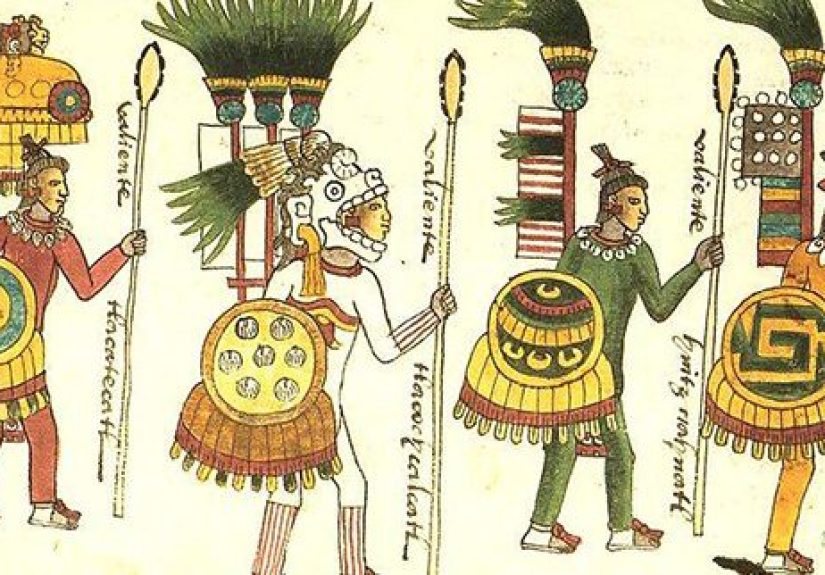
Aztec and other Mesoamerican peoples used visual writing systems that combined images, symbols, place signs, dates, names, and glyphs. Their books are often called codices. These manuscripts could record tribute obligations, family histories, migrations, land claims, ceremonies, calendars, and political events.
Many pre-Hispanic manuscripts were destroyed during the conquest and early colonial period. However, several important documents survived, including works created shortly after Spanish rule began. These codices remain essential sources for understanding Aztec life because they preserve Indigenous perspectives alongside later colonial interpretations.
Reading a codex is not exactly like reading a modern novel from left to right while eating snacks. It requires understanding symbols, cultural conventions, place markers, and historical context. But the documents reveal something important: the Aztecs were skilled record keepers with sophisticated visual systems for organizing information.
8. The Aztecs Used Two Interlocking Calendars
Aztec timekeeping was built around two major calendar systems. One was a 365-day solar calendar used for agriculture, seasonal ceremonies, and civic life. The other was a 260-day ritual calendar used for divination and religious purposes.
These calendars worked together in a repeating cycle that lasted fifty-two solar years. The completion of that cycle was especially significant and was marked by important ceremonies, including the New Fire ceremony. For the Mexica, time was not merely a row of dates on a wall. It was sacred, cyclical, and deeply connected to cosmic order.
Priests and specialists used calendar knowledge to determine ceremonial days, interpret signs, and guide major decisions. The system reflected careful observation, mathematics, ritual tradition, and the belief that human life was tied to larger patterns in the universe.
9. Aztec Art Was Bold, Symbolic, and Technically Skilled
Aztec artists worked with stone, clay, feathers, gold, shell, wood, textiles, and pigments. Their sculptures often represented gods, animals, rulers, warriors, and cosmic forces. Monumental stone works could be both visually striking and packed with religious meaning.
Featherwork was particularly prized. Skilled artists arranged colorful feathers into elaborate ceremonial objects, shields, garments, and ornaments. Bright feathers from tropical birds were rare and valuable, which made them powerful symbols of wealth and status.
Aztec art was not designed merely to decorate a room. It communicated ideas about power, warfare, fertility, rain, agriculture, ancestry, and the movement of the heavens. A sculpture could function as art, theology, politics, and public messaging all at once. It was the ancient equivalent of a masterpiece that also came with a full civic mission statement.
10. Human Sacrifice Was Real, but It Is Not the Whole Aztec Story
Human sacrifice is one of the most discussed parts of Aztec religion, and it was a genuine feature of certain ceremonies. Bloodletting and sacrifice were connected to religious beliefs about reciprocity, cosmic balance, warfare, agriculture, and the obligation to sustain the gods.
However, reducing Aztec civilization to sacrifice alone creates a distorted picture. It ignores their engineering, farming, poetry, trade, family life, education, medicine, diplomacy, art, and urban planning. It also repeats a long tradition of treating Indigenous societies as exotic spectacles instead of complex human communities.
Spanish accounts of Aztec religious practices must also be read carefully. Some observers were shocked by what they saw, while others had political or religious motives for portraying the Mexica as especially brutal. Archaeological evidence confirms that sacrifice occurred, but sensational claims and exact totals in colonial accounts should be handled with caution.
The fuller truth is more interesting than a stereotype: Aztec religion was part of a complex worldview in which nature, warfare, political power, sacred duty, and the survival of the cosmos were closely intertwined.
The Fall of Tenochtitlan Was Not Caused by One Small Spanish Army Alone
Tenochtitlan fell in 1521 after a devastating siege led by Hernán Cortés and a large coalition of Indigenous allies who had their own reasons for opposing Mexica rule. Disease, especially smallpox, also caused catastrophic losses in central Mexico.
The conquest was not a simple story of a few Europeans defeating a vast empire through superior weapons. Indigenous politics, local rivalries, military alliances, disease, geography, and long-term tensions within the tribute system all shaped the outcome.
After the fall of Tenochtitlan, Spanish colonial authorities built Mexico City over much of the former Aztec capital. Yet the legacy of the Mexica never disappeared. It lives in Mexican language, food, place names, art, archaeology, traditions, and national identity.
Why the Aztecs Still Matter
The Aztecs matter because they challenge simplistic ideas about the past. Their civilization was neither a lost fantasy kingdom nor a one-note tale of war and ritual. It was a highly organized society that solved difficult problems involving food production, urban growth, trade, education, politics, and environmental management.
Studying Aztec civilization also reminds us that the Americas had major cities, advanced agricultural systems, intellectual traditions, and rich artistic cultures long before European colonization. Tenochtitlan was not an empty stage waiting for someone else to arrive. It was already one of the great cities of its era.
Experience Aztec History Today: A 500-Word Guide
Start in Mexico City, Where Tenochtitlan Still Lies Beneath the Streets
The best way to experience Aztec history is to begin in Mexico City and remember that you are standing on the remains of Tenochtitlan. Much of the ancient capital was dismantled or buried after the Spanish conquest, but traces of the Mexica world still appear in archaeological sites, museums, streets, place names, and even the layout of the historic center.
A visit to the Templo Mayor archaeological zone offers one of the clearest introductions. The site reveals layers of construction from the ceremonial heart of Tenochtitlan, including structures connected to the worship of Huitzilopochtli and Tlaloc. Seeing the temple complex near colonial buildings is a powerful reminder that history does not vanish politely. It stacks itself in layers, waits under sidewalks, and occasionally surprises construction crews.
Visit Museums With Curiosity, Not Just Camera Energy
The National Museum of Anthropology in Mexico City is one of the most important places to explore Aztec and wider Mesoamerican history. Its collections include monumental stone sculptures, ritual objects, tools, jewelry, ceramics, and artifacts that help explain how the Mexica understood the world around them.
When looking at an Aztec object, pause before taking a photo and ask a few questions. What material was used? Where did it come from? Who may have made it? Was it practical, ceremonial, political, or all three? A carved stone disk may look dramatic, but it also carries ideas about time, gods, war, and authority. Ancient art was rarely just something to match the curtains.
See the Chinampas Around Xochimilco
To understand Aztec agricultural ingenuity, explore the chinampa landscape around Xochimilco. This area preserves parts of the wetland farming tradition that helped feed the population of the Valley of Mexico. While colorful boat rides are popular, the deeper experience comes from learning how chinampa farmers cultivate crops in a fragile urban ecosystem.
Choose tours or local initiatives that emphasize agriculture, conservation, and community knowledge rather than treating the waterways as a floating party venue. The chinampas are not merely scenic leftovers from the past. They are living landscapes that connect environmental sustainability, food production, and Indigenous agricultural knowledge.
Taste the Historical Threads in Mexican Food
Food offers another doorway into Aztec history. Maize, beans, squash, chilies, tomatoes, amaranth, cacao, avocado, and herbs were central to Mesoamerican food systems. Modern Mexican cuisine has changed over centuries and includes ingredients introduced after European contact, so no restaurant meal is a perfect time machine. Still, eating a fresh tortilla, drinking cacao, or trying amaranth sweets can make the past feel deliciously close.
The key is to appreciate continuity without pretending that every taco is an untouched Aztec recipe. History is not frozen. It evolves, adapts, borrows, survives, and occasionally gets extra cheese.
Listen for Nahuatl in Everyday Place Names
Nahuatl, the language associated with the Mexica and many other Nahua peoples, survives today in communities across Mexico and has influenced countless place names and borrowed words. Names such as Chapultepec, Coyoacán, and Mexico have Nahuatl roots, while English speakers use words with Indigenous American origins every day, including chocolate, tomato, avocado, and coyote.
Learning a few Nahuatl terms can make Aztec history feel less distant. It also reminds visitors that Indigenous cultures are not trapped in museums. Nahua peoples are living communities with languages, traditions, and identities that continue into the present.
Read More Than One Version of the Conquest
Finally, experience Aztec history by reading different perspectives. Spanish conquistadors, missionaries, Indigenous allies, Mexica survivors, archaeologists, historians, and modern Indigenous voices do not always tell the same story. That is not a flaw. It is the point.
The richest understanding comes from comparing sources, questioning dramatic claims, and recognizing that history is often written by people who had very different reasons for remembering events. The Aztec world becomes far more vivid when you stop looking for a simple villain-and-hero script and start seeing real people navigating extraordinary change.
Final Thoughts
The Aztecs created a civilization of remarkable ambition. They built a lake city, developed productive wetland farms, managed vast trade networks, preserved knowledge through codices, and shaped a cultural legacy that remains visible today.
The most fascinating fact about the Aztecs may be that they were never just one thing. They were warriors, yes, but also poets, engineers, farmers, merchants, parents, artists, astronomers, and citizens of one of the most extraordinary cities in pre-Columbian history.