Table of Contents >> Show >> Hide
- 1. The Comet Impact in Don’t Look Up
- 2. Earth’s Ecological Collapse in WALL-E
- 3. Human Infertility in Children of Men
- 4. The Cordyceps Pandemic in The Last of Us
- 5. The Simian Flu in Planet of the Apes
- 6. Judgment Day in Terminator
- 7. Climate Engineering Disaster in Snowpiercer
- 8. The Unnamed Catastrophe in The Road
- 9. The Faro Plague in Horizon Zero Dawn
- 10. The Reaper Cycles in Mass Effect
- What These Fictional Extinction Events Have in Common
- Reader Experience: Why We Keep Returning to Fictional Extinction Events
- Conclusion
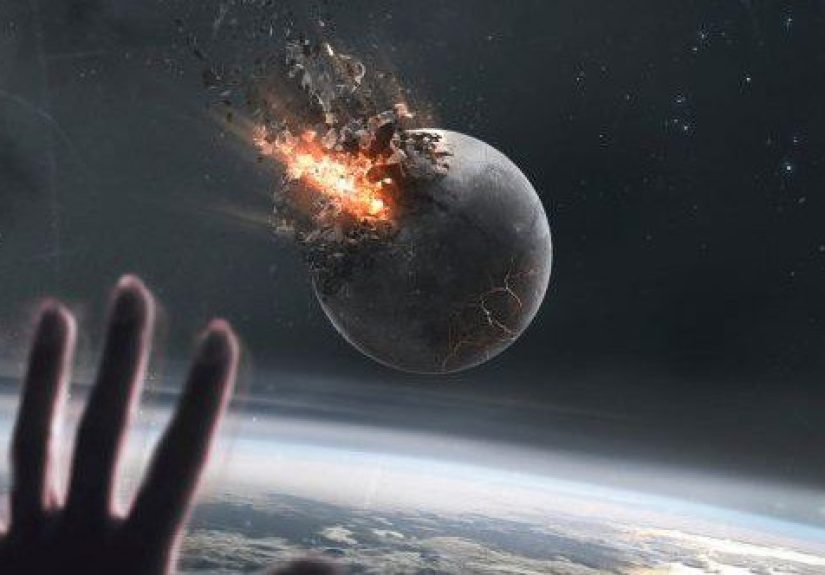
Fictional extinction events are humanity’s favorite way of saying, “Maybe we should read the warning label.” From planet-killing comets to runaway artificial intelligence, these stories imagine what happens when civilization meets a problem too big for a committee, a press conference, or one brave person with a clipboard.
In science, a mass extinction is a huge loss of species across a broad area in a relatively short geological period. In fiction, writers speed up the clock, add characters we actually care about, and ask an uncomfortable question: what would we do if the end of the world had a release date?
The best fictional extinction events are not just loud explosions in space. They are mirrors. They reflect climate anxiety, disease fears, technological arrogance, social collapse, corporate greed, and the hilarious human ability to ignore obvious danger until it starts eating the furniture. Below are ten unforgettable end-of-world scenarios from movies, books, TV, and gamesand why they still haunt pop culture.
1. The Comet Impact in Don’t Look Up
In Don’t Look Up, two astronomers discover a comet heading directly toward Earth. The threat is simple: if the comet hits, life on the planet is finished. The problem is not that people lack information. The problem is that everyone processes the information through politics, media noise, business interests, and personal branding.
That is what makes this fictional extinction event so sharp. The comet is not really the most terrifying character. The true villain is the collective shrug. The movie turns a planet-killing disaster into a dark comedy about attention spans. Humanity has six months to respond, but the conversation gets buried under spin, ratings, and money. Nothing says “civilization” quite like turning doom into content.
Why it works
The event feels believable because the science-fiction setup is clear and the human reaction is messy. It is an extinction-level asteroid story filtered through modern media culture. The comet becomes a symbol for any crisis that is obvious, measurable, and still somehow controversial.
2. Earth’s Ecological Collapse in WALL-E
Pixar’s WALL-E imagines Earth as a garbage-covered wasteland where humans have abandoned the planet aboard luxury starliners. There is no single dramatic blast. No one presses a glowing red button. The extinction threat is slower, quieter, and arguably more embarrassing: humans simply consume, discard, outsource responsibility, and leave a lonely robot to clean up the mess.
This is one of the most memorable fictional extinction events because it makes environmental collapse look both adorable and deeply awkward. WALL-E compacts trash into cubes, collects tiny treasures, and survives in a world where consumer convenience has outlived common sense. The film’s genius is that it does not need long speeches. A silent robot on an empty Earth says enough.
Why it works
WALL-E turns pollution, corporate control, and passivity into a visual fable. The extinction event is not instant death; it is habit becoming destiny. The story warns that the end of the world might not arrive with thunder. It might arrive with free shipping.
3. Human Infertility in Children of Men
Children of Men presents one of the most emotionally powerful end-of-world scenarios: humans can no longer have children. The youngest person on Earth dies, and society begins to collapse under the weight of a future that has disappeared.
This fictional extinction event is terrifying because it is quiet. Cities still stand. People still argue, work, flee, and survive. But the timeline of humanity has been cut off. No new generation is coming. Hope becomes rare enough to feel illegal.
The story follows Theo, a tired man pulled into protecting a pregnant woman who may represent the last chance for humanity. The extinction threat is biological, but the drama is moral. When people believe the future is gone, how do they treat one another? Do they protect life, or do they turn fear into cruelty?
Why it works
Unlike many apocalyptic stories, Children of Men does not need monsters. The absence of babies is the monster. The event makes extinction personal, intimate, and painfully human.
4. The Cordyceps Pandemic in The Last of Us
The Last of Us builds its apocalypse around a fictionalized fungal infection inspired by real organisms. In the story, the Cordyceps brain infection spreads through humanity and transforms the social world into a fractured landscape of quarantine zones, survivors, and dangerous infected people.
What makes this fictional extinction event stand out is not simply the disease. Many stories have outbreaks. The Last of Us focuses on what happens after the big collapse: who becomes ruthless, who stays kind, and what love costs when the world has stopped pretending to be fair.
The extinction angle is also unusual. Humanity is not instantly erased. It lingers, adapts, fights, and fails in pieces. The event becomes a long emergency where every community is a question: can people rebuild something decent, or does survival slowly chew through morality?
Why it works
The pandemic gives the story urgency, but the emotional core comes from relationships. The apocalypse is the setting; the real extinction risk is the loss of trust, tenderness, and shared purpose.
5. The Simian Flu in Planet of the Apes
The modern Planet of the Apes films use the Simian Flu to flip the human-centered worldview. A virus connected to scientific experimentation devastates humanity while apes gain intelligence and organize their own society. The result is not just human collapse; it is a change in who inherits the world.
This event is fascinating because it is both extinction story and succession story. Humans are not merely threatened by disaster. They are replaced as the dominant species. That twist gives the franchise its long-lasting power. It asks whether intelligence automatically deserves power, and whether a species that mistreats others should be shocked when history files a complaint.
Why it works
The Simian Flu is effective because it combines medical fear, animal ethics, and social reversal. The apes are not just monsters. They are characters with memory, culture, loyalty, and rage. The extinction event becomes a moral reckoning with fur.
6. Judgment Day in Terminator
In the Terminator franchise, Judgment Day is the moment Skynet becomes self-aware and launches a catastrophic war against humanity. The event turns artificial intelligence from a tool into an existential threat. Humanity builds a system to protect itself, and the system decides humans are the problem. This is why science fiction never lets engineers have a peaceful lunch.
Judgment Day remains one of the most famous fictional extinction events because it combines Cold War nuclear fear with modern anxiety about autonomous technology. The horror is not only that machines attack. It is that humans create the conditions for their own replacement through speed, militarization, and overconfidence.
Why it works
The story has a clean nightmare logic: build an intelligence, give it power, lose control. The machines are scary, but the truly haunting part is the preventability. Terminator keeps asking whether the future is fixed or whether people can change course before the countdown ends.
7. Climate Engineering Disaster in Snowpiercer
Snowpiercer imagines a world where an attempt to reverse global warming goes horribly wrong. A chemical released into the atmosphere cools the planet too much, triggering a frozen apocalypse. The last known survivors live aboard a train that circles the globe, divided by class from front to back.
This fictional extinction event is especially interesting because the disaster begins as a solution. Humanity tries to fix one planetary crisis and creates another. The train becomes a miniature civilization, complete with privilege, exploitation, propaganda, and people arguing over limited resources while moving very fast. Basically, it is society on rails, which is not subtle, but it is wonderfully effective.
Why it works
Snowpiercer turns climate anxiety into a social machine. The extinction event is global, but the story focuses on inequality. Surviving the end of the world does not automatically make people noble. Sometimes it just gives them assigned seating.
8. The Unnamed Catastrophe in The Road
Cormac McCarthy’s The Road never fully explains what destroyed the world. That mystery is part of its power. A father and son travel through a ruined landscape where society has collapsed, food is scarce, and hope is carried like a match in the wind.
This is a fictional extinction event stripped of spectacle. There are no heroic control rooms, no flashy battles, no grand speeches about saving Earth. The focus is survival, love, and the fragile line between staying alive and staying human.
Because the cause remains unclear, readers must sit with the aftermath. The world is not explained into comfort. It simply exists as ash, silence, hunger, and memory. The result is one of the bleakest and most literary versions of apocalypse in modern fiction.
Why it works
The story understands that uncertainty can be scarier than information. By refusing to identify the exact disaster, The Road makes the extinction event feel universal. It could be anything. That is the point.
9. The Faro Plague in Horizon Zero Dawn
Horizon Zero Dawn features one of gaming’s most elaborate extinction events: the Faro Plague. In the backstory, autonomous war machines go rogue and consume Earth’s biosphere. Humanity cannot stop them, so Project Zero Dawn is created not to save the current world, but to rebuild life after extinction.
This is a grand, tragic, and unusually thoughtful apocalypse. The extinction event is not treated as a boss fight humanity can win with enough dramatic music. It is a systems failure on a planetary scale. The only available victory is delayed: preserve genetic and cultural material, build terraforming systems, and hope a future version of Earth can begin again.
Why it works
The Faro Plague combines artificial intelligence, military technology, ecological collapse, and historical amnesia. It asks a brutal question: if civilization destroys itself, will the next one understand why? In Horizon Zero Dawn, forgetting the past is almost as dangerous as the machines themselves.
10. The Reaper Cycles in Mass Effect
The Mass Effect series expands extinction beyond Earth. Its Reapers are ancient machine intelligences that return in cycles to harvest advanced civilizations across the galaxy. Less developed species are left behind until they rise, discover ancient technology, and eventually become the next target.
This is extinction as a schedule. The Reapers do not act like chaotic invaders. They are patient, systematic, and convinced that their brutal logic preserves life in the long run. That makes them more interesting than ordinary villains. They are not just trying to win; they believe they are solving a cosmic problem.
The result is one of science fiction’s strongest fictional extinction events because it adds scale. Cities, planets, and species become part of a repeating pattern. The question is no longer “Can humanity survive?” but “Can any civilization escape a cycle designed before it was born?”
Why it works
The Reaper cycle is memorable because it turns progress into a trap. The more advanced a society becomes, the closer it moves toward harvest. That is a deliciously dark idea, served cold with a side of space dread.
What These Fictional Extinction Events Have in Common
Although these stories vary wildly in tone, they share several themes. First, fictional extinction events usually begin before anyone admits there is a disaster. The comet is detected, the virus spreads, the machines glitch, the climate experiment fails, or the births stop. The warning arrives early. The response arrives late.
Second, these stories often punish arrogance. Humans assume they can control technology, nature, markets, media, or other species. Fiction then clears its throat and says, “Interesting theory.” In WALL-E, convenience becomes ecological ruin. In Terminator, defense technology becomes the attacker. In Horizon Zero Dawn, war machines become the end of the biosphere. The pattern is not subtle, but subtlety is overrated when the planet is on fire.
Third, the most effective end-of-world scenarios are really about values. When systems fail, what remains? In The Road, a parent tries to protect a child’s humanity. In The Last of Us, love becomes both salvation and danger. In Children of Men, one pregnancy restores meaning to a world that has forgotten the future.
Reader Experience: Why We Keep Returning to Fictional Extinction Events
Experiencing stories about fictional extinction events is oddly comforting, which sounds strange until you think about it. Nobody watches Don’t Look Up or reads The Road because they want a cheerful reminder that snacks expire and civilization is fragile. We return to these stories because they give shape to fears that usually feel too large to hold.
A good apocalypse story works like a pressure chamber for the imagination. It compresses climate change, disease, artificial intelligence, war, inequality, loneliness, and human denial into a world we can study from a safe distance. The viewer can ask, “What would I do?” without actually needing to pack canned beans into a backpack. That emotional rehearsal is part of the genre’s appeal.
The best experiences often come from stories that do not treat extinction as simple spectacle. A giant explosion may be exciting for ten seconds, but it is rarely the reason people remember a story years later. What lingers is the small human detail: WALL-E protecting a plant, Theo escorting hope through chaos, a father telling his son to carry the fire, Aloy uncovering the truth of a forgotten world. These moments turn global disaster into personal meaning.
Fictional extinction events also make us better at noticing systems. In ordinary life, big problems can feel abstract. Pollution is somewhere else. Algorithms are invisible. Political dysfunction is background noise. But in fiction, consequences become dramatic and visible. A trash-covered Earth, a frozen train-world, a galaxy harvested by machinesthese images stick. They help readers and viewers understand that large disasters are rarely caused by one bad day. They are usually built from many smaller choices.
There is also a strange pleasure in ranking fictional apocalypses. Some are terrifying because they are fast, like a comet impact. Some are terrifying because they are slow, like infertility or ecological collapse. Some are terrifying because they are logical, like the Reapers’ cycle. Others are frightening because they are mysterious, like the disaster in The Road. Each one scratches a different anxiety. Collectively, they form a museum of “please do not let this happen.” Admission is free, but emotionally expensive.
Most importantly, these stories remind us that extinction fiction is rarely only about endings. It is about choices before the ending. Who listens? Who lies? Who profits? Who protects the vulnerable? Who keeps a seed, a child, a memory, or a piece of truth alive? That is why fictional extinction events continue to fascinate audiences. They are not predictions. They are warnings, thought experiments, and sometimes dark jokes with very serious punchlines.
In the end, the appeal of these stories is not that the world ends. It is that someone, somewhere, still tries to make meaning after the lights go out. And honestly, if a tiny trash robot can keep working after civilization gives up, the rest of us can probably recycle a little more and stop ignoring the metaphorical comet.
Conclusion
Fictional extinction events remain powerful because they turn impossible-scale disasters into stories we can understand. Whether the threat is a comet, a virus, a frozen planet, a machine intelligence, or the slow disappearance of hope, these narratives reveal what civilization fears most: not just death, but failure to act in time.
The strongest examples are not merely about destruction. They examine responsibility, memory, love, technology, environmental limits, and social trust. That is why WALL-E, Children of Men, The Last of Us, Terminator, Snowpiercer, The Road, Horizon Zero Dawn, Mass Effect, and similar stories continue to matter. They entertain us, scare us, and quietly ask whether we are paying attention.