Table of Contents >> Show >> Hide
- Before You Copy These Finished Attics: The Unsexy Stuff That Makes Them Work
- 1) The “Paint It All” Light-Box Attic Office + Guest Suite
- 2) The Skylight-Stuffed Sleep Sanctuary
- 3) The Dormer-Boosted Primary Suite That Lets You Actually Stand Up
- 4) The Twin-Bed Attic Guest Loft That Feels Like a Boutique Inn
- 5) The Wallpaper-Wrapped Whimsy Room (Yes, Even on the Ceiling)
- 6) The Bookish Attic Library + Reading Nook With Eaves Storage
- 7) The Playroom + Homework Loft That Gives Your Living Room Its Dignity Back
- 8) The Attic Bathroom Glow-Up (Clawfoot Tub Optional, Drama Encouraged)
- 9) The Movie Den Under the Rafters
- 10) The Maker’s Loft: Craft Studio With Built-In Organization
- Wrapping It Up
- Bonus: Real-World Finished Attic Lessons (About of “Wish I’d Known That”)
- Lesson #1: The stairs are the project, not an accessory
- Lesson #2: Temperature control is where good attics separate from sad attics
- Lesson #3: Storage is not optionalyour attic will become clutter’s favorite vacation spot
- Lesson #4: Lighting needs layers (and the ceiling fixture can’t do it alone)
- Lesson #5: Measure furniture like you’re trying to win a lawsuit
- Lesson #6: Plan outlets, internet, and sound before the walls close
The attic is basically your house’s “forgotten bonus level.” It’s where old holiday decorations go to retire, where a single ski boots waits for its lost twin,
and where spiders run a tiny (but thriving) co-working space.
But when you finish an attic the right way, it turns into the most charming square footage you owncozy, character-rich, and suspiciously good
at making guests say, “Wait… this used to be an attic?”
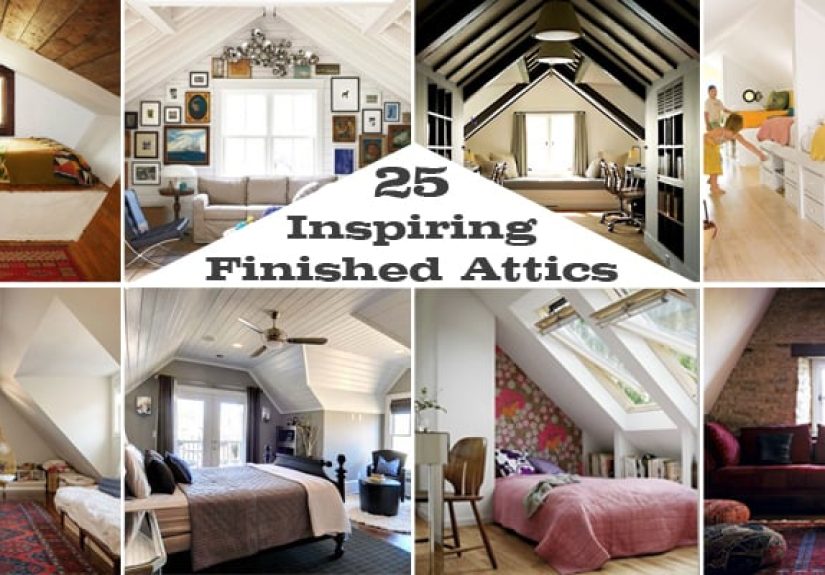
Below are 10 inspiring finished atticsplus the practical (read: unglamorous but essential) design moves that make an attic conversion feel
bright, comfortable, and worth every bead of drywall dust.
Before You Copy These Finished Attics: The Unsexy Stuff That Makes Them Work
1) Start with access, exit routes, and headroom (a.k.a. don’t build a beautiful fire trap)
A finished attic isn’t just “pretty storage.” Once it becomes real living space, you’re usually dealing with rules about safe access and safe escape.
That often means a proper staircase and a second way out (like an egress window), plus enough clearance so you’re not climbing stairs like you’re entering
a submarine. The fastest way to ruin an attic dream is to ignore this until after you’ve fallen in love with the idea of a freestanding tub under the rafters.
2) Comfort is not optional: insulation + ventilation are a package deal
Attics get dramatic about temperature. They can swing from “toasty” to “surface of the sun” and back again in a single day. The fix isn’t just insulation.
Good attic projects treat insulation and ventilation like peanut butter and jelly: separate, disappointing; together, magical.
If ventilation is ignored, moisture can build up and cause long-term problems. In plain English: a finished attic should feel like a room, not a seasonal mood swing.
Air-sealing matters too (yes, it’s boring; yes, it’s worth it). Some building science pros recommend simple, proven assemblies like airtight layers paired with
common insulation types when appropriatebecause “fancy” isn’t always “better,” and your future self wants lower energy bills, not a dissertation.
3) Light is your best “square footage multiplier”
If your attic currently feels like a dim storage cave, don’t panic. The best finished attics cheat: they add or maximize daylight so the sloped ceiling feels
taller and the whole space feels intentional. Skylights/roof windows, dormers, and well-placed lighting (hello, wall sconces) can make a small attic feel
surprisingly openwithout actually moving your roofline with sheer force of will.
4) Design around the weird angles instead of fighting them
An attic’s superpower is also its personality flaw: sloped ceilings and tight corners. Instead of cramming standard furniture where it doesn’t belong, great
designs lean into low platforms, built-ins, and “knee wall” storage. Translation: let the short walls be storage zones, and keep your walking paths in the tallest
part of the room so you’re not doing a daily head-bonk commute.
1) The “Paint It All” Light-Box Attic Office + Guest Suite
One of the smartest ways to make an attic feel bigger is the simplest: stop chopping the paint line. Color-drenchingpainting walls, ceiling,
trim, and even built-ins the same shadeturns confusing angles into a single, airy envelope.
This approach is especially brilliant for attic offices. Your Zoom background looks calm and curated, not like you’re broadcasting from a triangular geometry
problem.
Steal this idea
- Pick one light, warm neutral and commit. The angles will visually “disappear.”
- Add a guest-ready sleeper sofa or daybed so the space earns its keep.
- Ground the brightness with a few darker accents so it doesn’t feel like a marshmallow factory.
2) The Skylight-Stuffed Sleep Sanctuary
If you want instant attic magic, chase daylight. A bedroom with skylights (or roof windows) can feel taller, fresher, and way less “upstairs storage.”
Pair that with a low-profile bed, and suddenly the slope isn’t a problemit’s a vibe.
The trick is to keep the center of the room clear, tuck furniture into the edges, and let the light do the heavy lifting. Bonus points for wall sconces so you
don’t need nightstands eating up precious floor space.
Steal this idea
- Use a low platform bed or floor-hugging frame under the slope.
- Choose layered lighting: sconces + a central fixture + a soft lamp in a reading corner.
- Go light on the ceiling color to bounce daylight deeper into the room.
3) The Dormer-Boosted Primary Suite That Lets You Actually Stand Up
Dormers are the attic’s version of “opening the curtains,” except the curtains are your roof and the stakes are your spine. A dormer can bring in daylight and
make the space feel far more livablesometimes without adding official square footage, but with a big payoff in comfort and usable layout.
Design-wise, dormers create natural zones: a window seat, a vanity, or a compact desk becomes an obvious “yes” instead of an awkward “maybe if I squint.”
Steal this idea
- Turn the dormer niche into a window seat with storage (books, blankets, secrets).
- Keep tall furniture (armoires, wardrobes) where ceiling height is best.
- Use one consistent wall color to calm the roofline transitions.
4) The Twin-Bed Attic Guest Loft That Feels Like a Boutique Inn
A big bed in an attic sounds romantic until you’re crab-walking around it because the walls slope in like they’re trying to cuddle you.
Two matching twin beds often work better: push them against the shorter walls and keep the walkway in the tallest section of the room.
Then apply guest-room logic: make it easy, comfortable, and slightly over-prepared. Your guests should feel like they’re staying in a thoughtful little hideaway,
not being punished for visiting during the holidays.
Steal this idea
- Matching bedding creates instant “designed” energy with minimal effort.
- Offer a luggage bench or shelf so suitcases don’t live on the bed.
- Use blackout shades if the attic gets early-morning sun (unless you’re running a “sunrise bootcamp” retreat).
5) The Wallpaper-Wrapped Whimsy Room (Yes, Even on the Ceiling)
Sloped surfaces can look chaotic when each plane feels separate. One of the most effective tricks is also the most fun:
run wallpaper up the walls and across the ceiling so the whole attic becomes a single, cohesive shell.
This is especially good for guest rooms, kids’ rooms, and creative spacesanywhere you want delight. A small attic can handle a bold pattern because it’s not
competing with the rest of your house. It’s its own little world. Like Narnia, but with better HVAC.
Steal this idea
- Pick a smaller-scale pattern to avoid visual overload in tight quarters.
- Balance it with simple furniture and light floors to keep the room airy.
- Use the tallest wall section for art or a gallery wall so it doesn’t feel too busy.
6) The Bookish Attic Library + Reading Nook With Eaves Storage
Some spaces are born to be libraries. Attics are top of the list, right after “everywhere you can fit another bookshelf.” A finished attic library works because
the sloped ceiling naturally creates cozy zonesperfect for a reading chair, a small table, and the kind of quiet you can’t buy in stores.
The power move is eaves storage: built-in cabinets along the low edges keep clutter hidden while leaving the central area open. It’s the difference between
“charming retreat” and “book avalanche waiting to happen.”
Steal this idea
- Put closed storage in the low zones; reserve open shelves for the tall wall.
- Add a reading light that doesn’t rely on ceiling height (sconces and floor lamps are your friends).
- Layer textiles: a rug, a throw, and a soft chair turn “attic” into “ahhh.”
7) The Playroom + Homework Loft That Gives Your Living Room Its Dignity Back
If your main floor currently looks like a toy store exploded, finishing the attic as a kid zone is a strategic masterpiece.
A playroom upstairs absorbs noise, clutter, and chaoswhile also creating a dedicated homework station that doesn’t compete with the TV.
The best versions include built-in storage (because kids produce stuff the way clouds produce rain), plus a durable floor and wipeable finishes.
And yes, you can still make it cute. Function and charm can be friends.
Steal this idea
- Use labeled bins or drawers in the low eaves so cleanup is actually possible.
- Add a “calm corner” with books and pillows for breaks and quiet time.
- Install enough outlets for lamps, chargers, and future tech you don’t even own yet.
8) The Attic Bathroom Glow-Up (Clawfoot Tub Optional, Drama Encouraged)
A bathroom in the attic feels wildly indulgentlike you’ve secretly upgraded your house to “boutique hotel.”
When done well, it turns awkward rooflines into architectural charm. A tub under a window? That’s not a featurethat’s a life choice.
The key is planning: plumbing runs, ventilation, and moisture control matter more here than in almost any other attic scenario.
Once those are handled, the fun begins: timeless tile, warm lighting, and a layout that doesn’t force you to brush your teeth while doing yoga.
Steal this idea
- Use a lighter palette to keep the bathroom from feeling tight.
- Go big on mirrors to multiply light in a space with angles.
- Choose fixtures that feel intentionalattic bathrooms should look designed, not “we found this in the basement.”
9) The Movie Den Under the Rafters
Attics make excellent media rooms because they’re naturally tucked away. That means less sound bleed, fewer interruptions, and no one complaining that your
“one episode” turned into a full season.
The best finished attic media rooms keep seating low (sectionals, loungers, floor cushions), control light (shades or blackout curtains), and embrace the slope
by placing the screen on the tallest wall.
Steal this idea
- Use a projector if wall space is limitedbig screen, small footprint.
- Choose darker, warmer wall colors for a theater feel (but keep ceilings lighter if it’s low).
- Add hidden storage so controllers and remotes don’t become attic folklore.
10) The Maker’s Loft: Craft Studio With Built-In Organization
Creative work loves two things: natural light and places to put stuff. A finished attic craft room can deliver bothespecially when you build storage right into
the low zones and keep your work surface near windows or skylights.
The real win? You can leave projects out without the dining table becoming a permanent glue-and-glitter exhibit.
Your future self will thank you, and your vacuum will finally stop eating sequins.
Steal this idea
- Use built-in drawers and cabinets in knee-wall areas for supplies.
- Pick a big, sturdy worktable (or a wall-mounted fold-down if space is tight).
- Plan task lighting like a professional: bright, focused, and not directly in your eyeballs.
Wrapping It Up
The best finished attics don’t pretend they’re regular rooms. They celebrate the angles, use light strategically, hide storage in the “weird” parts, and handle
the serious stuffaccess, insulation, ventilation, and moistureso the space feels comfortable year-round.
Choose one clear purpose (sleep, work, play, read, sweat, soak), then design around what your attic already wants to be. When you do, you don’t just gain
square footageyou gain your house’s coziest, most character-filled “extra” space.
Bonus: Real-World Finished Attic Lessons (About of “Wish I’d Known That”)
People who finish an attic tend to learn the same lessonsusually right after buying furniture that doesn’t fit up the stairs. To save you from that particular
rite of passage, here are the most common “experience-based” takeaways from homeowners, designers, and remodel veterans.
Lesson #1: The stairs are the project, not an accessory
Attic stairs aren’t just a way to get up there; they control how the space functions every day. If the staircase is too steep, too narrow, or awkwardly placed,
the attic becomes a “sometimes room.” People start avoiding it the way they avoid updating their passwords. A comfortable staircase is what turns an attic into
a true bedroom, office, or hangout.
Lesson #2: Temperature control is where good attics separate from sad attics
A finished attic should not require seasonal negotiations (“We’ll use it again in October.”). If you want year-round comfort, you typically need a plan for
insulation, ventilation, and HVAC. Homeowners who skip this often end up with a gorgeous room that’s either too hot, too cold, or oddly humidlike a tropical
greenhouse that happens to have a desk in it.
Lesson #3: Storage is not optionalyour attic will become clutter’s favorite vacation spot
When people finish an attic, they imagine calm. Then real life arrives with suitcases, board games, extra bedding, seasonal decor, and approximately 900 tiny
objects that have no home. Built-ins along the eaves, knee-wall cabinets, and under-bench drawers are what keep a finished attic from slowly sliding back into
“fancy storage.” If you’re choosing between a bigger vanity and more closed storage, storage usually wins long-term.
Lesson #4: Lighting needs layers (and the ceiling fixture can’t do it alone)
Attics have angles that cast shadows in weird places. The fix is layered lighting: overhead for general glow, sconces or lamps for comfort, and task lighting
for work. People who do this right say the attic feels “intentional.” People who don’t say things like, “It’s cute, but it’s kind of cave-y at night.”
Lesson #5: Measure furniture like you’re trying to win a lawsuit
In attic rooms, the floor area can look big on paper, but the usable volume is what matters. The winning strategy is to map out the “stand-up zone” (highest
ceiling area) and place circulation there. Low beds, low seating, built-in desks, and custom storage often outperform standard pieces. Also: measure doorways,
stair turns, and the attic opening. The couch that “should fit” will absolutely attempt to prove you wrong.
Lesson #6: Plan outlets, internet, and sound before the walls close
A finished attic used as an office or media room needs power and connectivity. Homeowners who plan this early end up with clean walls and thoughtful outlet
placement. Homeowners who don’t end up with extension cords doing interpretive dance across the floor. If you’re adding a desk, add outlets. If you’re adding a
TV or projector, think about wiring and speaker placement. Future-you loves a clean setup.
The good news? Once those lessons are baked in, a finished attic becomes the space everyone fights overquiet for work, cozy for guests, magical for kids,
and weirdly perfect for reading during thunderstorms. (Attics are dramatic like that.)