Table of Contents >> Show >> Hide
- 1. Alexander the Great’s Corpse Became a Prize of Empire
- 2. Oliver Cromwell Was Executed Three Years After He Died
- 3. Galileo’s Fingers and Tooth Became Scientific Relics
- 4. Jeremy Bentham Turned Himself Into an “Auto-Icon”
- 5. Thomas Paine’s Bones Took a Trip and Then Disappeared
- 6. Grave Robbers Tried to Kidnap Abraham Lincoln
- 7. Eva Perón Spent Years as a Secret Political Prisoner
- 8. Albert Einstein’s Brain Went on a Decades-Long Journey
- 9. Che Guevara Was Hidden Beneath an Airstrip
- 10. Charlie Chaplin’s Corpse Was Held for Ransom
- Why Famous Corpses Keep Having Adventures
- Experiencing the Strange Afterlives of History’s Famous Dead
- Conclusion
Death is usually supposed to end a person’s travel plans. History, however, has repeatedly failed to respect that arrangement.
Some famous historic corpses have been stolen for ransom. Others have been exhumed for political revenge, smuggled across borders, divided into collectible relics, hidden beneath airstrips, or carried around in containers by scientists. One celebrated philosopher even arranged to remain on display in his own clothes, proving that some people can still make an entrance nearly two centuries after their funeral.
These bizarre posthumous journeys are more than macabre trivia. They reveal how societies use human remains to express power, devotion, scientific curiosity, political fear, and sometimes plain old greed. A corpse may no longer speak, but the living can turn it into a symbol, a trophy, a shrine, evidence, merchandise, or a very inconvenient hostage.
Here are 10 strange adventures of famous historic corpses that demonstrate one unsettling truth: for some people, the afterlife came with an extremely complicated itinerary.
1. Alexander the Great’s Corpse Became a Prize of Empire
Alexander the Great spent his life conquering enormous territories, so perhaps it is fitting that control of his body became another geopolitical struggle after his death in Babylon in 323 BCE.
Ancient accounts differ on some details of the original burial plan, but Alexander’s elaborate funeral procession became entangled in the rivalry among his successors. Ptolemy, one of Alexander’s former generals and the future ruler of Egypt, gained possession of the corpse and diverted it to Egypt. Alexander was first buried in Memphis and later transferred to Alexandria, the city that carried his name.
This was no ordinary case of changing funeral arrangements. Possessing the dead conqueror had enormous symbolic value. In a world where Alexander’s generals were carving his empire into competing kingdoms, the body of the former king could help provide political legitimacy. Even dead, Alexander was useful.
His tomb in Alexandria eventually became a celebrated destination. Roman leaders reportedly visited it, including Augustus. Then the trail went cold. By late antiquity, the location of the tomb disappeared from reliable historical knowledge. Archaeologists and historians have searched for it ever since.
Alexander conquered much of the known world, traveled to Egypt after death, and then managed one final trick: losing himself for more than a thousand years.
2. Oliver Cromwell Was Executed Three Years After He Died
Most people cannot be late to their own execution. Oliver Cromwell managed it by approximately three years.
Cromwell, the Lord Protector who ruled England after the execution of King Charles I, died in 1658 and received an elaborate funeral. He was buried in Westminster Abbey. Then the monarchy returned under Charles II, and royalists decided that natural death had allowed Cromwell to escape punishment far too conveniently.
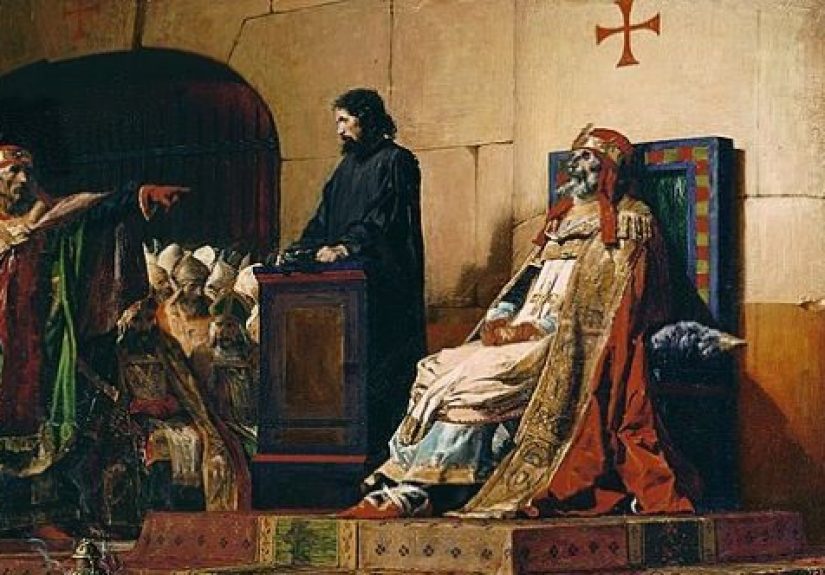
In 1661, Cromwell’s corpse was exhumed along with those of other prominent regicides. The bodies were subjected to a posthumous execution at Tyburn. Cromwell was then beheaded, and his head was mounted high above Westminster Hall as a warning against challenging the monarchy.
After years exposed to London weather, the head disappeared from public view. Its subsequent journey involved private owners, collectors, exhibitions, arguments over authenticity, and scientific examination. What had begun as a political warning gradually became a historical curiosity.
In 1960, after roughly three centuries of remarkably poor postmortem privacy, the head believed to be Cromwell’s was finally buried at Sidney Sussex College in Cambridge, where he had once studied.
It is difficult to imagine a stronger argument for leaving clear instructions in your will.
3. Galileo’s Fingers and Tooth Became Scientific Relics
Galileo Galilei spent his life encouraging people to observe evidence carefully. After his death, admirers took that enthusiasm in an unexpectedly literal direction.
Galileo died in 1642. In 1737, when his remains were transferred to a grander tomb in Florence’s Basilica of Santa Croce, several people attending the ceremony removed parts of his body. Among the pieces taken were fingers, a tooth, and a vertebra.
The relics then followed separate paths. Galileo’s middle finger eventually became a museum object in Florence. A vertebra went to the University of Padua. Two other fingers and a tooth disappeared from public knowledge for generations.
Then came a wonderfully strange development. In 2009, the missing pieces resurfaced after an auction. An unidentified container purchased by a collector was connected to historical records describing Galileo’s lost remains, and the objects were returned to the care of the museum now known as Museo Galileo.
Today, visitors can encounter some of the astronomer’s preserved body parts alongside artifacts associated with his scientific work. There is a certain dark irony in seeing Galileo’s finger displayed as a relic. The man famous for pointing humanity toward the heavens is now, in part, pointed at by museum visitors.
4. Jeremy Bentham Turned Himself Into an “Auto-Icon”
English philosopher Jeremy Bentham did not merely make funeral plans. He essentially designed his own museum exhibit.
Bentham, a major figure in the development of utilitarian philosophy, died in 1832. His instructions called for his body to be publicly dissected and then preserved. The result became known as his “Auto-Icon.”
His skeleton was articulated, padded to resemble a human figure, dressed in Bentham’s own clothing, and seated inside a cabinet. The original attempt to preserve his head did not produce a particularly lifelike result, so the displayed figure was eventually given a wax head. Bentham’s real preserved head was stored separately for conservation and security reasons.
The Auto-Icon eventually came into the possession of University College London, where it remains one of the world’s most recognizable displays of human remains.
Stories have long circulated claiming that Bentham is formally recorded as attending university meetings. Such tales are entertaining but should not be confused with the documented history of the Auto-Icon itself.
Still, Bentham achieved something few philosophers manage: students who would never voluntarily read a large volume of moral philosophy may happily go out of their way to see the philosopher sitting in a glass case.
5. Thomas Paine’s Bones Took a Trip and Then Disappeared
Thomas Paine helped inspire revolution with words such as those in Common Sense. Unfortunately, the fate of his remains became anything but sensible.
Paine died in New York in 1809 and was buried on his property in what is now New Rochelle. About a decade later, English political writer William Cobbett, who had once criticized Paine but later became an admirer, decided that the revolutionary thinker deserved greater recognition in England.
Cobbett dug up Paine’s remains and transported the bones across the Atlantic. His plan was to build support for a grand memorial and proper reburial. The public enthusiasm he expected never materialized.
Paine’s bones remained in Cobbett’s possession. After Cobbett died, the remains were dispersed or lost amid a fog of claims, sales, rumors, and supposed fragments. Over the years, various people have claimed to possess pieces of Paine, but the full skeleton has never been reliably recovered.
The man whose writings crossed oceans and helped reshape nations ended up crossing the Atlantic one final time in a box, only to vanish into one of history’s strangest missing-person cases.
Technically, of course, the person was no longer missing. The bones were.
6. Grave Robbers Tried to Kidnap Abraham Lincoln
Abraham Lincoln’s final journey began with one of the most famous funeral trains in American history, carrying his body from Washington, D.C., toward burial in Springfield, Illinois. Even after that national period of mourning, his remains were not allowed to rest without drama.
In 1876, criminals connected to a counterfeiting operation plotted to steal Lincoln’s body from his tomb. The plan was audacious: take the remains, demand a large ransom, and reportedly use the corpse as leverage to secure the release of an imprisoned engraver valuable to the counterfeiting business.
The attempted theft was disrupted. But the plot created a serious security problem. Lincoln’s coffin was subsequently concealed and moved within the tomb complex as caretakers tried to protect it from future thieves.
Eventually, the burial arrangements became much more permanent. In 1901, Lincoln’s coffin was placed in a steel cage and buried beneath a massive amount of concrete.
The Great Emancipator had survived political enemies, civil war, assassination, a long funeral journey, and finally an attempted posthumous kidnapping. His eventual solution to grave security was less poetic than the Gettysburg Address but undeniably effective: a great deal of concrete.
7. Eva Perón Spent Years as a Secret Political Prisoner
Few famous corpses have been treated as politically dangerous for as long as that of Eva Perón.
Evita, the immensely influential wife of Argentine president Juan Perón, died in 1952 at age 33. Her body was expertly embalmed and became an object of intense public devotion. For supporters of the Perón movement, she was already approaching the status of a secular saint.
That devotion made her corpse a political problem after Juan Perón was overthrown in 1955. The new authorities feared that Evita’s body could become a rallying point. Her remains were removed and hidden while officials struggled with a bizarre question: what do you do with a corpse that still has political power?
Eventually, she was secretly buried in Milan under the false name Maria Maggi. In 1971, the body was exhumed and returned to Juan Perón, then living in exile in Madrid. After further political upheaval, Evita finally returned to Argentina in 1974.
Her remains now rest in the Duarte family tomb in Buenos Aires’ Recoleta Cemetery, protected far more securely than an ordinary burial.
Evita’s strange journey through Argentina, Italy, Spain, and back to Argentina shows that governments can exile a person after deathbut they cannot necessarily exile a symbol.
8. Albert Einstein’s Brain Went on a Decades-Long Journey
Albert Einstein died in 1955, but one part of him immediately began a surprisingly complicated scientific road trip.
During Einstein’s autopsy, pathologist Thomas Harvey removed the physicist’s brain without initial permission from the family. Permission for research was obtained afterward from Einstein’s son, with the expectation that legitimate scientific study would result.
Harvey preserved and divided the brain into numerous blocks and prepared tissue samples. Pieces were distributed to researchers over the years, while Harvey retained much of the material himself. The story later became famous partly because the brain spent decades moving with him rather than remaining inside a conventional academic collection.
Journalists eventually tracked down Harvey and the preserved material. Portions of Einstein’s brain later entered medical museum collections, including specimens associated with Philadelphia’s Mütter Museum and material transferred to the National Museum of Health and Medicine.
Researchers have repeatedly studied the tissue in hopes of discovering an anatomical explanation for Einstein’s extraordinary abilities. Such interpretations remain scientifically controversial; finding an unusual feature in one famous brain does not automatically explain genius.
Still, the physical journey is remarkable. Einstein spent his life reshaping our understanding of space and time. His brain then spent decades demonstrating that even human anatomy can have a very strange relationship with both.
9. Che Guevara Was Hidden Beneath an Airstrip
After revolutionary leader Ernesto “Che” Guevara was captured and killed in Bolivia in 1967, his body immediately became part of a political struggle over memory.
The corpse was taken to Vallegrande and publicly displayed, allowing journalists and local residents to see and photograph it. His hands were removed for identification purposes. Then the rest of his body disappeared.
Bolivian authorities gave conflicting accounts about what had happened. The uncertainty was useful: a known grave could have become a place of pilgrimage for Guevara’s supporters.
For nearly three decades, the burial location remained a mystery. In the 1990s, new information pointed investigators toward an area near the Vallegrande airstrip. In 1997, a forensic team excavated a burial containing several sets of remains, including a handless skeleton identified as Guevara’s.
The remains were transferred to Cuba and buried with honors in Santa Clara, a city closely associated with Guevara’s role in the Cuban Revolution.
The attempt to prevent a shrine ultimately produced two powerful sites of memory: the places in Bolivia connected with his death and disappearance, and the mausoleum in Cuba where his remains were finally laid to rest.
10. Charlie Chaplin’s Corpse Was Held for Ransom
Charlie Chaplin built a career around stories in which an ordinary person is thrown into absurd situations. Months after his death, his own corpse became the center of a plot so strange that it could have belonged to a very dark comedy.
Chaplin died in Switzerland in December 1977 and was buried near his home. In March 1978, grave robbers dug up his coffin and stole the body. The thieves contacted Chaplin’s widow, Oona, and demanded money for its return.
The family did not simply pay. Police investigated the ransom communications and eventually arrested the men responsible. Chaplin’s body was recovered after being hidden in a field and was returned to the cemetery.
This time, authorities and the family took extra precautions. The coffin was reburied with reinforced protection designed to discourage another kidnapping attempt.
The crime failed as a business model, which may be the least surprising part of the story. Stealing the body of one of the most recognizable entertainers in history created an obvious practical difficulty: there was only one possible customer, and she was cooperating with the police.
Why Famous Corpses Keep Having Adventures
These 10 stories span more than two thousand years, yet the motives surrounding famous human remains are remarkably consistent.
Power Does Not Always End at Death
Alexander the Great, Oliver Cromwell, Eva Perón, Abraham Lincoln, and Che Guevara all demonstrate that a corpse can remain politically significant. Supporters may view remains as sacred symbols, while opponents may see them as threats. Possessing, hiding, displaying, or destroying a body can therefore become an act of political theater.
Fame Creates Relics
Galileo’s fingers and Einstein’s brain reveal another impulse: the belief that physical pieces of extraordinary people might somehow contain the secret of their greatness. Sometimes that curiosity is religious in character. Sometimes it is scientific. Sometimes it is collecting with a more respectable hat.
A Grave Is Not Always the End of the Story
Thomas Paine and Charlie Chaplin demonstrate the vulnerability of even famous burials. One was exhumed by an admirer with grand plans; the other was stolen by criminals with financial plans. Neither scheme worked particularly well.
The larger lesson is that burial customs are not simply about disposing of remains. They are about identity, memory, ownership, grief, politics, and the human desire to keep important people physically connected to the world they left behind.
Experiencing the Strange Afterlives of History’s Famous Dead
Reading about famous historic corpses can feel like entering a particularly eccentric side corridor of history, but the subject becomes even more revealing when approached as a form of cultural travel. Museums, tombs, memorials, and former burial sites allow visitors to see how different societies decide who deserves to be rememberedand how.
A useful first rule is to arrive with curiosity rather than a checklist of macabre attractions. Jeremy Bentham’s Auto-Icon, for example, is interesting not merely because a skeleton is sitting inside a cabinet. The experience becomes richer when you understand Bentham’s ideas about education, anatomy, utility, and public benefit. The preserved body is part of a philosophical argument about what a person might contribute after death.
The same principle applies in Florence. Seeing relics associated with Galileo can initially seem like an odd collision between science and medieval-style devotion. That tension is precisely what makes the experience valuable. Visitors can ask why a culture that celebrated rational investigation also treated pieces of a scientist’s body almost like sacred objects. History rarely sorts itself into the neat categories found on library shelves.
At major graves and mausoleums, pay attention to security and architecture. Lincoln’s tomb, Evita’s family crypt, and memorial sites associated with political leaders are not simply places containing remains. Their design reflects earlier conflicts over access, ownership, vandalism, public devotion, and political meaning. Thick walls, controlled entrances, and reinforced burial chambers often tell a story before a guide says a word.
It is also worth comparing places where a body is present with places defined by absence. Alexander the Great’s lost tomb creates fascination precisely because nobody can point with confidence and say, “Here he is.” Thomas Paine’s missing bones transform a grave into a mystery. In these cases, absence becomes part of the memorial.
For travelers, researchers, and history enthusiasts, the best experience often comes from following a corpse’s route rather than visiting a single location. Eva Perón’s posthumous journey connects Buenos Aires, Milan, and Madrid. Einstein’s brain links a hospital autopsy, private custody, laboratories, researchers, and museum collections. Che Guevara’s story connects execution sites, a hospital laundry room, a secret burial area, forensic excavation, and a national mausoleum.
That approach turns strange corpse stories into something deeper than a collection of bizarre facts. Each stop reveals a different group trying to control the meaning of the same dead person.
Visitors should also remember that human remains are not ordinary museum props. Even when the person died centuries ago, ethical questions remain. Who had the right to remove a body part? Was consent given? Should remains be displayed? Does scientific value justify keeping human tissue? Different cultures and institutions answer these questions differently, and modern standards continue to evolve.
Finally, resist the temptation to believe every sensational legend. Famous corpses attract folklore at approximately the same rate that abandoned castles attract ghost stories. Distinguish documented events from disputed claims, especially when tales involve secret body parts, miraculous preservation, curses, or dramatic last words.
The most rewarding experience is not simply thinking, “That is incredibly weird,” although that reaction is perfectly understandable. It is realizing that these adventures reveal the living more clearly than the dead. A society’s treatment of a famous corpse exposes its fears, loyalties, ambitions, scientific assumptions, and ideas about memory. The bodies may be silent, but the journeys surrounding them remain remarkably talkative.
Conclusion
The strange adventures of famous historic corpses prove that death does not always provide a peaceful exit from public life. Alexander the Great became a prize in a struggle for imperial legitimacy. Cromwell was punished after he was already dead. Galileo was divided into relics. Bentham became his own permanent exhibit. Paine vanished bone by bone. Lincoln nearly became a criminal bargaining chip. Evita was secretly transported across countries. Einstein’s brain wandered through decades of scientific curiosity. Che Guevara disappeared beneath an airstrip. Charlie Chaplin was kidnapped from his own grave.
Behind the bizarre details lies a serious historical pattern. Famous bodies matter because people invest them with meaning. They can represent political authority, national identity, intellectual genius, revolutionary hope, religious-style devotion, or financial opportunity. The dead themselves have no say in the matterwhich may be the strangest part of all.
Note: Some ancient accounts and disputed details surrounding famous remains are uncertain. Where the historical record is incomplete, this article distinguishes documented events from traditions, later claims, and unresolved mysteries.