Table of Contents >> Show >> Hide
- Quick context: Reconstruction tried to build a new Americaand then got undercut
- Table of contents
- 18 ways racism was kept alive after the Civil War
- 1) Blocking land ownership and breaking the “new start”
- 2) Black Codes: freedom with fine print
- 3) Vagrancy laws: making “existing” a crime
- 4) Labor contract traps and apprenticeship schemes
- 5) Sharecropping: “independence,” sponsored by debt
- 6) The crop-lien system: the ledger that always “wins”
- 7) Debt peonage: coercion dressed as a contract
- 8) Convict leasing: slavery’s loophole in action
- 9) Chain gangs and prison farms: punishment as policy
- 10) White supremacist terror groups and political intimidation
- 11) Racial terror lynching: public violence as “social control”
- 12) Voter suppression: poll taxes, tests, and “rules” made to fail
- 13) Court decisions that narrowed Black citizenship in practice
- 14) The federal retreat after 1877: “home rule” for injustice
- 15) Jim Crow segregation: the law of everyday life
- 16) Education inequality: separate, unequal, and deliberate
- 17) Housing segregation: covenants, redlining, and locked-in inequality
- 18) The “Lost Cause” and cultural propaganda: rewriting reality
- Lived experiences: what all this felt like on the ground (extra )
- Conclusion: why this history still matters
The Civil War ended slavery, not racism. If that sounds obvious, it’s because history has spent
160 years trying to make it sound less obviouslike it was all an unfortunate “misunderstanding”
that could be fixed with a handshake and a new amendment.
In reality, the period after 1865 was a master class in how a society can change the job title
(from “enslaved” to “free”) while keeping the management structure, the pay scale, and the rules
of who gets to belong. Racism didn’t just linger. It got updated, rebranded, andwhen necessarywritten
into law with the politeness of a courthouse stamp.
Quick context: Reconstruction tried to build a new Americaand then got undercut
Reconstruction (roughly 1865–1877) included major changes: constitutional amendments, federal enforcement,
and a real (if fragile) opening for Black political participation. But powerful forces worked overtime to
restore a racial hierarchysometimes through “legal” channels, sometimes through intimidation and violence,
and often through both at once.
The result was a long era where racism stayed alive through systems that shaped land, labor, voting, schooling,
housing, policing, and public memory. Below are 18 of the biggest mechanisms that kept it goingmany of which
echo into the present.
18 ways racism was kept alive after the Civil War
-
1) Blocking land ownership and breaking the “new start”
After emancipation, land meant independence: a way to feed your family, build wealth, and not have to ask
your former enslaver for anythingnot even permission to exist. But widespread land redistribution never
truly materialized. Policies shifted, confiscated land was often returned, and many freed families were
pushed into labor arrangements controlled by white landowners.When you deny people assets and then judge them for being poor, you’ve created a system that feels like “personal failure”
while functioning like engineered inequality. It’s the original “bootstrap” scam: you can’t pull yourself up by bootstraps
if someone sold your boots. -
2) Black Codes: freedom with fine print
Southern states passed Black Codes almost immediately after the war. These laws restricted movement, limited job choices,
penalized “insolence,” and made it harder to live as an autonomous citizen. The message was blunt: you are freeso long as
your freedom stays convenient for white economic and social power.Black Codes weren’t a side quest; they were an attempt to replace slavery with a legal framework that kept Black people
controlled as workers and excluded as equals. -
3) Vagrancy laws: making “existing” a crime
One of the most effective tools in the postwar South was the criminalization of “vagrancy.” If you were unemployed, between jobs,
traveling, or couldn’t prove you had workespecially as a Black personyou could be arrested. That gave local authorities a pipeline:
arrest, fine, fees, and then forced labor if you couldn’t pay.It was a neat trick: turn poverty into a crime, then use the punishment to extract labor. The system didn’t “find workers.”
It manufactured them. -
4) Labor contract traps and apprenticeship schemes
Freedom included the right to choose your workso the backlash focused on limiting that choice. Some places used contract enforcement
rules that punished workers for leaving jobs. Others used “apprenticeship” systems that bound Black children to white employers,
often with minimal oversight and maximum exploitation.If slavery was ownership, these systems were control-by-paperwork: not “property,” just a set of rules that somehow always ended with
the same people doing the same work for the same people. -
5) Sharecropping: “independence,” sponsored by debt
Sharecropping spread as a labor system where tenant farmers worked land they didn’t own in exchange for a share of the crop. On paper it
looked like a partnership. In practice it often became a trap: tenants needed tools, seed, and food on credit; bad weather or bad prices
could wipe out a season; and the landlord controlled the terms.Sharecropping helped rebuild Southern agriculture, but it frequently kept Black families economically dependentespecially when paired with
a credit system designed to keep them one step behind. -
6) The crop-lien system: the ledger that always “wins”
The crop-lien system let farmers borrow supplies using future crops as collateral. The catch was interest rates, inflated prices, and a supply chain
controlled by merchants and landowners. By harvest time, many families owed more than they madeand the “solution” was to sign up for another year.If you’ve ever wondered how racism can hide inside “neutral” economics, meet the crop lien: a financial structure that turned labor into debt and debt
into dependency. The ledger became a quiet kind of fence. -
7) Debt peonage: coercion dressed as a contract
Debt peonage kept people bound to work until a debt was “paid,” often under conditions where repayment was practically impossible. Some states used laws
that criminalized breach of labor contracts or treated quitting as evidence of fraud. That meant the criminal legal system could be used to force labor.The rhetoric was always polite“contracts,” “obligations,” “order.” The effect was not: it punished Black freedom as if independence were a suspicious activity.
-
8) Convict leasing: slavery’s loophole in action
The Thirteenth Amendment ended slavery “except as punishment for crime,” and that exception became a major lever. Under convict leasing, states and localities
leased incarcerated people to private businesses for labor. When combined with selective policing and discriminatory courts, it created a racialized labor pipeline
that echoed slavery in everything but name.The system was especially brutal because it treated human beings as rentable equipment: replaceable, profitable, and outside the protection of community norms.
-
9) Chain gangs and prison farms: punishment as policy
Even after convict leasing declined, forced labor persisted through chain gangs and prison farms. States used incarcerated labor for roads, agriculture, and public works.
When policing and sentencing were racially biased, “public works” became another way to extract labor while reinforcing racial hierarchy.This wasn’t only about economics; it was also about message. Being seen in stripes, under guard, told communities who was “supposed” to be controlledand who was “supposed”
to be safe from control. -
10) White supremacist terror groups and political intimidation
Reconstruction created real political power for Black men in many places, including voting and officeholding. White supremacist groupsmost famously the Ku Klux Klan, alongside
other paramilitary organizationsused intimidation and violence to suppress that power. The goal wasn’t random cruelty; it was political: to destroy Black civic life and restore
white rule.When a ballot box is protected by fear, elections stop being democracy and start being theater with a very expensive costume department.
-
11) Racial terror lynching: public violence as “social control”
Racial terror lynching rose as a tool to enforce the social order after slavery. These murders were used to punish perceived “violations”from attempting to vote to challenging
economic exploitation. The purpose was to spread fear widely, not just harm an individual.You don’t need every person to experience violence directly if you can make everyone imagine it. That’s why public terror can reshape daily life: it changes where people go,
what they say, and what they dare to want. -
12) Voter suppression: poll taxes, tests, and “rules” made to fail
The Fifteenth Amendment promised voting rights for Black men, but Southern states built a maze: poll taxes, literacy tests, complicated registration rules, grandfather clauses,
white primaries, and discretionary enforcement. Add intimidation and fraud, and you get a system that looks like “law and order” while operating like targeted exclusion.The genius (and cruelty) was in the design: each barrier could be defended as “neutral,” yet applied with racial intentand backed by local power.
-
13) Court decisions that narrowed Black citizenship in practice
Federal amendments matteredbut so did interpretation. A series of court decisions weakened Reconstruction-era protections by limiting what federal power could do, shrinking
the reach of the Fourteenth Amendment, and treating civil rights as mainly a state issue. When states were hostile, that legal logic functioned like abandonment.This is one reason racism can survive “equal” laws: rights exist on paper, but enforcement lives in institutionsand institutions can choose to look away.
-
14) The federal retreat after 1877: “home rule” for injustice
When federal protection faded and Reconstruction collapsed, white supremacist political forces gained room to rewrite rules at the state level. The phrase “home rule”
sounded like local democracy, but in practice it often meant local control by people committed to racial hierarchy.Once federal oversight declined, systems like disenfranchisement and segregation could spread with fewer obstaclesbecause the referee left the field while the game was still on.
-
15) Jim Crow segregation: the law of everyday life
Jim Crow wasn’t a single law; it was a governing philosophy enforced through statutes and customs. It separated people in transportation, public accommodations, workplaces, and social life.
The point wasn’t just separationit was ranking. Facilities for Black people were routinely inferior, and the legal system largely protected the inequality.Segregation also trained everyoneespecially childreninto a daily ritual of who had priority and who had to wait. Racism became not just belief, but routine.
-
16) Education inequality: separate, unequal, and deliberate
Education is one of the fastest ways to change a societyso unequal schooling became one of the fastest ways to keep it the same. Segregated school systems (and segregated funding)
restricted opportunities across generations. Even where there were formal “schools,” under-resourcing meant fewer books, worse buildings, and shorter terms.If a community is told, year after year, that their children deserve less investment, that message doesn’t stay in the classroom. It leaks into hiring, housing, politicseverywhere.
-
17) Housing segregation: covenants, redlining, and locked-in inequality
Racism didn’t stay Southern, and it didn’t stay rural. In the 20th century, housing discrimination became a national engine of inequality. Restrictive covenants limited who could buy
in certain neighborhoods. “Redlining” and discriminatory lending practices denied credit and opportunity to many Black families, shaping where people could live and what wealth they
could build.Housing is not just an address; it determines school zones, commutes, exposure to pollution, access to parks, and whether a family can build equity. When housing is segregated,
inequality becomes geographically baked in. -
18) The “Lost Cause” and cultural propaganda: rewriting reality
Racism survives longer when it controls the story people tell themselves. The “Lost Cause” narrative reframed the Confederacy as noble, downplayed slavery, and portrayed Reconstruction
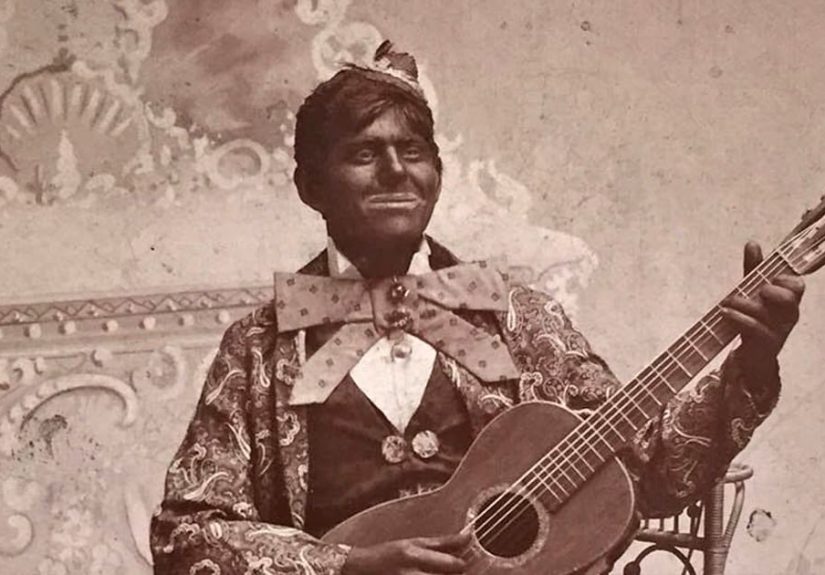
as chaos caused by Black political participation. Monuments, textbooks, speeches, and pop culture reinforced a version of history that excused white supremacy and treated equality as a mistake.This is how racism becomes “common sense”: not just through law, but through memory. If you can convince a society that injustice was actually “order,” then fairness will always sound
like disruption.
Lived experiences: what all this felt like on the ground (extra )
It’s one thing to list systems. It’s another to picture a life inside themespecially because many of these mechanisms were designed to look ordinary. That was the point: to make inequality
feel like “just how things work.”
Imagine a newly freed family in 1866 trying to choose a future. They’re free, technically, but freedom doesn’t come with a deed, a mule, or a bank account. They ask about land and hear
rumors: maybe there will be parcels, maybe not. Meanwhile, the nearest white landowner offers a contract. The paper is full of ruleswhen work starts, what happens if someone is “idle,”
where the family can live. Signing feels like surrender, but not signing feels like starvation.
A year later, the family is sharecropping. They plant and harvest, then meet the ledger. The numbers are mysterious in a very specific way: the totals never lean in their favor. Seed costs
more than expected. Tools “needed” repair. The mule rental is higher. The store credit has interest. The harvest price is somehow lower than what they were told last month. If they complain,
the response is a shrug and a new balance due. The math doesn’t add up, but it doesn’t have tobecause the person holding the book also holds the power.
Now picture a Black man trying to vote in the 1870s or 1890s, depending on the county and the mood of local officials. He shows up early, dressed carefully, because respectability is sometimes
treated as armor. He’s met with a “rule”: a fee, a test, an arbitrary question, a new registration day he never heard about. Or maybe nothing is said out loudjust a long delay and a short
temper from the clerk. He understands the unspoken point: this building is not designed for him. The barrier might be legal today, violent tomorrow, and “administrative” the next day, but the
goal stays steady.
In town, segregation is a choreography. Signs, separate entrances, separate waiting areas. The humiliation isn’t only physical; it’s psychological. It trains you to calculate everything:
where you can sit, when you can speak, what “tone” is safe. Parents teach children a survival curriculum that isn’t in any textbook: don’t argue with the wrong person, don’t linger in the
wrong place, don’t be alone after dark in the wrong neighborhood. Not because they accept the rules, but because they want their children to come home.
Then, decades later, migration offers a new promiseChicago, Detroit, Los Angeles, New York. But the welcome comes with conditions. Some neighborhoods are off-limits. Some jobs are “not hiring.”
Banks treat certain blocks like danger zones. A family that wants to buy a home finds a wall made of paperwork and polite refusals. The old hierarchy doesn’t vanish; it relocates and modernizes.
The language changes. The outcomes don’t.
These experiences aren’t just “history stories.” They explain why inequality can persist even when people insist they’re being fair. Systems have momentum. And when racism is built into land,
labor, law, and memory, it doesn’t need everyone to be openly hateful every day. It only needs enough institutions to keep choosing the same direction.
Conclusion: why this history still matters
Racism after the Civil War wasn’t simply a leftover attitude waiting to fade. It was maintainedintentionallythrough policy, courts, violence, economics, and culture. That matters because it
changes the question from “Why didn’t people just move on?” to “Who benefited from preventing people from moving on?”
Understanding these 18 mechanisms isn’t about guilt or gotcha moments. It’s about clarity. When you can see the machinery, you can recognize its modern echoesand you can stop pretending that
inequality is just a weather pattern that appears for no reason.