Table of Contents >> Show >> Hide
- How to Spot a House Style in Under a Minute
- Table of Contents
- Early American Staples
- Arts & Crafts and the “Built to Live In” Era
- Mid-Century and Postwar Crowd-Pleasers
- Storybook Imports and European-Inspired Favorites
- Victorian-Era Flair (A.K.A. “More Is More”)
- Warm-Weather Classics and Regional Standouts
- Modern Living, Clean Lines, and Bold Shapes
- Field Notes: Real-Life Experiences With These House Styles (500+ Words)
- Conclusion
House styles are basically a home’s “outfit”: the roofline is the hat, the windows are the accessories, and the porch is either a friendly handshake or a dramatic cape flourish. Whether you’re house-hunting, renovating, or just trying to win an argument during a neighborhood walk (“No, that’s not a Tudor, it’s Tudor-ish”), this guide breaks down the most popular architectural house styles in the U.S. and the defining characteristics that make each one instantly recognizable.
How to Spot a House Style in Under a Minute
- Start at the roof: pitch, shape, and eaves tell you more than paint color ever will.
- Check the symmetry: centered door + matching windows often signals classic, historic styles.
- Look for “signature moves”: half-timbering, red tile, low-slung horizontals, or a porch that means business.
- Remember the remix rule: many homes are blends (especially remodels), so aim for “primary style” plus influences.
Table of Contents
- Colonial
- Georgian
- Federal
- Dutch Colonial
- Cape Cod
- American Foursquare
- Craftsman
- Bungalow
- Prairie
- Farmhouse (Classic & Modern)
- Ranch
- Split-Level
- Minimal Traditional
- Tudor
- English Cottage
- French Country
- Italianate
- Greek Revival
- Victorian
- Queen Anne
- Second Empire
- Shingle Style
- Art Deco
- Spanish Colonial
- Spanish Colonial Revival
- Mediterranean
- Pueblo Revival (Southwestern/Adobe)
- Mid-Century Modern
- Contemporary
- Modern
- A-Frame
- Log Cabin (Rustic)
- Tiny House
Early American Staples
1. Colonial
Colonial homes are the straight-laced classics: calm, symmetrical, and usually not interested in your “funky accent color” phase. They’re rooted in early American building traditions and remain wildly popular for their timeless curb appeal.
- Symmetrical facade, centered entry
- Multi-pane windows, shutters common
- Gabled roof; simple, balanced lines
2. Georgian
Georgian style turns the symmetry dial up a notch: formal proportions, classical details, and an overall vibe of “I own a library.” In the U.S., it’s strongly associated with 18th-century colonial-era design.
- Strict symmetry and proportion
- Paneled front door, decorative crown
- Brick facades are common
3. Federal
Federal style is Georgian’s sleeker younger siblinglighter ornamentation, refined details, and elegant entryways. You’ll often see it in historic East Coast neighborhoods where “charming” is basically a zoning requirement.
- Fanlight or elliptical transom windows
- Delicate moldings and trim
- Balanced, rectangular massing
4. Dutch Colonial
The defining characteristic is the barn-like gambrel rooftwo slopes per sidewhich creates extra upper-level space. If a Colonial house got a stylish hat upgrade, it might look like this.
- Gambrel roof with flared eaves
- Symmetry often, but not always
- Dormers frequently appear
5. Cape Cod
Cape Cod homes are compact, cozy, and built for real weather. Originally inspired by early New England cottages, they became a postwar favorite because they were affordable, efficient, and cute without trying too hard.
- Steep roof, minimal exterior ornament
- Central chimney on many originals
- Dormers add light and headroom
6. American Foursquare
American Foursquares are practical, boxy, and surprisingly lovablelike the architectural equivalent of a great cast-iron skillet. They were designed for efficient living and often mix Craftsman or Prairie details.
- Square footprint; 2 to 2.5 stories
- Hipped roof, central dormer
- Wide front porch
Arts & Crafts and the “Built to Live In” Era
7. Craftsman
Craftsman homes celebrate hand-built charm: warm wood, sturdy lines, and details that look like they were made by someone who owned a very satisfying set of chisels. They’re loved for their cozy, human-scale feel.
- Low-pitched roof with wide eaves
- Exposed rafters, tapered porch columns
- Built-ins: benches, shelves, cabinetry
8. Bungalow
Bungalows are compact, approachable, and porch-forwardperfect for people who want charm without a 14-room echo problem. Many American bungalows borrow Craftsman detailing, especially in trim and brackets.
- One or 1.5 stories
- Deep front porch, cozy footprint
- Simple rooflines, practical layouts
9. Prairie
Prairie style is all about horizontalitylow roofs, strong lines, and a house that feels like it belongs to the landscape. It’s closely tied to early modern American architecture and Midwest roots.
- Low-pitched roof, broad overhangs
- Horizontal lines and window bands
- Open, flowing interior plans
10. Farmhouse (Classic & Modern)
Classic farmhouses are functional, family-focused homes with simple forms and welcoming porches. Modern farmhouse keeps the friendliness but sharpens the lookcleaner lines, bigger windows, and fewer frills (but still plenty of “come on in” energy).
- Gabled roofs; simple rectangular forms
- Porches and practical, bright interiors
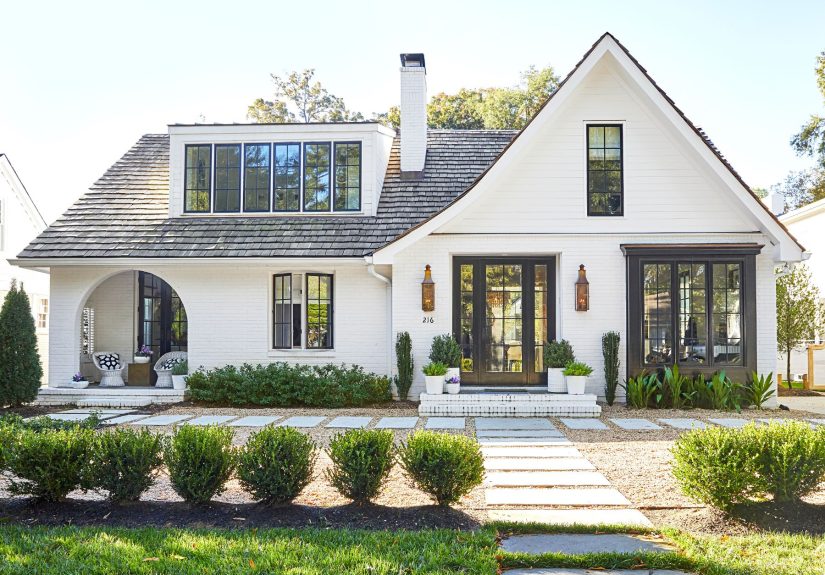
- Modern version: black windows, minimal trim
Mid-Century and Postwar Crowd-Pleasers
11. Ranch
Ranch homes are the laid-back legends of suburbia: typically single-story, long and low, designed for easy indoor-outdoor living. They rose with postwar growth and are still popular because the layouts just make sense.
- Single-story, open circulation
- Low-pitched roof, wide footprint
- Large windows and sliding doors
12. Split-Level
The split-level is basically the Ranch’s multi-level cousin, built to separate living zones without going full “staircase marathon.” It’s especially common in mid-century suburbs and on sloped lots.
- Staggered floors, short flights of stairs
- Clear zones: living vs. sleeping vs. utility
- Often paired with attached garages
13. Minimal Traditional
Minimal Traditional houses are small, simple, and deliberately un-fancypopular from the late 1930s through the postwar period. They’re like the “basic tee” of home exterior styles: reliable, versatile, and everywhere.
- Compact one-story massing
- Low to moderate roof pitch
- Minimal ornament; modest entry
Storybook Imports and European-Inspired Favorites
14. Tudor
Tudor homes look like they were designed for someone who owns at least one velvet cloak. Inspired by medieval English architecture, they’re known for steep roofs and decorative exterior details that feel romantic and substantial.
- Steep front-facing gables
- Decorative half-timbering, stucco/brick
- Tall, narrow windows; arched entries
15. English Cottage
English Cottage style is Tudor’s softer, cozier friendstill charming, but less castle and more “tea and a good book.” Expect organic shapes, warm materials, and a home that looks like it knows how to bake.
- Steep rooflines, often with dormers
- Arched doors; charming, irregular details
- Brick, stone, or stucco exteriors
16. French Country
French Country homes mix rustic warmth with refined touchesbalanced, elegant, and never in a hurry. They often feel “collected over time,” even when they were built last Tuesday.
- Steep hipped roofs; tall proportions
- Arched openings; stone/brick accents
- Shutters and soft, classic detailing
17. Italianate
Italianate style brings drama through height and detail: bracketed eaves, tall windows, and a confident vertical presence. Many examples date to the 19th century and are common in older city neighborhoods.
- Low-pitched roof; wide, bracketed eaves
- Tall, narrow windows (often ornate)
- Porches and decorative trim
18. Greek Revival
Greek Revival homes are the “temple-front” iconssymmetry, columns, and a serious love of classical proportions. If your house looks like it could host a philosophy debate, you’re probably in Greek Revival territory.
- Columns and pediments
- Strong, symmetrical facades
- Bold trim and entablature details
Victorian-Era Flair (A.K.A. “More Is More”)
19. Victorian
“Victorian” is a big umbrella, but the shared vibe is ornament and presenceporches, patterns, and details that refuse to whisper. These homes often feature complex rooflines and decorative woodwork.
- Ornate trim and decorative elements
- Complex rooflines; bay windows common
- Porches that invite lingering
20. Queen Anne
Queen Anne is Victorian’s most theatrical performer: asymmetry, turrets, wraparound porches, and textures layered like a maximalist cake. If the house makes you say “wow” before you’ve even found the front door, that’s a clue.
- Asymmetrical facade; towers/turrets
- Wraparound porch; spindlework details
- Mixed materials and patterned surfaces
21. Second Empire
Second Empire houses are easiest to spot by their mansard roofthe one that looks like a hat with a built-in extra floor. They’re stately, urban-friendly, and unapologetically fancy.
- Mansard roof with dormer windows
- Highly decorative trim
- Tall proportions; formal curb presence
22. Shingle Style
Shingle Style homes wrap themselves in wood shingles like a cozy sweateroften in sweeping, continuous surfaces. Common in coastal regions, they can look relaxed while still being architecturally sophisticated.
- Wood shingles on walls and roof
- Asymmetrical forms; fluid massing
- Porches and expansive gables
23. Art Deco
Art Deco is glamour with geometrybold shapes, stylized motifs, and a “we believe in the future” confidence. While more common in commercial buildings, Deco-inspired homes pop up in some older urban neighborhoods.
- Geometric patterns and streamlined forms
- Decorative metalwork or stylized reliefs
- Vertical emphasis and symmetry
Warm-Weather Classics and Regional Standouts
24. Spanish Colonial
Spanish Colonial style is built for sun: thick walls, shaded openings, and durable materials suited to warm climates. The look is instantly recognizablestucco, red tile roofs, and arches that feel like a permanent vacation.
- White stucco walls; red clay tile roof
- Arched doors and windows
- Wrought iron and dark wood accents
25. Spanish Colonial Revival
Spanish Colonial Revival reinterprets the original with a more romantic, decorative edgepopular in the early 20th century and still loved in California, Florida, and the Southwest for its warmth and texture.
- Courtyards, balconies, decorative tile
- Stucco and arches, often more ornate
- Carved doors; accent ironwork
26. Mediterranean
Mediterranean homes borrow from Southern Europe with stucco walls, tile roofs, and an emphasis on indoor-outdoor living. Think breezy courtyards, warm palettes, and exteriors that photograph well even in bad lighting.
- Stucco exterior; low-pitched tile roof
- Arches, loggias, and courtyard elements
- Wrought iron and stone detailing
27. Pueblo Revival (Southwestern/Adobe)
Pueblo Revival homes are rooted in Southwestern building traditions: thick, adobe-like walls that moderate heat, rounded edges, and earthy colors. If your house looks like it belongs in Santa Fe, you’re on the right track.
- Adobe or adobe-look stucco walls
- Flat roofs; rounded corners
- Wood vigas and deep-set windows
Modern Living, Clean Lines, and Bold Shapes
28. Mid-Century Modern
Mid-Century Modern is the poster child for open plans and indoor-outdoor flow. It favors simple forms, large glass, and honest materialsdesigned for a world that just invented the blender and felt unstoppable.
- Flat or low-slope roofs; clean geometry
- Large windows; connection to outdoors
- Open layouts; exposed structure common
29. Contemporary
Contemporary homes are “of the moment,” which means the look evolves. The common thread is flexibility: mixed materials, big windows, and forms that prioritize light, function, and today’s lifestyles rather than strict historical rules.
- Mixed materials: wood, metal, glass, stucco
- Large openings; bright interiors
- Asymmetrical forms and modern rooflines
30. Modern
Modern architecture leans minimalist: fewer decorative details, more intentional structure. It often features flat roofs, crisp lines, and a “less but better” attitude. When done well, it feels calm, bright, and effortlessly current.
- Simple massing; minimal ornament
- Flat or shed roofs; strong geometry
- Glass-forward facades and open plans
31. A-Frame
A-Frames are basically a roof that decided to become the whole house. Their steep triangular shape sheds snow and rain like a champ, which is why they became iconic vacation homes. Inside: dramatic ceilings, cozy lofts, and lots of window views.
- Steep “A” roofline, often to the ground
- High ceilings; exposed beams
- Large gable-end windows
32. Log Cabin (Rustic)
Log cabins are the original cozy-core: natural materials, straightforward forms, and a strong relationship with the outdoors. Some are historic and humble; others are luxury lodges pretending they just chopped wood five minutes ago.
- Log walls; visible natural texture
- Gabled roofs; deep porches common
- Stone fireplaces and warm interiors
33. Tiny House
Tiny houses aren’t just smallthey’re intentionally efficient. Style varies (modern, cabin, farmhouse), but the defining characteristic is the smart use of space: multifunctional furniture, creative storage, and a layout that makes every inch earn its rent.
- Compact footprint; often under 400 sq. ft.
- Built-in storage and multi-use zones
- Lofts and flexible layouts
Field Notes: Real-Life Experiences With These House Styles (500+ Words)
After enough open houses, you start recognizing styles the way you recognize friends in a crowdby silhouette and habits. Colonials stand politely at attention. Ranches sprawl like they’re stretching after a long nap. Queen Annes wave their turrets like, “Hello, yes, I am the main character.” But the real lessons show up when you live with these styles (or try to remodel them without accidentally turning them into something else).
1) Rooflines are secretly the whole story
In person, the roof does most of the heavy lifting. Cape Cod and Tudor roofs aren’t steep because they’re being dramatic (okay, Tudor is a little dramatic); they’re steep because steep roofs handle rain and snow better and historically fit colder climates. Meanwhile, Ranch and Prairie roofs go low and wide, which often means big overhangs, shaded windows, and that signature horizontal “glide” across the lot. If you’re shopping, pay attention to how the roof affects attic space, insulation needs, and maintenance access. A beautiful roof you can’t safely service is like buying fancy shoes you can’t walk in.
2) Porches change how you use a home
Craftsman, Bungalow, Victorian, and Farmhouse porches aren’t just cutethey’re lifestyle features. A deep porch becomes an outdoor room: morning coffee, neighbor chats, packages that don’t get roasted in the sun, and a place to sit when you “just need a minute” after carrying groceries. Homes without porches can still be wonderful, but you’ll notice the difference in how people linger (or don’t) outside. If community matters to you, porch styles are like built-in social infrastructure.
3) Windows tell you what the era valued
Multi-pane windows on Colonial or Federal homes tend to signal tradition and proportion. Mid-Century Modern and Contemporary homes often go big on glass to bring the outdoors inamazing for light and views, but it can raise questions about privacy and energy performance depending on climate and window quality. In real life, buyers fall in love with sunshine… and then discover glare at 4:30 p.m. is a daily event. Pro tip: visit at different times of day if you can, and think about window coverings early, not after you’ve been temporarily blinded by your own living room.
4) Renovations can “style-drift” fast
The most common remodeling mistake isn’t bad tasteit’s losing the architectural language. Swap Craftsman tapered columns for skinny metal posts and the whole home looks confused, like it forgot its own name tag. Put ultra-modern, wall-to-wall black windows on a delicate Federal facade and you might get a result that’s more “historical cosplay” than harmony. The sweet spot is respecting the defining characteristics while upgrading comfort: keep proportions, repeat original trim rhythms, and choose materials that look like they belong. Modern farmhouse is popular partly because it’s a forgiving bridge: it can update older homes without demanding a full personality transplant.
5) Layout surprises are part of the deal
Foursquares can be shockingly spacious because the “box” is efficientgreat room sizes, solid stair placement, and often a satisfying sense of order. Split-levels look modest from the curb, then reveal more functional separation inside than you expected. Tiny houses teach you a different kind of luxury: not more stuff, but better systemsfold-down tables, hidden drawers, and a ruthless commitment to “Do I actually use this?” Even if you never move into a tiny house, touring one is like taking a masterclass in how to make space work harder.
6) The best style is the one you’ll maintain happily
Here’s the honest truth: owning a house is a long-term relationship with your home’s exterior details. Shingle Style is gorgeous, but wood shingles and coastal weather are a conversation you’ll be having for years. A-Frames are iconic, but those tall ceilings and big glass panels can mean higher heating/cooling costs if the envelope isn’t tight. Mediterranean and Spanish styles are stunning, yet tile roofs and stucco need the right care (and the right trades). So when choosing among popular house styles, don’t just ask, “Do I love it?” Ask, “Will I love taking care of itor will I resent it by next winter?”
Conclusion
Learning architectural house styles isn’t about being a design snobit’s about noticing what a home is built to do. The roofline hints at climate strategy, the windows reveal an era’s priorities, and the porch says whether the house wants to be social. Use these defining characteristics as your cheat code: you’ll read listings faster, renovate smarter, and choose a home exterior style that fits how you actually live (not just how you want your Instagram grid to look).