Table of Contents >> Show >> Hide
Some babies arrive looking like tiny versions of their parents. Baby pangolins arrive looking as though an artichoke learned to walk, developed enormous digging claws, and decided that ants were the only acceptable item on the menu. These rare young mammalsoften affectionately called pangopupscombine soft faces, overlapping scales, wobbly steps, and serious tree-climbing ambition. The result is a creature so charming that even its defensive ball resembles a sleepy pinecone taking a personal day.
Yet the cuteness comes with a sobering story. Pangolins are shy, insect-eating mammals from Africa and Asia, and all eight living species face conservation pressure. Their scales are made of keratin, the same basic material found in human fingernails, but that harmless body armor has made pangolins targets for illegal trade. Celebrating baby pangolins responsibly therefore means enjoying their astonishing biology while remembering that they belong in protected habitatsnot in private collections, souvenir shops, or viral handling stunts.
Why Baby Pangolins Look Like Living Artichokes
A newborn pangolin does not begin life in full medieval armor. Its scales are pale and relatively soft at birth, then begin hardening soon afterward. Beneath those scales is a warm-blooded mammal with sparse hair on unarmored areas, a pointed face, no teeth, and a remarkably long, sticky tongue designed for collecting ants and termites. In other words, the outside says “miniature dragon,” while the feeding equipment says “highly specialized insect vacuum.”
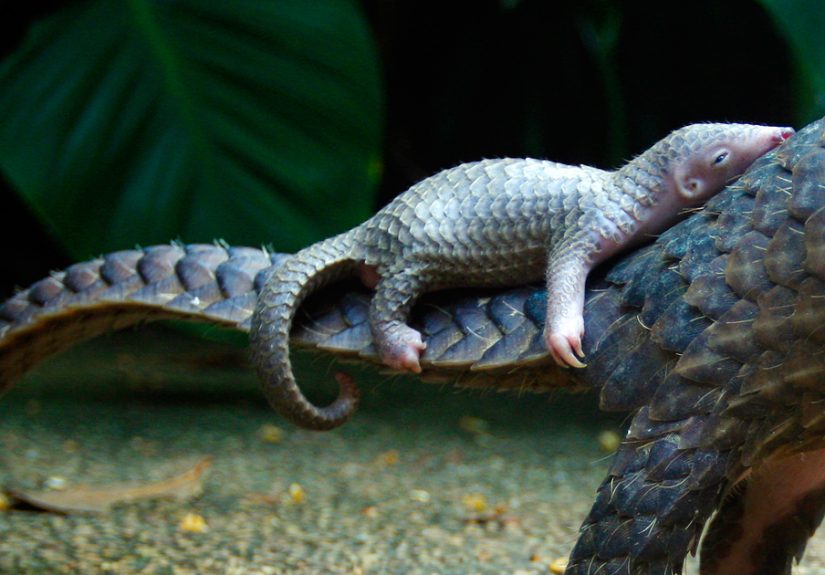
Most pangolin mothers give birth to one pup at a time, although some Asian species may occasionally have more. A young pangolin nurses, stays close to its mother, and may ride on her back or tail as it grows. That ride is not merely adorable transportation. It lets the pup remain near protection while learning the smells, movements, feeding places, and rhythms of its environment.
The following countdown celebrates 34 recognizable pangopup behaviors, poses, and visual moments. It is an editorial list based on real pangolin biology rather than a catalog claiming that every entry is a separately identified animal.
34 Baby Pangolin Moments That Deserve the “Cutest Artichoke” Crown
Soft Scales, Tiny Faces, and Maximum Nap Energy
- The newborn with soft starter scales.
Before those overlapping plates become firm armor, a newborn’s pale scales have a gentler look that makes the pup resemble a carefully folded flower bud. - The pangopup discovering its own tail.
A long tail is useful for balance and, in climbing species, gripping support. To a baby, however, it also appears to be a mysterious object that keeps following it. - The sleepy nose tucked under a scale.
When a resting pup curls its pointed face inward, the entire animal becomes a compact bundle of scales with one tiny nose peeking out. - The miniature defensive ball.
Rolling up protects the softer belly and face. In a baby pangolin, this serious survival behavior happens to produce an object that looks suspiciously like a travel-size artichoke. - The wide-eyed veterinary checkup.
Rescued pups sometimes require careful examinations, weighing, hydration, and specialized feeding. Their alert expressions can be charming, but the scene also reflects difficult, skilled rehabilitation work. - The milk-drunk post-meal pause.
A properly cared-for orphan may relax after feeding with the universal baby expression that says, “Excellent service; I will now be unavailable for several hours.” - The front claws that seem borrowed from an adult.
Even a small pangolin has impressive digging equipment. The oversized look is equal parts construction worker, pastry fork, and fantasy creature. - The belly-up moment.
Pangolin undersides are not covered by the same heavy armor as the back. A relaxed pup may briefly reveal a soft belly that makes its armored top half look even more dramatic.
Back Rides, Tail Rides, and Beginner-Level Adventuring
- The first ride on mom’s back.
A pup clinging to its mother looks like one animated artichoke wearing another, smaller artichoke as a backpack. - The tail-seat commuter.
As young pangolins become more mobile, they may ride near the base of the mother’s tail, holding on while she walks or searches for food. - The cautious dismount.
Getting off mom requires timing, balance, and confidence. The pup’s slow descent often resembles someone leaving a bus while carrying far too much luggage. - The nose-first investigation.
Pangolins rely heavily on smell. A youngster exploring leaf litter may lead with its snout, pausing as though every twig has submitted a formal résumé. - The first serious ant inspection.
Nursing comes first, but young pangolins gradually learn about the insect diet that will define adult life. An ant trail becomes both classroom and future buffet. - The wobbly two-foot shuffle.
Pangolins can sometimes rise and move on their hind legs, balancing with the tail. A baby attempting this maneuver looks like a tiny dinosaur late for a meeting. - The branch-hugging beginner.
Tree-dwelling pangolin species are capable climbers. Youngsters practice by gripping branches with curved claws and wrapping their bodies close to the wood. - The “I absolutely meant to do that” slip.
Climbing practice includes awkward adjustments. A pup that loses its ideal position often recovers with the dignity of a cat pretending nobody saw anything. - The mother-and-pup double curl.
When a mother protects or rests around her young, their overlapping scales create a layered spiralpart fortress, part nest, and entirely photogenic.
Claws, Tongues, and the World’s Most Specialized Snack Hunt
- The tiny termite-mound apprentice.
Adult pangolins tear into insect nests with strong forelimbs. A youngster may imitate digging before it has the strength or precision to achieve much beyond enthusiastic landscaping. - The tongue test.
Pangolins have no teeth, so a long, sticky tongue does the collecting. A baby practicing tongue movements can look as if it is trying to taste the entire atmosphere. - The snout covered in dinner evidence.
Soil and insect-nest debris around the nose are signs of natural foraging, not poor table manners. Pangolins simply do not believe in napkins. - The serious listening pose.
Pangolins are quiet and secretive. When a pup freezes with its head lifted, it suddenly resembles a tiny armored detective processing a suspicious rustle. - The leaf-litter submarine.
Moving beneath dry leaves, a small pangolin may appear only as a traveling ridge of scales. The forest floor has apparently developed its own periscope. - The scale-scratch maneuver.
Flexible overlapping scales allow movement, but an itch can still demand attention. Watching a clawed foot negotiate the armor is a master class in difficult personal maintenance. - The tiny tail used as a stabilizer.
Ground-dwelling pangolins use their powerful tails for balance and defense, while arboreal species may rely on them during climbing. For a pup, the tail is essentially built-in outdoor equipment. - The “no teeth, no problem” face.
Pangolins swallow small prey rather than chewing it. Their narrow jaws look delicate, yet their feeding system is expertly matched to an insect-based diet.
Curled-Up Comedy With a Conservation Message
- The startled half-curl.
Before forming a complete defensive ball, a young pangolin may bend halfway and pause, creating the animal equivalent of closing a laptop during an unexpected meeting. - The peek from inside the armor.
Once curiosity defeats caution, a small eye and pointed snout emerge from the curl. The artichoke has opened, and it would like a status report. - The supervised rehabilitation walk.
Orphaned or rescued pups may be guided through controlled environments where they can exercise, smell natural materials, and develop foraging behavior before release decisions are made. - The weigh-in protest.
Monitoring body weight can be essential in rehabilitation. The pangopup, meanwhile, may treat the scale as an insult to privacy and attempt a very slow escape. - The blanket burrow.
In temporary professional care, a pup may tuck beneath suitable bedding for warmth and security. Only the armored back remains visible, like a loaf of bread designed by a blacksmith. - The first confident climb.
A youngster that once clung uncertainly can eventually move with purpose, placing each claw and shifting its weight with impressive control. - The determined nighttime patrol.
Most pangolins are nocturnal. As a pup matures, evening activity becomes less like random wandering and more like a focused search for food and safe routes. - The return-to-the-wild silhouette.
A rehabilitated pangolin disappearing into vegetation is less instantly cuddly than a close-up photo, but it is the image conservation work is trying to achieve. - The final tiny artichoke with a very big job.
Every surviving pup represents future genetic diversity, insect control, ecological function, and the possibility that a threatened species can continue on its own terms.
Cute, Rare, and in Need of Serious Protection
Pangolin armor works well against many natural predators because the animal can curl around its vulnerable underside. Unfortunately, that same response makes a frightened pangolin easier for a person to pick up. Illegal trafficking for meat, scales, skins, and other products has placed heavy pressure on populations, while habitat loss and fragmentation add further danger.
Their reproductive pace makes recovery difficult. A species that usually produces one dependent baby cannot quickly replace large numbers removed from the wild. Conservation therefore depends on preventing poaching, reducing demand for wildlife products, protecting habitat, improving enforcement, supporting local communities, and strengthening rescue and rehabilitation capacity.
How to Admire Baby Pangolins Without Harming Them
Share images from credible conservation organizations, accredited zoos, responsible filmmakers, and wildlife researchers. Avoid accounts selling encounters, exotic pets, scales, leather, medicine, or suspicious “rescues.” Do not treat hands-on contact as the ideal experience; legitimate care teams minimize handling and prioritize health, natural behavior, and eventual release whenever release is possible.
Support organizations that explain where donations go and that work with local partners in pangolin range countries. Responsible programs may fund anti-trafficking efforts, veterinary training, field research, community education, protected habitat, tracking, or post-release monitoring. The most helpful kind of pangolin fandom is the kind that makes wild pangolins harder to exploit.
A Responsible Pangolin Experience: Wonder Without Interference
Imagine entering a quiet nocturnal animal space or watching carefully filmed rehabilitation footage. At first, there may be almost nothing to see. Pangolins are not performers. They do not arrive on cue, wave at the audience, or deliver a dramatic roar. A branch shifts. Dry leaves move. Then a narrow face appears, followed by a body covered in overlapping scales. The slow reveal changes the experience from ordinary animal viewing into a small act of discovery.
The first surprise is movement. Still photographs make pangolins look rigid, almost sculpted, but a living pangolin is flexible. Its scales slide over one another as the body curves. The front claws are held in a way that protects their digging edges, giving the walk a careful, slightly hunched rhythm. A baby adds uncertainty to every step. It pauses, sniffs, turns, and sometimes climbs with the concentration of a beginner solving a puzzle in real time.
The second surprise is how little noise surrounds the animal. There is no loud social group and no constant vocal performance. The experience encourages patience. Instead of demanding action, the viewer begins noticing details: the soft skin around the eyes, the bare underside, the way the tail supports balance, and the deliberate placement of each claw. Cuteness becomes less about a single photograph and more about close observation.
Seeing a mother carry a pupwhether in person at a professionally managed institution or through ethical documentary footageadds another layer. The baby is not a decorative passenger. It is learning while remaining close to protection. Its grip, posture, and attention reveal dependence, but they also hint at the adult it may become: a solitary nighttime forager capable of opening insect nests and navigating dense habitat.
A responsible experience also includes the parts that are not adorable. Conservation displays may explain trafficking, confiscations, injuries, habitat loss, and the difficulty of keeping rescued pangolins alive. Rehabilitation footage may show gloves, weighing equipment, formula preparation, medical checks, and meticulously cleaned spaces. Those details prevent the story from turning into empty cuteness. They show that saving a pangopup can require sleepless schedules, veterinary judgment, specialized nutrition, behavioral assessment, and cooperation across countries.
For families, the most meaningful follow-up is simple: turn fascination into one concrete action. Children can draw the eight species, compare tree-dwelling and ground-dwelling adaptations, or learn why keratin has no magical medicinal power. Adults can check whether a conservation group publishes transparent reports, avoid wildlife-derived products, and share accurate information rather than sensational claims. Even asking where an image came from is a useful habit.
The lasting feeling is a mixture of delight and restraint. A baby pangolin invites the instinct to cuddle it, yet genuine respect means accepting distance. The best outcome is not a perfect selfie or a private encounter. It is a healthy animal behaving naturally, requiring less human help over time, and eventually disappearing into protected habitat. That vanishing silhouette may be less marketable than a bottle-feeding close-up, but it is the happiest ending a pangolin can receive.
Conclusion: Protect the Artichoke, Not Just the Picture
Baby pangolins earn every playful comparison to artichokes, pinecones, dragons, and armored pastries. They are genuinely funny-looking, deeply specialized mammals whose tiny claws, soft newborn scales, back rides, cautious curls, and determined foraging make them unforgettable. But their appeal should lead somewhere useful.
The next time a pangopup photo stops your scrolling thumb, enjoy itand then look for the conservation story behind it. Was the image made responsibly? Does the organization protect wild habitat? Is the animal being prepared for release, studied to improve care, or used to educate people against trafficking? Cuteness attracts attention; informed action gives that attention value.