Table of Contents >> Show >> Hide
A hundred years ago, Europe was busy reinventing itself. The First World War had ended, borders and budgets were being redrawn,
and everyday people were doing the most heroic thing imaginable: going back to work, buying bread, raising kids, flirting on
promenades, and trying to look cool in hats that had absolutely no ventilation.
This article is a guided “photo walk” through real, archival imagery from the early 1920s into the early 1930sstreet scenes,
markets, homes, factories, and celebrations. The photos don’t just show what Europeans wore or drove; they reveal how people
moved through a day: what they carried, what they sold, what they repaired, and what they found worth gathering for.
Why old photos hit harder than history class
Textbooks tell you what happened. Photos show you how it felt.
A single frame can capture the stuff historians lovetechnology, class, politics, fashionand the stuff humans actually remember:
the way someone leans into the wind, the impatience in a queue, the pride in a uniform that’s seen too much, or the joy of a Sunday
stroll when you’re pretending your shoes aren’t pinching.
Around the 1920s, photography wasn’t just for stiff studio portraits. Cameras and modern photojournalism pushed into the street,
turning ordinary life into a subject worth documenting. That shift is why we get so many images of the “in-between” moments:
shopping, commuting, gossiping, sweeping, selling, fixing, and waiting.
How to “read” a 1920s photo like a detective
Before we jump into the 40-photo tour, here’s a quick method to pull more meaning from any vintage imagewithout pretending you’re
starring in a noir film (though you absolutely can).
1) Start with movement
Are people rushing, strolling, or standing still? Busy streets and crowded markets usually signal commerce and commuting.
Leisure photos tend to have relaxed posture, open space, and that unmistakable “we’re pretending this is spontaneous” vibe.
2) Notice what’s being carried
Baskets, milk cans, tools, newspapers, parcels, and sacks often tell you more than facial expressions. Objects are the receipts of
daily life.
3) Look for infrastructure
Tracks, overhead wires, signage, street lighting, and road surfaces reveal what a city invested inand what it hadn’t gotten around
to yet. (History is full of ambition; potholes keep it honest.)
4) Don’t ignore the background characters
A photo’s main subject might be a parade, but the background shows the audiencekids climbing fences, workers in aprons, a vendor
hustling snacks. That’s where “real life” leaks into the frame.
The 40 interesting photo moments
Think of these as 40 “frames” you’ll repeatedly find in authentic 1920s–early 1930s European photography. Some are tied to specific
well-known archival images; others describe recurring scenes that show up across countries and collections.
Together, they form a surprisingly intimate diary of Europe 100 years ago.
A) Streets, traffic, and the daily commute
- A capital street with a milk wagon. A simple street scene becomes a logistics story: fresh food moved slowly, locally, and visiblyoften by wagon. (And yes, this is also proof that “farm-to-table” once had wheels.)
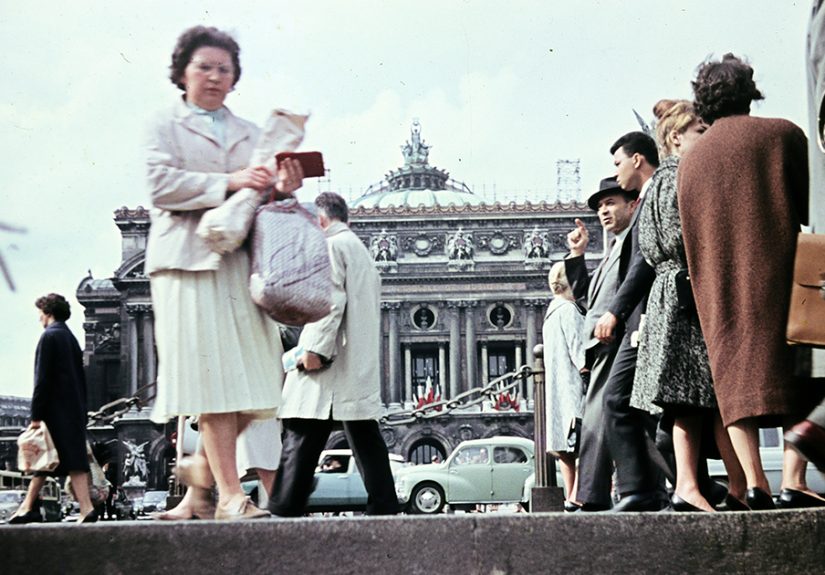
- A major boulevard packed with mixed traffic. Trams, early cars, bicycles, carts, and pedestrians negotiating the same spacelike a group project where nobody agreed on the rules.
- Crosswalks before crosswalks. People stepping into traffic with the confidence of someone who has never met a modern delivery scooter.
- Street signs as status symbols. Billboards, shop signs, and posters hint at new consumer culture and mass media creeping into the urban landscape.
- A “commuter uniform.” Caps, sturdy coats, work bootspractical clothing that quietly marks class and occupation.
- Street cleaners and municipal workers. Cities were modernizing, and someone had to keep up with ash, soot, and horse-related realities.
- A station platform moment. The look of people leavingbags, bundles, and that posture that says, “I’m early because I don’t trust timetables.”
- Rush hour in a European shopping district. The crowd itself becomes the story: who has time to browse, who’s hurrying, and who’s watching everyone else.
B) Markets, street food, and the business of getting fed
- A public city market from the outside. Markets were community enginesprices, gossip, and ingredients exchanged in one place.
- Street traders lined up with portable goods. Small-scale commerce thrives where people walk; the sidewalk becomes a business plan.
- A vendor selling hot drinks on the street. A walking refreshment stand is basically the 1920s version of “grab coffee on the go,” minus the oat-milk discourse.
- Textiles and fabric shopping at an open market. Clothing often started as cloth; buying fabric wasn’t nicheit was household strategy.
- Fish, bread, and the honest glare of daylight. Open-air food markets tell you what people ate and what they could afford to waste (usually: not much).
- Shoppers carrying baskets, not branding. Packaging was minimal; reusability wasn’t a lifestyle trend, it was Tuesday.
- Children helping with errands. Kids appear as workers-in-training: holding parcels, watching stalls, learning prices early.
- A butcher or baker at the threshold. The shop door is a stageproducts displayed, neighbors evaluated, and small talk deployed like currency.
C) Work, trades, and “making a living” up close
- Craft trades in action. Cobblers, tailors, and repairmen remind you that objects weren’t disposable; they were relationships.
- Construction and rebuilding. Postwar Europe was repairing streets, buildings, and livesoften all at once.
- Factory floors and uniforms. Workwear tells you the pace of industrial life: durable fabrics, minimal flair, maximum function.
- Office workers emerging as a visible class. Suits, briefcases, and the beginnings of “I work indoors” posture.
- Women at work in public space. Not just at homeselling, organizing, managing stalls, commuting, and keeping the wheels turning.
- Rural labor captured mid-task. Farming and animal work remained central; modernization didn’t erase the countrysideit negotiated with it.
- Port and shipping scenes. Goods moving through harbors and rail yards: global trade made local life possible.
- Deliveries as daily theater. Milk, coal, bread, and parcels arrive like clockworkand everyone notices.
D) Home life, clothing, and “the everyday aesthetic”
- Apartment windows as social media. Laundry lines, curtains, potted plantspublic signals of private life.
- Kitchen reality. Even when appliances were emerging, much household work was still manual, repetitive, and time-consuming.
- The 1920s silhouette in the street. Clothing shifts toward straighter lines and a freer fitfashion reflecting social change, comfort, and modern identity.
- Hats. So many hats. The era’s headwear is practically a census: cloches, caps, brimmed hatseach one a tiny biography.
- Children’s clothes as practicality. Less costume, more mobilitybecause kids were expected to move, work, and play hard.
- Shopping scenes in city centers. Department stores and shop-lined streets suggest rising consumer culture and new ways to spend leisure time.
- Courtyards and shared spaces. Common areas reveal density, neighborhood rhythms, and how communities functioned close together.
- Light, signage, and electric modernity. Streetlights and illuminated signs hint at how technology reshaped night life and safety.
E) Leisure, celebration, and public emotion
- Promenades and parks. Walking as entertainment: the cheapest luxury, the most universal habit.
- Beach scenes without the influencer poses. Early resort culture shows relaxation becoming organized, scheduled, and socially meaningful.
- Cafés and sidewalk tables. Public conversation becomes a lifestyleand the café becomes a classroom for politics, art, and flirting.
- Sports and crowds. Stadiums and fields reveal mass entertainment and the rise of shared public spectacles.
- Street music and performers. A reminder that “content creation” existed long before platforms didpeople always performed for coins and attention.
- Parades that mix pride and grief. Postwar celebrations often carry a shadow: victory, loss, and remembrance sharing the same street.
- Veterans in public life. Uniforms, medals, and injuriesimages that quietly explain why the 1920s felt both hopeful and haunted.
- Night scenes: modern life after dark. Electric lights, nightlife, and the beginnings of a faster social tempo.
F) Politics, tension, and the mood under the surface
- Militarized remnants on city streets. Tanks or military equipment parading as symbolspower displayed in public space even after the fighting ends.
- Mass gatherings with banners. Crowds can mean celebration, protest, or persuasion; the photo doesn’t always tell you whichuntil you read the signs.
- A leader-centered march. Images of organized marches and rallies foreshadow how politics in parts of Europe became intensely theatrical and public.
- Borderlines and paperwork. Photos of queues, officials, and documents hint at a world where states were redefining who belonged where.
- Economic anxiety in ordinary spaces. Even when a photo shows shopping, you might see repair work, reused clothing, or tight expressionssmall signals of bigger instability.
- Newspapers everywhere. People reading in cafés, on benches, in transitinformation moving faster, shaping opinion more quickly than ever.
- Street photography with humor. A candid glance, a startled expression, a perfectly timed momentproof that people have always been accidentally funny.
- The “ordinary” portrait. Not royalty, not celebritiesworkers, families, neighbors. The democratization of who gets remembered.
That’s 40 framesbut the real magic is how they combine. One market photo tells you food prices; another tells you gender roles;
a street scene tells you technology; a portrait tells you aspiration. Stack them, and you get a living model of a society.
What these photos reveal about daily life in Europe 100 years ago
1) Modern life arrived unevenly
In many cities, you’ll see trams and cars sharing space with carts and pedestrians. Some neighborhoods look electrified and commercial;
others still feel pre-industrial. Modernity wasn’t a switchit was a patchwork quilt, and some patches arrived late.
2) The street was a workplace
Vendors weren’t “side hustling.” For many, street trade was a primary economy: selling drinks, produce, textiles, or services.
The sidewalk functioned as marketplace, billboard, and community bulletin board.
3) Clothing was both identity and survival
The 1920s are famous for shifting silhouettes and new styles, but photos remind you of the practical layer underneath.
Coats last years. Shoes are repaired. Hats are worn hard. Fashion trends existed, surebut so did weather and budgets.
4) Leisure mattered because life was heavy
The “interwar” label can sound academic, but the mood shows up in faces and gatherings. Celebrations and public events often carry
the emotional residue of recent trauma. Photos of cafés, promenades, and parks hint at why leisure was more than funit was recovery.
5) Politics wasn’t abstractit was visible
Between new borders, unstable economies, and rapidly changing public life, politics often spilled into the street.
In photos, you can literally see persuasion: banners, marches, uniforms, symbols, and crowds organized around an idea.
Quick tips for historians-at-heart (and casual scrollers)
- Zoom in on shoes. Footwear is a surprisingly strong clue about class and work.
- Check the storefronts. What’s being sold tells you what people valued and what was available.
- Follow the light. Day vs. night images can show how electrification changed urban rhythm.
- Look for kids. Children appear everywhereand their roles often reveal family economics.
If You Could Step Into the Frame: A 500-Word Time-Travel Experience
Imagine you wake up in a small European room in the mid-1920s. The window is cracked open because the air inside smells faintly of
coal smoke and yesterday’s cooking. Outside, the street is already awakenot the modern “quiet, then suddenly traffic” kind of awake,
but a steady hum of footsteps, carts, and voices that never fully disappears.
You get dressed with fewer choices than you’re used to. The fabric is sturdy, the buttons have been replaced at least once, and
whatever you put on is meant to last. In the mirror (if you’re lucky enough to have one), you notice how much of the era’s style is
about structure: collars, hats, and coats that create a silhouette even when money is tight. You step outside and immediately feel the
choreography of the street. People move like they have places to be, but they also pause easilyat a storefront, a posted notice, a
conversation that looks like it started yesterday.
You follow the smell of bread and end up at a market. There’s no glossy packaging, no branded tote bagsjust baskets, sacks, and
practiced hands checking produce. A vendor calls out prices, and you realize shopping is a social act. People talk while they buy,
compare notes, and swap warnings about what’s scarce. You see a child carrying something too heavy for their size, and nobody treats it
as unusual. Work and family are tangled together in public.
As you walk, transportation feels like a living timeline. A tram rattles by. A bicycle slips through. A car passes with the confidence
of a new technology that hasn’t yet learned humility. You’re careful crossing the street because traffic rules look more like polite
negotiation than law. Then you notice the background details the way photographers loved them: posters layered on walls, signs in shop
windows, and people reading newspapers as if the next headline might explain what happens to their wages next month.
Later, you pass a café. Inside, conversations sit on tables like extra cups. Someone is laughing. Someone is arguing. Someone is
staring into space with the tired calm of a person who has lived through too much and is determined to enjoy this one small moment
anyway. You realize the era’s “vibe” isn’t just jazz, chic haircuts, and new machines. It’s resilience with a social life. It’s a
continent trying to look forward while still hearing echoes behind it.
When evening comes, electric lights (where they exist) change the street’s personality. Darkness isn’t only rest; it’s another shift of
the day. You head back to your room and think: the photos were right. Life here is not a museum display. It’s loud, practical, communal,
and oddly familiar. The century between you and them suddenly feels… smaller.
Wrap-up
The best historical photos don’t just show you “what people looked like.” They show you how people lived: what they carried, how they
moved, what they sold, where they gathered, and what they worried about. In the 1920s and early 1930s, Europeans navigated a world
rebuilt after war and reshaped by modern technology, mass media, shifting fashion, and political volatilityoften all at once.
If you ever find yourself doom-scrolling, consider upgrading your feed: spend ten minutes with a real archival photo collection.
You’ll come back with a sharper eye, a deeper appreciation for everyday resilience, and (most likely) a new respect for hats.