Table of Contents >> Show >> Hide
- Why Rare Vehicle Cabins Are So Fascinating
- 40 Vehicle Cabins Most People Never See
- 1. Apollo Command Module Cabin
- 2. Apollo Lunar Module Cockpit
- 3. Space Shuttle Flight Deck
- 4. NASA Crawler-Transporter Operator Cab
- 5. Boeing 787 Flight Deck
- 6. F-35 Fighter Jet Cockpit
- 7. F-16 Fighting Falcon Cockpit
- 8. CH-47 Chinook Helicopter Cockpit
- 9. AH-64 Apache Attack Helicopter Cockpit
- 10. Locomotive Engineer Cab
- 11. Subway Train Operator Cab
- 12. Streetcar or Light Rail Cab
- 13. Freight Crane Operator Cab
- 14. Caterpillar Excavator Cab
- 15. Wheel Loader Cab
- 16. Mining Haul Truck Cab
- 17. John Deere Tractor Cab
- 18. Combine Harvester Cab
- 19. Snowplow Truck Cab
- 20. Garbage Truck Cab
- 21. Fire Engine Cab
- 22. Fire Ladder Truck Cab
- 23. Ambulance Driver Cab
- 24. Ambulance Patient Compartment
- 25. Armored Truck Cabin
- 26. Presidential Limousine Interior
- 27. Police Cruiser Cabin
- 28. SWAT Vehicle Interior
- 29. GM Defense Infantry Squad Vehicle Cabin
- 30. Tesla Semi Cabin
- 31. Volvo VNL Sleeper Cab
- 32. Mack Anthem Cab
- 33. Refrigerated Delivery Truck Cab
- 34. Food Truck Driver Cabin
- 35. Formula 1 Cockpit
- 36. INDYCAR Cockpit
- 37. NASCAR Stock Car Interior
- 38. Top Fuel Dragster Cockpit
- 39. Submarine Control Room
- 40. Ship Bridge
- What These Cabins Reveal About Vehicle Design
- Experience Notes: What It Feels Like To Peek Inside Rare Vehicle Cabins
- Conclusion
Most of us know the inside of a regular car a little too well: coffee cup in the holder, mystery crumbs in the seat track, and a glove box full of receipts that has somehow become an archaeological site. But step beyond everyday sedans and SUVs, and the world of vehicle cabins becomes wildly more interesting.
Some cabins are rolling offices. Some are flying nerve centers. Some are so packed with switches, joysticks, harnesses, radios, screens, and emergency gear that they look like a spaceship sneezed on a dashboard. From spacecraft crew modules to locomotive cabs, fire engines, mining trucks, race cars, ambulances, submarines, and military vehicles, these rare vehicle interiors show how design changes when comfort is only one piece of the mission.
This guide takes a fun, in-depth look at 40 vehicle cabins that most people rarely get to peek inside. No velvet rope required. Just curiosity, a sense of adventure, and the ability to appreciate a really serious cup holder.
Why Rare Vehicle Cabins Are So Fascinating
A cabin is not just a place to sit. It is the command center where human judgment meets machine power. In everyday cars, the cabin is designed around comfort, visibility, infotainment, and storage. In specialty vehicles, the cabin becomes much more intense. It may need to help someone land a lunar module, steer a freight train, guide a fire crew through city traffic, operate a 200-ton haul truck, or monitor a patient while moving at highway speed.
The best vehicle cabins balance three major needs: control, visibility, and survival. Operators need every switch where muscle memory can find it. They need windows, cameras, radar, displays, or mirrors to understand what is happening outside. And they need seats, harnesses, insulation, filtration, airbags, reinforced structures, and emergency exits because these vehicles often work in unforgiving places.
40 Vehicle Cabins Most People Never See
1. Apollo Command Module Cabin
The Apollo Command Module was tiny, technical, and historic. Three astronauts lived and worked in a cone-shaped capsule filled with switches, circuit breakers, gauges, and navigation tools. It was less “luxury cabin” and more “metal camping pod headed for the Moon.”
2. Apollo Lunar Module Cockpit
The Lunar Module cockpit was built for two astronauts standing near small windows while controlling descent and ascent on the Moon. It looked fragile, almost handmade, yet every inch had a job. The view was priceless. The legroom was not.
3. Space Shuttle Flight Deck
The shuttle flight deck had commander and pilot seats facing an impressive wall of instruments. It blended aircraft cockpit logic with spacecraft complexity, giving astronauts control during launch, orbit, docking, and landing.
4. NASA Crawler-Transporter Operator Cab
NASA’s crawler-transporters move massive rockets and launch platforms at walking speed. The operator cab is where patience becomes a driving skill. Imagine steering a vehicle that weighs millions of pounds and being proud when nobody says, “Can you parallel park that?”
5. Boeing 787 Flight Deck
The Boeing 787 cockpit is modern, clean, and screen-heavy. Large displays, heads-up guidance, and electronic flight tools help pilots manage long-haul flights with better situational awareness than older analog-heavy flight decks.
6. F-35 Fighter Jet Cockpit
The F-35 cockpit is famous for advanced sensor fusion, helmet-mounted information, and a panoramic display. Rather than overwhelming the pilot with scattered data, it aims to organize the battlespace into one highly connected view.
7. F-16 Fighting Falcon Cockpit
The F-16 cockpit is compact, purposeful, and built around pilot control at high G-forces. Its side-stick controller, bubble canopy, and focused display layout make it one of the most recognizable fighter interiors in aviation.
8. CH-47 Chinook Helicopter Cockpit
The Chinook’s cockpit sits at the front of a tandem-rotor heavy-lift helicopter. Behind the pilots is a cavernous cargo area with ramp access, giving the cabin a practical military feel: part aircraft, part flying warehouse.
9. AH-64 Apache Attack Helicopter Cockpit
The Apache uses a tandem cockpit, with crew positioned one behind the other. It is packed with mission displays, targeting systems, and controls that make the cabin feel more like a combat workstation than a traditional aircraft interior.
10. Locomotive Engineer Cab
A locomotive cab gives the engineer throttle, brakes, radio, signal displays, and a commanding view down the track. It is a workplace where small decisions affect hundreds of passengers or thousands of tons of freight.
11. Subway Train Operator Cab
Urban rail operator cabs are usually hidden behind doors at the end of a train. Inside, electronic displays, speed information, signal systems, intercom controls, and emergency equipment help move crowds through tunnels and stations.
12. Streetcar or Light Rail Cab
Light rail cabins combine train controls with city-street awareness. Operators must watch signals, pedestrians, cars, platforms, cyclists, and occasionally someone sprinting dramatically while yelling, “Hold the train!”
13. Freight Crane Operator Cab
Crane cabins sit high above docks, rail yards, or construction sites. The operator has joysticks, pedals, monitors, and huge windows angled downward. The view is amazing, but it is not for anyone who gets nervous on a stepladder.
14. Caterpillar Excavator Cab
Modern excavator cabs are surprisingly comfortable. Many include sealed and pressurized interiors, climate control, suspension seats, touchscreen monitors, joysticks, machine-status displays, and visibility designed for precision digging.
15. Wheel Loader Cab
A wheel loader cabin gives operators a broad view of buckets, piles, trucks, and jobsite traffic. Joystick steering, digital displays, and all-around visibility help turn heavy earthmoving into careful, repeatable movement.
16. Mining Haul Truck Cab
The cab of a giant mining truck can be roomier than many people expect. These machines need excellent visibility, protective structures, fatigue monitoring, climate control, and easy-to-reach controls because the workday is long and the rocks are not friendly.
17. John Deere Tractor Cab
Modern tractor cabins can include large digital displays, precision guidance, climate systems, and controls for implements. It is farming, yes, but with more screens than a teenager’s bedroom.
18. Combine Harvester Cab
A combine cab is a rolling harvest command center. The operator monitors crop flow, yield data, header height, grain tank levels, machine speed, and guidance systems while moving through fields for hours.
19. Snowplow Truck Cab
Snowplow cabins are loaded with switches and controls for blades, spreaders, lights, radios, and sometimes cameras. Visibility matters because the operator is working in bad weather while everyone else is saying, “Nope, staying home.”
20. Garbage Truck Cab
Refuse truck cabs are built around stop-and-go work. Drivers may use low-entry designs, camera systems, mirrors, route technology, and controls for lifts or compactors. It is urban logistics with a soundtrack of squeaky brakes and heroic patience.
21. Fire Engine Cab
A fire engine cab has to move a crew quickly and safely. Modern designs focus on easy entry and exit, cleanable surfaces, large windshields, climate control, room for gear, and secure seating for firefighters wearing bulky equipment.
22. Fire Ladder Truck Cab
Ladder trucks add the challenge of moving a long, heavy apparatus through tight streets. The cab often emphasizes visibility, communication, crew storage, and fast access, because nobody wants a three-point turn during an emergency.
23. Ambulance Driver Cab
The front cab of an ambulance includes emergency lighting controls, siren systems, radios, navigation, climate controls, and communication with the patient compartment. It is part cockpit, part dispatch desk, part stress test.
24. Ambulance Patient Compartment
The rear patient cabin is even more specialized. It may include oxygen, suction, lighting controls, climate systems, cabinets, harnessed attendant seats, safety systems, and space for life-saving care while the vehicle is moving.
25. Armored Truck Cabin
Armored truck cabins are designed around security and protection. Visibility can be limited, doors are heavy, and the atmosphere is more “secure vault on wheels” than “comfortable commute.”
26. Presidential Limousine Interior
Most people will never see the true interior details of a presidential limousine, and that is the point. These vehicles are designed around communication, protection, privacy, and secure movement rather than flashy dashboard selfies.
27. Police Cruiser Cabin
A modern police cruiser cabin includes radios, computer mounts, partitions, lighting controls, siren controls, cameras, and storage for duty gear. It is a mobile office where the passenger seat often loses the battle against equipment.
28. SWAT Vehicle Interior
SWAT vehicle interiors prioritize team transport, armor, communication, weapons storage, and tactical readiness. The cabin is usually dark, rugged, and practical, with seating arranged for fast deployment.
29. GM Defense Infantry Squad Vehicle Cabin
The Infantry Squad Vehicle is built to move a nine-person squad quickly across difficult terrain. Its cabin is open, utilitarian, and focused on access, equipment, and mobility rather than soft-touch luxury trim.
30. Tesla Semi Cabin
The Tesla Semi cabin stands out because of its central seating position and dual-screen layout. The design gives the driver a different sense of road visibility compared with conventional truck cabs.
31. Volvo VNL Sleeper Cab
A long-haul sleeper cab is both workplace and tiny apartment. Modern Volvo sleeper designs can include bunks, storage, insulation, window shades, work surfaces, lighting, and controls that make life on the road more livable.
32. Mack Anthem Cab
The Mack Anthem interior focuses on driver comfort, storage, dashboard ergonomics, display technology, and standing room in certain configurations. It proves that big trucks are not just engines with chairs attached.
33. Refrigerated Delivery Truck Cab
Refrigerated delivery vehicles may look ordinary from outside, but the driver’s area often supports route technology, temperature monitoring, delivery documentation, and constant stops. The cabin is the nerve center of cold-chain logistics.
34. Food Truck Driver Cabin
A food truck has two personalities: driver cabin in front, tiny restaurant in back. The driver area may be simple, but the real magic is behind it, where cooking equipment, counters, storage, ventilation, and service windows turn a vehicle into lunch.
35. Formula 1 Cockpit
An F1 cockpit is unbelievably tight. The driver sits low inside a carbon-fiber survival cell, surrounded by the halo safety structure, steering wheel controls, harnesses, and just enough space to remind you that comfort was not invited to the design meeting.
36. INDYCAR Cockpit
An INDYCAR cockpit includes a safety harness, steering wheel, molded seat, and protective aeroscreen. It is engineered for speed, visibility, impact protection, and endurance at race pace.
37. NASCAR Stock Car Interior
The inside of a NASCAR race car is stripped, caged, and serious. There is no plush back seat, no touchscreen playlist debate, and absolutely no “new car smell.” Instead, drivers get a roll cage, racing seat, netting, switches, gauges, and heat.
38. Top Fuel Dragster Cockpit
A Top Fuel dragster cockpit is narrow, intense, and built for a few explosive seconds. The driver is strapped into a machine that accelerates so violently the cabin feels less like transportation and more like being mailed by thunder.
39. Submarine Control Room
A submarine does not have a “cab” in the car sense, but its control room is the vehicle’s command heart. Helm controls, navigation equipment, periscope-related stations, sonar communication, and depth management all come together in a compact space.
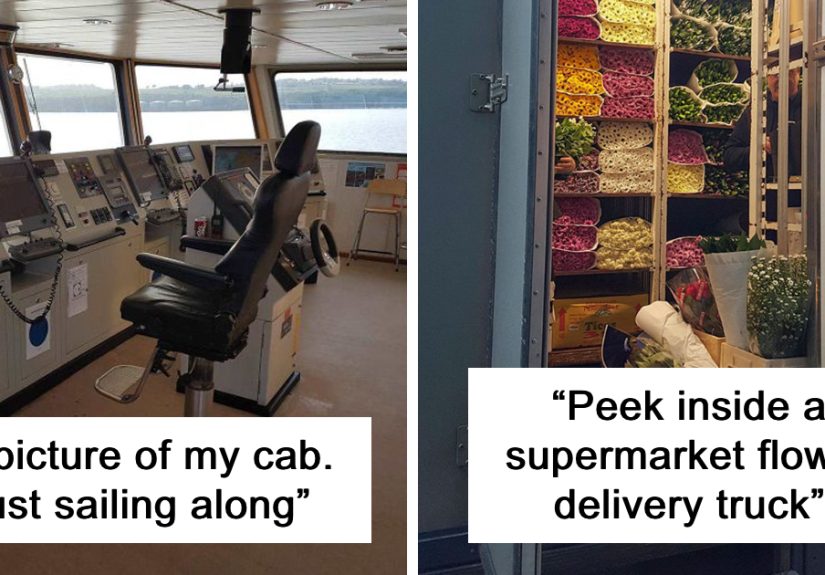
40. Ship Bridge
A ship’s bridge is a wide, instrument-filled command area for navigation, steering, communication, radar, electronic charts, and watchstanding. It may look calm, but it is where weather, traffic, water depth, and human judgment constantly meet.
What These Cabins Reveal About Vehicle Design
Looking across these rare vehicle cabins, one thing becomes clear: design follows pressure. A family SUV cabin is shaped by errands, comfort, safety ratings, and entertainment. A spacecraft cabin is shaped by oxygen, mass limits, navigation, and survival. A fire truck cab is shaped by urgency and gear. A tractor cab is shaped by long hours, dust, visibility, and precision. A race car cockpit is shaped by speed, impact protection, and the need to turn a driver into part of the machine.
That is why so many unusual vehicle interiors look strange at first glance. Their beauty is not decorative; it is functional. The awkward-looking joystick is placed there because a hand needs to find it instantly. The huge windshield is there because blind spots can be expensive or deadly. The seat harness is there because motion can become chaos in a second. The labels, lights, screens, and toggles are not clutter. They are a language.
Experience Notes: What It Feels Like To Peek Inside Rare Vehicle Cabins
Peeking inside a rare vehicle cabin feels a little like reading someone’s diary, except the diary has hydraulic controls and smells faintly of rubber mats. The first reaction is usually surprise. From outside, a vehicle may look simple: big truck, shiny plane, loud race car, farm machine, emergency rig. Inside, however, everything becomes personal. You suddenly understand that every inch was built around a human body doing a difficult job.
The first thing you notice is the seat. In ordinary vehicles, seats are about comfort. In specialty vehicles, seats are about endurance and control. A mining truck seat has to reduce fatigue during long shifts. A racing seat has to hold the driver like a very serious hug. An ambulance attendant seat has to keep a medic protected while still allowing patient care. A tractor seat has to make twelve hours in a field feel less like punishment from a medieval kingdom.
The second thing you notice is visibility. Rare cabins often have strange windows, high seating positions, cameras, mirrors, or displays because the operator must understand the world around the machine. Sitting in a fire truck cab, you feel how high and wide the apparatus is. Sitting in construction equipment, you realize the operator is not just “digging dirt” but judging distance, slope, bucket angle, people on the ground, and nearby structures. Sitting in a locomotive cab, you feel the seriousness of distance: what looks far away can arrive quickly when the train is heavy and momentum is in charge.
Then come the controls. This is where curiosity turns into respect. A modern car asks you to choose a playlist and maybe stay in your lane. A specialty cabin asks the operator to manage power, pressure, braking, traction, load, communications, safety systems, climate, cameras, lights, and sometimes another human life in the back. Some cabins look intimidating because they are intimidating. They are designed for trained hands, not casual button-pushers. There is usually at least one red switch that silently says, “Please do not discover my purpose by accident.”
What makes these cabins memorable is not just the technology. It is the evidence of work. Scuffed steps, grab handles, worn armrests, labeled switches, clipped radios, taped notes, emergency gloves, sun-faded panels, and coffee holders tell a story. These are not showroom interiors. They are tools. They carry firefighters to calls, pilots through weather, farmers through harvest, drivers across states, astronauts beyond Earth, and operators through jobs most of us never see.
After looking inside enough rare vehicle cabins, regular cars start to feel different. Suddenly, your dashboard seems easy. Your seatbelt seems friendly. Your backup camera seems like a tiny luxury. And that cup holder? Honestly, still one of civilization’s finest inventions.
Conclusion
Vehicle cabins are hidden worlds. They reveal how engineers solve real problems for real people operating powerful machines in demanding environments. Some cabins protect crews from impact, heat, dust, noise, vibration, debris, or danger. Others give operators the data they need to fly, haul, harvest, rescue, patrol, race, steer, or explore. The most fascinating cabins are not always the prettiest. They are the ones where every control has a reason and every square inch earns its keep.
So the next time a fire truck passes, a freight train rolls by, a tractor crosses a field, or a jet lifts into the sky, remember that someone is inside a carefully designed command center doing work most of us only glimpse from the outside. And somewhere in that cabin, there is probably a switch, a harness, a radio, a screen, and yes, maybe even a cup holder doing heroic duty.