Table of Contents >> Show >> Hide
- What Allegedly Happened During the Ride
- Why This Story Hit So Hard Online
- The Immediate Fallout: Charges, Job Loss, and Platform Consequences
- Why Employers React So Fast in Cases Like This
- The Bigger Context: Anti-Muslim Bias Is Not Abstract
- The Human Cost for the Driver
- Public Accountability in the Viral Era
- What This Story Says About American Public Life
- Experiences Related to This Story: What Many People Recognize Immediately
- Final Takeaway
Some headlines arrive like a thunderclap, and this one came with all the elements the internet tends to seize immediately: a rideshare trip, a viral video, an alleged assault, questions of anti-Muslim bias, and then the public fallout that followed. But beneath the share buttons and outrage posts is a more serious story about safety, dignity, and the very modern reality that one reckless act can blow up a career, invite criminal scrutiny, and turn a stranger’s worst night into a national conversation.
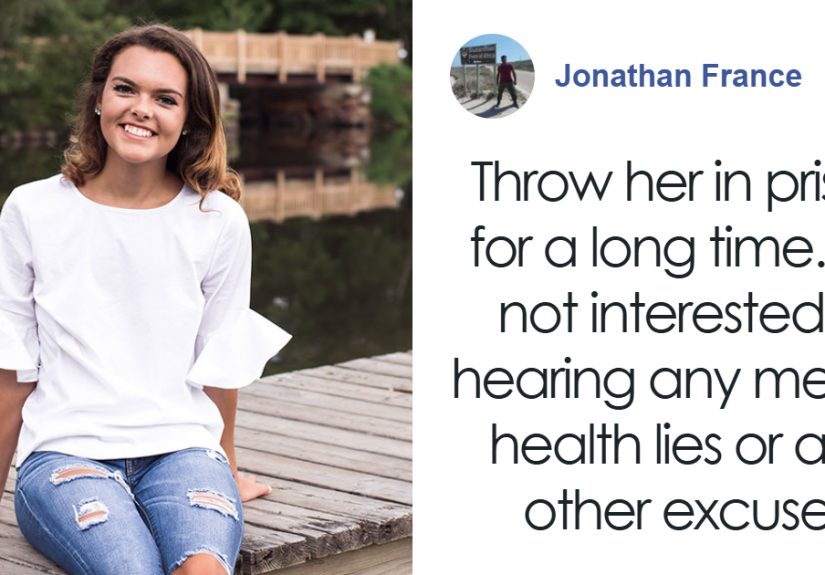
The case involving a woman accused of pepper-spraying a Muslim Uber driver in Manhattan drew intense attention not simply because it was shocking, but because it touched several nerves at once. It raised concerns about anti-Muslim harassment in America, the vulnerability of gig workers who are expected to stay calm no matter what happens in the back seat, and the way employers and platforms now respond when off-the-clock behavior becomes public in a very on-the-record way. In other words, it was not just a bad moment. It was a case study in consequences.
And yes, the phrase that kept circling online was brutally simple: actions have consequences. Not exactly a legal brief, but still the mood.
What Allegedly Happened During the Ride
According to prosecutors and multiple news reports, the incident unfolded during a late-night Uber trip on Manhattan’s Upper East Side. Authorities said the driver, Shohel Mahmud, was completing a ride for two passengers when he began praying quietly in Arabic while stopped at a red light. Prosecutors allege that one passenger then lunged forward and sprayed him in the face with pepper spray.
That detail matters. The core allegation is not simply that a rider became unruly. It is that the driver was allegedly attacked while doing something ordinary for many observant Muslims: praying. That is part of why the case drew hate-crime charges in the first place. The Manhattan District Attorney’s office described the alleged assault as an anti-Muslim attack, and civil rights advocates immediately pointed to it as an example of how religious identity can still trigger hostility in public spaces that are supposed to be routine and transactional.
The driver later described intense burning and pain. Reports said the attack was captured on video, which accelerated public attention. Once footage hits the internet, events stop being local very quickly. A stranger’s late-night ride becomes a national morality play by breakfast.
Why This Story Hit So Hard Online
Part of the reason this case exploded is that it felt both extreme and familiar. Extreme, because pepper-spraying a driver in close quarters is frightening and dangerous. Familiar, because many Americans have already seen similar viral stories in which a service worker or driver becomes the target of somebody else’s prejudice, panic, entitlement, or plain old bad judgment.
Rideshare drivers occupy a peculiar position in modern life. They are expected to be patient, friendly, safe, punctual, discreet, and somehow emotionally bulletproof. They work in tight spaces with strangers. They are rated constantly. They are often alone. And when something goes wrong, they have only seconds to decide whether to de-escalate, stop the vehicle, call police, or protect themselves. That is not customer service. That is emotional triage with seat belts.
Video made the story even more combustible. In 2026, public opinion often forms before a courtroom does. Employers see it. clients see it. future employers definitely see it. The result is that reputational damage can arrive almost instantly, even while legal proceedings are still sorting out what happened and how it should be charged.
The Immediate Fallout: Charges, Job Loss, and Platform Consequences
Public reporting on the case focused on three immediate forms of fallout.
1. Criminal consequences
Prosecutors pursued serious charges tied to the allegation that the attack was motivated by bias. That transformed the case from a disturbing assault story into a wider statement about how authorities interpret violence that appears connected to religion or identity. When a driver is allegedly attacked while praying in Arabic, the legal system is not just asking whether force was used. It is asking why.
2. Employment consequences
The accused woman also reportedly lost her public relations job after the story circulated. That development became part of the headline because it fed a larger public debate: should employers act when an employee’s conduct outside work becomes notorious? In practice, many companies do, especially when the behavior appears violent, discriminatory, or wildly inconsistent with the company’s stated values.
For a PR firm, the irony was impossible to miss. Public relations is the business of reputation. When an employee becomes the reason your own company is suddenly doing crisis communications about itself, that is not merely awkward. It is existentially on-brand in the worst possible way.
3. Platform consequences
Uber’s policies clearly prohibit violence, threatening behavior, and discrimination. That matters because rideshare apps are not neutral floating marketplaces where anything goes. They are governed ecosystems. If a rider is alleged to have engaged in violent or discriminatory behavior, losing access to the platform is not surprising. The app may feel casual. The rules are not.
Why Employers React So Fast in Cases Like This
Whenever a viral misconduct story includes the phrase “former employee,” you are seeing the modern workplace in action. Employers today operate in an environment where public trust, internal morale, customer expectations, and legal risk are all moving at internet speed.
That does not mean every company can or should fire people simply because social media is angry. Employment law is more complicated than a trending hashtag. But when conduct appears violent, biased, or reputationally toxic, many employers decide the business risk of doing nothing is greater than the risk of acting.
There is also a cultural factor. Companies increasingly make public commitments to diversity, inclusion, anti-harassment, and respect. Those commitments become very real when a public incident forces a company to answer a blunt question: do your values live only in onboarding slides, or do they still apply when headlines get ugly?
That is why “actions have consequences” resonates so strongly in stories like this. The phrase is not just moral commentary. It is increasingly corporate policy, platform policy, and public expectation all rolled into one.
The Bigger Context: Anti-Muslim Bias Is Not Abstract
This case also landed in a climate where anti-Muslim bias is already a documented concern in the United States. Federal hate-crime data and civil rights reporting have shown persistent incidents involving religious bias, including anti-Muslim hostility. Civil rights groups have also reported record levels of complaints in recent years, with many involving harassment, discrimination, and threats aimed at Muslim Americans.
That larger context matters because it changes how stories like this are understood. To some readers, it may look like one appalling incident involving one rider and one driver. To others, especially Muslim Americans, it can feel like another reminder that ordinary expressions of identity, language, or faith can still provoke suspicion or aggression.
And that is the key point: bias rarely announces itself with polished ideological slogans. Sometimes it appears in crude reflexes. Someone hears Arabic and decides danger is in the room. Someone sees a prayer and responds as if it were a provocation. Someone confuses difference with threat. The result is not just ignorance. It can become harm.
The Human Cost for the Driver
Too often, stories like this end up centering the accused person’s job loss, social downfall, or legal strategy, while the victim becomes a supporting character in his own ordeal. That would be a mistake here.
The Uber driver was a worker trying to finish a ride. He was not making a speech. He was not confronting anyone. He was not picking a fight. He was doing his job and, according to reporting, quietly praying. That should not be a dangerous act in a car, in a city, or anywhere else.
Reports indicated the injuries and stress affected his ability to work. That is often the hidden cost in stories involving service workers and drivers. When people are attacked on the job, the damage does not end when the video stops. There can be missed income, fear about returning to work, anxiety around passengers, and a long tail of emotional fallout that does not fit neatly into a headline.
In that sense, the real consequence story is not only about the accused woman. It is also about what one person’s split-second alleged act can do to another person’s livelihood and sense of safety.
Public Accountability in the Viral Era
The phrase “actions have consequences” sounds obvious because it is obvious. What has changed is the speed, scale, and visibility of those consequences.
In an earlier era, an ugly incident in a private car might have remained a police report and a local court matter. Today, cameras, dashcams, doorbell feeds, and social media turn isolated behavior into public evidence. That can be messy. It can encourage pile-ons. It can also expose conduct that might otherwise be minimized, denied, or forgotten.
There is a tension here worth acknowledging. Online outrage is not a court. Viral condemnation is not due process. But public visibility can still serve a legitimate purpose when it reveals behavior that institutions need to confront. In this case, the visibility appears to have helped trigger wider scrutiny from prosecutors, advocates, Uber, the public, and the employer connected to the accused woman.
So yes, the internet can be chaotic. But it also has a nasty little habit of keeping receipts.
What This Story Says About American Public Life
At its core, this story says something uncomfortable about the fragility of everyday pluralism. A rideshare trip is one of the most ordinary encounters in modern life. You sit down, confirm the address, stare at your phone, maybe make small talk, maybe do not. It should not become a referendum on whether the driver’s language, religion, or skin tone makes him a target.
Yet stories like this remind us that public life in America is still negotiated in tiny daily moments. Can someone pray quietly without being treated as suspicious? Can a worker speak with an accent without someone assigning a stereotype? Can a driver who looks or sounds “different” simply complete a shift without becoming the object of someone else’s fear or rage?
Those are not abstract culture-war questions. They are sidewalk questions. workplace questions. backseat questions. And they carry real consequences when answered badly.
Experiences Related to This Story: What Many People Recognize Immediately
One reason this case resonated so widely is that many readers could connect it to experiences they have either lived through or witnessed. Muslim Americans often describe the exhausting unpredictability of being treated as normal one minute and suspicious the next. A prayer, a phrase in Arabic, a hijab, a beard, an accent, or even a name can suddenly change the temperature in a room. It is that abruptness that makes these incidents feel so destabilizing. You can be driving a car, helping a customer, teaching a class, or standing in line for coffee, and then one person’s prejudice turns an ordinary moment into a tense one.
Gig workers and service workers recognize another layer of the story. They know what it is like to be trapped in a role where professionalism is expected even when the other person behaves badly. Drivers, cashiers, servers, and delivery workers often have to smile, defuse, absorb, and move on. Many cannot afford to “make a scene,” even when they are the ones being mistreated. That imbalance is part of why incidents involving customers or riders can feel so raw. The worker is expected to keep the peace while also protecting personal safety.
There is also the workplace side of these stories. People have seen colleagues lose jobs, opportunities, internships, or public trust because conduct outside work suddenly became impossible to separate from the employer’s brand. Sometimes the triggering event is a post, sometimes a video, sometimes a police report. The lesson is not that employers monitor every private action. It is that once conduct becomes public, especially if it appears violent or discriminatory, the border between “personal life” and “professional consequences” becomes very thin.
For bystanders, this kind of story can also feel familiar in a different way. Many people have been in the second-row seat of someone else’s awful decision, watching in disbelief as a friend, coworker, or stranger escalates a situation that did not need to exist. That shock matters. It reminds us that prejudice does not always arrive as a polished ideology. Sometimes it shows up as chaos, impulsiveness, entitlement, and the assumption that another human being does not deserve dignity.
And finally, there is the experience of aftermath. Victims may replay the moment. Families worry. Coworkers ask questions. Employers issue statements. Lawyers get involved. The internet passes judgment at top speed. Long after the clip stops trending, the people directly involved are still living with the consequences. That is why this story sticks. It is not only about one alleged assault. It reflects a set of real experiences many Americans know too well: bias in everyday spaces, vulnerability on the job, and the brutal speed with which one ugly act can reshape multiple lives.
Final Takeaway
The most useful thing about the phrase “actions have consequences” is that it cuts through spin. Whether people approach this case from the angle of criminal law, civil rights, workplace reputation, or rideshare safety, the central lesson is the same. A split-second act can trigger legal exposure, professional collapse, platform bans, public condemnation, and long-lasting harm to the victim.
That is not cancel culture. That is cause and effect.
And in a country still wrestling with anti-Muslim bias, the deeper lesson is even more important: people should not have to choose between practicing their faith and feeling safe while they work. That should be the baseline. Not the aspiration. The baseline.