Table of Contents >> Show >> Hide
- ARRW 101: What the “Arrow” Was Trying to Be
- The Timeline: From “Rapid Response” to Rapid Reprioritization
- So… Was ARRW Actually “Canceled” or Just “Paused”?
- Why ARRW Stumbled: The Unromantic Reasons Behind the Decision
- ARRW vs. HACM: Two Hypersonic Paths, Two Different Headaches
- What the Air Force Still Got From ARRW (Even After “Canceling” It)
- What ARRW’s Cancellation Signals About U.S. Hypersonic Strategy
- FAQ: The Most Common ARRW Questions (Answered Like a Human)
- Conclusion: What Happened to ARRW, Really?
- Field Notes: 5 Real-World “Experiences” Hypersonic Programs Teach (and ARRW Proved)
If you blinked, you might’ve missed it: the U.S. Air Force’s hypersonic missile called ARRW (pronounced “arrow”) was “canceled”… but also tested again… and later quietly found a way back into budget documents. If that feels confusing, congratulationsyou’re reading the right article.
ARRW was supposed to be the Air Force’s fast-track hypersonic leap: a boost-glide weapon launched from a bomber, racing to extreme speeds, then maneuvering toward a target in ways traditional ballistic missiles don’t. Instead, ARRW became a case study in modern defense reality: physics is hard, integration is harder, and budgets have the final vote.
ARRW 101: What the “Arrow” Was Trying to Be
ARRW stands for Air-Launched Rapid Response Weapon, officially designated AGM-183A. In plain English, ARRW was a “boost-glide” hypersonic weapon: a rocket booster kicks the payload up to hypersonic speed, then a glide vehicle separates and streaks toward the target at very high speed while remaining maneuverable.
The appeal was obvious:
- Speed + maneuverability can shrink warning times and complicate missile defense.
- Air-launch adds flexibilitymove the launch platform, shift the geometry, choose the time and place.
- Rapid prototyping promised a quicker path than traditional acquisition programs.
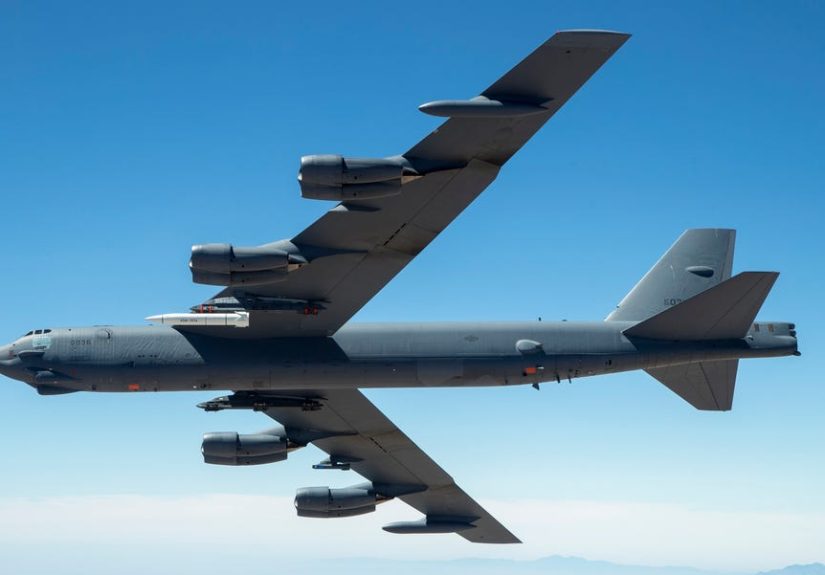
ARRW’s testing centered on the B-52Ha strategic bomber with the payload capacity and range to carry a large missile and support long test corridors over the Pacific.
The Timeline: From “Rapid Response” to Rapid Reprioritization
ARRW’s story isn’t a single “cancel button” moment. It’s more like a slow-motion relay race where the baton kept getting droppedthen picked up againthen debated in a budget meeting.
2018–2022: Big ambitions, then mixed test reality
ARRW entered the hypersonic sprint with urgency, aiming to demonstrate an operationally relevant capability quickly. Over time, the program experienced a combination of successful events and frustrating setbacks. This is pretty normal in hypersonicsexcept hypersonics are expensive, highly visible, and politically impatient.
December 2022–March 2023: A turning point
After an all-up-round test effort in late 2022, the program’s momentum hit a wall in March 2023, when a flight test was publicly acknowledged as unsuccessful. In test programs, a failure is just data. In a budget cycle, a failure can become a headline with a price tag.
March 2023: The Air Force says ARRW won’t proceed beyond testing
By late March 2023, Air Force leadership signaled the key decision: ARRW would not transition into operational procurement as originally hoped. The program would continue a limited number of planned test flights to gather databut the service’s main hypersonic focus would shift.
August 2023–March 2024: “Canceled,” but still flying
Here’s the part that makes people think the internet is gaslighting them: ARRW continued to show up in test news. The Air Force conducted additional activity and, in March 2024, carried out what was described as a major all-up-round test event in the Pacific region involving a B-52 launching an ARRW prototype. Some reporting characterized it as successful, while official statements emphasized “valuable insights” rather than victory laps.
FY 2025: No money, no mission
The cleanest signal of “we’re done” in defense programs is simple: no procurement funds and no R&D line that keeps development alive. In the Air Force’s FY 2025 budget materials and related reporting, ARRW was notably absent from procurement and further development funding, while other hypersonic efforts were prioritized.
FY 2026 planning: The plot twist
Later budget reporting and congressional analysis suggested the Air Force explored reviving ARRW in procurement planning for FY 2026, indicating that “canceled” sometimes means “not right now, not like this, and not with that test record.” In other words: ARRW’s door didn’t just crack openit creaked.
So… Was ARRW Actually “Canceled” or Just “Paused”?
The honest answer: ARRW was canceled as a path to near-term operational fielding, but not immediately erased from existence.
That sounds like a contradiction until you know how these programs work. ARRW lived under a rapid prototyping approach. Under that model, the Air Force can decide not to “adopt” the prototype into a formal program of recordwhile still finishing planned tests to harvest data. That data can inform other hypersonic weapons, future boosters, guidance approaches, thermal protection lessons, and manufacturing realities.
Think of it like this: the Air Force didn’t want to keep paying for a full restaurant franchise, but it was still willing to finish the last few cooking experiments to learn the recipe. (Unfortunately, the soufflé tried to escape the oven at Mach 5.)
Why ARRW Stumbled: The Unromantic Reasons Behind the Decision
There wasn’t one single villain. ARRW ran into a stack of issues that, together, made leadership and Congress ask: “Is this the best use of limited hypersonic dollars?”
1) Hypersonic flight testing is brutaland failures are expensive
Boost-glide systems must survive extreme acceleration, separation events, intense heat, communications challenges, and precision guidance at absurd speeds. Even when a test achieves some objectives, a single failure in a key phase can mean you don’t collect the data you actually needed.
In ARRW’s case, publicly discussed test issues included separation and shroud-related problems that limited what the Air Force could learn about the glide and terminal phases in at least one major test. When the goal is an “end-to-end” weapon, a broken link anywhere in the chain becomes the whole story.
2) Cost and schedule pressure collided with “rapid” expectations
ARRW’s name includes “rapid,” which is great until reality asks, “Rapid compared to what?” The missile’s development encountered delays, and hypersonic components aren’t mass-produced commodities you can buy in bulk at a discount club.
Meanwhile, the Air Force also faced competing modernization demandsstealth aircraft, munitions stockpiles, space systems, nuclear modernization, and more. In that environment, a program with mixed test results has a tougher time arguing it deserves the next big check.
3) Platform integration: big missile, fewer places to hide it
ARRW is not a tiny bolt-on accessory. A large boost-glide missile pushes you toward aircraft that can carry itlike a B-52while shrinking the menu of potential launch platforms. That matters operationally:
- Fewer compatible aircraft can mean fewer sorties that can carry the weapon.
- Large external carriage can affect signature and flight profiles.
- Magazine depth becomes a serious question: how many can you carry, how many can you surge, how many can you afford?
Even if ARRW worked perfectly, the Air Force still had to decide whether it was the right hypersonic “shape” for the force.
4) The Air Force chose a different hypersonic bet: HACM
At the same time ARRW struggled, the Air Force increasingly emphasized the Hypersonic Attack Cruise Missile (HACM)a different concept with different tradeoffs. HACM is generally described as a hypersonic cruise missile approach, which can offer advantages in integration across a broader set of aircraft and operational flexibility.
Leadership statements and budget reporting signaled that the Air Force believed HACM offered a more promising pathenough to prioritize it even while ARRW was still finishing tests.
ARRW vs. HACM: Two Hypersonic Paths, Two Different Headaches
It’s tempting to frame ARRW as “the failed one” and HACM as “the good one.” Real life is messier. The Air Force was balancing risk across approaches.
ARRW (boost-glide)
- Pros: Potentially very fast end-to-end; strong theoretical survivability against some defenses; leverages boost-glide heritage.
- Cons: Large form factor; difficult testing and separation events; potentially narrower aircraft compatibility; costly development and limited tolerance for failures.
HACM (hypersonic cruise missile approach)
- Pros: Potentially broader aircraft compatibility; may align better with Air Force operational concepts; budgets signaled strong commitment.
- Cons: Still technologically demanding; propulsion and thermal challenges remain; integration and production scaling are never “easy mode.”
In other words: ARRW was a high-speed science project with operational ambitions. HACM is an operational ambition with a high-speed science project inside it.
What the Air Force Still Got From ARRW (Even After “Canceling” It)
Even a program that doesn’t get fielded can be valuableespecially in hypersonics, where data is rare and costly.
ARRW generated learning in areas that matter across the hypersonic portfolio:
- Flight test design: Instrumentation, telemetry, and range coordination for extreme-speed events.
- Booster and separation dynamics: The “hand-off” from boost to glide is a make-or-break moment.
- Thermal protection and materials: Heat management is not optional at hypersonic speeds.
- Industrial base reality: Prototyping is one thing; producing reliable weapons at scale is another.
If you’re building future hypersonic systems, you want those lessonsideally without repeating the same expensive mistakes.
What ARRW’s Cancellation Signals About U.S. Hypersonic Strategy
ARRW’s saga reveals a broader shift in how the U.S. is trying to compete in hypersonics:
- Portfolio thinking: Instead of betting everything on one missile, the Pentagon is spreading risk across multiple programs and services.
- Operational fit matters: A weapon isn’t just a test successit has to integrate into real squadrons, real aircraft, real logistics, and real budgets.
- Congress is watching: Hypersonics are high-profile. Programs that don’t show progress quickly become targets for cuts or restructuring.
- “Canceled” can be reversible: If threat pressure increases or testing improves, programs can reappear under new funding strategies.
ARRW didn’t just test hypersonic hardwareit tested whether “rapid prototyping” can deliver a reliable, affordable hypersonic weapon on a timeline that satisfies both warfighters and appropriators.
FAQ: The Most Common ARRW Questions (Answered Like a Human)
Did ARRW ever work?
ARRW had a mixed testing record, including events described as successful and others publicly acknowledged as unsuccessful. In hypersonics, “worked” often depends on which phase you’re talking about and whether the test achieved the data objectives.
Why cancel ARRW right after testing it again?
Because the Air Force can decide it doesn’t want to buy and field the weaponwhile still using remaining test assets to collect data. It’s not unusual for a prototype to fly even after the service decides it won’t become an operational program.
Why not keep ARRW and HACM?
Money, capacity, and focus. Hypersonic programs are costly, and leadership appeared to believe HACM offered a better path for the Air Force’s needs at that time. Keeping both at full throttle can dilute resources and slow both down.
Is ARRW dead forever?
“Forever” is a long time in defense budgeting. Later budget discussions indicated interest in reviving ARRW procurement, which suggests the Air Force may still see value in the capabilityif the program can meet cost, reliability, and operational fit requirements.
Conclusion: What Happened to ARRW, Really?
ARRW wasn’t canceled because the Air Force stopped caring about hypersonics. It was canceled because the Air Force does care about hypersonicsand decided it needed a different approach.
ARRW became a headline example of how hard it is to turn hypersonic promise into operational reality. Mixed test outcomes, complex integration needs, and budget tradeoffs pushed the Air Force to prioritize HACM and step back from immediate ARRW fielding. Yet the continuation of tests and later procurement discussions also show something else: ARRW’s underlying concept never stopped being relevant. It just stopped being the Air Force’s preferred hypersonic betat least for a while.
So if you’re looking for the clean Hollywood ending where the “Arrow” either hits the bullseye or snaps in half dramaticallysorry. This is procurement. The ending is a spreadsheet.
Field Notes: 5 Real-World “Experiences” Hypersonic Programs Teach (and ARRW Proved)
(This section adds practical, experience-driven perspectivewithout pretending anyone needs to be a rocket scientist to understand the pain.)
1) The test range becomes your second headquarters.
People imagine hypersonic development as engineers huddled over CAD models and dramatic launch footage. The lived experience is often calendars, coordination calls, and range constraints. For programs like ARRW, the Pacific test architecture matters: tracking assets, safety corridors, telemetry, and a thousand moving pieces that must align. One missed handofflike losing key sensor data at the wrong momentcan turn a months-long buildup into a “we learned some things, but not the things we needed.” That’s not glamour; that’s the job.
2) A “failure” is technically usefuland politically radioactive.
Engineers treat failures as data points. Program managers treat them as schedule impacts. Congressional staffers treat them as questions. The warfighter community treats them as “so when can I actually get this?” ARRW demonstrated the human tension between learning and accountability: even when a test teaches you something important, it can still weaken confidence if the story becomes “another setback.” In hypersonics, the learning curve is steepbut the patience curve is shallow.
3) Integration beats innovation if you want a weapon in the field.
A hypersonic missile isn’t only a missile. It’s training, handling equipment, software updates, safety certifications, basing assumptions, loading procedures, and platform compatibility. The operational experience of building a weapons ecosystem can be less forgiving than the technology itself. ARRW’s large form factor highlighted a key truth: even an impressive capability can struggle if it fits only a narrow slice of aircraft or creates burdens the force can’t absorb quickly. Leaders tend to prefer the hypersonic option that slots into more of the existing Air Force machine.
4) “Rapid prototyping” still has to survive the budget Olympics.
Rapid programs promise speed, but budgets demand justification. Every year, portfolios get compared: which program is closest to fielding, which has clearer milestones, which best matches operational concepts, which can scale production, which has the least frightening risk chart. ARRW’s experience shows that “rapid” doesn’t mean “immune.” If leadership decides another programlike HACMhas a better balance of risk and payoff, money migrates. And when money migrates, fate follows.
5) The biggest experience is humility: the physics always gets a vote.
Hypersonics punish assumptions. Heat, vibration, separation timing, materials, guidance, communicationseverything gets harder at extreme speed. ARRW’s journey reinforced a quiet, universal lesson in flight test culture: the vehicle doesn’t care about your press release. That humility can be productive. It forces better engineering discipline, better test design, and better decision-making about which hypersonic path to pursue next.
Bottom line: ARRW’s cancellation wasn’t just about one missile. It was a very public reminder that the path from “prototype” to “operational weapon” is not a straight lineespecially when the weapon is moving faster than the headlines.