Table of Contents >> Show >> Hide
- What Makes a Felling Axe “American”?
- A (Very) Short History of a Very Long Tool
- American Felling Axe Patterns: Why So Many “Flavors”?
- Single-Bit vs. Double-Bit: Two Philosophies of the Same Problem
- Steel, Forging, and the Shape of a Good Cut
- Why Hickory Handles Became the Standard (and Why Grain Matters)
- Choosing an American Felling Axe Without Overbuying (or Underthinking)
- Care and Maintenance: The Unsexy Stuff That Keeps It Fun
- Safety: The Part Everyone Skims Until They Don’t
- The Modern Revival: Old Patterns, New Pride
- Common Experiences Around American Felling Axes ()
- Conclusion
There are few tools more “quietly American” than the felling axe: a wedge of steel on a hickory handle that helped turn forests into farms,
homes, railroads, townsand, eventually, a nation that never met a “before-and-after” renovation it didn’t like. Long before chainsaws and
hydraulic harvesters, the felling axe was the job interview, the paycheck, and the daily gym membership.
But “American felling axe” isn’t just a patriotic label. It’s a family of designsshaped by regions, tree species, and the hard math of making
a sharp edge survive real work. In this guide, we’ll break down what makes American felling axes distinctive, how classic patterns evolved,
why double-bits became legends in logging country, and what to look for if you’re choosing one todaywithout turning your weekend into a
cautionary tale.
What Makes a Felling Axe “American”?
In everyday speech, “felling axe” means a full-sized axe meant for cutting across grainespecially to bring down standing timber. In American
tradition, that typically points to the American-pattern single-bit (one cutting edge, one poll) and its many regional
variations. The design priorities were practical:
A head built to bitethen get out of the way
A felling axe needs a cutting edge that bites cleanly, plus cheeks (the sides behind the edge) that don’t wedge so aggressively that the tool
sticks every swing. Many American patterns strike a balance: enough thickness for durability, but not so much that the head behaves like a
doorstop in a living tree.
The “hang” is the secret handshake
Old pros were famously picky about an axe’s hanghow the head is fitted to the handle, its alignment, and how it tracks through a swing.
Two axes can weigh the same and still feel totally different because the hang changes control, accuracy, and fatigue. That’s why experienced
users talk about an axe like it’s a dance partner: if it’s “off,” you’ll know in five minutes.
Hickory handles: the American default for a reason
American hickory became the iconic handle wood because it’s tough, springy, and good at soaking up shock. A good handle isn’t just “wood that
holds the head.” It’s part of the system that helps protect your hands, your arms, and your day.
A (Very) Short History of a Very Long Tool
Axes have existed for thousands of years, but the American story has a particular twist: abundant forests, fast expansion, and a constant need
for edge tools that could be produced at scale. Early on, colonists often relied on local blacksmiths or imported heads. As American industry
matured, axe manufacturing became more standardizedand more ambitious.
Industrial America meets the edge-tool boom
By the 1800s, American makers were producing ready-to-use axes in large numbers, and companies competed on quality, consistency, and variety.
Some firms became global exporters, offering many patterns tailored to different regions and preferences. That variety wasn’t marketing fluff;
it was a response to real differences in wood species, working styles, and local traditions.
Single-bit first, double-bit fame later
The single-bit felling axe became a kind of international benchmark for quality in American edge tools. The double-bit (two cutting edges, no
poll) emerged in the mid-1800s and spread in the Northeast, but it gained special popularity laterespecially in big-timber regions where
speed, flow, and edge management mattered. In logging culture, the double-bit became both a practical tool and a symbol: the kind of axe you
carry when you want the forest to know you showed up to work.
American Felling Axe Patterns: Why So Many “Flavors”?
If you’ve ever fallen into the rabbit hole of axe patterns, you already know: it’s not one rabbit holeit’s a warren. Pattern names like
Dayton, Connecticut, Yankee, Michigan, Jersey, and
Puget Sound hint at where a design became popular or where a maker sold them heavily. Think of them like regional pizza:
they’re all pizza, but people will absolutely argue about what counts.
The Dayton pattern: the American “all-rounder”
The Dayton pattern is often described as a general-purpose American axe profilewidely recognized and widely used. In many modern lineups,
“Dayton” stands in for a balanced felling/bucking style head: not overly specialized, not overly fragile, and versatile enough that owners keep
reaching for it when they don’t want to overthink it.
Regional patterns: tuned for local work
Some patterns skew broader, slimmer, heavier, or more curved. Those differences can reflect:
- Tree species (softwoods vs. hardwoods, stringy vs. brittle fibers)
- Cutting style (fast, repetitive swings vs. slower, more controlled work)
- Local industries (logging, hewing, shipbuilding, turpentine production, and more)
- Availability (what local makers produced, what stores stocked, what crews preferred)
The result is a huge “pattern map” of American axe historyproof that the most analog tool imaginable still evolved like technology: iterated,
adapted, and optimized by users who cared a lot about what worked.
Single-Bit vs. Double-Bit: Two Philosophies of the Same Problem
The single-bit felling axe is the classic: one cutting edge, one poll that can serve as a striking surface (in appropriate contexts) and adds
a familiar balance. It also makes the “business end” obviousalways a nice feature when you’re tired.
The double-bit is a different idea: two edges that can be ground and maintained differently. Historically, users might keep one edge keener for
clean cutting and the other slightly more durable for rougher contact. The tradeoff is that a double-bit demands more attention and safer
habits, because there’s no “safe” back endevery end is trying to be the sharpest object in the zip code.
If you’re under 18, treat both as adult tools: use only with responsible adult supervision and proper training. These are not “learn by trial
and error” tools. The error part is where things get expensive.
Steel, Forging, and the Shape of a Good Cut
A felling axe is basically a controlled experiment in metallurgy. The head needs to be tough enough to survive impacts and vibrations, yet
hard enough at the edge to hold a working sharpness. That’s why reputable American makers emphasize forging, heat treatment, and consistent
quality control.
Edge geometry: the difference between “bites” and “bounces”
People talk about weight a lot3.5 pounds, 4 pounds, 5 poundsbut geometry often matters more than a scale number. Edge profile, cheek
thickness, and head balance influence how the axe penetrates and releases. That’s also why pattern names still matter: they’re shortcuts for
a geometry that users recognize in the hand.
Fit and finish: not just vanity
A smooth eye (the hole where the handle fits), clean transitions, and a well-seated handle reduce unwanted movement and help the axe track
predictably. “Predictable” might be the least sexy compliment you can give a tooluntil you’re using it. Then it’s basically poetry.
Why Hickory Handles Became the Standard (and Why Grain Matters)
Hickory is native to the eastern United States and has a long history in demanding wooden partstool handles, wagon components, and other jobs
where shock resistance matters. Good handle wood combines strength with flexibility, helping absorb impact instead of transferring every jolt
into your wrists.
Straight grain: the boring detail that saves your day
If you ever hear a serious axe person say “look at that grain” like they’re admiring a sunset, this is why: straight grain tends to be
stronger and more predictable under stress. A great head on a poor handle fit is like a sports car on bald tires. It might look impressive,
but the first surprise will be memorable in the worst way.
Choosing an American Felling Axe Without Overbuying (or Underthinking)
Let’s keep this practicaland safe. A felling axe isn’t a toy, a prop, or a vibe. It’s a real cutting tool meant for demanding work. If your
goal is learning, collecting, restoration, or responsible property maintenance, these are the decision points that matter:
1) Decide what “felling” means in your life
For professionals, “felling” is a trained skill with site assessment, escape planning, and specialized safety practices. For non-professionals,
it may mean understanding the tool’s heritage, doing controlled cutting tasks, or maintaining wood on private property with proper guidance.
If you’re dealing with standing trees near buildings, power lines, or public areas, that’s a job for trained, insured pros.
2) Weight and handle length should match the user
Heavier heads can deliver more force, but they also fatigue the user faster and punish poor form. Longer handles increase leverage and reach,
but demand control and space. Many manuals and experienced users emphasize that “bigger” isn’t automatically “better”the best axe is the one
you can control consistently.
3) Pick a reputable maker (and don’t ignore vintage)
American felling axes have a rich ecosystem of old and new. Modern U.S. manufacturers still produce felling and bucking axes, and there’s also
a lively restoration culture around vintage American headsoften prized for their profiles and steel. If you’re buying used, prioritize safety:
loose heads, cracked handles, and mystery modifications are not “character,” they’re problems.
Care and Maintenance: The Unsexy Stuff That Keeps It Fun
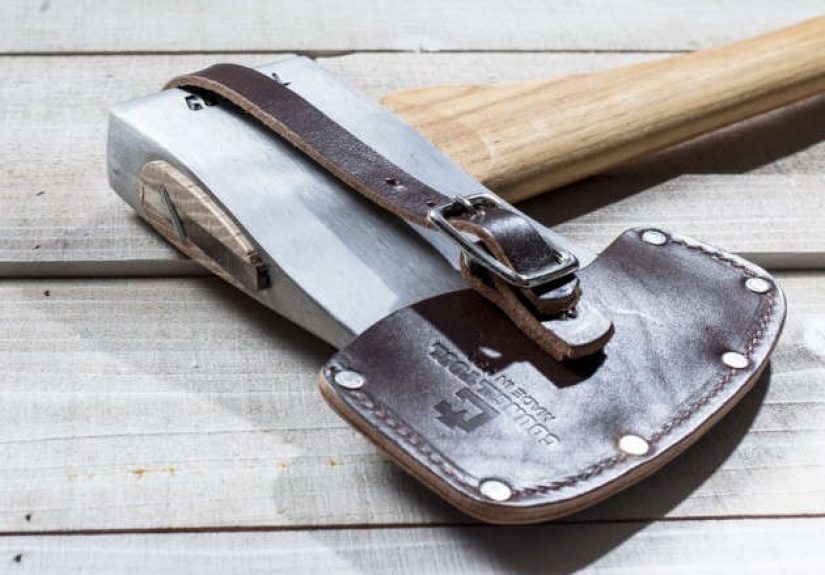
The best axe care advice is also the least dramatic: keep it clean, keep it dry, protect the edge, and check the handle regularly. A simple
cover (a sheath) helps protect the edge and everything near itlike your other tools, your vehicle, and your shins.
Sharpening is its own craft. Instead of chasing an “internet-perfect” edge, focus on a safe, working sharpness and consult reputable manuals
or in-person instruction. If you’re new, learn from experienced adults and keep safety front-and-center. The goal isn’t “razor”; it’s “reliable.”
Safety: The Part Everyone Skims Until They Don’t
An axe in motion is powerful and can be dangerous. That’s not alarmismit’s physics. Professional guidance commonly emphasizes a clear work
area, awareness of others, and avoiding solo work in risky conditions. Add basic protective gear, stable footing, and a plan for what you’ll do
if something goes wrong.
- Keep your workspace clear of people, pets, and clutter.
- Inspect before use: head secure, handle sound, no major damage.
- Use training and supervision, especially if you’re under 18.
- Know when not to use an axe: complex tree work is not a DIY flex.
The Modern Revival: Old Patterns, New Pride
In an age of batteries and apps, you might expect the felling axe to fade into museum territory. Instead, it’s enjoying a revivalpart craft,
part heritage, part “I want tools I can actually understand.” American makers still forge felling and bucking axes, and boutique shops and
collectors keep historical patterns alive through restoration and education.
There’s also a cultural pull: the American felling axe is a symbol of self-reliance, yes, but also of skilled labor. In the best sense, it
reminds us that competence is attractiveespecially competence that keeps all toes accounted for.
Common Experiences Around American Felling Axes ()
Because axes are physical tools, the “experience” side of American felling axes tends to show up in the same places again and againwhether
you hear it from foresters, woodworkers, collectors, or folks restoring a garage-find head that looks like it survived three centuries and a
minor war.
The first surprise: balance matters more than you expected
Many people assume an axe is basically a heavy blade that you swing. Then they pick up a well-hung American felling axe and realize it feels
“alive” in the hands. The head tracks smoothly, the handle flexes just enough, and the tool does not fight the user. That’s when you learn why
old-timers obsessed over hang, handle shape, and the subtle differences between patterns. A good felling axe doesn’t just hit woodit moves
through it with intent.
The second surprise: sound becomes feedback
Users often talk about sound in almost musical terms. A clean bite has a different note than a glancing strike. A secure head and solid handle
feel (and sound) different than a loose fit. Over time, you can hear when something is “off” before you see it. That’s not mysticism; it’s
pattern recognition built from repetition. The axe becomes a teacher that grades you instantly.
Restoration is part archaeology, part therapy
Vintage American felling axe heads are everywhere: barns, flea markets, toolboxes inherited from someone who could repair anything except a
relationship. The restoration processcleaning, removing rust, re-handling, protecting the steelbecomes a connection to how the tool was used.
People often describe the satisfaction of bringing a battered head back into safe working condition, especially when the original maker’s stamp
reappears. It feels like rescuing a story.
The “respect phase” happens fast
Another common experience: you don’t stay casual about an axe for long. The moment you realize how quickly things can go wrong, you start
adopting better habitsclearing your work area, checking your stance, paying attention to where the edge will travel if it misses. Responsible
users often say the axe teaches humility. You can be strong, but strength doesn’t substitute for control.
People fall in love with specificity
At first, an axe is an axe. Then you learn the differences: why one pattern feels better in certain woods, why handle curvature changes control,
why some heads release cleanly and others bind, why certain historic designs became favorites in particular regions. That specificity is part of
the fun. It also explains why American felling axes remain a living traditionbecause there’s always more to learn, and the learning shows up in
the hands, not just in theory.
The best “experience” takeaway is simple: American felling axes aren’t just artifacts. They’re tools shaped by real workand they still reward
thoughtful users today, whether your interest is history, craft, restoration, or responsible outdoor skills learned the right way.
Conclusion
American felling axes sit at the intersection of history and function: refined patterns, smart geometry, durable steel, and the shock-absorbing
practicality of hickory. From industrial-era makers and global exports to double-bit legends in logging country, the story is bigger than the
tooland the tool is better than the stereotype. If you approach it with respect, proper training, and an appreciation for design, a felling axe
becomes more than a sharp object. It becomes a lesson in how Americans solved problems: with steel, wood, and a willingness to iterate until it
worked.