Table of Contents >> Show >> Hide
- PSPgo at a Glance
- Design and Build: The Slider Era, but Make It PlayStation
- Display: 3.8 Inches of Widescreen Nostalgia
- Core Hardware: CPU Speed, Memory, and the “It’s Still a PSP” Reality
- Storage: 16GB Internal Flash (and the M2 Memory Card Plot Twist)
- Connectivity: Wi-Fi, Bluetooth, and the Multi-Use Connector
- Audio and Media: Speakers, Microphone, and Portable Entertainment Goals
- Video Output: How the PSPgo Can Pretend It’s a Living-Room Console
- Battery and Power: The Trade-Off for Slimness
- Digital-Only Ecosystem: The Spec That Isn’t a Number
- PSPgo vs. Other PSP Models: What Changes, What Doesn’t
- Who the PSPgo Is For (Even Now)
- Real-World Experience: What Living With PSPgo Specs Feels Like
- Closing Thoughts
The PSPgo (officially the PSP-N1000) is the handheld that looked at the PlayStation Portable’s chunky UMD drive and said,
“What if we… simply didn’t?” In 2009, that was either a bold leap into the all-digital future or the gaming equivalent of
showing up to a potluck with only a spoondepending on how attached you were to your little plastic discs.
Either way, the PSPgo is one of Sony’s most interesting hardware experiments: smaller, lighter, slider-style, Bluetooth-enabled,
and built around downloadable games. If you’re here for the specs, you’re in the right place. We’ll break down what the PSPgo
is made of, what each spec actually means in real use, and why this tiny machine still gets discussed like it dropped last week.
PSPgo at a Glance
Here’s the “tell-me-fast” version. (Don’t worrydetails and context follow right after.)
| Category | PSPgo Spec Summary |
|---|---|
| Model | PSP-N1000 (PSPgo) |
| Display | 3.8-inch TFT LCD, 480×272, 16:9 |
| CPU / Memory | PSP CPU (1–333 MHz), 64MB system memory |
| Storage | 16GB internal flash + Memory Stick Micro (M2) expansion |
| Connectivity | Wi-Fi (802.11b), Bluetooth 2.0 (EDR), USB 2.0 via multi-use connector |
| Audio | Stereo speakers, built-in microphone, 3.5mm headphone jack |
| Video Output | Analog video out (via optional cables/cradle) |
| Size / Weight | Approx. 128 × 69 × 16.5 mm; about 158g |
| Battery | Internal Li-ion (commonly cited at 930 mAh); expected playtime varies by use |
| Big “Design” Change | No UMD drive (download-only for games) |
Design and Build: The Slider Era, but Make It PlayStation
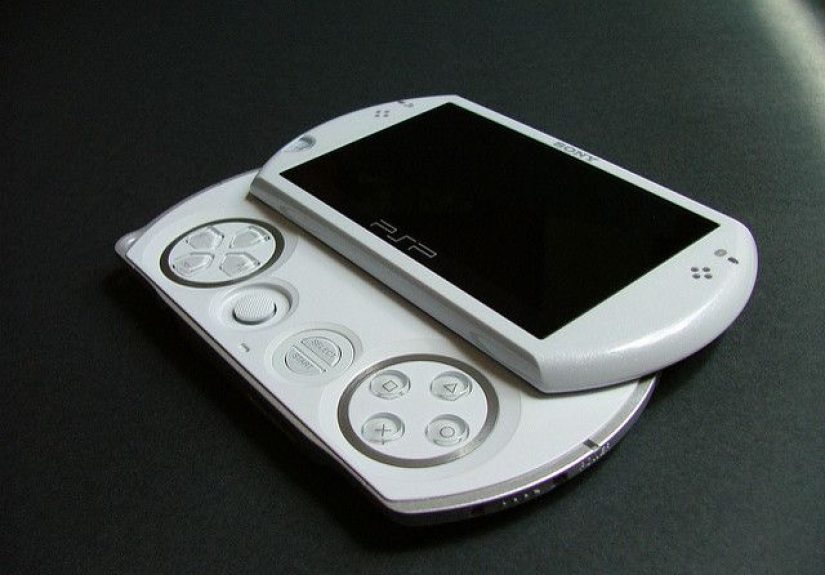
The PSPgo’s most obvious “spec” is the one you feel before you even power it on: it’s compact.
At roughly 128 × 69 × 16.5 mm and about 158 grams, it’s notably smaller and lighter than earlier PSP models.
Instead of a fixed face, the PSPgo uses a sliding screenpush the display upward and the controls are revealed underneath.
The slider isn’t just a party trick. It changes how you carry the device. With the controls tucked away,
the PSPgo is less likely to snag in a pocket or get its buttons mashed by whatever else you’re carrying
(keys, coins, that mystery gum wrapper that follows you from jacket to jacket).
Controls: Familiar Layout, Different Feel
The PSPgo keeps the classic PSP setupD-pad, face buttons, shoulder buttons, a single analog nubjust arranged in a tighter footprint.
If you’re used to a PSP-2000/3000, expect a similar control philosophy but a more compact hand position.
Smaller can be nicer for travel, but it can also mean long sessions feel more “pinched” depending on your grip.
Display: 3.8 Inches of Widescreen Nostalgia
The PSPgo’s display is a 3.8-inch TFT LCD with the PSP family’s signature 480×272 resolution in a
16:9 aspect ratio. The pixel count doesn’t sound impressive todaybecause it isn’tbut it was designed for one job:
make PSP games look clean, bright, and properly scaled on a handheld screen.
In practice, this resolution matches the PSP’s native rendering expectations. That matters because it minimizes scaling artifacts:
text and UI elements tend to look “as intended,” rather than stretched or softened by awkward resizing.
What the Smaller Screen Size Really Means
Compared to the 4.3-inch screen on other PSP models, the PSPgo’s smaller panel makes the device more pocketablebut also makes
small HUD elements feel, well, smaller. Fast action games still look sharp, but heavy text games and tiny mini-map interfaces
can demand a bit more squinting. (Your eyes may file a complaint with your brain’s HR department.)
Core Hardware: CPU Speed, Memory, and the “It’s Still a PSP” Reality
Under the hood, the PSPgo is fundamentally a PSP. Its CPU is commonly described as the PSP CPU with a system clock
ranging from 1 to 333 MHz, paired with 64MB of system memory.
This is important because it signals compatibility: PSPgo runs the same PSP game library as other later PSP revisions, just delivered digitally.
Performance Expectations
For PSP titles, performance is generally “native” because the software was built for this hardware profile.
Where you feel limits is in two places:
- Ambitious late-era games that push the system hard can still show the same constraints you’d see on a PSP-3000.
The PSPgo doesn’t magically turn into a PS3 because it learned a new trick. - Multitasking is not the point here. While you can store music, photos, and videos, this is a dedicated gaming device first.
The payoff is consistency: if a game runs well on a later PSP model, you can generally expect similar behavior on the PSPgo.
Storage: 16GB Internal Flash (and the M2 Memory Card Plot Twist)
The PSPgo’s defining spec is its built-in 16GB internal flash storage. That storage replaces the UMD drive as your main way to
“own” and carry games. In 2009, 16GB was enough to feel liberatingat least until you tried to download a few big titles,
some PS1 Classics, a handful of demos, and your “totally essential” music library.
Expandable Storage: Memory Stick Micro (M2)
If you need more space, the PSPgo supports Memory Stick Micro (M2) cards. This is where the PSPgo gets a little spicy:
M2 is smaller than the Memory Stick Duo format used by many other PSP models, and it’s also more niche.
Translation: it’s compact and convenient, but not exactly the universal “grab one anywhere” storage standard.
What Fits on 16GB?
Game sizes vary a lot. Some PSP games are relatively small; others can be much larger. A realistic “day-to-day” expectation is:
you can comfortably keep multiple full games installed, but you’ll eventually start managing spaceespecially if you also store video.
If you treat the PSPgo like a digital library you never prune, it will politely remind you that physics is still real.
Connectivity: Wi-Fi, Bluetooth, and the Multi-Use Connector
The PSPgo supports Wi-Fi (IEEE 802.11b) for online features and downloading content. While 802.11b is old by today’s standards,
it was sufficient for game downloads and basic online functions at the time. Your modern router may still support it, but your patience might not.
Bluetooth 2.0 (EDR): The PSPgo’s Secret Superpower
Bluetooth is one of the PSPgo’s most meaningful upgrades over many earlier PSP revisions.
With Bluetooth 2.0 (EDR), the PSPgo can pair with supported accessoriesmost famously,
a DualShock 3 controller, which opens up “play it like a tiny console” scenarios when combined with video out.
USB and the Multi-Use Connector
Instead of a standard mini-USB port like other PSP models, the PSPgo uses a multi-use connector that handles charging,
USB data transfer, and audio/video output through compatible cables or a cradle.
This design keeps the device slim, but it also means you’re living in “special cable” land.
Lose the cable, and you can’t just borrow a random one from the kitchen drawer.
Audio and Media: Speakers, Microphone, and Portable Entertainment Goals
The PSPgo includes built-in stereo speakers and a built-in microphone.
The mic matters because it supports voice features in certain games and apps, and it’s part of Sony’s push to treat the PSPgo as
a small entertainment hubnot just a gaming device.
There’s also a standard 3.5mm headphone jack, which is great news if you prefer wired headphones
(and/or if you’ve been burned by wireless pairing rituals that feel like summoning a dragon).
Video Output: How the PSPgo Can Pretend It’s a Living-Room Console
One of the PSPgo’s most underrated specs is its ability to output video through the multi-use connector using compatible accessories.
With the right cable or cradle, you can display gameplay on a TV. Add Bluetooth controller support, and suddenly the PSPgo starts
acting like a “micro console” that fits in your pocket.
Why This Matters in Real Life
On a handheld screen, PSP games are designed to be readable at close range. On a TV, some games look surprisingly good,
especially simpler titles and PS1 Classics. It’s not upscaled into modern HD glory, but it is a charming way to replay old favorites
and it’s a big part of why the PSPgo still has fans.
Battery and Power: The Trade-Off for Slimness
The PSPgo uses an internal rechargeable lithium-ion battery. Teardowns and parts listings commonly cite it around
930 mAh. Because it’s internal, it’s not meant to be swapped as casually as a typical “pop the back cover off” portable.
Expected Battery Life
Battery life depends heavily on what you’re doing: screen brightness, Wi-Fi usage, audio volume, and the demands of the game.
Reports around launch commonly described gameplay in the ballpark of a few hours per charge, with a wider range depending on conditions.
The practical takeaway is simple: the PSPgo is designed for portability and convenience, not marathon unplugged sessions.
It’s the kind of handheld that appreciates a charger nearbylike a cat appreciates you nearby, but refuses to admit it.
Digital-Only Ecosystem: The Spec That Isn’t a Number
The PSPgo’s “spec sheet” includes something you can’t measure in MHz or pixels: it’s built for digital distribution.
No UMD drive means you buy and download games rather than collecting discs.
Downloading and Managing Content
During the PSPgo era, Sony supported downloading through the PlayStation Store and also enabled transfers using a PC application
and/or a PlayStation 3 workflow in certain setups. In plain English: the PSPgo was meant to live in a connected world, even if that
world was powered by 2009 Wi-Fi and your home router’s best intentions.
Compatibility and “Real Library” Considerations
Because the hardware is still PSP at heart, PSPgo supports a large library of downloadable PSP titles and PlayStation 1 Classics.
The big limitation is availability: digital catalogs change over time. For collectors today, the PSPgo is both a time capsule
and a reminder that “ownership” can be a complicated word when your games live in an online storefront.
PSPgo vs. Other PSP Models: What Changes, What Doesn’t
If you’re comparing the PSPgo to the PSP-2000/3000, the key differences aren’t raw performancethey’re lifestyle choices:
- Smaller and lighter than previous PSPs, with a slider design.
- 3.8-inch screen instead of 4.3 inches, at the same resolution.
- 16GB internal storage built in, plus M2 expansion.
- No UMD, which is either “clean and modern” or “tragic,” depending on your shelf of discs.
- Bluetooth, which enables controller pairing and expands how you can use the device.
In short: it’s not a “faster PSP.” It’s a “different PSP,” tuned for pocketability and downloads.
Who the PSPgo Is For (Even Now)
The PSPgo’s specs make the most sense for three types of people:
- Portable minimalists who want a PSP that’s genuinely easy to carry.
- Digital-first players who prefer installed games and don’t care about UMD collecting.
- Tinkerers and nostalgia fans who enjoy the PSP era and want the most unusual official PSP hardware Sony made.
Real-World Experience: What Living With PSPgo Specs Feels Like
Specs are great, but the PSPgo’s personality shows up in everyday use. The first thing most people notice is the weight.
At around 158 grams, it feels almost “too light” if you’re used to older handhelds that could double as a home-defense option.
Toss it in a pocket, and it’s genuinely pocketableespecially with the slider closed. That slider changes the vibe: it’s less like
carrying a controller with a screen and more like carrying a compact gadget that happens to play God of War.
Then there’s the screen. The 3.8-inch display is crisp for PSP games because the resolution matches what the platform expects.
Colors pop nicely for a device from that era, and the image feels “tight” and concentrated. The trade-off is readability:
if a game’s HUD is tiny, the PSPgo politely asks you to lean in a bit. For fast-action games, the smaller screen can actually feel
focusedlike you’re peering into a miniature arcade cabinet. For text-heavy RPG menus, it can feel like the game is daring you
to prove you didn’t skip your annual eye exam.
The digital-only design is the biggest lifestyle change. With 16GB internal storage, you can keep a handful of games installed
and bounce between them quickly. That convenience is real: no swapping discs, no carrying cases, no “where did I put that UMD?”
The flip side is that you become the device’s librarian. Big games, PS1 Classics, and media files add up. Eventually you’ll do the
classic PSPgo shuffle: finish a game, archive it, download something else, and repeat. If you add an M2 card, that shuffle becomes
less frequent, but the “proprietary storage” aspect can feel like the PSPgo is gently insisting you join its special club.
Bluetooth is where the PSPgo starts feeling ahead of its time. Pairing a controller (in supported scenarios) and using video output
can turn the PSPgo into a quirky little couch machine. It’s not modern-console cleanthere are cables, settings, and the occasional
“why isn’t the picture showing?” moment if the output configuration isn’t rightbut when it works, it’s delightful. Suddenly your
pocket handheld is on the TV, and your brain does a double-take because this is basically the “Switch concept” years early, just with
more proprietary accessories and fewer kickstands.
Battery life is another “spec meets reality” moment. With an internal battery and a bright screen, Wi-Fi downloads, and audio,
playtime varies. The PSPgo works best as a device you charge often, not a device you forget for a week and expect to be ready for a
six-hour road trip. That said, the smaller form factor makes it easier to charge in real life: it’s not a hassle to plug in, and it
fits on a desk without dominating the space.
Finally, there’s the intangible experience: the PSPgo feels like Sony experimenting in public. The specs make sense as a whole:
smaller screen for a smaller body, internal storage for a disc-less future, Bluetooth for flexibility, and a connector that keeps
everything slim. You can absolutely see the intention. And when you use it today, you also see the lesson: the PSPgo wasn’t just a PSP
revisionit was a statement about where portable gaming was headed. Even if the world wasn’t fully ready to follow it in 2009, the
design still feels oddly modern when you slide it open and realize a tiny handheld can be both a pocket toy and a living-room guest star.
Closing Thoughts
The PSPgo’s specifications tell a clear story: Sony prioritized portability and digital convenience, then added smart extras like Bluetooth
and video output to widen how the device could be used. It’s not the most powerful PSP, because it doesn’t need to beit’s the most
conceptually different one. If you want a handheld that represents a turning point toward download-first gaming (with a side of slider charm),
the PSPgo’s specs still hold up as a fascinating, slightly rebellious hardware blueprint.