Table of Contents >> Show >> Hide
- What Is a Bear Market (and What It Isn’t)
- Why Bear Markets Happen: The Usual Suspects
- The Case for “Transitory”: What History Shows
- What “Bear Markets Are Transitory” Really Means (In Plain English)
- Practical Moves Long-Term Investors Consider During Bear Markets
- Common Mistakes That Turn a Temporary Bear Market Into a Permanent Loss
- A Quick Reality Check: “Transitory” Still Has Risk
- Mini Checklist: A Calm Plan for a Chaotic Market
- Conclusion: The Bear Market Ends, but Your Habits Remain
- Experiences: What Bear Markets Feel Like (and What People Learn)
If you’ve ever watched your portfolio drop faster than a phone slipping into a toilet, you already know the emotional flavor of a bear market: panic with a side of “why did I ever learn how to log in?” But here’s the helpful truth: bear markets are transitory. They show up, make a mess, andhistoricallymove on.
This article breaks down what a bear market is, why it happens, what history actually says (not what your group chat says), and how long-term investors can think and act without turning every red day into a personal crisis.
What Is a Bear Market (and What It Isn’t)
A bear market is commonly defined as a decline of 20% or more in a broad market index (like the S&P 500) from a recent peak. Different sources use slightly different rules (time window, “closing basis,” whether a rebound cancels the count), but the 20% threshold is the widely used yard line.
Bear market vs. correction vs. crash
- Market correction: typically a drop of about 10%–19.9% from a recent high. Corrections are common.
- Bear market: generally 20%+ down from a peak. Painful, but not rare.
- Crash: not a strict definition, but usually a sudden, severe drop (often tied to a shock event).
Think of it like weather. A correction is a stormy week. A bear market is a full season of bad weather. And a crash is the moment the patio umbrella becomes airborne and tries to join the aviation industry.
Why Bear Markets Happen: The Usual Suspects
Bear markets don’t arrive because the market hates you personally (even if it feels that way). They tend to show up when expectations collide with realityespecially when money becomes more expensive, growth slows, or uncertainty spikes.
Common triggers
- Recessions or growth scares: falling earnings, layoffs, reduced consumer spending.
- Inflation and rising interest rates: higher rates can pressure stock valuations and borrowing.
- Geopolitical shocks: wars, trade disruptions, energy supply issues.
- Financial system stress: credit crunches, banking turmoil, liquidity problems.
- Bubble unwinds: when “this time is different” turns into “oh no, math still exists.”
Some bear markets are recessionary and deeper; others are “reset” bears where the economy bends but doesn’t break. Either way, uncertainty tends to be the accelerant. The headlines get louder, the predictions get weirder, and your brain starts acting like it’s trying to win an Olympic medal in overreacting.
The Case for “Transitory”: What History Shows
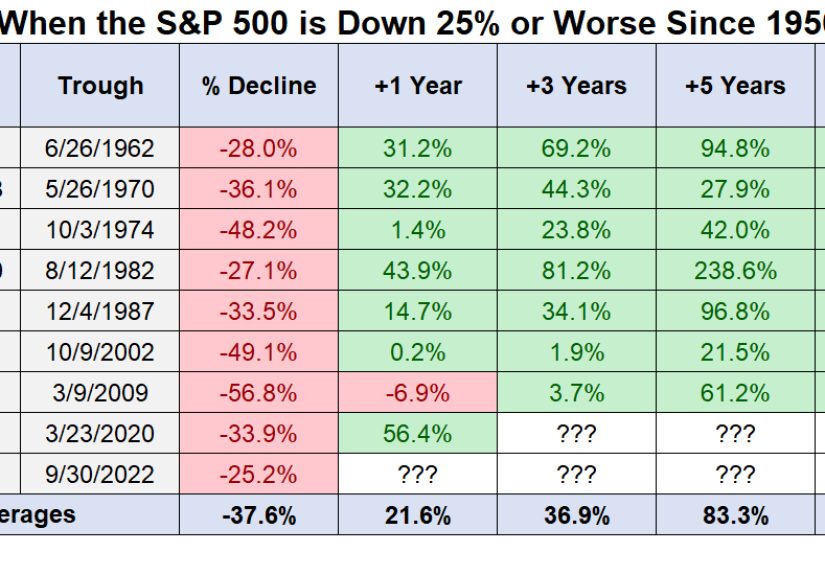
“Transitory” doesn’t mean “easy.” It means “not permanent.” Markets move in cyclesexpansions and contractions, bull markets and bear markets. Historically, broad U.S. stock markets have recovered from bear markets and gone on to make new highs, though the timeline can vary a lot.
Bear markets are normaland typically shorter than bull markets
One widely cited historical look at the S&P 500 finds that bear markets have averaged under a year in length, while bull markets tend to last longer. Depending on the dataset and dates used, you’ll see averages around roughly 9–13 months for bears, versus multiple years for bulls. The important point isn’t the exact numberit’s the pattern: down markets tend to be shorter than up cycles.
Yes, the worst ones last longerand feel endless
There have been brutal episodes (the Great Depression, the Global Financial Crisis) where declines were deep and the recovery took time. But “took time” still ended in “recovered.” Even after severe drawdowns, diversified long-term investors who stayed invested generally benefited as markets normalized and growth returned.
Fast bears can be shockingly fast
The 2020 pandemic bear market is the classic example of a rapid decline and a rapid reboundproof that markets can drop quickly and recover quicker than your emotions can catch up. That speed cuts both ways: it’s why panic-selling is so dangerous, because the market’s best days often cluster around the worst days.
What “Bear Markets Are Transitory” Really Means (In Plain English)
Saying bear markets are transitory is not a motivational poster. It’s a framework for decision-making:
- They are part of the price of admission. The long-term returns people want from stocks come with volatility.
- They tend to end. Not on your schedule, not with a polite email, but they end.
- Your behavior matters more than your predictions. Most investors don’t get derailed by a single bear market. They get derailed by what they do during it.
Bear markets don’t require you to become fearless. They require you to become consistent. If you can avoid self-sabotage, you’re already doing something many people don’t.
Practical Moves Long-Term Investors Consider During Bear Markets
This is not personal financial advicebecause I don’t know your goals, timeline, or risk tolerancebut these are commonly discussed, research-backed behaviors that many long-term investors use to navigate downturns.
1) Re-anchor to your time horizon
Money needed in the next 1–3 years shouldn’t be depending on stock-market luck. If your horizon is 10–30 years, a bear market is disruptivebut not necessarily decisive. Matching your investments to your timeline is one of the simplest ways to reduce the urge to make panicked changes.
2) Check your risk tolerance the honest way
Risk tolerance isn’t what you say during a bull market. It’s what you can live with when your account is down 20%, 30%, or more and the news is calling it “historic.” If you discover your allocation is too aggressive, many investors consider making changes slowly and intentionallynot mid-panic.
3) Stay consistent with contributions (a.k.a. dollar-cost averaging)
Investing a set amount on a regular schedule means you buy more shares when prices are lower and fewer when prices are higher. This doesn’t guarantee profits, but it can reduce the emotional pressure of trying to pick the perfect bottombecause the perfect bottom is mostly a myth told by people selling courses.
4) Rebalance instead of “reinventing your personality”
Rebalancing is the boring hero of disciplined investing. When stocks fall, your portfolio may drift away from your target mix. Rebalancing nudges you back toward your planoften leading you to buy relatively cheaper assets and trim relatively stronger ones. It’s a rules-based way to do what emotions hate: buy low, sell high.
5) Stress-test your cash needs and emergency fund
A bear market is a great time to confirm you’re not one surprise expense away from selling long-term investments at the worst possible moment. Many investors check their cash buffer, near-term bills, and job stability to reduce the odds that market volatility forces bad decisions.
Common Mistakes That Turn a Temporary Bear Market Into a Permanent Loss
Panic-selling and waiting for “clarity”
“I’ll get back in when things feel safe” is a tempting planand notoriously hard to execute. Markets often rebound before the news improves. If you sell after big declines, you risk missing the recovery and locking in losses.
Over-checking balances
If you look at your portfolio twelve times a day, you’re not investingyou’re stress-marinating. Consider reducing how often you check. (Yes, this is advice. No, it doesn’t require a brokerage account to implement.)
Concentrating into “the one safe thing”
In every bear market, something feels like the only rational place to hide. Sometimes it’s cash. Sometimes it’s one sector. Sometimes it’s a single “can’t lose” stock. The problem: markets rotate, narratives change, and concentration risk can quietly replace market risk.
A Quick Reality Check: “Transitory” Still Has Risk
It’s important to say out loud: bear markets are transitory historically, but history is not a guarantee. Individual stocks can fail. Specific sectors can lag for long stretches. Inflation can erode purchasing power. And if you’re forced to sell at the bottom due to cash needs, the market’s eventual recovery won’t help the dollars you no longer have invested.
The goal isn’t to pretend risk doesn’t exist. The goal is to manage risk so a bear market remains a chapterrather than the whole story.
Mini Checklist: A Calm Plan for a Chaotic Market
- Confirm your time horizon: what money is short-term vs. long-term?
- Review your allocation: could you stomach another 20% down without bailing?
- Automate contributions: remove “should I buy today?” from your daily drama.
- Rebalance on a schedule: rules beat feelings.
- Limit doom-scrolling: the market doesn’t pay you extra for suffering.
Conclusion: The Bear Market Ends, but Your Habits Remain
Bear markets are transitory in the same way winter is transitory: it’s unpleasant, it changes your behavior, and it can feel like it’ll never endright up until it does. If you build a plan designed for reality (including down markets), then bear markets become less like a catastrophe and more like a tough season you’re prepared to outlast.
The real win isn’t predicting the next bear market. It’s having a strategy that doesn’t require prediction to work. Because the market will do what it does. Your job is to avoid doing something you’ll regret.
Experiences: What Bear Markets Feel Like (and What People Learn)
If you want a true bear-market indicator, skip the charts and listen for the phrase, “I’m just going to move to cash until this settles down.” Bear markets don’t just change numbersthey change behavior. Here are a few experiences that come up again and again, plus the lessons people often carry forward.
Experience 1: The “I didn’t know I hated risk” moment
Many investors discover their real risk tolerance only after they see a 20%+ drop in black and white. It’s one thing to imagine volatility; it’s another to watch it happen while headlines declare everything is on fire. The lesson is usually practical: an investment mix you can’t stick with is the wrong mix, even if it looks brilliant in a backtest. People who make it through often simplifymore diversification, fewer “hero bets,” and a clearer split between long-term investing and short-term cash needs.
Experience 2: The temptation to “do something” becomes constant
In a bull market, doing nothing feels easy. In a bear market, doing nothing feels like neglect. Investors describe the urge to tinkerswitch funds, chase defensive trades, jump into whatever is “working,” or doom-scroll until 2 a.m. The big realization: activity and progress are not the same thing. Many people come out of a bear market with a renewed appreciation for automationscheduled contributions, scheduled rebalancing, and fewer decisions that can be corrupted by mood.
Experience 3: The strange relief of buying when prices are lower
This sounds backwards until you live it. Investors who keep contributing through a downturn sometimes report a surprising shift: once they accept that volatility is normal, they start seeing lower prices as future opportunity. It doesn’t erase the discomfort, but it reframes the experience. The habit that supports this mindset is simple: invest consistently, stop trying to “earn certainty,” and focus on what you can controlsavings rate, costs, and diversification.
Experience 4: The “I sold… and then it bounced” regret
Plenty of people have a story that goes like this: sold after a scary drop, felt immediate relief, waited for the “all clear,” and then watched the market rebound without them. That regret can last longer than the bear market. The lesson isn’t “never sell anything.” The lesson is to separate decisions into two categories: (1) planned moves aligned with goals and timeline, and (2) emergency emotional reactions. Investors who improve over time build rules so category (2) has fewer chances to hijack category (1).
Experience 5: The calm that comes from a real plan
The most consistent bear-market survivors aren’t emotionlessthey’re structured. They often have an emergency fund, a diversified portfolio, a contribution plan, and a rebalancing rule. That structure creates a kind of calm that feels almost unfair when everyone else is spiraling. And it’s learnable. Many investors say the first bear market felt like chaos, the second felt like discomfort, and later ones felt like a difficult but familiar cycle. That’s what “transitory” looks like in real life: the market swings, but your process stays steady.