Table of Contents >> Show >> Hide
- What Counts as “Smart Glasses” in 2024?
- How We Chose the Best Smart Glasses of 2024
- Top Smart Glasses of 2024
- 1. Ray-Ban Meta Smart Glasses (Gen 2) – Best Overall Everyday Smart Glasses
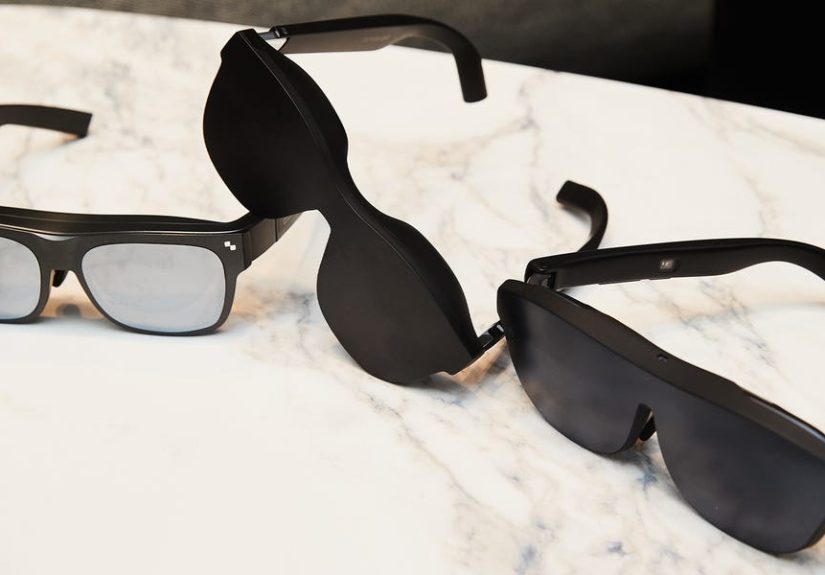
- 2. Xreal Air 2 & Air 2 Pro – Best for Portable Big-Screen and AR-Lite Experiences
- 3. Xreal Air 2 Ultra – Best Enthusiast-Friendly AR Glasses
- 4. Rokid Max / Rokid AR Glasses – Best for Home Cinema and AR Fans
- 5. Amazon Echo Frames – Best Smart Audio Glasses for Alexa Users
- 6. Bose Frames Tempo – Best Sports Audio Smart Glasses
- Which Smart Glasses Are Right for You?
- Are Smart Glasses Worth It in 2024?
- Real-World Experiences with the Best Smart Glasses of 2024
Remember when “smart glasses” meant a super bulky headset that made you look like you’d just escaped from a VR arcade?
Good news: 2024 is the year smart glasses finally started looking like… normal glasses.
You can walk into a coffee shop wearing AI-powered Ray-Bans, take calls from your face, project a virtual 120-inch screen in front of you, and most people won’t even notice.
In this in-depth guide to the best smart glasses of 2024, we’ll break down the top models for
hands-free AI, virtual screens, audio-only smart frames, and full AR experiences.
We’ll talk comfort, battery life, use cases, and who each pair is really forbecause “best” is very different
for a commuter, a gamer, and a cyclist trying not to ride into a parked car.
What Counts as “Smart Glasses” in 2024?
The term smart glasses now covers a few distinct categories:
- Camera & AI glasses – Look like regular sunglasses but add cameras, microphones, speakers, and AI assistants. Ideal for creators and everyday life logging.
- Display / AR glasses – Plug into your phone, laptop, or handheld device and project a virtual big screen or AR interface in your field of view.
- Audio smart glasses – Frames with built-in speakers and mics, focused on calls, music, and voice assistants. No screens, but lots of convenience.
In this review, we’ll mix all three types, but we’ll always clearly spell out what each pair actually does so you don’t
accidentally buy “AR glasses” that are really just very fancy headphones.
How We Chose the Best Smart Glasses of 2024
To build this list, we looked at hands-on reviews, lab tests, and owner feedback from multiple reputable tech
publications and retailers in the U.S. We focused on:
- Comfort and design – If you can’t wear them for more than 30 minutes, they’re not “smart,” they’re a head clamp.
- Display or audio quality – Brightness, clarity, and immersion for AR glasses; loudness and richness for audio frames.
- AI and software features – Voice assistants, AI image recognition, app ecosystems, and reliability.
- Battery life – You want hours of use, not “one TikTok and a nap.”
- Real-world use cases – Not just specs on paper but how they perform in everyday life.
- Value for money – The price has to make sense compared with what you actually get.
Top Smart Glasses of 2024
1. Ray-Ban Meta Smart Glasses (Gen 2) – Best Overall Everyday Smart Glasses
If you want one pair of smart glasses that does a bit of everything and still looks like classic eyewear,
the Ray-Ban Meta smart glasses are the most balanced choice in 2024.
They keep the iconic Ray-Ban Wayfarer-style silhouette but pack in 12 MP ultra-wide cameras, improved open-ear speakers,
a multi-mic array, and Meta AI integration for hands-free interactions.
Reviewers consistently highlight three strengths: surprisingly good photos and POV videos, much louder and clearer
speakers than the previous generation, and a design that doesn’t scream “gadget.”
The latest models also get improved battery life, with more capacity and up to about five hours of continual use in typical scenarios.
These glasses are ideal if you:
- Love capturing first-person content without holding your phone.
- Want to take calls and listen to music discreetly.
- Are curious about AI assistance that can answer questions about what you’re seeing or snap-and-ask scenarios.
Downsides? Privacy concerns are realother people may not love being around an always-ready cameraand you’re heavily tied
into Meta’s ecosystem. But if you want stylish, camera-centric smart glasses with real-world appeal, these sit at the top of the 2024 list.
2. Xreal Air 2 & Air 2 Pro – Best for Portable Big-Screen and AR-Lite Experiences
The Xreal Air 2 and Air 2 Pro are favorites among people who want a
giant virtual display without lugging around a monitor or TV. Plug them into a compatible phone, laptop, handheld console,
or special adapter, and they project a floating virtual screen that can feel like 100–130 inches in front of you.
Tech reviewers praise them for being lightweight, comfortable, and bright enough to use indoors and even in some outdoor conditions.
The Air 2 Pro adds electrochromic dimming, letting you adjust the tint to block more or less real-world light.
Think of it as a sliding scale between sunglasses and immersive cinema goggles.
Key advantages:
- Great for travel – Turn a cramped airplane seat into a private theater for movies or gaming.
- Productivity boost – Mirror your laptop or phone and effectively work on a large screen without carrying a monitor.
- Comfort – Many users note they can wear these for hours with minimal fatigue.
Just note: the Air 2 line is more about display than “smart” AI. There’s no camera, and the “smartness” is
mainly in the AR/virtual screen functionality plus companion apps. If you hate the idea of cameras on your face but
want a next-gen display, these are a fantastic pick.
3. Xreal Air 2 Ultra – Best Enthusiast-Friendly AR Glasses
The Xreal Air 2 Ultra steps things up with true AR features: 6DoF (six degrees of freedom) tracking,
room mapping, and hand tracking. That means virtual objects can stay “anchored” in your environment instead of moving when you move your head,
offering a more immersive spatial computing experience.
Early adopters and reviewers point out that while it doesn’t match the complexity of high-end enterprise headsets,
it delivers a surprisingly capable AR experience at a more accessible size and cost. You can use it for:
- AR gaming – Place virtual items on your coffee table and walk around them.
- Spatial productivity – Spread multiple virtual windows around your room.
- Developer experimentation – Build and test AR apps without committing to bulky headsets.
It’s best for enthusiasts and developers who are comfortable with somewhat limited phone compatibility and a more technical setup.
For casual users just looking for a screen replacement, the standard Air 2 or Air 2 Pro is simpler and cheaper.
4. Rokid Max / Rokid AR Glasses – Best for Home Cinema and AR Fans
Rokid has become one of the main competitors to Xreal in the “AR cinema glasses” space.
Their latest models, such as the Rokid Max, aim to deliver a bright, large virtual display with decent contrast and color reproduction.
Reviewers often highlight that Rokid’s glasses provide a slightly more “cinema” focused experience,
making them ideal for streaming movies and shows.
These glasses shine when:
- You mostly want to watch movies, TV, or anime in bed or on the couch without a big TV.
- You’d like a simple AR-style display with basic overlay experiences.
- You value plug-and-play usage with a compatible dongle or device.
On the downside, the software ecosystem is not as polished or widely discussed in U.S. media as Meta’s or Amazon’s,
and prescription lens support and comfort can vary. Still, if your primary goal is a virtual cinema, Rokid deserves a spot on your shortlist.
5. Amazon Echo Frames – Best Smart Audio Glasses for Alexa Users
If you don’t care about cameras or AR but love the idea of a voice assistant gently whispering reminders into your ears,
Amazon Echo Frames are for you. These are audio smart glasses: no screens, no camerajust open-ear speakers,
microphones, and Alexa on tap.
U.S. reviewers generally describe them as:
- Fantastic for hands-free productivity – Add items to your shopping list, control smart home devices, or get weather updates.
- Discrete and lightweight – They look like regular glasses and can be fitted with prescription lenses.
- Safer than earbuds outdoors – You can hear your surroundings while listening to audio.
Battery life is good enough for a typical workday of intermittent use, though heavy audio playback will drain them faster.
They’re best for people already living in the Amazon ecosystem who want to leave earbuds at home but keep Alexa closeliterally right by their temples.
6. Bose Frames Tempo – Best Sports Audio Smart Glasses
The Bose Frames Tempo are designed specifically for outdoor sportscycling, running, hikingwhere you want music,
but you also want to stay aware of traffic, people, and, you know, large objects in your path.
The Frames Tempo offer:
- Open-ear audio that’s loud enough to hear even with wind noise.
- Up to around 8 hours of playback for longer rides or runs.
- Sport-friendly fit with grippy temple arms and adjustable nose pads.
Audio quality is typically described as richer and more powerful than most other audio smart glasses, which isn’t surprising coming from Bose.
The trade-off is that these look more like sporty sunglasses than subtle everyday frames.
If your “daily commute” is a bike trail, though, these might be the perfect fit.
Which Smart Glasses Are Right for You?
Here’s a quick cheat sheet based on your priorities:
- Best all-rounder: Ray-Ban Meta Smart Glasses – for everyday wear, POV photos and videos, calls, and AI help.
- Best virtual monitor: Xreal Air 2 / Air 2 Pro – for travelers, remote workers, and gamers who want a huge screen anywhere.
- Best enthusiast AR: Xreal Air 2 Ultra – for developers and tech fans exploring spatial computing.
- Best home cinema AR: Rokid Max – for movie lovers who want a private big-screen experience.
- Best smart audio with Alexa: Echo Frames – for productivity junkies and smart home users.
- Best sports audio glasses: Bose Frames Tempo – for runners and cyclists who want music plus situational awareness.
Are Smart Glasses Worth It in 2024?
Whether smart glasses are “worth it” comes down to how much you’ll actually use the extra features versus just wearing
regular glasses and popping in earbuds.
They are worth it if:
- You travel often and want a private big screen for work or entertainment.
- You create content and love the idea of smooth, first-person video without holding a phone.
- You rely heavily on voice assistants and want hands-free control of your digital life.
- You exercise outdoors and don’t like blocking your ears with headphones.
They’re probably not worth it yet if:
- You’re extremely privacy-conscious or work in environments where cameras are frowned upon.
- You don’t like tinkering with new tech or dealing with compatibility quirks.
- Your budget is tight and you already own great headphones and a solid monitor.
But as designs get thinner, AI assistants get smarter, and AR ecosystems mature, 2024 feels very much like the
“early iPhone era” for smart glasses. They’re no longer just a gimmick; they’re starting to make daily sense for certain people.
Real-World Experiences with the Best Smart Glasses of 2024
Specs and features are fun, but what do these glasses actually feel like in real life? Let’s walk through a few everyday scenarios
that show how different models shineand where they fall short.
Commuting and Coffee Shop Life with Ray-Ban Meta
Imagine your typical morning commute. Instead of juggling your phone, earbuds, and a latte, you slip on
your Ray-Ban Meta smart glasses. As you walk, you double-tap the frame to start recording a POV clip of the sunrise
over the city skyline. No one around you realizes you’re filming; your glasses just look like normal Ray-Bans.
At the coffee shop, you answer a call without pulling out your phone. Audio leaks less than you’d expectpeople nearby
just hear faint sound, if any. When a friend texts you asking, “What are you up to?”, you quickly grab a 15-second video
through the glasses and send it back. You’re living like a lifestyle vlogger, except you still have both hands free to
not spill your cappuccino.
The downside shows up around lunchtime: battery life isn’t infinite. If you shoot a lot of video and listen to music,
you’ll probably need to pop them back into their charging case at some point in the afternoon. Still, for a light to moderate user,
they easily feel like a normal pair of glasses that just happens to be very good at “remembering” your day.
Traveling with Xreal Air 2: Your Portable Movie Theater
Now picture a long-haul flight. Instead of squinting at the tiny seatback display, you plug your
Xreal Air 2 into your phone or handheld gaming console. Suddenly a huge virtual screen appears in front of you.
You watch a movie, then switch to a game, then briefly mirror your laptop to answer a few emails.
The person next to you just sees you wearing slightly futuristic sunglasses and minding your own business.
You’re not hogging the armrest or juggling a big laptop screen. When the cabin lights dim, you dim the AR glasses or use the
included light shield, and the virtual screen stays bright and sharp. The experience is immersive enough that you occasionally
have to remind yourself not to lean forward to “touch” the screen.
When you land, you toss them into your bag. They take up less space than most over-ear headphones, yet gave you an entire cinema
for half the flight. For frequent travelers, this is where smart glasses go from “cool” to “absolutely worth it.”
Running with Bose Frames Tempo: Hear Music, Hear the World
For outdoor runners and cyclists, the Bose Frames Tempo change the vibe of a workout.
Instead of trying to balance earbuds that fall out every time you sweat, you put on sunglasses that play your playlist
directly into your ears through open-ear speakers.
As you pick up speed, you can still hear traffic, bikers calling “on your left,” and your friend complaining about hills.
But your music remains loud enough to be motivating. On longer runs, you don’t get that “ear fatigue” from something plugged
into your ear canal. And when you stop at a café post-run, you can keep the glasses on without looking like you’re still in full workout mode.
Are they as audiophile-grade as nice over-ear headphones? Not quite. But the combination of awareness, comfort, and decent sound
quality makes them feel more like a safety upgrade than a luxury. In other words: you’re not just buying better sound;
you’re buying more awareness of your surroundings.
Alexa on Your Face: Living with Echo Frames
If your home already responds when you shout “Alexa,” Echo Frames are like exporting that power into the outside world.
You’re walking to lunch and suddenly remember, “Did I turn off the lights?” A quick voice command through the frames, and Alexa checks.
You add milk to the grocery list, set reminders, control your smart thermostat, all without touching your phone.
The experience is especially nice for people who don’t love living with earbuds in all day. The glasses sit on your face like normal eyewear,
but quietly extend your digital life to wherever you go. You might not show them off like a shiny gadget,
but you’ll definitely miss them once you get used to that constant low-friction assistance.
Together, these real-world scenarios show the big picture: smart glasses in 2024 aren’t about replacing your phone overnight.
They’re about quietly moving parts of your digital life into a more natural, less phone-obsessed space.
Whether that’s worth it depends on your routinesbut for many people, that first pair of smart glasses ends up being a lot harder to stop using than they expected.