Table of Contents >> Show >> Hide
- What This Book Actually Is
- Why the Authors Matter
- What Makes This Book Different From Other Cybersecurity Books
- The Best Parts of the Book
- Why This Book Feels Especially Relevant Now
- Who Should Read It
- What the Book Does Better Than Trendy Tech Content
- A Few Honest Caveats
- Final Verdict
- Extended Reading Experience: What It Feels Like to Spend Time With This Book
- Conclusion
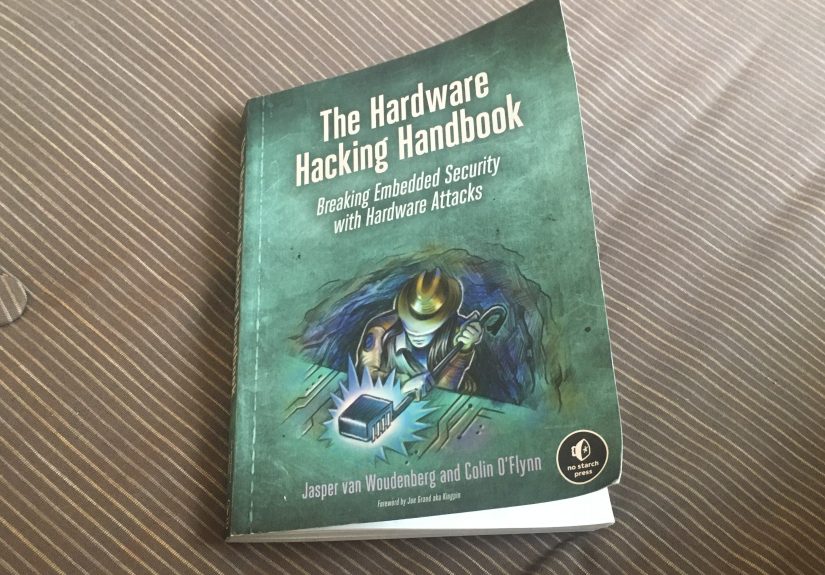
If most tech books feel like they were written by a committee trapped in a beige conference room, The Hardware Hacking Handbook feels like the exact opposite. It is sharp, funny, deeply technical, and gloriously interested in the messy reality of how devices behave once they leave the whiteboard and enter the real world. This is the kind of book that makes you look at everyday electronics a little differently. Your router stops being a boring plastic box. Your smart lock stops being “smart.” Even your coffee machine starts to look suspiciously like a tiny computer with trust issues.
Before we go further, let’s clear up a tiny naming hiccup with the gentleness of a person setting down a soldering iron: the actual title of the book is The Hardware Hacking Handbook: Breaking Embedded Security with Hardware Attacks. But if you are looking for a book recommendation under the banner “Books You Should Read: The Hardware Hacker’s Handbook,” you have found the right one. And yes, it absolutely deserves shelf space.
This book is not casual airport reading unless your carry-on includes a logic analyzer and a healthy distrust of glossy marketing claims. It is a serious, in-depth guide to embedded security, hardware attack thinking, and the physical side of cybersecurity. Yet what makes it special is that it does not read like a cold technical manual. It reads like a field guide written by people who genuinely love the work, have spent years in the trenches, and still have enough humor left to name chapters things like they were written by engineers who survived on coffee and wit.
What This Book Actually Is
At its core, The Hardware Hacking Handbook is a book about understanding how embedded devices can fail, leak, misbehave, or be misunderstood from a security perspective. That matters because embedded systems are everywhere now. They sit inside vehicles, laptops, medical devices, industrial controls, smart home gadgets, payment systems, and enough everyday objects to make a toaster seem emotionally unavailable. In other words, hardware security is no longer a niche curiosity for conference talks and basement labs. It is part of the broader conversation about trust, safety, privacy, and resilience in a connected world.
The book approaches that reality with admirable seriousness. It starts by building foundational knowledge: what embedded devices are, how to think about their architecture, how interfaces and components reveal clues, and how threat modeling applies when the target is not just software but a physical object. From there, it gradually moves into the areas that make the book especially respected: fault injection, power analysis, and the practical thinking needed to evaluate how secure hardware really is.
Importantly, this is not a “wave a magic wand and become elite overnight” kind of cybersecurity book. It is a framework-first book. It teaches readers how to think before it asks them to admire clever case studies. That choice makes it more valuable, not less. Tricks age. Mental models last.
Why the Authors Matter
A good technical book can survive mediocre prose, but it cannot survive fake expertise. Fortunately, that is not a problem here. Jasper van Woudenberg and Colin O’Flynn are not tourists in the hardware security world. They come from the kind of background that gives a book real weight: research, testing, tools, conference work, and long-term involvement in embedded security.
That matters because hardware security is one of those fields where theory sounds elegant right up until the bench starts disagreeing with you. The authors clearly understand both sides of the equation. They know the academic language, but they also know the gap between a neat concept and a stubborn real device that refuses to behave. That tension is present throughout the book in the best possible way. You are not just getting definitions. You are getting perspective from people who know why a simple-looking problem can turn into a long weekend.
The result is a book with credibility. It feels written by practitioners who respect the reader enough to explain the difficult parts without dumbing them down. That is a tricky balance, and this book pulls it off better than most.
What Makes This Book Different From Other Cybersecurity Books
It treats hardware as the main character
Many security books treat hardware as scenery. It is the set dressing behind software bugs, network flaws, and cloud misconfigurations. The Hardware Hacking Handbook flips that script. Here, the hardware is the story. The physical board, the interfaces, the electrical behavior, the memory, the signals, and the assumptions built into the device all matter. That shift alone makes the book stand out.
It respects complexity without becoming unreadable
This is a dense book, but it is not a miserable one. The writing has enough clarity and personality to keep the material moving. The authors understand that readers do not need endless simplification; they need good explanations, good structure, and the occasional reminder that everyone in this field has at some point stared at a board and said, “Well, that seems bad.”
It combines theory, labs, and case studies
One reason the book lands so well is that it is not stuck in one mode. It does not just explain concepts. It also ties them to practical lab work and real-world examples. That combination helps readers connect the abstract idea of embedded insecurity to the actual ways devices can be evaluated, tested, and defended. Even when you are not personally building a lab setup, the structured walkthroughs improve your understanding of what makes hardware security challenging.
The Best Parts of the Book
A strong mental model of embedded security
The opening stretch of the book is one of its biggest strengths. Rather than rushing into flashy examples, it gives readers the intellectual map they need. You learn how devices are put together, where the trust boundaries tend to live, what interfaces matter, and why some weaknesses are obvious while others hide in plain sight. This portion is especially useful for engineers, students, and security people who come from software-heavy backgrounds and need a better feel for the physical layer.
Honest attention to side-channel and fault concepts
The book is especially well known for its treatment of power analysis and fault-related concepts. That is one reason it is so widely recommended in hardware security circles. These topics often sound exotic when mentioned online, as if they are reserved for secret labs, dramatic music, and people who own very expensive equipment. The book makes them intelligible. Not simplistic, but intelligible. It explains why they matter, what they reveal about system design, and how they fit into a realistic view of embedded risk.
For defenders and product builders, this is gold. You do not need to romanticize attacks to understand why they shape better products. In fact, the book’s real value may be that it forces readers to stop thinking of security as a neat software checkbox and start seeing it as a full-system discipline.
Real examples that keep the material grounded
Another major plus is the use of real examples. The book does not live in a vacuum. It refers to actual devices and known security stories, which helps readers see how the ideas translate beyond a classroom or slide deck. That makes the lessons stick. Reading about hardware security in the abstract is one thing. Seeing how physical assumptions break in the real world is another. The latter tends to stay with you longer.
Why This Book Feels Especially Relevant Now
Hardware security has become more important because embedded systems have become more important. That is the short version. The longer version is that modern life now depends on semiconductors, connected devices, and embedded computing in ways that are easy to ignore until something breaks. National standards bodies, security frameworks, and industry threat models increasingly treat hardware and embedded systems as central concerns, not side notes. That bigger backdrop makes The Hardware Hacking Handbook feel timely rather than merely specialized.
There is also a practical reason the book matters now: hardware problems are often harder to fix after deployment than software problems. A software patch may be inconvenient. A hardware design mistake can become a long, expensive, reputation-damaging headache. That is one reason security-minded engineers, product teams, and researchers need stronger hardware literacy. The book helps build that literacy without pretending the subject is easy.
In a world full of IoT devices, supply chain concerns, boot integrity discussions, and constant talk about trustworthy computing, a book like this stops being optional reading for a small club. It becomes part of the broader toolkit for understanding modern cybersecurity.
Who Should Read It
This book is an excellent fit for embedded engineers who want to think more adversarially, security professionals who want a better grasp of the physical layer, students entering hardware security, and serious hobbyists who enjoy moving beyond surface-level gadget poking. It is also useful for technical managers who need to understand why hardware assurance is not the same thing as “we enabled secure boot and hoped for the best.”
That said, it is not the perfect starting point for every reader. If you have zero comfort with electronics vocabulary, binary concepts, or how digital systems are physically built, parts of the book may feel like jumping into the deep end while your swim instructor yells, “Observe the waveform!” It is not impossible to follow, but it does ask for attention and patience.
Still, even readers who do not work through every technical detail can get a lot from the early chapters and the general framework. This is one of those books where partial understanding is still useful, and revisiting later often pays off.
What the Book Does Better Than Trendy Tech Content
Tech content on the internet often has two moods: impossibly vague or irresponsibly overconfident. One post says everything is revolutionary. The next says everything is broken. Somewhere in the middle is reality, sipping coffee and waiting patiently. The Hardware Hacking Handbook lives closer to that reality.
It does not sell mythology. It does not pretend hardware security is effortless, glamorous, or instantly monetizable. Thank goodness. Instead, it shows that careful observation, methodical reasoning, and respect for systems are what matter. That tone is refreshing. It also makes the book age better than hype-driven content because it teaches principles rather than chasing novelty.
In a way, the book’s greatest strength is that it makes readers slower in a good way. Slower to assume. Slower to trust neat abstractions. Slower to believe that a black box is truly black. In security, that kind of intellectual patience is a superpower.
A Few Honest Caveats
No book is perfect, and pretending otherwise would be extremely on-brand for marketing copy but not especially helpful. This one is demanding. It is long, technical, and detail-heavy. Some readers will love that. Others will hit a chapter and suddenly feel like their brain has been asked to debug a satellite before lunch.
It is also a book best approached ethically and thoughtfully. The material is most valuable when used for authorized research, product improvement, education, and defensive understanding. That framing is important. The smartest way to read a book like this is not as a shortcut to mischief but as a serious education in how real systems earn or lose trust.
Finally, it is not a replacement for all other learning. You may still want supplemental material in electronics, embedded development, or broader security testing. The good news is that the book is strong enough to serve as a backbone. Once you have its framework in your head, many other resources start making more sense.
Final Verdict
The Hardware Hacking Handbook is one of those rare technical books that manages to be both respected and genuinely useful. It is deep without being empty, structured without being stiff, and technical without acting like readability is a moral weakness. If you care about embedded systems, device trust, security engineering, or the reality that hardware is now part of the cybersecurity frontline, this is a book worth reading.
More than that, it is a book worth keeping. Some books get read once and vanish into the shelf equivalent of witness protection. This one feels like a long-term reference. You read it for the big ideas, revisit it for the frameworks, and return to it later when a device, product, or project starts asking more complicated questions.
So yes, this belongs on the “Books You Should Read” list. Not because it is trendy. Not because it sounds cool. And not because the cover whispers sweet promises of instant brilliance. It belongs there because it teaches readers how to think clearly about one of the most important and least understood layers of modern security. That is a rare thing. And rare things, unlike mystery jumper wires, should be appreciated.
Extended Reading Experience: What It Feels Like to Spend Time With This Book
Reading The Hardware Hacking Handbook often feels less like consuming a book and more like being inducted into a way of seeing. At first, you may approach it like any other technical title: a few chapters, a few notes, maybe a highlighted phrase that makes you feel smarter than you were thirty minutes earlier. But after a while, the book starts changing how you look at physical devices. You stop seeing a gadget as a polished consumer product and start seeing layers: chips, buses, assumptions, protections, shortcuts, and places where designers had to choose between cost, convenience, speed, and security.
That shift is one of the most memorable parts of the reading experience. It is not dramatic in a movie-trailer sense. Nobody kicks in a lab door while synthesizers play. It is quieter than that. You simply become more observant. The screws on a casing feel like clues. The exposed pads on a board feel intentional. The difference between “works” and “works securely” gets wider in your mind. That is the kind of experience strong technical books create: they improve your questions before they improve your answers.
For many readers, there is also a satisfying sense of humility that comes with the book. Hardware has a way of making everyone honest. You can bluff your way through a surprising amount of software conversation, but circuits and physical behavior are less interested in your confidence. The book captures that feeling well. It reminds you that devices are real things, not just abstract systems in a diagram. A design choice made months or years earlier can shape what is possible now. A tiny oversight can matter. A “minor” interface can become a major story. That perspective is sobering, but in a productive way.
There is also genuine fun here. Not silly fun, but the particular joy of understanding something that previously seemed opaque. A chapter clicks, a concept settles, a case study suddenly makes sense, and you get that little burst of technical satisfaction that says, “Ah, so that is why people in this field care so much.” It is the same feeling you get when a complicated map finally stops looking like spaghetti and starts looking like a city. The territory has not changed. Your understanding has.
Another common reading experience is discovering that the book works on multiple levels. One reader may come for professional reasons, another out of pure curiosity, and both leave with something useful. Engineers may value the attack mindset because it sharpens design judgment. Security people may value the hardware context because it broadens their thinking beyond code and networks. Hobbyists may simply enjoy seeing how serious practitioners connect theory and reality. Few technical books manage to serve such different audiences without falling apart. This one largely succeeds.
Perhaps the best way to describe the experience is this: the book rewards seriousness. If you bring patience, curiosity, and a willingness to sit with difficult ideas, it gives you a richer understanding of modern devices than most surface-level content ever will. It is not always easy. It is not always quick. But it is consistently worthwhile. And by the end, even if you are not suddenly a hardware security expert, you will almost certainly be a better technical reader, a sharper observer, and a much harder person to impress with buzzwords.
Conclusion
If your reading list needs one book that bridges embedded systems, security thinking, real-world device analysis, and the physical realities behind digital trust, The Hardware Hacking Handbook is an easy recommendation. It is intelligent, grounded, practical, and refreshingly free of tech-industry nonsense. In a field where complexity is real and shortcuts are often illusions, that kind of book is worth its weight in solder.