Table of Contents >> Show >> Hide
Editorial note: The restaurant discussed below was officially known as Bouchéry. It closed in 2025, but its reputation still makes it one of the most talked-about dining rooms in Brussels. This article looks at the restaurant as both a place and a lasting design-and-food story.
Some restaurants try very hard to be beautiful. They drape themselves in velvet, dim the lights to a seductive murmur, and place a candle on the table as if that alone can distract you from an average bread basket. Then there was Bouchery in Brussels, officially styled Bouchéry, a restaurant that seemed to understand a more difficult truth: the prettiest spaces do not scream. They breathe.
Tucked away in Uccle, one of Brussels’ greener and more residential corners, Bouchéry earned a reputation that went beyond food. Yes, chef Damien Bouchery was admired for cooking that followed the rhythm of the seasons. Yes, the address became associated with natural gastronomy, vegetable-forward menus, and an unusually thoughtful approach to local sourcing. But people also talked about the room. And the garden. And the way the entire place felt like a pause button in a city that is equal parts grand architecture, diplomacy, comic-book charm, and serious appetite.
So, was Bouchery the prettiest restaurant in Belgium? That depends on what you think beauty looks like. If your idea of pretty involves chandeliers the size of small planets, acres of gilding, and enough polished brass to blind a passerby, then maybe not. But if beauty means proportion, restraint, atmosphere, texture, and a sense that every object belongs exactly where it is, then Bouchery has a very strong case. In fact, it might be the kind of place that ruined other restaurants a little. After dining in a room that calm and coherent, a lot of places start to feel like they were decorated by committee.
Why Bouchery Became a Design Darling
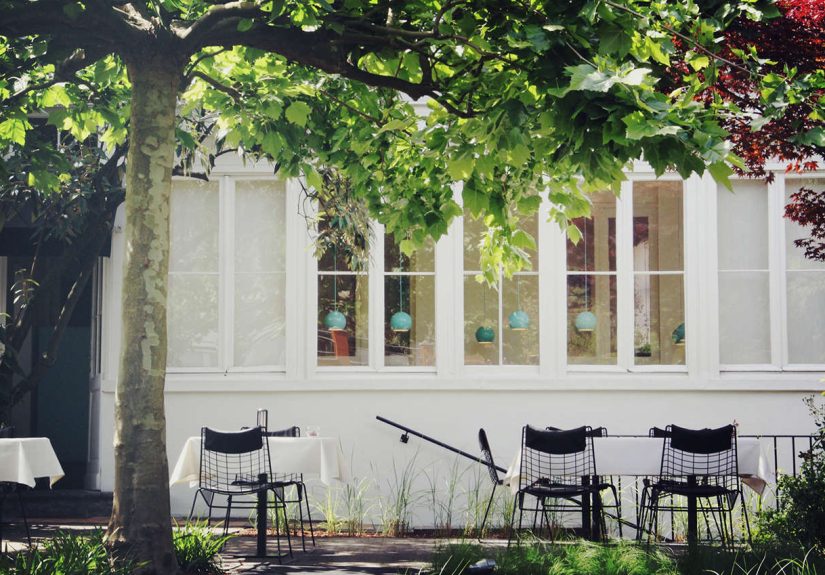
Part of Bouchery’s mystique came from the fact that it never looked like it was trying to win a beauty pageant. The dining room was minimalist without being cold, elegant without drifting into stiff formality, and airy without feeling unfinished. Whitewashed walls, pale tones, natural materials, carefully chosen lighting, discreet ceramics, and simple wooden seating worked together like a well-rehearsed chamber orchestra. Nobody overplayed their solo.
The restaurant was co-created with Bénédicte Bantuelle, whose influence helped shape the address into something more than a dining room with good taste. It felt curated, but not precious. Photogenic, but not thirsty. Modern, but still human. That is harder to pull off than it sounds. Plenty of beautiful restaurants look fantastic in photos and somehow feel emotionally unavailable in real life. Bouchery, by contrast, appears to have understood that comfort is part of beauty. A room can be lovely and still feel lived in.
Its most memorable details became part of the legend: clean-lined furniture, mint-toned pendant lamps, etched glass doors, handmade ceramics, and a softness in the visual language that kept the entire place from turning severe. Even the floral gestures were restrained. Instead of oversized arrangements yelling for attention, the look favored the kind of quiet botanical touches that seemed to say, “Relax, the asparagus is the star here.”
The Garden Did a Lot of Heavy Lifting, Beautifully
Then there was the garden. If the indoor dining room made Bouchery feel composed, the outdoor setting made it feel like a secret. The terrace, set in an English-style garden near Wolvendael Park, gave the restaurant a mood that many urban fine-dining spots spend years trying and failing to manufacture. Raspberry bushes, wild grasses, greenery, herbs, open air, and the sense that you had somehow stumbled into a hidden pocket of calm rather than merely booked dinner online.
That outdoor setting mattered because it aligned perfectly with the kitchen’s philosophy. This was not a restaurant where “nature” was just a nice word printed on the menu beside a suspiciously geometric beet cube. Nature shaped the experience. The garden was visual proof of the restaurant’s larger worldview: food should feel connected to the land, the weather, the season, and the moment.
In a country full of handsome dining rooms, Bouchery stood out because it fused architecture, interior design, and landscape into one continuous idea. Step inside, and the room felt serene. Step outside, and the terrace extended that serenity into something almost cinematic. Not movie-set cinematic. Better. Quiet European summer cinematic, where the soundtrack is cutlery, breeze, and someone at the next table saying, “What is this herb?”
The Food Matched the Room
Beauty alone does not make a restaurant memorable. If it did, every stylish café with excellent chairs and forgettable eggs would be a national treasure. Bouchery mattered because the food belonged to the space.
Chef Damien Bouchery, who came from Brittany and trained in serious kitchens including London’s Club Gascon and Brussels’ Bistrot du Mail, built his reputation on cooking that was seasonal, ingredient-led, and deeply attentive to nature. When he opened the restaurant in 2010, he did so with a point of view that became increasingly clear over time: luxury did not need to mean excess. It could mean precision. It could mean vegetables treated with the reverence usually reserved for foie gras. It could mean bread made in-house, thoughtful fermentation, natural wines, and a plate that looked elegant because it was composed intelligently, not because someone added tweezers and drama.
That approach made Bouchery especially interesting in Brussels, a city whose dining culture is wonderfully broad. Traditional Belgian comfort food still matters. So do fries, beer, seafood, chocolate, and classic brasserie pleasures. But modern Brussels dining has also become known for creative, sustainability-minded kitchens that take local sourcing seriously and are not afraid to let vegetables lead the conversation. Bouchery fit that evolution beautifully. It was refined, but never felt disconnected from the wider food culture of the city.
From Seasonal Cooking to Strong Plant Identity
One of the most fascinating things about Bouchery was how clearly its identity sharpened over time. It was always rooted in seasonality and nature, but later chapters of the restaurant leaned even more decisively into vegetarian cooking. By 2025, public descriptions of the restaurant emphasized a fully vegetarian menu, with plants reigning not just symbolically, but literally, on the plate.
That was not a gimmick. It was the logical endpoint of the restaurant’s philosophy. Once you decide that ingredients should be local, seasonal, respectful of producers, and expressive of the landscape around you, vegetables stop being supporting actors. They become the cast.
And Bouchery’s reputation in this area was not imaginary. The restaurant was recognized in the broader sustainable-food conversation in Brussels, including through Good Food labeling and recognition connected to vegetable-focused dining. In other words, this was not one of those places that tossed a lonely carrot on a plate and declared itself revolutionary. It had credibility.
Why Bouchery Felt So Perfectly Brussels
To understand why people found Bouchery so beautiful, it helps to understand Brussels. This is a city that mixes grandeur with eccentricity better than almost anywhere. You get ornate guild houses, Art Nouveau masterpieces, hidden courtyards, comic murals, polished institutions, and neighborhood cafés that look as if they have been arguing amicably about politics and potatoes for 80 years.
American travel coverage often frames Brussels as a place where architecture and food naturally reinforce one another, and that feels exactly right. It is a city where visual pleasure and edible pleasure share the same sidewalk. Bouchery fit that urban personality with uncanny precision. It was not a loud tourist magnet. It was a cultivated hideaway. It rewarded curiosity, which is very Brussels. The city rarely throws all of its best stuff in your face at once. It invites you to notice.
And Bouchery was an address worth noticing. Not because it tried to imitate old-world Belgian grandeur, but because it offered another kind of beauty: contemporary, calm, and rooted in materials, light, and atmosphere. In a country famous for historic splendor, that felt refreshingly confident.
So, Was It the Prettiest Restaurant in Belgium?
I think the most honest answer is this: Bouchery may not have been Belgium’s most ornate restaurant, or its most theatrical, or its most obviously luxurious. But it may well have been one of the most beautifully resolved. That distinction matters.
A lot of restaurants are pretty in fragments. Maybe the bar is gorgeous, but the dining room is flat. Maybe the terrace is dreamy, but the interior feels generic. Maybe the food is stunning, but the setting looks like it was assembled in a panic three weeks before opening. Bouchery seems to have achieved something rarer: coherence. The food, the room, the garden, the philosophy, and the mood all pointed in the same direction.
That is the kind of beauty people remember. Not just “What a lovely lamp,” but “I cannot separate the place from the meal from the feeling.” That is when a restaurant crosses over from merely attractive into truly memorable.
So yes, there is a strong argument that Bouchery was one of the prettiest restaurants in Belgium, and maybe the prettiest for diners who prefer understatement over spectacle. It was beautiful in the way a perfectly written sentence is beautiful: not because it is overloaded, but because nothing extra is there.
What Visitors Should Know Now
There is one important update that any web-ready article on Bouchery needs to say clearly: the original restaurant closed in 2025. Damien Bouchery’s official site now presents his work through private-chef services and seasonal projects, while the former address moved into a new chapter under the name Casa Due.
That does not make the story less interesting. If anything, it makes it more so. Great restaurants do not disappear just because the door changes hands. They linger in memory, in photographs, in design conversations, in city guides, and in the expectations they leave behind. Bouchery’s beauty now belongs partly to Brussels food history, which is still a very elegant address to occupy.
For travelers planning a Brussels food trip today, the lesson is not “too late.” The lesson is: pay attention to the city’s quieter, more thoughtful places. Brussels has always rewarded people who look beyond the obvious. Bouchery became iconic precisely because it felt discovered rather than announced.
The Experience of Bouchery: Why People Kept Talking About It
Imagine arriving in Uccle after the usual Brussels rhythm of trams, cobblestones, conversations, and the occasional internal debate about whether you should have had one more waffle earlier. You reach Bouchery and, almost immediately, the city changes volume. Not disappears. Just softens. That was part of the experience people loved. The restaurant did not feel like a performance venue for luxury. It felt like a threshold.
You walked in and the first impression was not “flash.” It was relief. Light moved gently across pale walls. Chairs, ceramics, glass, and wood all seemed to have been chosen by someone who believed visual harmony could improve digestion. The room did not crowd you. It exhaled. And because the design was so restrained, you noticed everything more: the curve of a chair back, the muted glow of a pendant lamp, the small botanical gesture on the table, the way the glass door caught the light. It was the kind of place that made you sit up straighter without making you feel judged by the furniture.
Then came the food, and with it, the realization that the room was not the whole story. Bouchery’s appeal was that the plates seemed to speak the same visual language as the interior. They were elegant, yes, but not fussy. Delicate, but not timid. Seasonal ingredients arrived looking like improved versions of themselves, as if they had gone to finishing school but kept their original personalities. A carrot could be a main character. Herbs were not garnish confetti. Bread was not filler. Everything appeared to matter.
In warmer weather, the terrace shifted the experience again. Suddenly the meal felt less like dinner in a restaurant and more like being folded into a private garden gathering run by people with extremely good taste and very strong opinions about produce. Wild grasses and greenery softened the edges of the evening. The urban world felt a little farther away. Time slowed down in that delightful European way that makes you forget what hour it is and remember that this is, in fact, the correct use of an hour.
And maybe that is why Bouchery stayed in people’s minds. It offered a kind of beauty that was immersive rather than decorative. You did not just look at it. You inhabited it. You tasted it. You moved through it. The experience was not “pretty restaurant, decent meal.” It was closer to “the whole evening made sense.” In hospitality, that is rare enough to feel almost magical.
Even now, after the original restaurant has closed, Bouchery remains the kind of place people mention with a very specific expression: half smile, half sigh. That is usually the sign of a restaurant that got something right. Not just on the plate, and not just in the room, but in the mysterious space where memory forms. Belgium has many grand dining addresses. But Bouchery was something subtler, and perhaps more difficult to create: a beautiful restaurant that felt beautiful from the inside out.
Final Thoughts
Bouchery in Brussels earned its reputation because it understood that restaurant beauty is never just decoration. It is philosophy made visible. It is hospitality translated into materials, light, space, and pace. In Bouchery’s case, that philosophy centered on nature, seasonality, calm, and care. The result was a restaurant that looked lovely in photos, certainly, but mattered far more in person.
So, was it the prettiest restaurant in Belgium? For some diners, absolutely. For others, it was something even more flattering: the most convincing example of how modern restaurant design and ingredient-driven cooking can belong to the same story. And in a country that takes both beauty and dinner very seriously, that is no small compliment.