Table of Contents >> Show >> Hide
- Why boys bunk beds are still a top choice
- Safety first: the non-negotiables for bunk beds
- How to pick the right bunk bed type for boys
- Dimensions, mattress planning, and room math
- Material and build quality: what lasts in real life
- Design ideas for boys bunk beds that don’t look generic
- Storage systems that keep boys’ bunk rooms under control
- Common bunk bed mistakes (and easy fixes)
- Quick buyer checklist for boys bunk beds
- Conclusion
- Real-life experiences with boys bunk beds
If your home has two boys, one bedroom, and approximately nine million LEGO pieces, bunk beds can feel less like furniture and more like diplomacy.
Done right, boys bunk beds save floor space, simplify bedtime, support sleepovers, and create a room that actually works for homework,
hanging out, and not stepping on mystery plastic bricks at 2 a.m.
But the best bunk bed isn’t just the one that looks cool in a photo. It’s the one that is safe, fits the room, supports your kids as they grow, and survives
normal kid energy (plus the occasional “I’m Spider-Man” moment). This in-depth guide covers the essentials: safety rules, bed types, layout strategy,
design ideas, storage systems, and buying decisions that hold up for years. You’ll also get practical experience-based tips at the end to help you avoid
common mistakes and build a boys’ room that stays functional long after the novelty of “top bunk captain” wears off.
Why boys bunk beds are still a top choice
Parents keep choosing bunk beds for one simple reason: they work. In most standard bedrooms, a bunk setup can free enough floor space for desks, toy storage,
a reading corner, or just open area for play. That matters in shared bedrooms, small homes, and growing families where every square foot has a job.
Bunk beds also make shared rooms easier emotionally. Each child gets a defined zone, even if they share one room. Add personal shelves, lighting, and bedding style,
and each bunk starts to feel like a mini room within the room. That little bit of ownership can reduce sibling friction, especially during bedtime transitions.
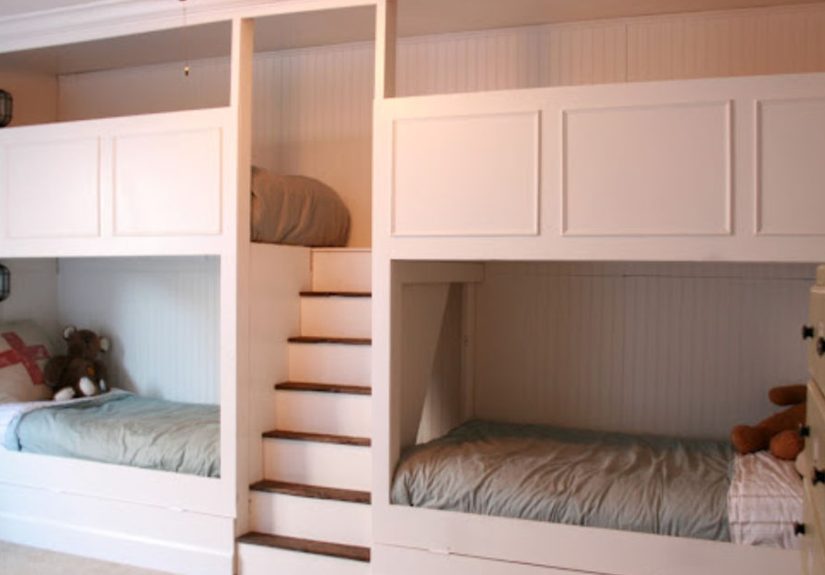
Another bonus: flexibility. Modern options include twin-over-twin, twin-over-full, triple bunks, L-shape bunks, and configurations with trundles, stairs, desks,
and built-in drawers. In other words, you can match the bed to your family’s actual routine instead of forcing your routine to match the bed.
Safety first: the non-negotiables for bunk beds
Let’s be direct: safety is not the “boring section.” It is the section that protects your child. Before you compare finishes and color palettes, lock in these core rules.
1) Age matters more than enthusiasm
Children younger than 6 should not sleep on the top bunk. This recommendation appears consistently in pediatric and safety guidance. Even a child who seems coordinated
during the day may struggle with nighttime climbing, grogginess, or falls.
2) Guardrails are mandatory, not optional
The upper bunk should have guardrails on both sides, and rail gaps should be narrow enough to reduce entrapment risk. Also check the rail height in relation to the mattress.
If the mattress is too thick, the rail can become less protective, which defeats the point of having one.
3) Mattress fit and thickness are critical
Use the exact mattress size recommended by the manufacturer. On many bunk systems, upper-bunk mattress thickness is limited so the sleeper remains safely below guardrail height.
A mattress that is “close enough” can become a real hazard.
4) Ladder access should be stable and lit
Whether you pick a straight ladder or stair-style access, the path needs to be stable, unobstructed, and visible at night. A small night-light near ladder access
can significantly improve nighttime safety.
5) No roughhousing on the frame
Kids will test boundaries. State this rule clearly: no jumping on bunks, no hanging from rails, no launching from ladder steps, no “parkour bedtime edition.”
Beds are for sleeping and calm play only.
6) Keep dangerous items away from the bunk structure
Do not hang belts, ropes, cords, or similar items from bunk frames. Also keep bunks away from ceiling fans and hard corner hazards where possible.
7) Check recalls and hardware regularly
Before purchase and a few times each year, check recall databases and inspect all fasteners. A quick monthly five-minute check for loosened bolts, cracked slats,
and wobbly ladder points can prevent bigger problems.
How to pick the right bunk bed type for boys
Different families need different layouts. Choose based on sleep needs, room size, and how your kids actually use the space.
| Type | Best For | Watch Outs |
|---|---|---|
| Twin-over-twin | Two younger boys in a standard room | Check total height under ceiling fans/lights |
| Twin-over-full | Different-age siblings or frequent parent snuggling/reading | Needs more wall length than twin-over-twin |
| Loft + lower play/study zone | One child in a small room needing desk space | Under-bed area can become clutter central |
| L-shape bunk | Rooms with odd corners and more floor area | Footprint is larger; measure walkways carefully |
| Bunk + trundle | Sleepovers, cousins, visiting family | Needs clear floor space for trundle rollout |
Dimensions, mattress planning, and room math
Standard U.S. twin mattresses are commonly around 38 by 75 inches, but frame tolerances vary. Always measure your actual room and verify the product’s exact dimensions,
including ladder projection, stair depth, and clearance for drawers.
A great rule: map the room on painter’s tape before buying. Tape the bed footprint on the floor, then add space for:
- Walking lanes (especially at night)
- Door swing and closet access
- Dresser or desk clearance
- Ladder/stair approach
- Trundle pullout zone, if included
Also check ceiling clearance above the top bunk so your child can sit up comfortably without feeling cramped.
Material and build quality: what lasts in real life
Solid wood
Usually quieter, heavier, and visually warmer. Great for traditional, farmhouse, coastal, or transitional rooms. Tends to age nicely and can handle repainting or refinishing.
Metal frame
Often slimmer and modern with excellent space efficiency. Can be a strong option for teen rooms or minimalist styles. Check weld quality and long-term noise control.
Hybrid designs
Common in modern kids’ furniture: wood look with metal support points, or vice versa. Can balance style and structure if quality control is good.
Whatever you choose, focus on:
- Published weight limits for each sleeping level
- Guardrail integrity and ladder attachment quality
- Slat support strength and spacing
- Hardware durability and replacement availability
- Assembly clarity (if instructions are chaos, maintenance may be chaos too)
Design ideas for boys bunk beds that don’t look generic
1) Built-in look without full custom cost
Use matching side panels, consistent wall color behind the bed wall, and symmetrical lighting to create a built-in feel. Add narrow shelves at head level for books and water.
2) Color strategy that survives changing tastes
Keep permanent elements neutral (bed frame, walls, rug base). Let personality come from removable layers: bedding, art, throw pillows, name signs, and wall decals.
Today’s “all dinosaurs all day” can become tomorrow’s “clean navy and charcoal” without replacing furniture.
3) Personal space cues for each bunk
- Individual reading light
- Tiny shelf or cubby
- Personal hook or basket
- Distinct but coordinated bedding
This is small effort with big payoff for sibling harmony.
4) Shared-room layout moves that actually help
Push bunks to one side to open center floor space. Use vertical storage on adjacent walls. If possible, keep a quiet corner for reading/homework and a separate zone for active play.
Separation by function is more useful than separation by decoration.
5) “Adventure” details without visual overload
Boys often love themes, but full-theme rooms can age fast. Instead, use one strong motif at a time: mountain mural, sports gallery wall, aviation prints, or ocean textures.
Pair with simple bedding so the room feels fun, not frantic.
Storage systems that keep boys’ bunk rooms under control
Storage is where many bunk rooms win or lose. Plan for three categories:
Daily-use storage
- Open bins for pajamas and bedtime books
- Bedside pocket caddies for glasses, flashlights, and small toys
- Drawer or basket for each child under lower bunk (if available)
Weekly rotation storage
- Closet bins labeled by activity: school, sports, art, weather gear
- A single toy-rotation tote to reduce floor clutter
- Laundry sorters to teach independence
Seasonal/deep storage
- High shelves for off-season clothing
- Vacuum bags for extra bedding and guest blankets
- Under-bed bins with lids for keepsakes and overflow toys
Pro tip: if your organization system needs a user manual, it’s too complicated for kids. Keep it visual, labeled, and repeatable.
Common bunk bed mistakes (and easy fixes)
Mistake: buying for today only
Fix: Choose a bed that can separate into two singles or support changing mattress sizes where appropriate.
Mistake: ignoring mattress-height rules
Fix: Verify upper-bunk mattress max thickness in writing before checkout.
Mistake: no plan for nighttime movement
Fix: Add motion-sensor night-light near ladder and clear the floor path nightly.
Mistake: prioritizing style over function
Fix: If a bed looks amazing but blocks closet doors, it’s not the one.
Mistake: skipping routine safety checks
Fix: Add a monthly “bed check” to your calendar: bolts, rails, slats, ladder, and floor clearance.
Quick buyer checklist for boys bunk beds
- Top bunk user is age 6+ and follows safety directions
- Guardrails on both sides of upper bunk
- Mattress thickness and size match manufacturer rules
- Published weight capacity works for your household
- Ladder/stairs are secure and easy to use
- Frame fits room with safe walkways and door/closet clearance
- Storage strategy included from day one
- Style can evolve without replacing the bed
- Recall check completed before purchase
- Assembly and monthly maintenance plan in place
Conclusion
The best boys bunk beds are the ones that balance safety, durability, and real family life. Yes, design matters. Yes, boys want rooms that feel fun.
But the winning setup is practical: correct mattress fit, strong guardrails, clear movement paths, solid storage, and a layout that can adapt as kids grow.
If you build around those fundamentals, your bunk room won’t just look good on day oneit will keep working through school years, growth spurts, changing hobbies,
and plenty of “Can my friend sleep over?” moments.
Real-life experiences with boys bunk beds
In one family I helped, two brothers shared a small room and fought every night about “who got the better side.” They had a basic twin-over-twin bunk, but no personal
setup around it. We made tiny changes: each boy got his own reading light, shelf, and small wall pocket for favorite books and a flashlight. Same bed, same room,
dramatically less conflict. The kids stopped arguing about territory because they each had a clearly defined “mini zone.” It was a reminder that boys often need visible
boundaries more than expensive upgrades.
Another home had the opposite issue: a beautiful custom bunk room that looked magazine-perfect but didn’t function for weekday life. The ladder side was blocked by laundry baskets,
the closet door couldn’t fully open, and the trundle was impossible to pull out without moving a chair and two bins. The parents were exhausted because bedtime involved
furniture Tetris. We reworked the layout with tape on the floor, moved one dresser, and switched to wall-mounted hooks and slimmer bins. Nothing fancy. But suddenly the room
flowed. Morning routines got faster, and the boys could actually make their beds without an obstacle course.
I’ve also seen how mattress choices can quietly create safety problems. One family upgraded to plush mattresses because they wanted “hotel comfort” for their kids. Sounds nice,
except the upper mattress sat too high, reducing the effective guardrail protection. We replaced it with a lower-profile mattress that matched the bed’s specs and used a softer
topper on the lower bunk where thickness wasn’t the same issue. Comfort stayed high, safety improved, and everyone slept better because the parents stopped worrying every night.
Sleepovers are where bunk beds become either genius or chaos. In a busy household with three boys plus frequent cousins, we set up a simple “sleepover protocol”: labeled bins for
guest blankets, one basket for device chargers, and a pre-bed floor check rule (“No LEGO on the runway”). It sounds silly, but this single routine reduced nighttime stumbles and
morning mess by a lot. The boys loved having a repeatable system, and the parents didn’t have to improvise at 10:30 p.m. while half-awake.
One of my favorite transformations involved a room that felt visually overwhelmingbright walls, patterned curtains, themed bedding, and toys everywhere. The bunk bed itself was fine,
but the environment kept the boys overstimulated at bedtime. We toned down fixed elements to calm neutrals and moved personality into flexible accents: one wall art zone, color pops in bedding,
and a rotating display shelf for current interests (space this month, basketball next month, dinosaurs always welcome). Sleep resistance dropped because the room felt calmer,
not because anyone enforced stricter rules.
The biggest lesson from these experiences is this: a bunk bed is not a one-time purchase; it’s a small system. When that system includes safety checks, right-sized mattresses,
personal space cues, and realistic storage habits, boys’ rooms become easier to manage and more enjoyable for everyone. And when the room works, family life gets easier in subtle but important ways:
fewer bedtime battles, less clutter stress, smoother mornings, and more confidence for kids sharing space. If I could give one final practical tip, it would be thisdo a 10-minute weekly reset
with your boys. Tighten, tidy, and re-teach routines together. It builds ownership, and ownership is what keeps a great bunk room great.