Table of Contents >> Show >> Hide
- Why Some Daughters Blame Their Mothers for Everything
- Signs the Pattern Has Become Unhealthy
- How to Deal When Your Daughter Blames You for Everything
- 1. Do not react at full emotional volume
- 2. Validate feelings without accepting every accusation
- 3. Own your part, but do not wear the whole blame costume
- 4. Set boundaries around disrespect
- 5. Stop overexplaining and overrescuing
- 6. Focus on patterns, not just incidents
- 7. Choose better timing
- 8. Invite repair, not a winner
- What Not to Do
- When Mothers Need to Look Inward
- When It Is Time for Professional Help
- If You Are the Daughter Reading This
- Conclusion
- Experiences Related to “Daughters Who Blame Their Mothers for Everything: How to Deal”
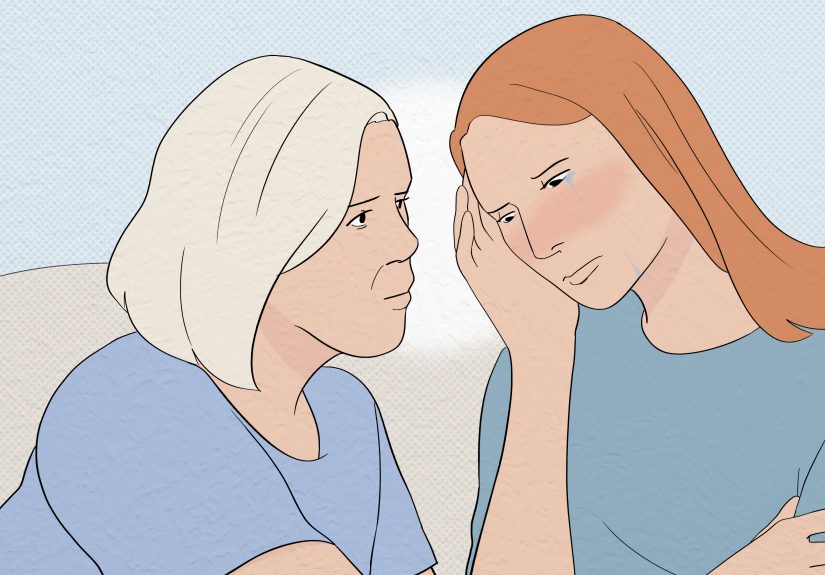
Some mother-daughter relationships feel less like a warm family bond and more like a courtroom drama where Mom is somehow the defendant in every case, every season, every reboot. One missed phone call? Mother’s fault. A bad breakup? Also mother’s fault. A rough week at work, a bad mood, Mercury in retrograde, soggy fries? You get the picture.
Still, this topic deserves more than jokes and eye-rolls. When daughters blame their mothers for everything, it usually points to something deeper: unresolved hurt, poor boundaries, family roles that never updated, chronic stress, or a relationship stuck in the world’s most exhausting loop. The good news is that blame does not have to run the whole show forever. With calmer communication, stronger boundaries, and a little less emotional ping-pong, it is possible to handle the situation in a healthier way.
This article breaks down why the pattern happens, how to tell the difference between ordinary family conflict and something more serious, and what mothers can actually do when every conversation seems to start with an accusation and end with a headache.
Why Some Daughters Blame Their Mothers for Everything
Blame is rarely just about the last argument. It is usually about a pileup of emotions, memories, and expectations that has been quietly collecting in the emotional garage for years. In many cases, daughters are not only reacting to what happened yesterday. They are reacting to what the relationship has meant to them over time.
1. Separation and identity can get messy
As daughters grow up, they naturally try to separate from their mothers and build an identity of their own. That process can be awkward even in loving families. A daughter may push back harder, criticize more, or frame her mother as “the problem” because blaming feels easier than sorting through complicated emotions like guilt, dependence, fear, or disappointment. In other words, sometimes blame is a shortcut through a very crowded emotional parking lot.
2. Old hurts may still be running the relationship
If a daughter felt criticized, misunderstood, controlled, compared, or emotionally unsupported while growing up, she may carry those wounds into adulthood. Then every new disagreement starts feeling like proof of an old story: “You never listen.” “You always make it about you.” “This is why I’m the way I am.” The current conflict may be small, but it presses on a bruise that never fully healed.
3. Family roles can turn into emotional uniforms
Families have a talent for assigning roles without holding a formal meeting. One child becomes “the responsible one,” another becomes “the sensitive one,” and sometimes Mom gets cast as “the one who ruins everything.” Once that role hardens, every event gets filtered through it. The daughter expects disappointment, the mother expects blame, and both arrive at the argument carrying scripts they did not mean to memorize.
4. Stress and emotional dysregulation can magnify conflict
Teen years, young adulthood, breakups, money worries, parenting stress, identity struggles, anxiety, depression, trauma, and burnout can all make conflict sharper. A daughter who feels overwhelmed may look for a target that feels emotionally available, familiar, and unlikely to disappear. Mothers often become that target. That does not make the behavior okay, but it can explain why blame gets louder when life gets harder.
5. Sometimes the blame points to something real
Here is the part nobody should skip: not all blame is unfair. Sometimes daughters are naming genuine pain. If there was emotional neglect, favoritism, harsh criticism, parentification, manipulation, substance misuse in the home, or repeated boundary violations, then the mother’s role may need honest reflection rather than instant self-defense. Healthy repair starts with truth, not with “Well, I did my best” used like a verbal fire extinguisher.
Signs the Pattern Has Become Unhealthy
Every family argues. That alone does not mean the relationship is broken. The bigger concern is when blame becomes the main operating system of the relationship.
- Every disagreement quickly turns into a global character attack.
- The daughter rewrites unrelated problems as proof that her mother caused everything.
- The mother feels she must constantly explain, defend, rescue, or apologize just to keep the peace.
- Conversations include guilt trips, shouting, contempt, or emotional shutdowns.
- Boundaries are treated like betrayal.
- Both people leave interactions feeling drained, angry, ashamed, or hopeless.
- The conflict is affecting sleep, work, health, other relationships, or mental well-being.
When blame becomes chronic, the goal is no longer to “win the argument.” The goal is to stop feeding a destructive pattern.
How to Deal When Your Daughter Blames You for Everything
1. Do not react at full emotional volume
Your first instinct may be to defend yourself like a lawyer with a coffee addiction. Totally understandable. Also usually unhelpful. If your daughter is emotional, meeting that intensity with your own rarely leads anywhere good. Pause. Breathe. Slow your voice. Lowering the emotional temperature is not weakness. It is strategy.
Try saying:
“I can hear that you’re really upset. I want to understand what’s bothering you, but I don’t want us to talk to each other in a hurtful way.”
2. Validate feelings without accepting every accusation
This is one of the most important skills in mother-daughter conflict. Validation means acknowledging her emotional reality. It does not mean agreeing that you are responsible for every flat tire in her life.
For example:
- “I can see why you felt hurt.”
- “I understand that you felt unsupported in that moment.”
- “I hear that this brought up a lot for you.”
That lands better than: “That never happened,” or the classic family favorite, “You’re too sensitive.” Validation opens the door to a real conversation. Defensiveness usually slams it shut.
3. Own your part, but do not wear the whole blame costume
If you truly handled something badly, say so clearly. Specific accountability builds trust. Vague martyrdom does not.
Better:
“I was too critical when you told me about that decision. I can see how that hurt you, and I’m sorry.”
Not better:
“Fine, I guess I’m just a terrible mother.”
The first response is accountable. The second is dramatic, self-focused, and oddly gifted at starting a second argument inside the first argument.
4. Set boundaries around disrespect
Love and access are not the same thing. You can love your daughter deeply and still refuse to be screamed at, insulted, or emotionally steamrolled. Boundaries are not punishments. They are instructions for how the relationship can remain safe and workable.
Examples:
- “I’m willing to talk, but not if I’m being called names.”
- “If the conversation becomes abusive, I’m going to end it and we can try again later.”
- “I can discuss this once we’re both calmer.”
Then follow through. A boundary without follow-through is just a very tired wish.
5. Stop overexplaining and overrescuing
Mothers who are blamed a lot often fall into one of two traps: endless defense or endless rescue. They explain every motive, every detail, every historical footnote, hoping to finally be understood. Or they rush in to fix the daughter’s problem so they can reduce conflict. Unfortunately, both approaches can keep the cycle alive.
If your daughter blames you for her bad choices, failed plans, or emotional discomfort, resist the urge to do all the emotional lifting. Support is healthy. Taking over her life because you are afraid of being blamed again is not.
6. Focus on patterns, not just incidents
Sometimes the issue is not one comment or one holiday blowup. It is a repeated dance. If that is the case, name the pattern gently.
“I’ve noticed that when something goes wrong, our conversations quickly turn into me being blamed for everything. I don’t think that pattern is helping either of us. I want us to talk differently.”
This keeps the conversation out of the weeds and puts attention on the relationship dynamic itself.
7. Choose better timing
Trying to resolve years of resentment during a holiday dinner, a rushed school pickup, or while someone is already furious is like trying to assemble furniture during an earthquake. Pick a calmer time. Be direct. Keep it shorter than your nervous system wants and kinder than your pride wants.
8. Invite repair, not a winner
Ask questions that encourage reflection instead of prosecution.
- “What do you need from me now that would actually help?”
- “What part of this feels old to you, not just about today?”
- “How can we handle conflict in a way that hurts us less?”
Those questions move the conversation toward problem-solving. That is where healing has at least a fighting chance.
What Not to Do
- Do not mock, minimize, or call her crazy.
- Do not match her intensity just because your blood pressure has filed a complaint.
- Do not drag siblings, spouses, or grandparents in as a jury panel.
- Do not keep apologizing for things you did not do just to end the conversation.
- Do not accept ongoing verbal abuse because “that’s just how she is.”
- Do not assume every complaint is nonsense; some may contain important truth.
When Mothers Need to Look Inward
Sometimes the most productive question is not, “Why is she blaming me?” but “What in this relationship has never really been addressed?”
Ask yourself:
- Was I controlling when she needed room to grow?
- Did I criticize more than I encouraged?
- Did I rely on her emotionally in ways a child should not carry?
- Did I dismiss her feelings because I felt overwhelmed or defensive?
- Am I still treating her like a child when she is trying to function as an adult?
Self-reflection is not self-destruction. It is how mothers move from guilt to clarity. You do not have to accept false blame to acknowledge real impact.
When It Is Time for Professional Help
If the relationship feels stuck in the same painful loop, therapy can help. Individual therapy may help a mother rebuild boundaries, reduce guilt, and respond more effectively. Family therapy can help both people identify patterns, communicate with less blame, and stop recycling the same fight in different outfits.
Professional support is especially important if the conflict includes estrangement threats, severe anxiety, depression, trauma history, substance misuse, self-harm talk, threats, or any form of emotional or physical abuse. In those situations, this is no longer just “family drama.” It is a mental health and safety issue.
If You Are the Daughter Reading This
Blaming your mother for everything may feel powerful for a moment, but it usually keeps you emotionally stuck. Even when your mother made real mistakes, healing requires more than replaying the evidence. It requires figuring out what you need now, what boundaries you want, what grief you have not processed, and how you want to live without making your past the CEO of your future.
You do not have to excuse harm. But you do have to decide whether you want constant blame or actual peace. Those are not always roommates.
Conclusion
When daughters blame their mothers for everything, the relationship often gets trapped between hurt and habit. The daughter may feel unseen, the mother may feel unfairly attacked, and both may keep replaying the same conflict with slightly different dialogue and the exact same exhaustion. The way forward is rarely found in a louder defense or a sharper comeback. It comes from calm communication, honest accountability, stronger family boundaries, and a shared willingness to stop turning every disappointment into a character trial.
If you are the mother in this dynamic, your job is not to become a perfect woman with retroactive powers. Your job is to stay grounded, listen for the truth inside the accusation, refuse disrespect, and respond in a way that protects both your dignity and the possibility of repair. That is not easy. But it is far more effective than arguing over who ruined 2014.
Experiences Related to “Daughters Who Blame Their Mothers for Everything: How to Deal”
Experience 1: The daughter who turned every setback into a family indictment. One mother described her adult daughter as bright, funny, and capable, but impossible to talk to when life went sideways. If a job interview went badly, Mom was blamed for “never teaching confidence.” If a relationship ended, Mom was blamed for “setting a terrible example.” The mother’s first instinct was to defend herself point by point, as if enough facts could end the cycle. They could not. What finally helped was changing the response. Instead of debating every accusation, she began saying, “I can hear that you’re disappointed and angry. I’m open to talking about what support you need now, but I’m not going to keep re-litigating my entire motherhood every time something hurts.” It did not fix the relationship overnight, but it stopped the endless courtroom routine.
Experience 2: The mother who realized some of the blame had roots. Another woman said she used to tell friends, “My daughter blames me for absolutely everything,” until therapy helped her notice a painful truth: some complaints were exaggerated, but some were not invented. She had been highly critical when her daughter was a teenager, often confusing worry with guidance and control with love. Once she stopped treating every complaint like an attack, she was able to say, “I don’t agree with every accusation, but I do see that I was often too harsh.” That sentence changed the tone of the relationship. Her daughter became less explosive once she felt that at least part of her pain had finally been recognized.
Experience 3: The teenage daughter who used blame as a shield. In one family, a teen blamed her mother for everything from strict rules to social stress to poor grades. The mother felt like the family Wi-Fi: invisible when working, hated when not. But the daughter was also dealing with anxiety and intense school pressure. Once the family started focusing less on “winning” arguments and more on emotional regulation, the blame softened. The mother learned not to chase every dramatic statement. The daughter learned to say, “I’m overwhelmed,” instead of launching a full character assassination before dinner.
Experience 4: The boundary that saved the relationship. One mother said the biggest change came when she stopped accepting cruel behavior in the name of closeness. Her adult daughter frequently called to unload, accuse, and insult. For years, the mother stayed on the phone because she thought hanging up would make things worse. Instead, it made things permanent. Eventually she began saying, “I love you, and I’m willing to talk when we can speak respectfully. I’m ending this call now.” At first the daughter was furious. Later, the calls became shorter, calmer, and less chaotic. The relationship was not magically healed, but it became more emotionally safe. Sometimes the most loving thing a mother can do is stop being available for emotional target practice.