Table of Contents >> Show >> Hide
- Before You Touch a Tile: Firepit Reality Checks (Safety + Rules)
- What “Mosaic Firepit” Can Mean (Pick the Right Version)
- Design Like a Pro: Planning Your Mosaic Pattern So It Doesn’t Look “Accidentally Abstract”
- Materials That Actually Hold Up Outdoors (Heat + Freeze/Thaw + Water)
- Smart Construction Approach: Build the Fire-Safe Core, Then Add Mosaic Where It Belongs
- Practical Mosaic Design Ideas That Look Custom (Without a Master’s Degree in Tile)
- Firepit Use + Maintenance: How to Keep It Pretty (and Not Annoy the Whole Neighborhood)
- Budget, Time, and “Worth It?” (A Realistic Breakdown)
- Common Mistakes (So You Can Avoid Becoming a Backyard Cautionary Tale)
- Conclusion: A Mosaic Firepit That’s Beautiful, Durable, and Not a “Learning Experience”
- Experiences from Real-World DIYers (What People Learn After the First Fire)
There are two kinds of backyard firepits: the kind that becomes the “we should do this every weekend” hangout spot,
and the kind that becomes a very expensive, very decorative circle you trip over in the dark. A mosaic firepit
(or a mosaic-wrapped firepit surround) is your chance to land in the first categorycozy, photogenic, and
conversation-startingwithout accidentally building the second category: “mystery cracked grout art.”
This guide focuses on the smart way to do a DIY backyard mosaic firepit: treat the fire feature itself
as a safety-first, code-friendly “core,” and treat the mosaic as the durable, weather-ready outfit. Translation:
you can absolutely create that showstopper look, but the flames should live in fire-rated materials, and the
mosaic should live where heat and weather won’t destroy it (or you).
Before You Touch a Tile: Firepit Reality Checks (Safety + Rules)
Start with clearance, wind, and “will my neighbor hate this?”
Fire features aren’t just décorthey’re tiny controlled bonfires with a social calendar. Many fire safety guidelines
recommend keeping a fire pit at least 10 feet from structures and anything that can burn, and local
rules can be stricter. That includes your house, fences, low branches, patio furniture, and yes, that adorable
string-light canopy you lovingly installed like a backyard movie set.
Also: check local fire rules and burn bans before you plan anything permanent. Cities, counties,
and fire districts may restrict open flames, require permits, limit fuel types, or regulate burn hours. Even if
you’re a responsible backyard wizard, a “no-burn day” still means no burning.
Use a safe core (and don’t DIY the dangerous parts)
If you’re set on DIY, the safest approach is to use a listed, manufactured fire pit insert/bowl or a
reputable fire pit kit for the burn chamberthen build your mosaic design on the outer surround
where surface temperatures are lower and materials can survive. Many home-improvement pros strongly discourage
DIY gas firepits unless installed by qualified professionals, because mistakes can be catastrophic.
Bottom line: the mosaic is a creative project; the fire chamber is an engineering-and-safety project. Let each be
what it’s best at.
What “Mosaic Firepit” Can Mean (Pick the Right Version)
Option A: Mosaic the firepit surround (best for durability)
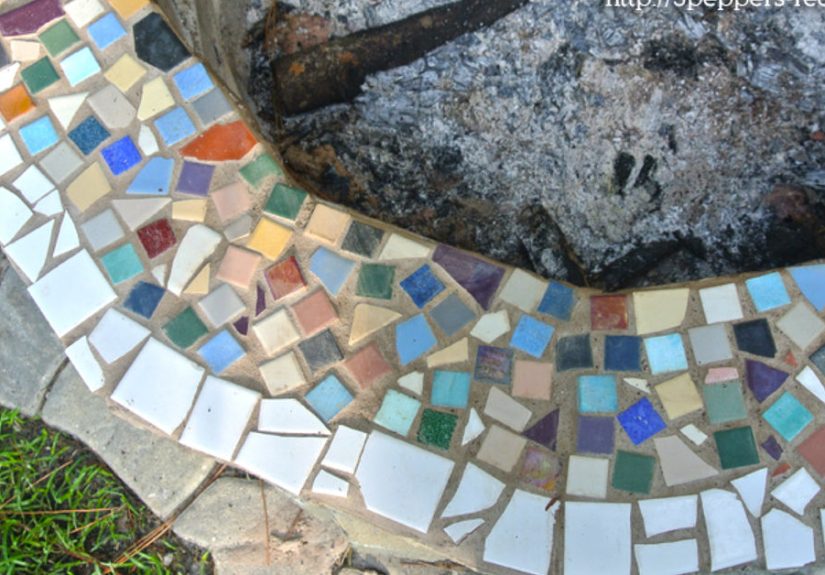
Think of this as a mosaic “jacket” around a fire-safe core: a seating wall, an outer ring, or a raised platform
that sits around the fire area. You get the wow-factor, and the mosaic is less likely to bake, pop, or crack.
Option B: Mosaic the outer face of a masonry firepit (good if designed for heat)
If you already have a masonry firepit (or a kit-built one), you can mosaic the outside surfacenot the inside
of the burn chamber. The inner fire area should be fire-rated (firebrick/liner/metal insert) and built to handle
repeated high-heat cycles. Your mosaic belongs on the exterior where it sees warmth, not direct flame.
Option C: Mosaic a “cap” or tabletop edge nearby (low heat, high style)
This is the cheat code for beginners: mosaic the coping stones, a nearby side table, or a firewood niche surround.
You still get the custom look, and you avoid the harshest heat.
Design Like a Pro: Planning Your Mosaic Pattern So It Doesn’t Look “Accidentally Abstract”
Choose a theme that fits your yard
A firepit is the backyard’s focal point, so your mosaic needs to play well with the rest of the space.
A few crowd-pleasers:
- Southwest sunset: terracotta + turquoise + creamy neutrals.
- Modern minimal: grayscale glass with one bold accent band.
- Coastal: sea-glass tones, wave patterns, and sandy grout.
- Garden glow: floral motifs that echo nearby plantings.
Plan for distance viewing
Most people will see your firepit from 6–15 feet away while carrying a drink and pretending they’re “just checking
the marshmallows.” Big shapes and strong contrast read better than tiny details. Save micro-mosaic masterpieces
for a tabletop or planter where people can admire them up close.
Use grout color like it’s eyeliner (subtle, but it changes everything)
Grout can make your mosaic look crisp and modern or soft and rustic. High-contrast grout outlines every tile piece
(bold, graphic). Close-match grout blends pieces together (calm, cohesive). If you want the mosaic to feel
intentionalnot like your tile scraps formed a unionpick grout deliberately.
Materials That Actually Hold Up Outdoors (Heat + Freeze/Thaw + Water)
Tile choices: pick tough, not just pretty
Outdoors, your mosaic will face sun, rain, temperature swings, and possibly freezing conditions.
Dense materials with low water absorption tend to perform better in freeze/thaw climates. Consider:
- Porcelain: durable and weather-friendly.
- Glass mosaic: beautiful, but ensure it’s rated for exterior use and installed correctly.
- Natural stone: can work, but needs the right sealer and maintenance (and stone selection matters).
Adhesives and mortars: exterior-rated matters
The glue is the unsung hero of every mosaic that survives winter. For exterior tile work, industry guidance
emphasizes using setting materials appropriate for outdoor conditionsoften including mortars designed to handle
moisture and freeze/thaw, plus proper movement accommodation.
For areas that may get warm (like an outer ring near a fire feature), talk to a tile pro at a local supplier and
choose products rated for exterior and temperature variation. The goal is a system
(substrate + mortar + grout + joints) that can flex with thermal cycling instead of cracking like a cookie.
Movement joints: the boring detail that prevents dramatic failure
Outdoor installations expand and contract with temperature swings. Tile industry guidance stresses that
movement joints are required to handle that movement. Skipping them is the fastest way to end up with
cracked grout lines that look like a road map of regret.
Sealants: not always mandatory, often smart
Many grouts and stones benefit from a penetrating sealer to reduce staining and moisture intrusion. For a firepit
area, think beyond beauty: soot, smoke residue, spilled drinks, and the occasional “I thought it was water” mystery
splash can all stain grout. A compatible grout/tile sealer can make cleanup easier and help the finish last longer.
Smart Construction Approach: Build the Fire-Safe Core, Then Add Mosaic Where It Belongs
Rule #1: Keep mosaic out of the burn chamber
Direct flame and extreme heat cycles are not friendly to typical mosaic materials, adhesives, and grout.
The inside of a wood-burning firepit should be lined with fire-rated materials or use a
metal insert designed for that purpose. Your mosaic should live on the exterior faces, caps,
or nearby features.
Rule #2: Choose a non-combustible, stable base around the pit
Whether your firepit is portable or permanent, it needs to sit on a stable, non-flammable surfacethink concrete,
pavers, stone, or gravelon level ground. A wobbly firepit is not “rustic charm.” It’s a physics lesson you
didn’t ask for.
Rule #3: Drainage is durability
Water that sits behind tile or in grout joints can freeze and expand, causing cracking or debonding. A smart design
sheds water, avoids trapping moisture, and uses materials meant for wet exterior exposure. This is why outdoor tile
guidance emphasizes the right substrate, proper setting materials, and movement accommodation.
Practical Mosaic Design Ideas That Look Custom (Without a Master’s Degree in Tile)
1) The “Constellation Band”
Add a single mosaic stripe around the perimeterlike a belt. Use dark grout and scattered metallic or iridescent
tiles for a night-sky vibe. It looks expensive, but it’s basically a fancy border.
2) The “Sunburst Face”
On one outward-facing side (the side people see most), create a sunburst or geometric medallion. Keep it large and
bold so it reads from across the yard.
3) The “Color-Shift Ombre”
Blend from deep charcoal at the base to light stone at the top. It disguises dirt near the ground and makes the top
feel airy. Also, it’s a subtle way to look like you planned everything.
4) The “Found Object Mosaic” (done responsibly)
Some DIYers incorporate meaningful piecesbroken china from a family set, tumbled beach glass, or leftover tile from
a remodel. The trick is to keep everything exterior-safe, avoid anything that can shatter with heat, and place it on
the low-heat surround rather than near direct flame.
Firepit Use + Maintenance: How to Keep It Pretty (and Not Annoy the Whole Neighborhood)
Fuel choices and smoke etiquette
Use appropriate, dry fuel (for wood-burning pits, seasoned wood is typically recommended). Avoid burning trash,
treated lumber, or construction scrapsthose can release nasty chemicals and create more sparks and smoke. If your
smoke drifts into open windows next door, your mosaic might become a memorial to your social life.
Weather and burn bans
Wind and dry conditions increase risk. Many safety guides recommend avoiding fires on windy days and paying
attention to burn bans and local restrictions. Keep extinguishing tools nearbywater source, sand, or a fire
extinguisherso you’re never improvising with a garden gnome.
Cleaning the mosaic surface
- Routine: gentle brush + mild cleaner as needed.
- Soot/film: spot clean sooner rather than later (it can stain grout over time).
- Annual check: inspect grout lines, movement joints, and any cracks; reseal if your product calls for it.
Budget, Time, and “Worth It?” (A Realistic Breakdown)
A mosaic project can be scaled:
- Budget-friendly: mosaic accent band on a surround using leftover tile.
- Mid-range: full wrap on a seating wall + quality exterior mortar/grout system.
- Premium: custom design, high-end glass/porcelain, pro-grade installation details, and a listed fire feature core.
The real cost isn’t just materialsit’s durability. Spending a little more on correct exterior-rated installation
products and movement accommodation can save you from redoing the entire thing after one rude winter.
Common Mistakes (So You Can Avoid Becoming a Backyard Cautionary Tale)
- Mosaicking the burn chamber: heat destroys ordinary tile systems.
- Skipping movement joints: leads to cracking and debonding with temperature swings.
- Ignoring drainage: trapped water + freeze/thaw = heartbreak.
- Placing too close to structures: unsafe and often not code-compliant.
- Forgetting wind direction: smoke will find the one person who hates smoke (it’s always someone).
Conclusion: A Mosaic Firepit That’s Beautiful, Durable, and Not a “Learning Experience”
A DIY backyard mosaic firepit can be the star of your outdoor spaceif you treat it like a system,
not a craft project glued to a bonfire. Prioritize a safe, code-friendly fire feature core, keep mosaic on the
lower-heat exterior surfaces or surrounding elements, and use exterior-appropriate tile practices (including
movement accommodation and weather-resilient materials). Do that, and you’ll end up with a backyard centerpiece that
looks custom, cleans up easily, and keeps everyone coming back for “one more round by the fire.”
Experiences from Real-World DIYers (What People Learn After the First Fire)
Even when you plan carefully, a mosaic firepit project tends to teach a few lessonsusually right around the moment
you’re holding a grout float and questioning your life choices. One of the most common “wish I knew this sooner”
themes is that heat behaves like an invisible paintbrush. People who mosaic too close to the hottest
zones often notice subtle changes first: grout that looks slightly chalkier, a few hairline cracks, or a tile edge
that seems to have shifted. It’s rarely dramatic on day one; it’s the repeated cycleswarmth, cool-down, moisture,
more warmththat reveal whether your materials and placement were truly appropriate.
Another frequently shared experience: the pattern matters more than you think at night. In daylight,
a complex design with tiny pieces can look incredible. But once the fire is lit, shadows dance, and your guests are
several feet back in a chair, bold shapes and clear contrast become the heroes. DIYers who choose a strong border,
a repeating geometric motif, or a simple medallion often report that their mosaic looks “intentional” in every kind
of light. Meanwhile, ultra-detailed scenes can get visually “noisy” once firelight starts flickering. The takeaway?
If your mosaic will mostly be enjoyed in the evening, design for evening.
Weather is the next big teacher. DIYers in climates with big temperature swings often talk about the moment they
realized their firepit surround is basically a tiny outdoor building: it needs to shed water, tolerate movement,
and survive freeze/thaw. The most successful projects usually include a plan for drainage and maintenance.
People who seal what needs sealing, keep joints clean, and repair small grout issues early tend to keep their mosaic
looking great for years. The folks who ignore a small crack sometimes end up with a larger repair later, especially
after a wet season.
There’s also the social sidethe part nobody puts on the shopping list. Many DIYers say a finished mosaic firepit
changes how they use their yard. A basic pit is functional; a mosaic one becomes a landmark. It’s the place where
someone inevitably says, “Wait… you made this?” (and you casually nod like you didn’t spend two weekends muttering
at grout haze). People also mention that a mosaic surround naturally creates “zones”: a spot for seating, a spot for
wood storage, and a spot for setting down snacks that are definitely not going to be dropped into the fire. It makes
the whole area feel designed rather than accidental.
Finally, experienced DIYers often recommend a mindset shift: build the fire feature for safety; build the
mosaic for joy. When the burn chamber is a reliable, fire-rated core and the mosaic lives where it can
thrive, you get the best of both worldswarmth you can trust and artistry you can show off. And that’s the real win:
a backyard centerpiece that doesn’t just look good in photos, but holds up through actual seasons of actual use,
with actual people laughing around it (and only a normal amount of marshmallow-related chaos).