Table of Contents >> Show >> Hide
- What “Weight Bias” Looks Like in Real Life (Not Just in Abstract)
- Why This Matters: Weight Stigma Changes Health Behaviors and Health Care Use
- Where Weight Bias Comes From (Hint: It’s Not Just “Bad People”)
- What Doctors Can Do: A Practical, No-Drama Playbook
- 1) Use person-first, medically accurate language
- 2) Ask permission before discussing weightand explain why it matters for this visit
- 3) Rethink weighing as a routine reflex
- 4) Make the environment fit the patient (not the other way around)
- 5) Treat obesity as complex and chronicbecause it is
- 6) Practice bias “micro-skills” during the visit
- 7) Build stigma-reduction into team culture (not just individual heroics)
- Specific Clinical Scenarios: What “Weight-Inclusive Care” Can Sound Like
- Composite Experiences Related to “Doctors Urged to Minimize Their Own Weight Bias and Stigma”
- Conclusion: Better Care Starts With Better Assumptions
If medicine had a “silent roommate” in the exam room, it would be biasthe kind that doesn’t announce itself,
doesn’t show up on lab work, and somehow still manages to steer the whole visit. Weight bias is one of the
most common versions of that roommate. And while most clinicians genuinely want to help, research and patient
reports keep landing on the same uncomfortable point: weight stigma can quietly shape clinical decisions,
communication, and whether patients feel safe coming back.
The good news? Weight bias isn’t a character flaw tattooed on your stethoscope. It’s a learnable, fixable
patternoften reinforced by culture, time pressure, outdated narratives, and “that’s how we’ve always done it”
workflows. This article breaks down what weight stigma looks like in practice, why it matters for outcomes,
and how doctors can reduce itwithout walking on eggshells or turning every visit into a dissertation about BMI.
What “Weight Bias” Looks Like in Real Life (Not Just in Abstract)
Weight bias in health care can be explicit (“You just need to stop eating so much”)but more often it’s subtle,
routine, and wrapped in “clinical efficiency.” It can show up as:
- Diagnostic shortcutting: attributing symptoms to weight before doing a full workup.
- Communication drift: using shaming language, sarcasm, or a “lecture voice.”
- Reduced patient-centeredness: less eye contact, less empathy, less time, fewer options discussed.
- Care barriers: lack of appropriately sized cuffs, gowns, chairs, imaging equipment, or scales.
- Conditional care: delaying procedures or referrals until weight loss happenswithout a realistic plan.
The patient experience can be even simpler: “My body walked in before I did.” When that’s the vibe, people delay
preventive visits, avoid follow-ups, or brace for humiliation instead of focusing on health.
Why This Matters: Weight Stigma Changes Health Behaviors and Health Care Use
Weight stigma isn’t a motivational poster with tough loveit’s a stressor. Studies link weight stigma to
increased stress responses, avoidance of physical activity, health care delays, disordered eating patterns,
and worse mental health. And inside the clinic, stigma can erode trust and make patients less likely to return
for preventive care or chronic disease management.
Here’s the paradox clinicians should care about: even when the medical advice is technically correct,
stigma can make it unusable. A patient who feels judged is less likely to disclose behaviors honestly, less likely
to ask questions, and more likely to leave with shame instead of a plan. When weight becomes the “main character”
of every visit, other issues (pain, fatigue, depression, autoimmune symptoms, cancer screening, sleep apnea workup)
can become side plotsor get cut entirely.
A quick reality check on prevalence
In the U.S., obesity affects a large share of adults, and many patients report experiencing weight stigma in
medical settings. That means this is not a niche “sensitivity topic.” It’s a mainstream quality-of-care issue
affecting millions of visits each week.
Where Weight Bias Comes From (Hint: It’s Not Just “Bad People”)
Clinicians are trained to recognize riskand body weight often becomes an easy visual cue. But bias forms when a cue
becomes a conclusion. Weight bias is reinforced by:
- Culture: moralizing body size (“good” bodies vs. “bad” bodies) instead of treating obesity as complex and chronic.
- Clinical time pressure: shortcuts feel necessary when schedules are packed and documentation is relentless.
- Overreliance on BMI: BMI can be a screening tool, but it’s not a full diagnosis, a personality trait, or a care plan.
- Training gaps: many clinicians receive limited education on weight stigma, obesity pathophysiology, and evidence-based treatment options.
- Frustration and burnout: when progress is slow, the clinician’s tone can drift into blame without anyone noticing.
Also worth saying out loud: plenty of clinicians carry their own body historydiet culture, “making weight” for sports,
family comments, or internalized stigma. If you’ve ever felt judged by a number on a scale, you already understand why
patients don’t want that number to become the headline of every appointment.
What Doctors Can Do: A Practical, No-Drama Playbook
1) Use person-first, medically accurate language
Language is one of the fastest ways to reduce stigmabecause it changes the emotional temperature of the room.
Person-first language means saying “a patient with obesity” rather than “an obese patient.” It’s a small shift
that signals: You are a person first, not a problem to be solved.
Also consider replacing moralized terms (e.g., “failed diet,” “noncompliant,” “lazy”) with clinical, specific descriptions:
“has struggled to sustain changes due to caregiving schedule,” or “medication side effects limited activity,” or
“food access is inconsistent.”
2) Ask permission before discussing weightand explain why it matters for this visit
A simple script can prevent a lot of harm:
“Would it be okay if we talk about weight today? I ask because it can affect blood pressure,
sleep, joint pain, and medication dosingbut I want to focus on what matters most to you.”
This is not about tiptoeing. It’s about collaboration. When patients feel respected, they’re more likely to engage.
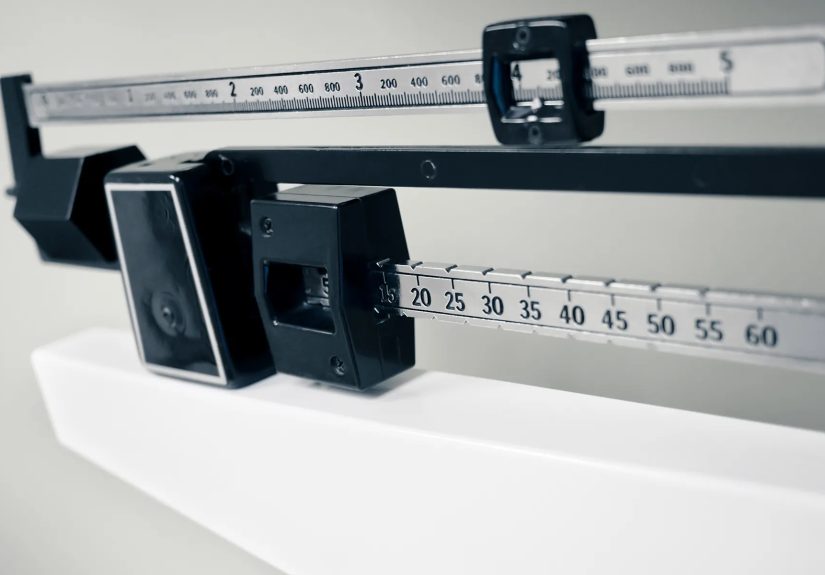
3) Rethink weighing as a routine reflex
Weighing can be medically relevant. It can also be emotionally loaded. Consider options that reduce distress while
still supporting care:
- Offer “blind weights” (patient faces away; staff doesn’t announce numbers).
- Clarify when weight is necessary (e.g., medication dosing, heart failure monitoring) vs. when it’s not.
- Separate “weight check” from “worth check” by keeping tone neutral and purpose explicit.
If your scale is the loudest thing in the visit, your patient is leaving with a numbernot a plan.
4) Make the environment fit the patient (not the other way around)
Stigma isn’t only language; it’s infrastructure. A patient who can’t fit comfortably in a chair or gown is being told,
without words, “You don’t belong here.” Practical upgrades matter:
- Sturdy, armless chairs in waiting and exam rooms
- Large blood pressure cuffs and staff training on correct sizing
- Gowns in a range of sizes (stored where staff can access them without a scavenger hunt)
- Scales that accommodate higher weights with privacy and dignity
These changes improve care for higher-weight patientsand for anyone with mobility issues, pregnancy, or medical equipment.
Inclusivity is often just good design.
5) Treat obesity as complex and chronicbecause it is
Multiple medical organizations recognize obesity as a chronic, multifactorial disease influenced by genetics, physiology,
environment, medications, sleep, stress, mental health, and social determinants. When clinicians frame weight as purely
willpower, patients get blame instead of treatment.
A more clinically useful approach:
- Assess contributors: sleep, pain, depression/anxiety, food security, medications, endocrine issues, mobility limits.
- Offer evidence-based options: nutrition counseling, movement that fits function, behavioral support,
anti-obesity medications when appropriate, and referral pathways including bariatric surgery evaluation when indicated. - Set realistic goals: focus on outcomes (blood pressure, A1C, lipids, mobility, sleep quality) rather than only the scale.
6) Practice bias “micro-skills” during the visit
Bias reduction isn’t always a grand training module. It can be small, repeatable behaviors:
- Lead with the patient’s agenda: “What’s most important for you to address today?”
- Reflect and validate: “It sounds like you’ve tried a lot and felt dismissed. That’s exhausting.”
- Stay curious: ask about barriers before prescribing solutions.
- Offer choices: “We can start with sleep and pain today, or we can also discuss weight treatment optionsyour call.”
These moves are deceptively powerful because they rebuild trustthe currency of long-term behavior change.
7) Build stigma-reduction into team culture (not just individual heroics)
Patients experience the whole clinic, not just the physician. Front-desk comments, rooming routines, and staff body language
all matter. Consider:
- Team training on weight stigma and respectful language
- Standard scripts for sensitive moments (weighing, gowning, equipment needs)
- Charting standards that avoid stigmatizing descriptors and focus on objective data
- Feedback loops (patient surveys, anonymous staff reporting, QI projects)
When stigma reduction is treated like hand hygieneroutine, expected, measurableit actually sticks.
Specific Clinical Scenarios: What “Weight-Inclusive Care” Can Sound Like
Scenario A: Knee pain and the “just lose weight” trap
Instead of: “Your knee hurts because of your weight. You need to lose 50 pounds.”
Try: “Extra load can contribute to knee pain, but it’s rarely the only factor. Let’s evaluate the joint,
talk about safe movement, and manage pain so you can function now. If you’d like, we can also discuss weight treatment options
as one toolnot the only tool.”
Scenario B: Hypertension follow-up with a history of stigma
Try: “A lot of people have had rough experiences in medical offices around weight. If that’s been true for you,
I want you to know I’m focused on your health, not judging your body. Let’s look at blood pressure, sleep, stress, and meds
and we’ll decide together what changes are realistic.”
Scenario C: Patient asks, “Are you saying this is my fault?”
Try: “No. Weight is influenced by many factorsbiology, environment, medications, stress, sleep. My job is to help you
find options that work for your life and support your health.”
Composite Experiences Related to “Doctors Urged to Minimize Their Own Weight Bias and Stigma”
Note: The following are composite scenarios drawn from commonly reported experiences in health care settings. They’re not about
any one patient or clinicianthey’re meant to feel familiar so we can learn from them.
1) The patient who stopped coming… until something got scary
A woman in her 40s delays her annual visits for years. Not because she “doesn’t care,” but because the last few appointments
felt like a predictable script: weigh-in, raised eyebrow, a quick lecture, and a handout that looked like it survived on black coffee
and judgment. Over time, she starts associating clinics with shame. When she finally returns, it’s not for preventionit’s because
she’s short of breath climbing stairs and can’t ignore it anymore.
In a weight-inclusive visit, the turning point isn’t a miracle treatment; it’s the clinician saying, “I’m glad you’re here,” and meaning it.
The doctor asks permission to discuss weight, focuses first on her symptoms, screens for sleep apnea, reviews meds, and sets a plan that
includes blood pressure control, movement that doesn’t aggravate her joints, and options for obesity treatment without moralizing.
She leaves feeling like a human againso she actually comes back.
2) The resident who realized “neutral” wasn’t neutral
A resident prides herself on being “direct.” She believes she’s simply stating facts: BMI is high, weight loss helps, end of story.
But during a continuity clinic rotation, she notices a pattern: patients in larger bodies get shorter conversations, more interruptions,
and fewer questions about mental health, sleep, or social stressors. Not because she’s cruelbecause she’s rushed, trained to triage,
and unconsciously assuming weight is the primary cause.
After a faculty-led session on weight stigma, she tries a different approach: she starts with, “What’s hardest about managing your health right now?”
She learns one patient’s biggest barrier isn’t knowledgeit’s knee pain, food insecurity, and shift work sleep. Another patient has a history
of disordered eating triggered by dieting. The resident’s “direct” style doesn’t disappear; it evolves. She becomes precise instead of judgmental,
and her care improves. Her notes shift from “noncompliant” to “barriers include transportation and caregiving demands.” That’s not political correctness.
That’s better medicine.
3) The clinic that fixed the furniture and unexpectedly improved outcomes
A primary care clinic decides to address stigma structurally. They add armless chairs, stock multiple cuff sizes in every pod, and make larger gowns
standard inventory instead of a “special request.” They also update scripts for staff: no announcing weights out loud, no jokes, no sighs.
The surprise? Patient satisfaction improves across the boardnot only among higher-weight patients. The environment feels calmer, more private,
and more respectful for everyone. And because patients feel less dread, they keep appointments more consistently. The clinic’s quality metrics
inch upward: better follow-up rates, better chronic disease monitoring, more preventive screening. The lesson is simple: dignity is a clinical intervention.
Conclusion: Better Care Starts With Better Assumptions
Doctors are being urgedby evolving standards, patient experience data, and common senseto minimize their own weight bias and the stigma that can follow it.
This isn’t about pretending weight is irrelevant. It’s about refusing to let weight become a shortcut that replaces curiosity, compassion, and clinical rigor.
The goal is practical: make care more accurate, more patient-centered, and more effective. Use person-first language. Ask permission. Create a clinic
environment that fits real bodies. Train teams. And remember: when patients trust you, they tell you the truthand that’s when medicine actually works.