Table of Contents >> Show >> Hide
- What Is the Elder Futhark?
- What Do Runes “Mean”? Two Different Layers of Meaning
- How to Read Elder Futhark Like a Normal Person (Not a Wizard in a Movie)
- The 24 Elder Futhark Runes and Their Meanings
- Specific Examples: What These Meanings Look Like in Real Life
- The Rune Poems: Where Many “Meanings” Get Their Poetry
- How Runes Were Used Historically (Not Just Mystically)
- Modern Rune Work: How to Use Meanings Without Getting Weird About It
- Common Beginner Mistakes (So You Don’t Accidentally Invent “Elder Futhark 2.0”)
- A Simple, Historically-Respectful Way to Study Rune Meanings
- Conclusion
- Real-World Experiences: What Learning Elder Futhark Feels Like
The Elder Futhark is the “OG keyboard” of the Germanic world24 sharp-angled symbols designed for carving into stubborn materials like wood, bone, and stone.
(Curves are cute, but try carving a perfect lowercase “g” with a knife and a strong opinion.) Today, Elder Futhark is everywhere: tattoos, jewelry, fantasy maps,
and modern spiritual practices. But what do these runes actually meanhistorically, linguistically, and in modern “rune meanings” culture?
In this complete guide, you’ll learn what the Elder Futhark is, how rune meanings developed, what each of the 24 runes commonly represents, and how to use them
thoughtfullywhether you’re studying language history, designing art, or building a personal practice that’s grounded in real information (not “I saw it on a meme,
therefore it’s Viking law”).
What Is the Elder Futhark?
Elder Futhark (also spelled Older Futhark or Fuþark) is the earliest well-known runic alphabet used by Germanic-speaking peoples
during the Migration Period. It’s typically dated to roughly the 2nd through 8th centuries CE. The name “Futhark” comes from the first six runes
in order: F, U, Þ (thorn), A, R, K.
Unlike modern alphabets that evolved for ink and paper, Elder Futhark runes were built for carving. Straight lines cut cleanly; diagonals are your friend; and if
you ever wonder why the shapes look so “angular,” it’s because they were literally engineered for the toolset of the time.
The 24 runes and the three “ættir”
The Elder Futhark contains 24 runes, often arranged in three groups of eight called ættir (singular: ætt).
You’ll often see modern labels like “Freyr’s ætt” or “Týr’s ætt,” but it’s important to know that the original historical names for these groupings aren’t securely
attested. The “three sets of eight” format is still a helpful way to learn and organize the runes, so we’ll use it herejust with the “modern convenience” label
attached.
What Do Runes “Mean”? Two Different Layers of Meaning
Here’s the biggest rune misconception in one sentence: every rune has a sound value, but not every “meaning” you see online is ancient.
Think of runes like letters with name-tags.
Layer 1: Historical meaning (letter + name)
Each rune represents a sound (like f, u, r) and also had a nameusually a common noun. That name
can suggest a “meaning” in the same way that the letter “A” could be nicknamed “Apple” in a teaching chart. The rune’s name might be attested in later rune poems
(especially for Anglo-Saxon and Scandinavian traditions) or reconstructed by scholars for earlier stages.
Layer 2: Modern symbolic meaning (keywords + interpretation)
Many people today use runes symbolicallysimilar to how tarot cards, archetypes, or journaling prompts work. These “rune meanings” are often built from a mix of:
(1) the rune’s name, (2) later poetic descriptions, (3) comparative mythology, and (4) modern tradition. This isn’t “fake,” but it is different from
claiming “Vikings used rune X to guarantee your crush texts back.”
In this guide, you’ll get both: a grounded, literal sense (name + concept) and the most common modern keyword associationsclearly framed as interpretation, not
time-travel certainty.
How to Read Elder Futhark Like a Normal Person (Not a Wizard in a Movie)
Start simple. Runes are letters. If you want to write a word in runes, you usually use transliterationmatching sounds to rune values. A few
tips that save beginners from instant confusion:
- Þ (thorn) is the “th” sound (like thin), often written as þ in scholarship.
- ᛉ (Algiz) and ᛇ (Eihwaz) can be tricky because their historical sound values and names are debated and vary by context.
- Rune names are often written with an asterisk (*Fehu) when scholars reconstruct an earlier form rather than quoting a direct historical spelling.
- Orientation matters for carving and for reading inscriptions, but modern “reversed meanings” (like tarot reversals) are largely a modern practice.
The 24 Elder Futhark Runes and Their Meanings
Below is a complete, learner-friendly list of the 24 runes. For each rune, you’ll see:
symbol, name, sound, literal sense, and common modern keywords.
Treat the “modern keywords” like a study aid or reflection prompt, not a museum label.
First Ætt (1–8): Fehu through Wunjo
| Rune | Name | Sound | Literal sense | Common modern keywords |
|---|---|---|---|---|
| ᚠ | Fehu | F | Cattle, movable wealth | resources, prosperity, flow, value |
| ᚢ | Uruz | U | Aurochs (wild ox), strength | vitality, endurance, raw power, courage |
| ᚦ | Thurisaz | TH | Giant/thorn, force | protection, challenge, boundaries, wake-up call |
| ᚨ | Ansuz | A | God/ancestral spirit (often linked to Odin in later tradition) | communication, insight, inspiration, signals |
| ᚱ | Raidho | R | Ride, journey, road | movement, process, travel, right timing |
| ᚲ | Kenaz (Kaunan) | K | Torch; also “ulcer” in some traditions | illumination, skill, creativity, revealed truth |
| ᚷ | Gebo | G | Gift | exchange, partnership, generosity, balance |
| ᚹ | Wunjo | W | Joy, delight | harmony, morale, belonging, wins (small or big) |
Second Ætt (9–16): Hagalaz through Sowilo
| Rune | Name | Sound | Literal sense | Common modern keywords |
|---|---|---|---|---|
| ᚺ | Hagalaz | H | Hail | disruption, reset, weathering change, resilience |
| ᚾ | Nauthiz | N | Need, constraint | friction, necessity, discipline, patience |
| ᛁ | Isa | I | Ice | stillness, focus, pause, cooling off |
| ᛃ | Jera | Y/J | Year, harvest cycle | earned results, seasons, gradual payoff, timing |
| ᛇ | Eihwaz | EI (varies) | Yew (a resilient tree) | steadiness, protection, long view, inner backbone |
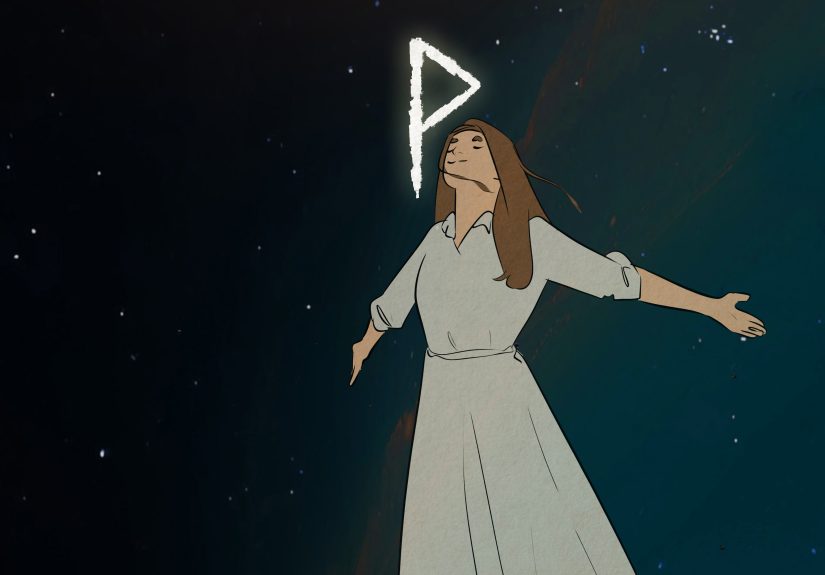
| ᛈ | Perthro | P | Unclear (often linked to “lot cup” or chance) | mystery, probability, hidden factors, discovery |
| ᛉ | Algiz (Elhaz) | Z/R (varies) | Uncertain; often associated with elk/sedge in later lore | guarding, boundaries, support, “don’t ignore your instincts” |
| ᛊ | Sowilo (Sól) | S | Sun | clarity, vitality, success, illumination |
Third Ætt (17–24): Tiwaz through Dagaz
| Rune | Name | Sound | Literal sense | Common modern keywords |
|---|---|---|---|---|
| ᛏ | Tiwaz | T | Týr (god-name), justice | integrity, duty, principled choices, courage |
| ᛒ | Berkano | B | Birch | growth, renewal, nurturing, beginnings |
| ᛖ | Ehwaz | E | Horse | trust, teamwork, momentum, healthy partnership |
| ᛗ | Mannaz | M | Person, humanity | identity, community, self-knowledge, social reality |
| ᛚ | Laguz | L | Water, lake | intuition, flow, emotion, adaptation |
| ᛜ | Ingwaz | NG | Ing/Freyr (fertility-linked figure) | potential, incubation, contained power, ripening |
| ᛟ | Othala (Odal) | O | Heritage, inherited property | roots, home, legacy, what you carry forward |
| ᛞ | Dagaz | D | Day, daylight | breakthrough, awakening, turning point, perspective shift |
Specific Examples: What These Meanings Look Like in Real Life
Rune meanings land best when you connect them to concrete situations. Here are a few examples that keep one foot in history and one foot in modern life:
-
Fehu (ᚠ): Historically tied to cattle as movable wealthsomething you can trade, move, and lose. Modern take: money in motion, resources you
manage, not just “get rich.” Example: budgeting, negotiating a raise, or realizing your time is a resource you’ve been giving away for free. -
Raidho (ᚱ): The rune of a ride/journey. Modern take: process and pacing. Example: you’re not “behind,” you’re on a routeyour next best step
matters more than your final destination mood board. -
Jera (ᛃ): A year/harvest cycle. Modern take: results arrive in seasons. Example: training for a sport, learning a language, or building a
portfoliogrowth you can’t microwave. -
Hagalaz (ᚺ): Hail disrupts, but it also clears. Modern take: an interruption that forces change. Example: a schedule collapse that finally makes
you set boundaries, switch strategies, or stop saying yes to everything.
The Rune Poems: Where Many “Meanings” Get Their Poetry
A lot of what people call “rune meanings” draws inspiration from later poetic sourcesespecially the Old English Rune Poem and Scandinavian rune
poems. These poems describe runes in metaphor-rich mini-verses: wealth that causes trouble, ice that’s slippery, a torch that’s bright, and so on. Even if you’re
focused on Elder Futhark, these poems matter because they preserve rune-name traditions and cultural associations that help scholars and learners interpret the system.
Translation note: these poems are not a one-to-one “dictionary,” and they reflect the cultures and time periods that wrote them. Still, they’re a big reason rune
study feels less like memorizing flashcards and more like reading tiny weather forecasts for the human soul.
How Runes Were Used Historically (Not Just Mystically)
Historically, runes show up most often in short inscriptionsnames, ownership marks, brief messages, memorial statements, or formulaic words whose
exact intention can be debated. Some inscriptions appear on jewelry, tools, weapons, and stones. In other words: runes were a writing system first.
That said, humans have always been human. People also used writing in symbolic waysprotective phrases, charms, or words meant to carry social and ritual weight.
The line between “message” and “meaning” has never been perfectly sealed off with a tamper-proof sticker.
Modern Rune Work: How to Use Meanings Without Getting Weird About It
If you’re using runes todaywhether for journaling, reflection, meditation, or creative projectshere are grounded approaches that honor both history and your own
intent:
1) Use runes as prompts, not guarantees
A rune can spark a useful question: “Where am I constrained?” (Nauthiz) or “What do I need to clarify?” (Sowilo). That’s different from treating it like a
cosmic vending machine: “I inserted Dagaz, please dispense instant life transformation.”
2) Keep the sound value attached to the symbol
Even if you love symbolic meanings, always learn the rune’s phonetic value. It keeps you honest and prevents the classic tattoo tragedy where a
person thinks they got “strength” and actually got “maybe a torch, maybe an ulcer, depends who you ask.”
3) Be careful with Othala imagery and modern politics
This is a practical safety note for the modern internet: some rune-like symbols have been appropriated by extremist groups in various contexts. If you’re using
runes publicly (tattoos, logos, merch), do a quick background check on the exact design you plan to useespecially for stylized forms. The Elder Futhark itself
is not “owned” by extremists, but online symbolism can get messy fast.
Common Beginner Mistakes (So You Don’t Accidentally Invent “Elder Futhark 2.0”)
-
Mixing rune systems: Elder Futhark (24) is different from Younger Futhark (16) and Anglo-Saxon Futhorc (expanded set). If you’re copying a chart,
make sure it’s the right alphabet. - Adding a “blank rune”: The “blank rune” is a modern invention used in some divination sets, not a historical Elder Futhark rune.
-
Assuming “reversed meanings” are ancient: In many modern practices, people read inverted runes as “blocked” or “shadow” meanings. That can be a
useful framework, but it’s not a universally ancient rule. - Overconfident certainty about debated runes: Perthro, Algiz, and Eihwaz can be debated in scholarship. It’s okay to hold meanings lightly.
A Simple, Historically-Respectful Way to Study Rune Meanings
Want a routine that doesn’t require buying a velvet bag or dramatically whispering “ancient secrets” at your bookshelf? Try this:
- Pick one rune per day for 24 days.
- Write its symbol and name, and note the sound value.
- Define the literal sense (like “ice” or “gift”).
- List 3 modern associations that feel reasonable (not forced).
- Find a real-world example from your day where that theme showed up.
- End with one question the rune helps you ask (not answer): “What needs time to ripen?” (Ingwaz) or “Where do I need boundaries?” (Algiz).
By the end, you’ll know the runes in a way that’s practical, memorable, andmost importantlyyours.
Conclusion
Elder Futhark is both a historical writing system and a modern meaning-making tool. The best way to respect it is to learn the basics (sounds, names, context),
stay honest about what’s ancient versus modern interpretation, and then use the runes as thoughtfully as you’d use any powerful symbollike language itself.
Because at the end of the day, runes aren’t magic because they “predict.” They’re magic because they help you notice.
Real-World Experiences: What Learning Elder Futhark Feels Like
People often expect rune study to feel like unlocking a secret door in a foggy forest. In reality, the experience is more like learning a new alphabet while your
brain keeps trying to autocorrect everything back into modern spelling. And that’s not a bad thingit’s part of the charm.
One of the most common early experiences is the “I recognize it but I can’t read it” phase. You start noticing runes everywhereon necklaces, in game menus, on
“Viking” décor at the storeand your mind goes, “Ah yes, ancient symbols!” But when you try to transliterate, it’s slower than you hoped. This is where the sound
values become your best friend. The moment you stop thinking of ᚠ as “wealth” and start thinking of it as “F,” a lot of confusion evaporates. Then the symbolic
layer becomes a bonus instead of a barrier.
Another surprisingly common moment: you realize rune meanings are less like fortune cookies and more like mirrors. Someone working with Nauthiz
might not experience it as doom or deprivation, but as the pressure that finally makes them simplify their schedule, cut distractions, or ask for help. The “need”
isn’t always dramaticit can be the quiet reality of having limited time and energy. And that’s exactly why rune reflection can work well: it turns vague stress
into a concrete theme you can address.
Many learners also describe a shift in how they notice “cycles” once they spend time with Jera. At first it’s just “harvest, got it.” But then
you start catching the seasonal nature of your own lifeperiods of intense effort, plateaus, rest, and eventual payoff. People often report that Jera-style thinking
helps them tolerate slow growth: learning to play an instrument, training for a sport, writing consistently, or rebuilding confidence after a setback. The rune isn’t
“predicting” a reward; it’s reminding you that some outcomes arrive on schedule only if you keep showing up.
If you’re drawn to the aesthetic side, the experience can be deeply tactile. Writing runes by hand is oddly satisfying because the shapes are built from decisive
strokes. You don’t “sketch” a rune; you commit to it. That physical decisiveness can change how you relate to the symbol. People who carve or woodburn runes often
describe feeling more connected to the idea behind the runenot because the wood grants powers, but because the time and attention required makes the meaning feel
earned. It’s the same reason handwritten notes stick in memory better than a screenshot.
There’s also a social experience that pops up: runes become conversation magnets. A small rune charm might lead to a chat about language history, museum exhibits,
Norse myths, or how the Bluetooth logo was inspired by runic letters in a later rune system. When that happens, the best feeling is realizing you can explain the
basics accurately. You’re not just wearing “mysterious symbols”you understand what system you’re referencing, what time period it belongs to, and what you mean by
“meaning.”
Finally, a very real experience: learning runes teaches you humility. Some rune names and interpretations are debated, and the evidence can be fragmentary. At first,
that uncertainty can feel frustratingpeople want a clean chart with perfect answers. But eventually, many learners find it refreshing. It gives you permission to
hold meanings lightly, to treat symbols as prompts rather than commandments, and to keep curiosity at the center. In a world where everyone online is extremely sure
about everything, rune study quietly trains you to say, “Here’s what we know, here’s what we infer, and here’s how I’m choosing to use it.” That mindset might be
the most valuable “rune meaning” of all.