Table of Contents >> Show >> Hide
- What Is Emotional Dumping?
- Why Emotional Dumping Happens
- Signs of Emotional Dumping
- 1. There’s no permission check
- 2. The conversation is intensely one-sided
- 3. The same problems get replayed on a loop
- 4. The listener feels drained, anxious, or trapped
- 5. Timing is consistently poor
- 6. Boundaries are ignored or negotiated to death
- 7. The goal is relief, not connection
- 8. Advice is rejected, but the emotional cycle continues
- How Emotional Dumping Affects Relationships
- Examples of Emotional Dumping in Everyday Life
- Coping Strategies If You’re the One Emotionally Dumping
- Coping Strategies If Someone Keeps Emotionally Dumping on You
- When Emotional Dumping Signals a Bigger Problem
- How to Build Healthier Emotional Habits
- Experiences Related to Emotional Dumping: What It Looks Like in Real Life
- Conclusion
- SEO Tags
Somewhere between “Hey, I had a rough day” and a 47-minute monologue delivered with the intensity of a tornado siren, emotional dumping enters the chat. Most of us have done some version of it. Most of us have also been on the receiving end, nodding politely while our soul quietly files a complaint.
Here’s the important part: sharing feelings is not the problem. In fact, emotional openness is part of healthy relationships. The trouble starts when emotional expression becomes one-sided, nonstop, poorly timed, or so intense that the other person feels cornered, drained, or responsible for fixing everything. That is what many people mean when they talk about emotional dumping.
If you have ever wondered, “Am I venting, or am I accidentally using my friend as a human overflow bucket?” this guide is for you. We’ll break down the definition of emotional dumping, the most common warning signs, how it affects relationships, and practical coping strategies for both the person doing the dumping and the person stuck catching it.
What Is Emotional Dumping?
Emotional dumping is an informal term for unloading intense emotions onto another person in a way that ignores timing, consent, reciprocity, or the listener’s emotional capacity. It often looks like repeated venting without reflection, rapid-fire oversharing, or expecting someone else to absorb distress on demand.
It is not an official mental health diagnosis. You will not find it sitting in a diagnostic manual wearing a name tag. Instead, it is a modern shorthand for a communication pattern that overlaps with ideas like trauma dumping, co-rumination, boundary problems, and one-sided emotional labor.
That distinction matters because not every intense conversation is unhealthy. Sometimes people are grieving, overwhelmed, burnt out, or genuinely in crisis. Needing support is human. Emotional dumping becomes a problem when the sharing repeatedly crosses lines: the listener didn’t agree to it, the conversation never moves toward insight or action, and the emotional weight is always flowing in one direction.
Emotional Dumping vs. Healthy Venting
Healthy venting usually has a few unglamorous but magical ingredients: consent, mutuality, context, and some awareness of the other person’s limits. It might sound like, “Do you have 10 minutes? I need to vent,” or “I’m upset and could use support, but I don’t need advice right now.”
Emotional dumping, on the other hand, tends to skip the courtesy lane and speed directly into the living room. It can be relentless, repetitive, and emotionally messy in a way that leaves the listener responsible for soothing, fixing, reassuring, and staying available forever. Healthy venting says, “Can you hold space for me?” Emotional dumping says, “Surprise, you’re my unpaid emergency therapist now.”
Why Emotional Dumping Happens
People usually do not emotionally dump because they are villains in a low-budget drama. More often, they do it because they are stressed, lonely, dysregulated, anxious, traumatized, overwhelmed, or simply never learned how to process feelings in a healthier way.
Some people grew up in families where emotions were either ignored or exploded all over the furniture. Others confuse constant disclosure with intimacy. Some are so desperate to feel heard that they talk first, think later, and forget that the person across from them also has a nervous system.
Social media and texting can make the pattern even easier. It is simple to fire off a 2,000-word emotional novella at 1:12 a.m. It is much harder to pause, regulate, and ask, “Is this the right person, right time, and right amount?”
Signs of Emotional Dumping
Not every long conversation is emotional dumping. Still, there are some reliable red flags. If several of these show up regularly, the pattern probably needs attention.
1. There’s no permission check
The person launches into distress without asking whether the listener has the time, energy, privacy, or headspace for it. It begins with a text like “I can’t do this anymore” followed by seventeen voice notes and zero context. Consent? Missing in action.
2. The conversation is intensely one-sided
One person talks. The other absorbs. There is little curiosity, little reciprocity, and almost no space for the listener’s needs, feelings, or reality. If the friendship feels like a full-time emotional customer-service job, that is a clue.
3. The same problems get replayed on a loop
Emotional dumping often sounds like emotional reruns. The same story, same outrage, same villain, same dramatic soundtrack. Repetition alone is not the issue; the issue is repetition without reflection, boundaries, or movement toward a solution.
4. The listener feels drained, anxious, or trapped
After the interaction, the listener may feel heavy, exhausted, guilty, edgy, or resentful. They might dread seeing a notification from that person. Their body often notices before their brain admits it: tight shoulders, clenched jaw, instant fatigue, or the urgent desire to fake a Wi-Fi outage.
5. Timing is consistently poor
Some emotional dumpers reach out only in crisis mode, at inconvenient hours, during work, during dinner, during your dentist appointment, or during the five minutes of peace you fought to earn. The pattern treats urgency as permanent.
6. Boundaries are ignored or negotiated to death
If the listener says, “I can’t talk right now,” the response may be guilt, pressure, panic, or a dramatic escalation. A healthy conversation can respect limits. Emotional dumping often acts like limits are betrayal.
7. The goal is relief, not connection
Everyone wants relief sometimes. But emotional dumping is often focused only on discharging distress, not communicating clearly, building understanding, or solving a problem. The other person becomes a release valve instead of a relationship partner.
8. Advice is rejected, but the emotional cycle continues
When someone repeatedly seeks support yet rejects every possible next step, the exchange can slide into a loop of complaint and rescue. That does not make them bad. It does mean the pattern may be stuck.
How Emotional Dumping Affects Relationships
Emotional dumping can quietly wear down even strong relationships. Over time, the listener may feel less like a friend, spouse, sibling, or coworker and more like emergency roadside assistance for feelings. That imbalance creates resentment fast.
It also damages trust. Ironically, the person doing the dumping may believe they are being “real” or “honest,” while the other person feels emotionally crowded. Instead of deepening closeness, the pattern can make people pull away, reply less often, and avoid contact altogether.
In romantic relationships, emotional dumping can create a parent-child dynamic where one person regulates everything and the other offloads everything. In friendships, it can turn mutual care into chronic emotional debt. At work, it can create awkwardness, blurred boundaries, and a strong desire to hide near the office printer.
Examples of Emotional Dumping in Everyday Life
The midnight spiral texter
A friend messages every time they feel upset, often with no warning and no sense of time. If you respond, the conversation stretches for hours. If you don’t, you get “Wow, okay” by morning.
The co-worker who cornered the coffee machine
You asked, “How’s your day going?” and suddenly you know everything about their breakup, resentment toward management, and suspiciously specific theory about office betrayal. You still haven’t gotten your coffee.
The partner who unloads but never listens back
Every conflict, frustration, and fear gets poured onto you. When you need support, though, the subject changes faster than a magician’s scarf trick. That is not emotional intimacy. That is emotional outsourcing.
Coping Strategies If You’re the One Emotionally Dumping
This section is not a scolding. It is a tune-up. If you recognize yourself here, congratulations: self-awareness has entered the building.
Pause before you unload
Ask yourself three questions: What am I feeling? What do I need? Who is the right person for this? Sometimes you need comfort. Sometimes you need advice. Sometimes you need to take a lap around the block and not text anyone until your nervous system stops acting like it is starring in an action movie.
Ask for consent
Try: “Do you have the bandwidth for something heavy?” or “Can I vent for ten minutes?” That small step changes everything. It communicates respect, creates safety, and reduces the chance that your conversation will feel like an ambush.
Name the kind of support you want
Do you want listening, reassurance, problem-solving, distraction, or honesty? People are not mind readers, no matter how dramatically you sigh. Clear requests lead to better support.
Use regulation tools before reaching out
Take a walk. Breathe slowly. Write it down. Sit with the feeling for a few minutes. Drink water like a person with options. The goal is not to suppress emotions but to lower the intensity so your sharing becomes communication instead of emotional shrapnel.
Don’t make one person your entire coping system
Diversify your support. Talk to different trusted people, journal, use mindfulness techniques, move your body, or speak with a mental health professional. Your best friend can be part of your support network. They should not be the whole building.
Watch for co-rumination
If you keep rehashing the same pain without insight or action, you may be feeding the problem instead of processing it. Reflection asks, “What now?” Rumination asks, “What if I say the exact same thing again, but sadder?”
Coping Strategies If Someone Keeps Emotionally Dumping on You
If you are the listener, you are allowed to be compassionate and have limits. Those two things are not enemies.
Set clear boundaries
Try simple language: “I care about you, but I can’t have this conversation right now,” or “I can listen for ten minutes, but I don’t have the energy for a long talk tonight.” Boundaries work best when they are kind, direct, and boringly consistent.
Stop performing emergency emotional CPR every time
You do not have to answer immediately, solve the issue, or regulate someone else on demand. Support is generous. Self-erasure is not.
Validate without becoming a sponge
You can say, “That sounds really hard,” without signing a contract to absorb every detail. Validation acknowledges the feeling. It does not require endless availability.
Redirect toward appropriate help
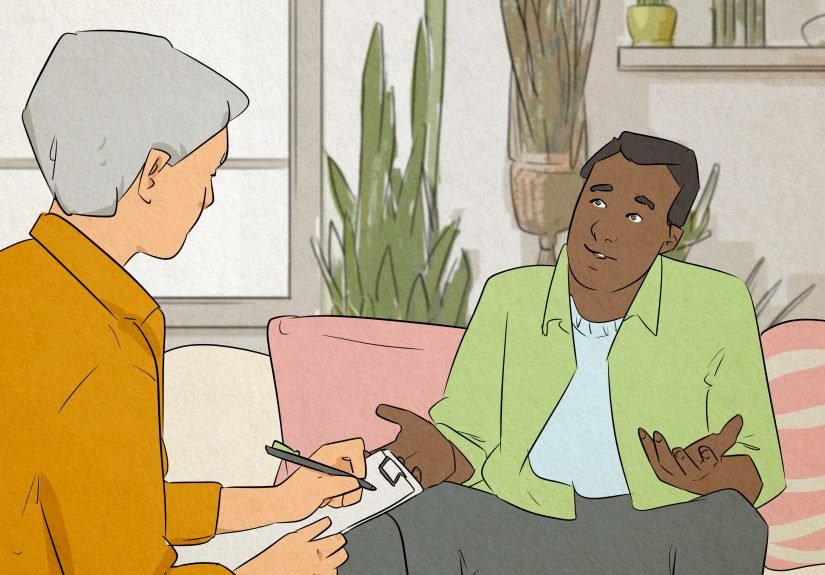
If the person is overwhelmed, repeatedly spiraling, or dealing with trauma-level distress, encourage them to talk with a therapist, counselor, primary care provider, or another qualified support person. That is not rejection. That is responsible care.
Protect your own nervous system
After a heavy conversation, decompress. Go outside, stretch, breathe, journal, turn off your phone for a while, or do something grounding. If you keep carrying everyone else’s emotions around like a backpack full of bricks, your body will eventually file a protest.
When Emotional Dumping Signals a Bigger Problem
Sometimes emotional dumping is just poor communication. Sometimes it points to deeper distress: anxiety, depression, trauma, grief, burnout, chronic stress, or low emotional regulation skills. When the pattern becomes frequent, disruptive, or intense, outside support can help.
It may be time to seek professional help if emotions feel constantly out of control, relationships are repeatedly suffering, daily functioning is slipping, or every conversation turns into a crisis. Therapy can teach emotional regulation, communication skills, boundaries, and healthier ways to ask for support.
How to Build Healthier Emotional Habits
Create a personal “before I vent” checklist
- Have I calmed down at least a little?
- Did I ask whether this person has time and energy?
- Am I sharing to connect, or just to discharge?
- Have I told them what kind of support I need?
- Have I relied on this same person for every crisis this week?
Practice emotional responsibility
Your feelings are real. Your feelings also belong to you. Other people can support you, but they cannot carry your full emotional load forever. Emotional responsibility means learning to feel, name, regulate, and communicate without making someone else responsible for your inner weather 24/7.
Build reciprocal relationships
Healthy support goes both ways. Ask questions. Check in. Notice whether the relationship has emotional balance. If someone always makes space for you, make sure you are making space for them too.
Experiences Related to Emotional Dumping: What It Looks Like in Real Life
In real life, emotional dumping rarely announces itself with a neon sign. It usually sneaks in disguised as closeness. At first, it can even feel flattering. Someone trusts you. They open up. They say you are the only one who understands. That can feel meaningful, especially if you are empathetic, responsible, or the unofficial “therapist friend” in your group.
But over time, the emotional math starts to look strange. One woman might notice that every call from her college friend begins with panic and ends with exhaustion. They never talk about anything light anymore. She starts letting the phone ring, then feels guilty for needing space. A man in a long-term relationship may realize that his partner shares every fear, frustration, and family conflict with him in intense detail, but when he brings up his own stress, the conversation somehow boomerangs back. A younger employee might feel trapped because a co-worker keeps unloading personal crises in the break room, making small talk feel like emotional spelunking.
People who emotionally dump are not always trying to be selfish. Some are lonely. Some are deeply anxious. Some are used to chaos and mistake intensity for intimacy. Others panic when left alone with their own thoughts, so they rush to export those thoughts into the nearest available person. In that moment, dumping may feel like relief. The problem is that relief for one person can become overload for another.
On the receiving side, the experience is often confusing. Many listeners do not think, “This boundary is being crossed.” They think, “I should be more supportive,” or “Maybe I’m a bad friend for feeling tired.” That is why emotional dumping can last so long. It hides inside good intentions. Caring people often stay too long in conversations that are hurting them because they do not want to seem cold, rude, or disloyal.
What changes things is usually not a huge dramatic showdown. It is a small moment of honesty. A person says, “I care about you, but I can’t do this every night.” Or, “I’m happy to listen, but I need you to ask first.” Or even, “This sounds bigger than what I can help with alone.” Those sentences may feel awkward at first, but they often open the door to healthier communication.
And sometimes, people really do respond well. They had no idea how overwhelming they had become. They start asking before venting. They shorten the monologues. They talk to a therapist. They learn that support works better when it is invited rather than imposed. That is the hopeful part of this topic: emotional dumping is a pattern, and patterns can change.
The goal is not emotional perfection. Nobody is calm, balanced, and exquisitely self-aware at all times. The goal is to create relationships where honesty does not crush the room, where vulnerability includes respect, and where support feels mutual instead of depleting. In other words, less emotional avalanche, more emotional conversation. Your relationships will thank you, and frankly, so will everyone’s blood pressure.
Conclusion
Emotional dumping is what happens when real feelings get delivered without enough awareness, boundaries, or care for the listener’s capacity. It can damage friendships, strain romantic relationships, and leave both people feeling misunderstood. The good news is that it is fixable.
If you tend to emotionally dump, learn to pause, regulate, ask for consent, and spread your support needs across healthier channels. If you are often on the receiving end, practice boundaries without guilt. Compassion and limits can absolutely coexist. They should probably get coffee together.
Healthy relationships are not built on silence, but they are not built on emotional flooding either. They are built on honest communication, reciprocity, respect, and the ability to say, “I care about you. Let’s do this in a way that doesn’t emotionally flatten us both.”