Table of Contents >> Show >> Hide
- What You’ll Find In This Article
- Vampires: Real Fears About Disease, Desire, and “Something’s Not Right”
- Werewolves: The Fear That You (or Your Neighbor) Might Become the Predator
- Frankenstein’s Creature: Fear of Science That Can… But Maybe Shouldn’t
- Zombies: Fear of Dehumanization, Control, and Crowds That Don’t Stop
- Mummies: Fear of Consequences, Guilt, and the “Curse” of Taking What Isn’t Yours
- Body Snatchers & Doubles: Fear of Replacement, Conformity, and Losing Your Self
- Godzilla: Fear of Nuclear Powerand the Monster as a Consequence, Not a Random Attack
- The Uncanny Valley: Fear of “Almost Human” (Dolls, Androids, and Too-Perfect Faces)
- Sleep-Paralysis Demons: Fear of Helplessness, Hallucinations, and the “Presence” in the Room
- of Real-World Experiences That Make These Monsters Hit Harder
- Conclusion: Monsters Change, But the Fears Stay Familiar
Horror monsters don’t come from “nowhere.” They crawl out of the same place your brain goes when you hear a creak at 2 a.m.:
real fearsdisease, loss of control, war, judgment, isolation, and the unsettling feeling that something looks human… but isn’t quite.
Across centuries, storytellers have taken everyday anxieties and given them teeth, claws, bandages, or suspiciously perfect smiles.
This is the secret sauce of great horror: the monster is rarely the point. The point is what the monster represents.
And once you know what a creature is “about,” it becomes even more interestingbecause you can see the real world hiding under the makeup.
Vampires: Real Fears About Disease, Desire, and “Something’s Not Right”
Vampires are basically a fancy, cape-wearing bundle of anxieties: sickness, contamination, and the fear that intimacy can be dangerous.
Long before vampires became romantic leads with great hair, they were tied to panic about unexplained illness and deathand about what might
happen if the “wrong” kind of person got too close.
Fear #1: Disease that changes behavior
Some historians and scientists have pointed out that outbreaks of rabies (and general misunderstandings about infection) could have helped shape
vampire folklore. Rabies can cause agitation, confusion, difficulty swallowing, and hydrophobia (fear of water)a cluster of symptoms that, in
earlier centuries, could look like “possession” or “monstrous” transformation to communities without modern medicine.
Fear #2: “The bite” as a scary metaphor
The vampire bite is unforgettable because it’s personal. It’s not a meteor hitting the planet; it’s someone close enough to touch you.
Vampires turn affection into risk. They dramatize a primal question humans ask in every era: “Is this person safeor do they bring something
harmful into my life?”
That’s why vampire stories often feel like they’re about more than monsters: they’re about boundaries, trust, and the uneasy link between
attraction and danger.
Werewolves: The Fear That You (or Your Neighbor) Might Become the Predator
Werewolves take a fear we don’t like to admit out loud“What if I lose control?”and turn it into a full moon problem. In folklore,
lycanthropy is about the boundary between human and animal: civilization versus wilderness, self-control versus impulse.
Fear #1: Rabies, wolves, and panic about “animal behavior”
Like vampire legends, werewolf tales can overlap with real anxieties about rabies and animal attacks. When a disease can affect behavior and
make someone seem unpredictable, it feeds the cultural dread that a person could suddenly become dangerous. Add centuries of fear around wolves,
and you have a perfect recipe for “it looked human, but acted like a beast.”
Fear #2: The monster is you
Werewolves are especially effective because they aren’t just “out there.” They’re “in here.” The horror is not merely being huntedit’s
waking up and realizing you may have become the thing people need protection from. If vampires are fear of the outsider, werewolves are fear of
the inner chaos you can’t always predict.
Frankenstein’s Creature: Fear of Science That Can… But Maybe Shouldn’t
Frankenstein’s Creature isn’t scary because it’s “made.” It’s scary because it’s made and then abandoned. This monster is the anxiety of
innovation without ethicsan invention unleashed before anyone thinks through consequences.
Fear #1: Electricity, experiments, and “restarting” life
In the early 1800s, the public was fascinated (and unsettled) by experiments involving electricity and the body. The idea that electrical forces
could trigger movement in muscles fed imaginations about animation and life. Mary Shelley absorbed that scientific atmosphere, and the result was
a story that asks: if humans can imitate creation, do they understand what they’re creating?
Fear #2: The real horror is responsibility
Frankenstein’s lasting power comes from how modern it feels. We still wrestle with the same question in new outfits: genetic engineering,
artificial intelligence, data surveillance, and medical tech that saves lives while raising huge ethical debates. The Creature is the reminder
that “innovation” is not automatically the same thing as “wisdom.”
Zombies: Fear of Dehumanization, Control, and Crowds That Don’t Stop
Zombies are famous for their shuffle, but their real superpower is symbolism. Zombie stories change shape across time: sometimes they reflect
fear of contagion, sometimes fear of mindless conformity, sometimes fear of social collapse. Either way, zombies hit a nerve because they erase
personhood.
Fear #1: A history tied to slavery and loss of autonomy
The “zombi” concept is often discussed in connection with Haitian history and the trauma of enslavementwhere the deepest terror wasn’t a bite,
but being robbed of freedom, identity, and control over one’s own life. That origin gives zombie storytelling a grim emotional engine: the horror
of being turned into a tool.
Fear #2: Modern zombies = modern anxieties
In contemporary movies, zombies often become a pressure test for society: How do people behave when systems fail? Who shares resources? Who
hoards them? The monster horde is terrifying because it mirrors a fear many people carry quietly: that civilization is thinner than we’d like to
believe.
Mummies: Fear of Consequences, Guilt, and the “Curse” of Taking What Isn’t Yours
The mummy is a monster wrapped in historyand, often, wrapped in uncomfortable questions about who gets to own the past. Mummy horror thrives on
a particular kind of dread: “We disturbed something we didn’t understand, and now we’ll pay for it.”
Fear #1: Egyptomania and the strange hunger for the ancient world
In the 1800s and early 1900s, “mummy mania” swept through popular culture. People collected artifacts, attended sensational “unwrapping”
events, and treated ancient remains as curiosities. That cultural obsession created fertile ground for mummy stories: the dead are not dead enough
when we won’t let them rest.
Fear #2: The “curse” as a conscience
The mummy’s curse is powerful because it feels like karma with a dramatic soundtrack. Whether or not anyone truly believed in supernatural
punishment, the trope captures a real moral anxiety: if you profit from harm or disrespect, consequences eventually arrivesometimes as headlines,
sometimes as guilt, sometimes as a bandaged figure who refuses to stay buried.
Body Snatchers & Doubles: Fear of Replacement, Conformity, and Losing Your Self
Doppelgängers and body-snatching monsters don’t need claws. Their weapon is a simple question: “If someone looks like you, talks like you, and
lives your life… what makes you you?”
Fear #1: Cold War paranoia and social pressure
Stories like Invasion of the Body Snatchers became famous in an era saturated with fear about infiltration, conformity, and accusations.
The terror isn’t just aliensit’s the suspicion that the people around you have become emotionally blank, scripted, and unrecognizable.
Fear #2: The modern upgradedeepfakes and identity theft
Today, “replacement horror” hits differently because technology makes it feel plausible. We worry about fake videos, stolen accounts, and
algorithms predicting our choices so well it feels like our personalities have been outsourced. The monster isn’t a pod anymoreit’s the
possibility that identity can be copied, manipulated, or monetized.
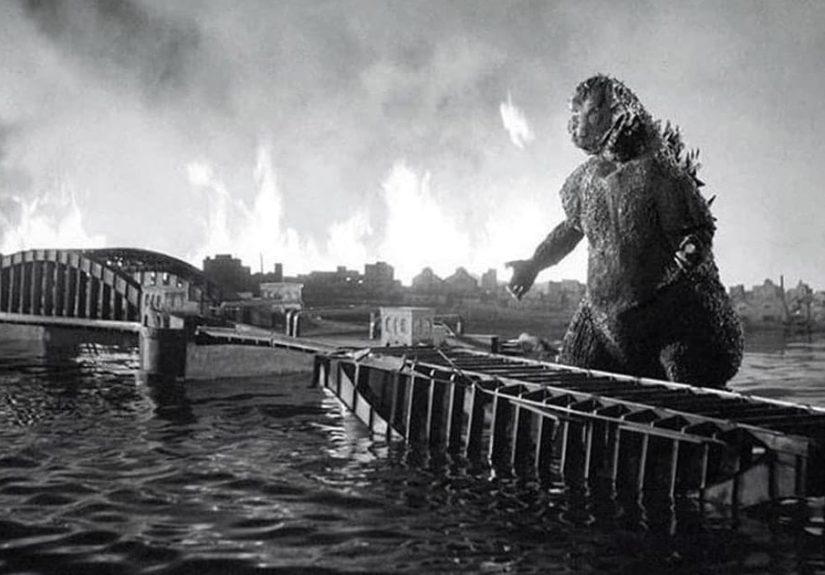
Godzilla: Fear of Nuclear Powerand the Monster as a Consequence, Not a Random Attack
Godzilla is a giant monster with a very human origin story: anxiety about catastrophe created by human decisions. Kaiju tales often work as
“disaster fear” made visiblenuclear fallout, war trauma, and the dread that nature will respond to our mistakes with unstoppable force.
Fear #1: The nuclear age and unstoppable consequences
Godzilla is frequently discussed as a cultural metaphor shaped by the nuclear era: a creature awakened or transformed by forces humans don’t fully
control. That’s why the monster feels less like a villain and more like a walking consequencebig, loud, and impossible to ignore.
Fear #2: Environmental payback
Over time, kaiju stories also absorbed environmental anxieties. Swap “radiation” for “climate disruption,” and the emotional structure still
works: the world pushes back. Godzilla endures because the fear endureshumans changing the planet faster than we can predict the outcome.
The Uncanny Valley: Fear of “Almost Human” (Dolls, Androids, and Too-Perfect Faces)
Some monsters don’t chase youthey just stand there being slightly off. The uncanny valley concept describes how people can feel
comfortable with a clearly non-human figure, and comfortable with a real human… but deeply unsettled by something that looks nearly human while
missing tiny cues.
Fear #1: A face that doesn’t behave like a face
Lifelike dolls, wax figures, and humanlike robots can trigger that eerie feeling because the brain is picky about social signals. When eyes don’t
blink “right,” or expressions lag by a fraction, your mind senses mismatch. Horror loves this because it’s a fear you can’t argue yourself out of.
Your nervous system reacts first; logic shows up late, holding coffee.
Fear #2: The bigger questionwhat is a “person”?
Uncanny monsters also poke at existential anxiety. If something looks like us, how do we decide it’s not us? That’s why “almost-human” horror
connects so well to modern fears about automation, AI, and simulated relationships. The monster is the uncertainty of where “human” begins and ends.
Sleep-Paralysis Demons: Fear of Helplessness, Hallucinations, and the “Presence” in the Room
One of the most common “monster experiences” in real life is sleep paralysis: waking up (or falling asleep) while your body can’t move yet.
People often report a heavy sensation, a feeling of threat, or vivid hallucinations. Across history, many cultures explained this with stories of
nighttime attackersincubi, “night hags,” shadow figures, or spirits.
Fear #1: Your brain tries to explain the unexplainable
Sleep paralysis is a perfect monster factory because it’s both physical and psychological: you’re conscious enough to feel scared, but not fully
able to move, and your mind may fill gaps with imagery. In older eras, folklore gave those sensations a character and a motive. That folklore then
cycles back into pop culture, influencing horror scenes where the scariest part is being unable to call for help.
Fear #2: The bed is supposed to be safe
Horror is always stronger when it invades the “safe zone.” The bedroom is where we recover, dream, and drop our guard. A monster that shows up
therereal or imaginedhits the deepest nerve: “If I’m not safe here, where am I safe?”
of Real-World Experiences That Make These Monsters Hit Harder
Even if you’ve never seen a vampire in a nightclub (and if you have, please tell them to stop texting in all caps), you’ve probably felt the real
fears that fuel monster stories. That’s why these creatures stick: they match moments from everyday lifethose flashes where the world feels a
little less stable than you assumed.
Think about the experience of reading a news alert about an outbreakany outbreak. You may not even know the details, but your brain instantly
runs the old survival software: avoid contact, wash hands, watch symptoms, scan faces. That’s vampire fear in modern clothing: the worry that
danger travels through closeness. When someone coughs near you on a bus or you realize you forgot your sanitizer, it’s not “dramatic.” It’s your
mind doing risk math. Horror simply gives that math a cape.
Or consider the feeling of being so angry, stressed, or overwhelmed that you don’t recognize yourself for a secondlike you’re watching your own
reactions from the outside. That’s the emotional seed of werewolf stories: fear of losing control and becoming someone you didn’t mean to be.
You don’t need fur and fangs for that; you just need a rough day and a situation that presses all the wrong buttons.
Then there’s “Frankenstein fear,” which shows up anytime technology moves faster than trust. Maybe you’ve had the experience of posting something
online and suddenly realizing you can’t pull it back. Or you’ve used an app that seems to know what you want before you do. Or you’ve watched a
trend spread with zero fact-checking, like a science experiment nobody asked for. That creeping sense“We built this, but we don’t control it”
is exactly what Frankenstein’s story keeps warning about.
Zombie fear is also surprisingly familiar. You’ve probably walked through a crowd where everyone is scrolling, bumping forward, barely looking up.
Or you’ve felt the pressure of groupthink: the sense that disagreeing will cost you socially. Zombies exaggerate it into a shuffle, but the
experience is realfear of becoming numb, of losing individuality, of being pulled into a herd.
Mummy fear pops up in subtler ways: guilt, consequences, and disrespect. Maybe you’ve had the experience of taking something that wasn’t yours
(even something small), then feeling a weird weight afterward. Or you’ve learned about a historical injustice and felt that uncomfortable
realization: “People benefited from harm, and the harm didn’t vanish.” The mummy is the story version of that discomforthistory refusing to stay
politely in the past.
And if you’ve ever had sleep paralysisor even a nightmare that felt too realyou understand why “bedroom monsters” are universal. Waking up with
your heart racing, feeling like something was in the room, needing a minute to convince yourself you’re safe: that’s not just horror-movie
material. It’s a human experience. These monsters endure because they are made from the same ingredients as real life: uncertainty, vulnerability,
and the brain’s talent for turning fear into a story.
Conclusion: Monsters Change, But the Fears Stay Familiar
The most famous horror monsters don’t survive for centuries because they’re “cool.” They survive because they’re useful. Vampires dramatize fear
of contagion and dangerous intimacy. Werewolves embody loss of control. Frankenstein’s Creature warns about creation without care. Zombies echo
dehumanization and mass panic. Mummies carry guilt and consequences. Doubles and body snatchers target identity and conformity. Kaiju like Godzilla
turn catastrophe into a face you can’t ignore. And uncanny, almost-human figures expose how fragile our sense of “normal” can be.
Knowing the real-world fears underneath doesn’t ruin the funit deepens it. Horror is a cultural mirror, and monsters are the reflections that
look back a little too honestly. If you’ve ever wondered why a creature feels terrifying even when it’s obviously fictional, the answer is simple:
it’s not the monster you’re scared of. It’s what the monster reminds you is possible.