Table of Contents >> Show >> Hide
- What gamification means in SaaS
- Why gamification works so well in SaaS
- What are some good examples of gamification in SaaS?
- 1. Duolingo: streaks, XP, leagues, and badges
- 2. Salesforce Trailhead: turning product education into progression
- 3. Todoist: Karma points make productivity feel measurable
- 4. Asana: celebration creatures and micro-rewards
- 5. Grammarly: stats, streaks, and personal performance feedback
- 6. Slack: onboarding checklists and progress markers
- 7. Microsoft Learn: achievements and badges with real utility
- 8. Notion: trackers, checklists, and visible onboarding progress
- What these examples have in common
- How SaaS companies should choose the right gamification mechanic
- Common mistakes SaaS teams make with gamification
- How to measure whether gamification is actually working
- Final thoughts: gamification works best when it respects the user
- Extended perspective: what teams often experience when they add gamification to SaaS
Let’s clear something up right away: gamification in SaaS is not about turning your software into a neon arcade where every button screams, “You unlocked a banana peel badge!” Good gamification is much quieter than that. It borrows the psychology of gamesprogress, achievement, feedback, challenge, reward, and momentumand uses those mechanics to help people get value from a product faster.
That is why the best gamification examples in SaaS do not feel childish or distracting. They feel useful. A progress bar nudges a user to finish setup. A streak makes a habit visible. A badge gives training a sense of completion. A leaderboard adds friendly competition. A tiny celebration after a task is done makes work feel a little less like tax paperwork and a little more like progress.
In the SaaS world, that matters a lot. Most products do not fail because their features are bad. They fail because users never get far enough to care. The first login is awkward, the dashboard is intimidating, the “aha” moment is hiding behind six settings pages, and the user quietly disappears. Gamification, when designed well, acts like a helpful tour guide with better timing and less small talk.
What gamification means in SaaS
Gamification in SaaS means applying game-like mechanics to a software experience to encourage desired behaviors. Those behaviors might include completing onboarding, learning a new feature, inviting teammates, building a habit, finishing training, or returning to the product regularly.
The keyword here is desired. Good gamification is not random decoration. It is tightly connected to actions that create value for both the user and the product. If a user completes a checklist, they should be closer to success. If they maintain a streak, they should be building a useful habit. If they earn a badge, it should represent a real milestone instead of a gold star for breathing correctly.
Common gamification mechanics in SaaS
The most effective SaaS products usually work with a familiar toolkit: onboarding checklists, progress bars, points, levels, badges, streaks, leaderboards, milestone celebrations, visual feedback loops, and personalized challenges. None of these mechanics are magical on their own. Their power comes from matching the right mechanic to the right user moment.
Why gamification works so well in SaaS
SaaS products often ask people to do difficult things: learn unfamiliar workflows, change old habits, configure settings, import data, invite coworkers, and trust a new system with important work. That is a lot to request from someone who signed up five minutes ago while also answering Slack messages and reheating coffee for the third time.
Gamification helps because it breaks a vague journey into visible steps. It makes progress concrete. It rewards effort before the ultimate outcome arrives. It creates momentum during slow or confusing moments. Most importantly, it turns “I guess I should figure this out later” into “I’m already halfway done, so I might as well finish.”
That is the real engine behind gamification in SaaS: not play for the sake of play, but motivation during moments where friction would otherwise win.
What are some good examples of gamification in SaaS?
1. Duolingo: streaks, XP, leagues, and badges
Duolingo is the poster child for gamification, and honestly, the owl has earned that job. The product layers together multiple mechanics: streaks for habit formation, XP for immediate feedback, leagues and leaderboards for competition, and achievement badges for milestone recognition.
What makes this example so strong is that every mechanic supports a core SaaS goal: getting users to come back and practice regularly. The streak encourages daily use. XP provides instant reinforcement. Weekly leagues create urgency and social comparison. Badges make long-term milestones feel reachable.
There is also a smart lesson here for SaaS teams: Duolingo does not rely on one trick. It builds a system of motivation. A user who does not care about leaderboards may still care about protecting a streak. A user who ignores badges may still enjoy the quick payoff of XP. In other words, it gives different personalities different reasons to continue.
2. Salesforce Trailhead: turning product education into progression
Salesforce Trailhead is one of the best examples of gamification in B2B SaaS because it transforms training into a progression system. Users complete modules, earn badges, collect points, and advance through learning paths that feel structured rather than overwhelming.
This works because enterprise software often has a giant adoption problem. Products are powerful, but power without guidance is just fancy confusion. Trailhead solves that by making learning visible and rewarding. The badges are not just decorative either. They signal skill development and can be shared professionally, which adds real-world value to the achievement.
For SaaS companies with complex products, Trailhead is a useful reminder that gamification is not only for consumers. It can be a serious tool for education, enablement, and long-term product adoption.
3. Todoist: Karma points make productivity feel measurable
Todoist’s Karma system is a beautifully simple example of gamification in SaaS. Users earn points by completing tasks, maintaining streaks, and building consistent productivity habits over time. Their progress is visualized, and they move through levels as they continue using the product.
Why does this work so well? Because productivity software has a strange emotional problem: when you use it correctly, you often still feel behind. There is always another task, another deadline, another thing your future self will pretend is tomorrow’s problem. Karma gives users a visible sense of accomplishment inside that endless loop.
It does not replace the utility of the product. It amplifies it. Users are still organizing work and checking off tasks, but the gamified layer adds emotional momentum. That is one of the best forms of SaaS gamification: making valuable behavior feel more satisfying without changing the job the product is hired to do.
4. Asana: celebration creatures and micro-rewards
Asana is a great example of subtle gamification. Instead of pushing a heavy point system, it uses delightful micro-celebrationsthose famous flying creatures and cheerful animations that appear when a task is completed.
This is important because not every SaaS product needs a big scoreboard. Sometimes a tiny emotional reward is enough. Completing tasks is a repetitive behavior, and repetitive behaviors benefit from positive reinforcement. Asana adds a little joy at exactly the right moment: right after effort becomes progress.
The lesson here is that gamification does not have to be loud. Sometimes one well-timed burst of delight can do more than a complicated ranking system. It makes the product feel human, and it gives users a small reason to keep moving.
5. Grammarly: stats, streaks, and personal performance feedback
Grammarly uses gamified feedback in a more reflective way. Its weekly stats, achievement-style summaries, streaks, and comparative performance signals turn writing improvement into something users can track over time.
That is smart because writing is usually invisible progress. You do it, send it, forget it, and move on with your life. Grammarly makes the invisible visible. It shows patterns, progress, volume, and consistency. Suddenly the user is not just “using a writing assistant.” They are building a measurable writing habit.
This is a strong gamification model for SaaS companies whose value is cumulative rather than immediate. If your product helps users improve gradually, then progress dashboards, weekly summaries, and milestone markers can make that growth feel real.
6. Slack: onboarding checklists and progress markers
Slack is a useful example because its gamification is practical rather than flashy. Structured onboarding templates, setup tasks, and clear progress markers reduce friction for new users and teams. This is not gamification with fireworks; it is gamification with common sense.
Checklists work in SaaS because they reduce ambiguity. Users do not have to guess what “getting started” means. They see the next step, complete it, and move on. That simple feeling of closure is surprisingly powerful. A blank dashboard says, “Good luck, champion.” A checklist says, “Here are three things to do next, and yes, you can handle this.”
For many B2B products, this is the best starting point. Before you build badges, levels, and leaderboards, give users a clear path. Progress itself is often the most effective reward.
7. Microsoft Learn: achievements and badges with real utility
Microsoft Learn shows how gamification becomes even stronger when rewards are portable. Users complete training, earn achievement badges, and can showcase those accomplishments as evidence of skill development.
That portability matters. A badge that lives only inside a product can still motivate users, but a badge that helps with credibility, career visibility, or internal recognition has a second layer of value. It is both motivational and practical.
This is a smart model for SaaS platforms that depend on customer education. If users must learn a complex system, then turning that learning into recognized achievement can increase both engagement and completion.
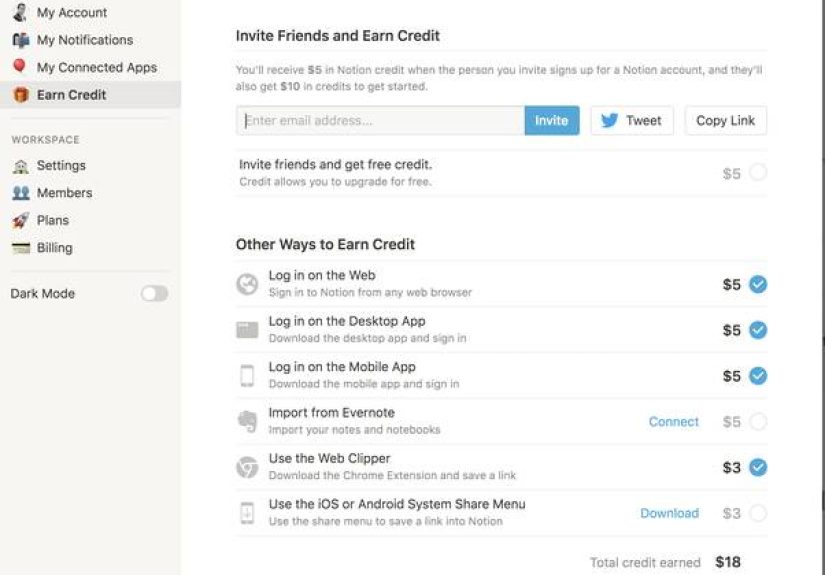
8. Notion: trackers, checklists, and visible onboarding progress
Notion’s onboarding and tracker templates highlight another effective style of gamification: user-controlled progress systems. Instead of forcing a competitive structure, Notion gives teams and individuals a clear way to track steps, check off milestones, and watch progress unfold.
This matters because some SaaS audiences do not want a game-show vibe. They want order, clarity, and momentum. A clean checklist or onboarding tracker can still be gamified because it provides completion signals, visible advancement, and a satisfying sense of movement. It is low-drama motivation, which is often exactly what professional users want.
What these examples have in common
The best gamification examples in SaaS all share a few characteristics. First, they reinforce behavior that already matters. Second, they make progress visible. Third, they provide feedback quickly. Fourth, they match the tone of the product. And finally, they never ask users to do meaningless work just to feed the metric machine.
That last point is important. Bad gamification is manipulative. It pushes users toward actions that look good in a dashboard but do not improve the user experience. Good gamification creates a win-win. The user moves closer to success, and the product gains deeper adoption.
How SaaS companies should choose the right gamification mechanic
Use checklists and progress bars for onboarding
If users need to complete a sequence of setup steps, use checklists, completion percentages, or progress bars. These mechanics reduce uncertainty and make the first session feel manageable.
Use streaks for habit-based products
If your product depends on frequent repeat usagelearning, writing, wellness, productivity, or daily operationsstreaks can be extremely effective. They make consistency feel valuable.
Use badges and points for education-heavy products
If users need training, certifications, or structured learning, points and badges can turn education into a progression path instead of a chore.
Use celebrations for repetitive actions
If your product involves repeated task completion, tiny moments of delight can reinforce behavior without becoming distracting.
Use leaderboards very carefully
Leaderboards can drive motivation, but they also create anxiety, discourage beginners, and make low performers feel like extras in someone else’s sports movie. They work best when the audience enjoys competition and the stakes are light.
Common mistakes SaaS teams make with gamification
The first mistake is rewarding the wrong thing. If users are pushed to click around without reaching value, the product may look “engaging” while still quietly creating churn. The second mistake is overdoing it. Too many badges, pop-ups, animations, and nudges can make a product feel exhausting. The third mistake is using the same mechanic for everyone. Some users love competition. Others would rather walk barefoot across Lego bricks than join a leaderboard.
Another mistake is forgetting that gamification is not a substitute for product clarity. If your onboarding is confusing, a progress bar will not magically fix the confusion. It will simply show users they are 20% of the way through being confused.
How to measure whether gamification is actually working
SaaS companies should judge gamification by business and user outcomes, not by novelty. The right metrics usually include onboarding completion, time to first value, feature adoption, retention, session frequency, learning completion, activation rate, and expansion behaviors such as team invites or workflow creation.
If a gamified feature increases clicks but does not improve meaningful product outcomes, it is not working. It may be entertaining, but so is watching raccoons open trash cans, and that is not usually a product strategy.
Final thoughts: gamification works best when it respects the user
The best examples of gamification in SaaS are not gimmicks. They are carefully designed systems that make progress feel obvious, learning feel rewarding, and effort feel worthwhile. Duolingo uses streaks and leaderboards to build habit. Salesforce Trailhead turns education into advancement. Todoist makes productivity visible with Karma. Asana adds delight to completion. Grammarly turns improvement into trackable progress. Slack and Notion reduce friction with clear checklists. Microsoft Learn shows how badges can carry real credibility.
If there is one big takeaway, it is this: great gamification is not about making software feel like a game. It is about making software feel rewarding to use. In SaaS, that can be the difference between a user who bounces after one login and a user who sticks around long enough to say, “Okay, this is actually helping me.”
Extended perspective: what teams often experience when they add gamification to SaaS
One of the most interesting things about gamification in SaaS is that teams usually start by imagining something big and flashy, but the wins often come from smaller changes. A company may dream about building a complex point economy, achievement store, referral tournament, and a leaderboard dramatic enough to require theme music. Then they launch a simple onboarding checklist firstand that humble checklist ends up doing most of the heavy lifting.
That happens because many SaaS problems are not motivation problems in the abstract. They are uncertainty problems. Users are willing to do the work, but they do not know what to do next. The moment a product makes the next step obvious, friction drops. Teams often discover that users are not lazy; they are just busy, distracted, and slightly allergic to unclear setup screens.
Another common experience is that internal teams fall in love with the reward mechanic and forget the user journey. They spend weeks debating badge names, level icons, and whether bronze sounds too humble, while the actual onboarding flow still asks new users to configure twelve things before they see any value. This usually ends the same way: the metrics are underwhelming, the badge art is excellent, and everyone learns the painful but useful lesson that motivation cannot rescue a broken path.
Teams also tend to learn that different user groups respond to different mechanics. New users often love progress bars because they reduce confusion. Power users may respond better to mastery systems, advanced achievements, or visible expertise. Teams using collaborative SaaS products sometimes find that social mechanics work best when they are cooperative rather than competitive. People enjoy completing a shared milestone with coworkers far more than being told they are currently ranked seventh in “invoice enthusiasm.”
There is also a tone lesson that shows up again and again. Gamification works better when it fits the product’s personality. In a playful product, users may welcome bright animations, streaks, and celebratory copy. In a serious B2B platform, subtle reinforcement usually performs better. A crisp progress indicator, a milestone confirmation, or a lightweight achievement can feel motivating without making the product feel silly. No compliance manager wants a dancing confetti cannon after updating security permissions.
Perhaps the most valuable experience teams report is that the best gamification features often become invisible over time. Users stop thinking, “Oh, neat, a game mechanic,” and start thinking, “This product is easy to keep using.” That is the sweet spot. When gamification is doing its job, it stops feeling like decoration and starts feeling like good product design. The user does not admire the mechanic. The user simply keeps moving forward.
And that is really the whole point. In SaaS, the most successful gamification is not the loudest. It is the mechanic that quietly turns hesitation into momentum, effort into progress, and first-time users into people who come back tomorrow on purpose.