Table of Contents >> Show >> Hide
- Why a Rugged Outdoor Shower Earns Its Keep
- The Low Route: Tough, Simple, and Surprisingly Good-Looking
- The High Route: Luxury That Can Handle Real Life
- Materials That Make or Break the Build
- Installation Realities You Should Not Ignore
- How to Design It So It Looks Rugged, Not Rough
- Maintenance and Winter Survival
- What the Experience Actually Feels Like
- Field Notes: Living With a Rugged Outdoor Shower
- Conclusion
Some home upgrades whisper. A rugged outdoor shower announces itself with wet footprints, salty hair, muddy dogs, sandy kids, and the kind of practical luxury that makes you wonder why you ever tolerated hauling half the backyard into the house. The best version is not fussy, fragile, or designed only for magazine photos. It is durable, easy to clean, kind to the landscape, and handsome enough to feel intentional instead of improvised. That is where the “high/low” question gets interesting.
Do you go low with a simple, hardworking rinse station that handles dirt and weather like a champ? Or do you go high with a more architectural setup that looks like it wandered in from a boutique hotel and decided to stay forever? The smart answer, of course, is that both can work beautifully. A rugged outdoor shower is less about showing off and more about choosing the right level of finish, plumbing, privacy, and weather resistance for how you actually live.
Why a Rugged Outdoor Shower Earns Its Keep
An outdoor shower is one of those upgrades that sounds indulgent until you use one for a week. Then it becomes suspiciously essential. If your household deals with a pool, a beach, a garden, a hot tub, sports gear, pets, or children who seem magnetically attracted to mud, an exterior rinse zone acts like a pressure relief valve for the rest of the house. Less sand on the floors. Less grass in the bathtub. Less “Who tracked this in?” detective work.
But “rugged” matters. Outdoor showers live a hard life. They take direct sun, wind, grime, changing temperatures, wet feet, soap residue, and the occasional garden-hose-level assault from somebody “just rinsing one thing.” A delicate setup can look fabulous on day one and tired by season two. A rugged one ages better, cleans easier, and stays functional when the weather stops being charming.
That means thinking beyond the showerhead. The floor matters. The hardware matters. The drainage matters. The distance from the house matters. Even the hooks matter, because the flimsy ones always seem to surrender first, usually at the exact moment you are balancing a towel, flip-flops, and your dignity.
The Low Route: Tough, Simple, and Surprisingly Good-Looking
What “Low” Actually Means
Going low does not mean cheap in the sad, wobbly sense. It means disciplined. The low version of a rugged outdoor shower is a streamlined setup with a clear job description: rinse people off fast, survive the elements, and avoid becoming a maintenance hobby. This is often the right choice for families, weekend houses, rental properties, surf shacks, lake cabins, and anyone whose design philosophy leans toward “less drama, more usefulness.”
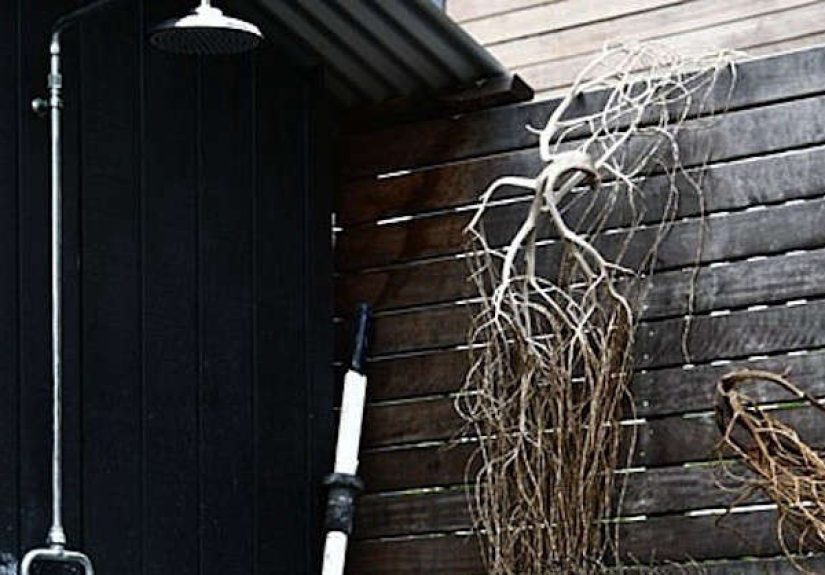
A great low setup might be as simple as a hose-fed freestanding shower or a wall-mounted shower fixture paired with a gravel base, a slatted platform, and a privacy screen made from cedar, pressure-treated lumber, or another weather-tolerant material. It can still look sharp. In fact, the restrained version often looks more convincing outdoors because it feels honest. It belongs there.
The beauty of the low path is that it lets you spend on the parts that count. Put the money into corrosion-resistant hardware, solid anchors, good drainage, and rot-resistant materials. Save on overcomplicated features you will rarely use. If this shower’s main purpose is to knock off chlorine, sand, sweat, or mud, you do not necessarily need a spa menu. You need reliability.
Where to Save and Where Not To
Save on enclosure complexity. A full outdoor room is lovely, but a smart privacy wall, corner fence, or slatted screen often does the trick. Save on decorative extras. A rugged shower does not need ten accessories and a tiny decorative stool that looks like it has strong opinions about linen. But do not save on metal quality, plumbing connections, or the floor surface underfoot.
A low outdoor shower should still feel stable and safe. The floor should drain well and stay grippy. The wall or post should not wobble. The fixture should not rust at the first hint of salt air. And if you are feeding it from a hose or a basic exterior line, the controls should be simple enough that nobody has to solve a small engineering puzzle while standing there shivering.
The High Route: Luxury That Can Handle Real Life
When the Upgrade Is Worth It
The high version of a rugged outdoor shower is not just prettier. It is usually more integrated. Think marine-grade stainless steel hardware, hot-and-cold water, a hand shower for easier rinsing, a foot wash for sand control, a substantial platform, and an enclosure that looks tied to the architecture of the home instead of added later in a panic before pool season.
This route makes sense when the shower will be used often, when the property is in a punishing climate, or when the shower is part of a larger outdoor-living plan. A premium setup can feel less like a utility stop and more like a daily ritual. Morning rinse after a swim. Cool-down after yard work. Warm shower under the stars. Very cinematic. Also very practical.
At the high end, the best features are the ones that make repeated use easier: pressure-balanced controls, durable finishes, dependable hot water, a handheld sprayer, integrated storage, better lighting, and flooring that looks refined without turning slippery. The goal is not to create a precious outdoor bathroom that needs emotional support. The goal is to create something luxurious enough to enjoy and sturdy enough to ignore between uses.
What Premium Should Buy You
Premium should buy resilience. In exposed locations, that means higher-grade stainless steel, better resistance to corrosion, sturdier valves, and hardware that can stand up to coastal air, freeze-thaw cycles, or relentless summer sun. It should also buy better detailing: proper drainage slope, thoughtful privacy, cleaner plumbing runs, and materials that weather gracefully rather than dramatically.
In other words, the high route should not just look expensive. It should feel easier to live with. If the shower is gorgeous but impossible to winterize, awkward to clean, or overly open to every upstairs window in the neighborhood, then congratulations: you have purchased a conversation piece instead of a useful amenity.
Materials That Make or Break the Build
Metal Hardware
For a rugged outdoor shower, metal selection is not a minor detail. Stainless steel is a favorite for good reason, especially in wetter or more corrosive environments. If the shower sits near a beach or pool, stepping up to marine-grade stainless can be worth the cost. It is not glamorous advice, but it is the sort of choice that keeps a fixture looking intentional instead of streaky and defeated.
Wood and Enclosures
Cedar remains popular because it is naturally resistant to moisture, decay, and insects, while also looking appropriately relaxed outdoors. Pressure-treated lumber can be the budget-friendly workhorse. Redwood, ipe, and other premium woods bring richer aesthetics and durability, but the visual goal should still be rugged ease, not overdesigned fussiness. Slatted wood walls are especially smart because they provide privacy, allow airflow, and help the structure dry out faster.
Flooring and Base Materials
Gravel, stone, decking, and duckboards all have their place. What matters most is drainage and traction. A rugged shower floor should not collect puddles, grow slimy, or send water wandering toward the house foundation. Crushed stone or gravel can be wonderfully forgiving and low-maintenance. A raised wood platform can look warmer and feel better underfoot, but it needs enough airflow and drainage beneath it to avoid becoming a damp science project.
Installation Realities You Should Not Ignore
If you remember only one technical point, make it this: water always wins. A rugged outdoor shower is not just a design object. It is a wet zone, and wet zones demand planning. The shower should sit where runoff can be managed responsibly. In some cases, natural drainage into the ground works. In others, especially where local codes are stricter or the site is tight, graywater may need to be routed differently or tied into an approved waste system.
That is why location matters so much. Closer to existing water lines can reduce cost. Far enough from the house can reduce splash and moisture issues. Not too close to the foundation is generally a wise instinct. The enclosure should also be positioned with privacy in mind, because nothing ruins the spa mood faster than realizing your “nature shower” is also visible from three neighboring windows and the delivery driver’s approach path.
A smart setup often includes a simple drainage bed or dry well beneath the shower area, combined with a floor or platform that encourages runoff. If you want hot water, longer plumbing runs, or year-round use, that is the point where professional help becomes less luxury and more common sense.
How to Design It So It Looks Rugged, Not Rough
The best rugged outdoor showers walk a fine line. They are polished enough to feel deliberate, but not so polished that a little dirt feels like a personal insult. That balance usually comes from restraint. One strong material palette. One good fixture finish. One clear privacy strategy. Maybe a bench. Maybe hooks. Maybe a shelf. No need to accessorize it like a tiny boutique hotel lobby.
Natural wood, stone, black or brushed metal, and simple greenery work because they look better as they age. Plants can soften the enclosure, but choose varieties that can tolerate humidity, overspray, and occasional neglect. Lighting should be subtle and practical. The shower should be easy to find at dusk, but it does not need to look like a runway.
And please, give people somewhere to put a towel that does not involve balancing it on a fence post and hoping for the best. Function is style’s more dependable sibling.
Maintenance and Winter Survival
A rugged outdoor shower should be easy to keep in shape, but “easy” does not mean “immortal.” Soap scum, mineral buildup, wet leaves, mildew, and metal wear all show up eventually. Regular rinsing, seasonal cleaning, and periodic inspection of valves, fasteners, and floor surfaces go a long way. If the shower includes wood, expect weathering and decide whether you want to preserve the original tone or let it silver naturally.
In colder climates, winterization is not optional. Shut off the water supply, drain the lines, protect exposed plumbing, and remove or cover components that should not sit full of water through freezing weather. This is the least glamorous part of the whole story, but also the part most likely to save you from springtime regret.
The upside is that a well-built outdoor shower usually rewards this small amount of care with years of solid performance. And unlike many outdoor features, it does not require a crew, a compressor, or a relationship with a mysterious service calendar. It mostly asks you to respect water, weather, and gravity. Fair enough.
What the Experience Actually Feels Like
There is a reason outdoor showers inspire a slightly dreamy tone in otherwise practical people. The experience is different. Water sounds louder outside. Air feels cooler. Sunlight shifts across the walls. The ordinary act of rinsing off becomes less like a bathroom errand and more like an intermission between one part of the day and the next. A rugged outdoor shower, especially one that is designed well, has a way of slowing people down without making them feel precious about it.
It also changes how the backyard works. Suddenly the route from pool to house makes more sense. Garden cleanup becomes easier. Kids and dogs become marginally less chaotic indoors. Guests instantly understand what to do after a swim. Good design often looks impressive; great design quietly improves behavior. Outdoor showers are sneaky that way.
Field Notes: Living With a Rugged Outdoor Shower
The most convincing argument for a rugged outdoor shower is not a product spec or a design board. It is the lived experience. People who use these showers regularly tend to talk about them less like fixtures and more like habits. The shower becomes part of the rhythm of warm weather, then part of shoulder season, and eventually part of the identity of the house itself.
Picture a late summer afternoon after a long day outside. Shoes are dusty, the dog is suspiciously muddy, and someone has absolutely brought half the garden home on their ankles. Instead of staging a crisis in the main bathroom, you turn on the outdoor shower. The rinse is quick. The mess stays outside. The house remains blissfully less gritty. That kind of tiny convenience adds up fast. It can make a family home feel more relaxed because everyday disorder gets intercepted before it crosses the threshold.
There is also something deeply satisfying about how democratic an outdoor shower feels. Fancy or simple, it invites immediate use. Children figure it out in seconds. Guests love it. Runners use it after workouts. Swimmers treat it like a mandatory checkpoint. Gardeners appreciate not dragging the yard indoors. Pet owners quickly realize the hand shower might be one of the smartest household additions they have ever made. A rugged shower earns affection because it solves real problems without asking for much applause.
Then there is the sensory side. On hot days, a cool rinse outdoors feels sharper and cleaner than one inside. After a swim, the water knocks off chlorine or salt while the breeze does the rest. At night, the whole thing becomes oddly memorable. Even a modest shower can feel cinematic when steam lifts into cool air and the sky is still visible above the privacy walls. This is where the high/low distinction almost disappears. The expensive version may have better controls and richer materials, but the essential pleasure is available to both. Water, air, privacy, and a place to stand comfortably under the spray: that is the magic formula.
Of course, the rugged part matters over time. Owners usually notice that the best experiences come from showers that do not demand babying. Surfaces that drain quickly feel cleaner. Hardware that resists corrosion looks better longer. A bench that can handle weather is actually used. Hooks that stay tight become oddly beloved. In contrast, fragile finishes, slippery floors, and bad drainage turn a joyful ritual into a maintenance lecture. Nobody wants a shower that comes with a personality test.
What stands out most, though, is how outdoor showers blur utility and pleasure. They are practical enough for muddy feet and elevated enough for a sunrise rinse before coffee. They can support a hard-working backyard while also delivering a small daily luxury. That dual personality is exactly what makes a rugged outdoor shower so compelling. It is not trying to be precious. It is trying to be useful, durable, and a little bit glorious. In the best cases, it succeeds at all three.
Conclusion
So, should you go high or low on a rugged outdoor shower? Go low if your priorities are simplicity, toughness, and value. Go high if you want deeper comfort, better materials, and a more integrated design experience. But whichever route you choose, the same rules apply: build for weather, plan for drainage, respect privacy, choose durable materials, and make the thing easy to use.
The smartest outdoor shower is not the one with the biggest spec sheet. It is the one that fits the property, survives the climate, and gets used constantly. That is the sweet spot. Rugged enough for real life, stylish enough to feel special, and practical enough to make the indoors just a little cleaner. Not bad for a place to rinse your feet.