Table of Contents >> Show >> Hide
- What reportedly happened in Dubai
- Is there actually a law against face tattoos in Dubai?
- Why tattoos can become an immigration issue
- This is not just a Dubai story
- When body art turns into a shortcut for fear
- A strange precedent: appearance-based exclusion is not new
- So was this discrimination?
- What travelers with visible tattoos should learn from stories like this
- Related experiences: what this kind of ordeal actually feels like
- Conclusion
Some headlines sound like they were written after three espressos and a dare. This is one of them. But behind the shock-value setup is a real and increasingly relevant question: can visible tattoos, especially facial tattoos, get someone stopped, profiled, refused entry, or pushed out of a country?
According to widely circulated reports, a British traveler was denied entry to Dubai after immigration officials allegedly told him his facial tattoos were the problem. The story went viral because it feels both modern and medieval at the same time. Modern, because tattoos are now mainstream enough to appear on baristas, bankers, and suburban dads with sourdough starters. Medieval, because the punishment sounded strangely blunt: you look wrong, so back you go.
And that is exactly why the story matters. Even if there is no neat, one-line law saying, “No face tattoos allowed,” travel does not run on vibes alone, but airports sometimes do. Border control is where written rules, officer discretion, local culture, public image, and suspicion all meet in one fluorescent-lit room with bad coffee and no windows.
This article breaks down what the viral Dubai story appears to show, why appearance can still create travel trouble even when something is not clearly illegal, and how related cases covered by major U.S. outlets reveal a bigger pattern: tattoos are often treated not just as body art, but as shorthand for danger, deviance, gang affiliation, or disrespect. Sometimes that assumption is wrong. Sometimes it is wildly wrong. And sometimes the consequences are much bigger than a ruined vacation.
What reportedly happened in Dubai
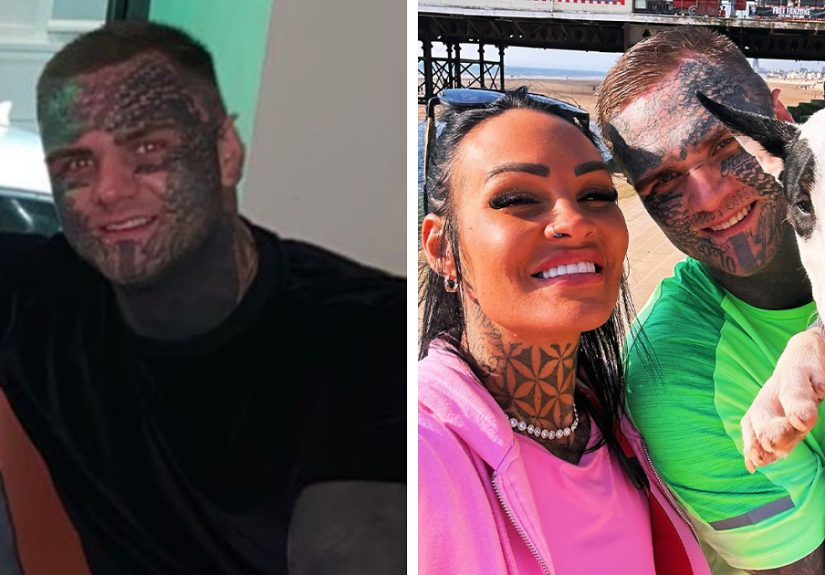
The viral account centered on a British man whose face was heavily tattooed. Reports said he arrived in Dubai for a family trip, was pulled aside by immigration officers, held for hours, had his passport taken, and was eventually sent back to the United Kingdom. He claimed officials told him he was not being allowed in because of his face tattoos and the way he looked.
That detail is what made the story travel so fast online. It was not a fight on a plane, not drugs in a suitcase, not a social media stunt gone wrong. It was appearance. That made the case feel unsettlingly simple. The traveler insisted there was no official law against face tattoos. Publicly available travel guidance from the U.S. State Department does not list a general tattoo ban for tourists entering the United Arab Emirates either. But that does not mean appearance cannot become a practical barrier at the border.
And that is the first lesson here: legal clarity and real-world entry are not always identical twins. Sometimes they are distant cousins who do not return each other’s calls.
Is there actually a law against face tattoos in Dubai?
Based on the public information available, there does not appear to be a broadly advertised UAE rule that says tourists with face tattoos are automatically forbidden from entering the country. What does exist, however, is a very clear pattern of strict local law enforcement, conservative social expectations, and broad immigration discretion.
U.S. travel guidance for the UAE stresses that travelers are subject to local immigration laws, that strict rules on behavior are enforced, and that even unwitting actions, including clothing choices, may invite unwanted attention. That language matters. It suggests the issue is not only what is formally prohibited, but also what raises concern in practice.
So no, this does not appear to be a clean “tattoos are illegal” situation. It appears to be a “your appearance may trigger scrutiny in a place where officials have little incentive to explain themselves in detail” situation. Not quite the same thing, but not exactly comforting when your return flight is suddenly tonight.
Local laws, local norms, local power
Travelers sometimes assume that if something is normal at home, it will at least be tolerated abroad. That assumption can age badly. Fast. In places with stricter social expectations, visible body modification may be read through a very different cultural lens. To one person, facial tattoos are personal expression. To another, they can signal aggression, gang identity, instability, disrespect, or simply an unwillingness to conform.
That gap in interpretation is where trouble starts. Not because every official is biased, and not because every country has the same standards, but because borders are one of the few places in life where the state can make a life-disrupting decision first and explain later, if at all.
Why tattoos can become an immigration issue
Tattoos are supposed to be personal. That is the sales pitch, anyway. Your story, your skin, your meaning. The problem is that border authorities do not always care what your tattoo means to you. They care what it might mean to them.
Visibility changes everything
A tattoo hidden under a sleeve is one thing. A face full of ink is another. Facial tattoos are impossible to miss, impossible to separate from first impressions, and nearly impossible to explain away in the five impatient minutes that often define a border interaction.
Fair? Not necessarily. Predictable? Absolutely.
Context often gets lost
A crown may honor family, faith, or a pageant background. A rose may mark grief. A clock may represent a child’s birth time. A soccer-ball design may celebrate a favorite team. But once a tattoo is viewed as a code rather than decoration, context can disappear at shocking speed.
That is why visible ink becomes risky in high-discretion settings. The official reading the image may have a totally different framework than the person wearing it.
Entry is a privilege, not a guaranteed service
Many countries retain broad authority to refuse entry to foreign nationals. In practical terms, that means a traveler can have a valid passport, money, hotel reservations, and a return ticket, and still lose the argument at the airport. The process is rarely elegant, and it is even less satisfying when the answer feels rooted in appearance rather than conduct.
This is not just a Dubai story
The most important thing about the “face tattoos” story is that it is not really just about Dubai. It belongs to a larger pattern in which visible body art gets read as proof of something larger: criminality, gang membership, moral threat, or social unfitness.
Major U.S. reporting in 2025 documented several immigration cases in which ordinary tattoos were treated as suspicious markers. The details are different, but the logic is familiar: officials saw the ink and jumped to a bigger conclusion.
One of the most discussed cases involved Venezuelan makeup artist Andry Hernández Romero, whose crown tattoos beside the words “Mom” and “Dad” were reportedly treated by U.S. authorities as gang identifiers. Another case involved Jerce Reyes Barrios, a former soccer player whose crown-over-soccer-ball tattoo was described by supporters as a nod to Real Madrid, not a criminal organization. Reuters and other outlets also reported on migrants whose tattoos included roses, clocks, stars, names of parents, music notes, and religious references, while family members and lawyers said the tattoos had no gang meaning at all.
AP put the issue bluntly: crowns, flowers, and even an eyeball that “looked cool” were cited by defense lawyers as ordinary tattoos that helped get Venezuelan men labeled as gang members and deported. CBS reported that experts and police familiar with Tren de Aragua said tattoos were not reliable identifiers of membership in that gang. The Washington Post likewise reported that experts disputed the claim that tattoos alone proved MS-13 membership in the case of Kilmar Abrego García.
This matters because it shows how tattoos can slide from art into “evidence” with alarming speed. Once that happens, the burden quietly shifts onto the tattooed person to explain, contextualize, reassure, and prove innocence. That is a hard thing to do on a good day. It becomes nearly impossible inside detention, at a checkpoint, or in a cross-border system built for speed rather than nuance.
When body art turns into a shortcut for fear
The danger is not tattoos themselves. The danger is lazy interpretation.
Tattoos are seductive to authorities because they are visible. They feel legible. They look like clues. But visibility is not the same as reliability. A visible symbol can be meaningful, meaningless, decorative, trendy, copied from sports culture, inspired by religion, or chosen because someone at age twenty-two thought it looked “sick” and now has to live with that decision forever. Humanity is messy like that.
Officials, however, often work in systems that reward fast categorization. That creates an ugly temptation: use appearance to fill in gaps. If the state lacks detailed evidence, appearance can become the stand-in. That is exactly what made so many of the U.S. immigration stories so controversial. Public reporting repeatedly showed experts warning that tattoos were too weak, too common, or too context-dependent to serve as reliable proof by themselves.
And yet, in high-pressure systems, “too weak” evidence can still do a lot of damage.
A strange precedent: appearance-based exclusion is not new
The Dubai facial-tattoo story also echoes an older case that received U.S. coverage years ago. In 2014, Time, citing the Associated Press, reported that Rolf Buchholz, known as the world’s most pierced man, was denied entry into Dubai. He said he was never given a proper official explanation, though airport personnel allegedly suggested authorities feared he practiced black magic.
If that sounds absurd, well, yes. But it also reveals something important. Border systems do not always communicate in clean legal language. Sometimes they act first and leave the traveler to reverse-engineer the logic later. That is part of what makes these stories so sticky online. They do not just raise questions about rules. They raise questions about opacity.
So was this discrimination?
Maybe. That is certainly how the reported traveler framed it. And from the outside, it is easy to see why. Being told, explicitly or implicitly, that your face disqualifies you from entry sounds like textbook appearance-based exclusion.
At the same time, border systems rarely describe themselves as discriminatory. They describe themselves as cautious, security-minded, culturally protective, or administratively bound. That does not automatically make the outcome fair. It just means the rationale often arrives wearing a necktie.
The harder truth is that both things can be true at once. A state may defend an action as discretionary while a traveler experiences it as humiliating profiling. That gap is exactly where many modern travel controversies live.
What travelers with visible tattoos should learn from stories like this
If you have highly visible tattoos and plan to travel internationally, especially to destinations with stricter cultural or legal expectations, assume homework matters. A lot.
- Read official destination guidance, not just travel blogs and TikTok confidence.
- Check local laws and social norms, especially around appearance, public behavior, and photography.
- Expect extra screening if your tattoos are on your face, neck, or hands.
- Carry proof of onward travel, accommodations, and funds.
- Build flexibility into your plans, including travel insurance and backup money.
- Understand that “there’s no explicit ban” is not the same as “there’s zero risk.”
That is not a moral judgment. It is just practical travel math. Airports do not grade on self-expression. They grade on whether the officer in front of you feels comfortable letting you through.
Related experiences: what this kind of ordeal actually feels like
Stories like this hit a nerve because almost everyone can imagine the first few minutes. You land tired, a little grimy, slightly optimistic. You are already picturing the hotel shower, the first meal, the photo you will post pretending airports are glamorous. Then someone says, “Come with me.” That sentence is small, but it has the emotional impact of a piano falling from the sky.
At first, you think it is a misunderstanding. Maybe a document check. Maybe a random screening. Maybe somebody just wants to confirm a passport stamp. Then the waiting begins. Airports are designed to move people; the holding room is designed to remind you that you are no longer moving at all. Time turns rubbery. Your phone battery drops. Nobody gives you a real answer. Your family is somewhere else, already beyond the gate, maybe already at the hotel, wondering why you are not replying.
And then comes the second layer: embarrassment. That is the part people often skip when they retell these stories online. Refusal is not only inconvenient. It is humiliating. You feel looked at, sorted, reduced. You stop being a person with plans and become a problem in a chair. If the reason seems tied to your appearance, the humiliation gets sharper. It does not feel like a paperwork issue. It feels personal, even when the system insists it is procedural.
There is also a weird kind of financial grief. Travelers do not just lose dignity in moments like this; they lose money in real time. Hotel bookings, taxis, tours, meals, time off work, family plans, nonrefundable everything. A border refusal can torch a trip in a single afternoon. The math is cold. The feeling is not.
For migrants and asylum seekers, the experience can be far worse. A tourist may lose a vacation. A migrant may lose a hearing, a case, freedom, or a chance at safety. That is why the tattoo-related immigration stories reported in the United States felt so disturbing. They were not about bruised holiday feelings. They were about how quickly body art could be turned into suspicion, and how fast suspicion could become detention or deportation.
That is the deeper emotional thread linking all of these cases. Whether it is a traveler in Dubai or a migrant in detention, the same sickening realization shows up: the body you live in is being read by strangers with enormous power, and your explanation may matter less than their assumption. That is a frightening thing to learn at any border, in any language, under any fluorescent light.
Conclusion
The headline “His Face Was Full Of Tattoos, So They Sent Him Back To His Country” sounds like pure internet theater. But the underlying issue is real. Tattoos, especially highly visible ones, can shape how travelers are perceived. Sometimes that means extra scrutiny. Sometimes it means suspicion. Sometimes, according to public reporting, it means being refused entry or even treated as a threat without much evidence.
The reported Dubai case captures the travel version of that problem. The U.S. immigration cases reported by Reuters, AP, ABC, CBS, Time, and The Washington Post show the much harsher version. Put together, they reveal a blunt truth: tattoos may be personal, but institutions often read them politically, culturally, or criminally.
That does not mean every tattooed traveler is doomed. It does mean that visible body art can still collide with border power in ways that are unfair, opaque, and intensely human. The final lesson is not “do not get tattoos.” It is this: never assume your face, your skin, or your symbols will be interpreted the same way everywhere. At the border, meaning is not always yours to control.