Table of Contents >> Show >> Hide
- Quick Answer: Boiling Time Chart (Most Common Scenarios)
- The Method That Makes the Timer Work (Not the Other Way Around)
- Boiling Times by Potato Type (Because Not All Spuds Walk at the Same Speed)
- Boiling Times by What You’re Making
- Why These Rules Work (Potato Logic, Not Potato Mythology)
- Troubleshooting: When Your Potatoes Don’t Listen
- Food Safety and Make-Ahead Tips
- Conclusion
- Kitchen “Experiences” That Teach You the Clock (Real-World Scenarios)
- SEO Tags
Boiling potatoes sounds like the kind of task your kitchen could do on autopilot. Toss spuds in water, apply heat,
wait, eat. And yetsomehowthis “simple” move is responsible for an impressive number of mashed-potato tragedies:
crunchy centers, blown-out edges, waterlogged chunks, and that one potato that turns to mush while its friends
are still practicing being rocks.
The secret isn’t a magic timer. It’s matching potato size + potato type + your end goal
(salad? mash? roasting later?) and then using a method that cooks them evenly. Do that and you’ll get potatoes that are
tender, flavorful, and not suspiciously wetbasically the potato version of “nailed it.”
Quick Answer: Boiling Time Chart (Most Common Scenarios)
These times start once the water reaches a gentle boil/simmer (not an aggressive jacuzzi).
Always check a couple minutes earlypotatoes don’t care about your schedule.
| Potato Prep | Best For | Approx. Time | “Done” Looks Like |
|---|---|---|---|
| Baby potatoes (whole) | Side dish, salads | 10–15 minutes | Fork slides in; potato holds shape |
| Fingerlings (whole) | Sides, salads | 8–12 minutes (tender) / 15–20 (salad-soft) | Knife in easily; slight resistance for salad |
| Small red/new potatoes (whole) | Salads, buttery sides | 15–20 minutes | Fork-tender; skins mostly intact |
| Medium potatoes (whole) | General purpose | 18–25 minutes | Knife in with minimal resistance |
| Large potatoes (cut into 2-inch chunks) | Mashed, soups | 20–25 minutes | For mash: no resistance at all |
| 1-inch cubes | Fast cooking, soups | 10–15 minutes | Tender through the center |
| Quartered potatoes | Even cooking, mash/sides | 20–25 minutes | Fork-tender; edges not crumbling |
The Method That Makes the Timer Work (Not the Other Way Around)
1) Start with the right potato for your goal
Potato personality matters. Waxy potatoes (reds, fingerlings, many “new” potatoes) hold their shape and
are great for potato salad and chunkier dishes. Starchy potatoes (russets/Idaho-style) get fluffy and
mash like a dreambut can fall apart if you bully them with too much boiling or too much water absorption.
Yukon Gold lives in the happy middle: creamy, versatile, and generally well-behaved.
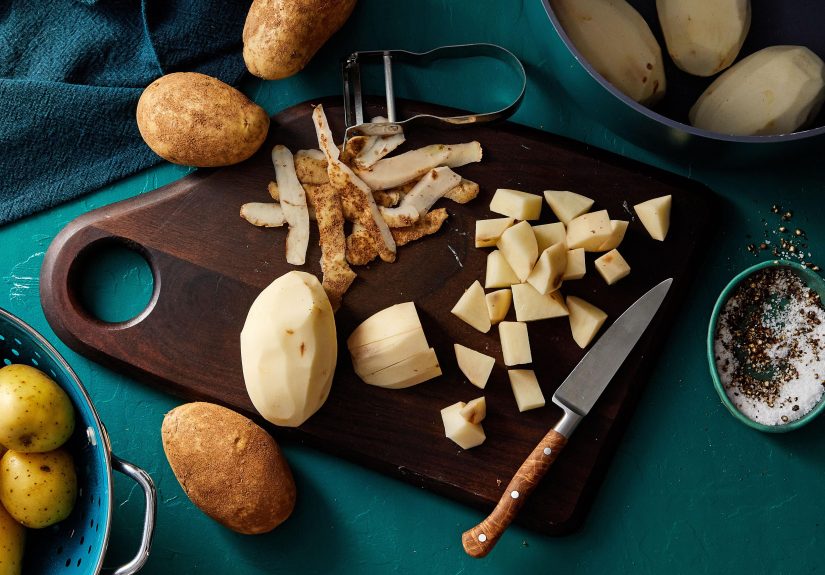
2) Cut evenly (or don’t cut at allon purpose)
If you cut potatoes, cut them into similar-sized pieces. Uneven chunks mean the small pieces overcook
while the big ones are still plotting revenge. If you’re using russets and worried about waterlogging, consider
larger chunks rather than tiny dicetiny pieces have more exposed surface area and can soak up more water.
3) Cover with cold water (yes, cold) and add salt
Put potatoes in the pot first, then add cold water until they’re covered by about an inch.
Starting cold helps them cook evenly from edge to center instead of turning the outside into mashed potatoes while
the middle remains a raw-core masterpiece.
Now salt the water generously. Potatoes are dense; seasoning only the outside after cooking is like trying to
butter toast by complimenting it. A well-salted pot gives you potatoes that taste good all the way through.
4) Bring to a boil, then reduce to a gentle simmer
Once the pot hits a boil, reduce heat so it stays at a gentle boil/simmer. A raging boil can knock
pieces around, break edges, and make waxy potatoes look like they survived a bar fight.
5) Check doneness the right way (and for the right dish)
-
For mashed potatoes: a knife or fork should slide in and out with no resistance.
If there’s any firmness, you’ll get lumpsor you’ll overwork the mash trying to fix it. -
For potato salad: you want tender but not collapsing. The utensil should go in easily, but you may
feel a tiny bit of resistance as you pull it back out. That little “bite” keeps cubes from turning
into potato confetti when you stir in dressing. - For soups/stews: cook until tender enough to eat, but stop before the pieces break apart in the pot.
6) Drain, then steam-dry for 2–5 minutes
Drain in a colander, then return potatoes to the warm pot (off heat) for a few minutes. This “steam-dry” step
evaporates surface moisture so your mash is fluffy, your salad isn’t watery, and your potatoes don’t taste like
they just got out of a swimming pool.
Boiling Times by Potato Type (Because Not All Spuds Walk at the Same Speed)
Red potatoes / new potatoes (waxy)
Whole small reds commonly land around 15–20 minutes. They’re excellent for potato salad because they
stay intact. If you cube them (about 1 inch), expect 10–15 minutes.
Yukon Gold (medium-starch)
Yukon Golds are versatile: whole medium potatoes often cook in the 18–25 minute range, while 1-inch
cubes are typically 10–15 minutes. For mash, aim a little softer than you thinkcreamy is the goal.
Russet / Idaho-style (starchy)
Russets are mash royalty, but they’re also enthusiastic water absorbers. For best texture, use
even chunks (not whole giant potatoes) and cook until fully tender for mashoften
20–25 minutes for 2-inch pieces. Avoid overboiling, and don’t let them linger in hot water after
they’re done.
Fingerlings and baby potatoes
Small potatoes cook fast. Fingerlings can be tender in 8–12 minutes, while baby potatoes often hit
the sweet spot around 10–15 minutes. If you’re using them for potato salad, you may go a bit longer
so they’re tender throughout, but still hold together.
Boiling Times by What You’re Making
Boil potatoes for mashed potatoes
If you want fluffy, smooth mashed potatoes, think: even chunks + gentle simmer + fully tender.
Start checking at 10–15 minutes for smaller chunks; many batches finish around 20–25 minutes
depending on piece size. After draining, steam-dry, then mash while hot. Add warm butter and warm dairy for a
creamy texture and less “glue risk.”
Boil potatoes for potato salad
Potato salad wants potatoes that are cooked through but still structured. Waxy potatoes or Yukon Gold are popular
because they don’t crumble as easily. Depending on size, you’ll typically be in the 10–25 minute
universe. The key is to stop at “tender with a little backbone,” then cool appropriately so the texture stays firm.
Parboiling potatoes for roasting
Parboiling is a head start: you’re not trying to cook them all the way. For medium chunks, you may boil
5–10 minutes after the water comes up to a simmerjust until the edges are softened. Drain well,
let them dry, then roast. The outside gets crispier because you’ve already softened the surface.
Boiling potatoes for soups and stews
For soup cubes (about 1 inch), 10–15 minutes is common. If they’ll simmer longer in broth, you can
undercook them slightly in water and finish in the soup so they don’t disintegrate.
Why These Rules Work (Potato Logic, Not Potato Mythology)
-
Cold-water start = even cooking: Potatoes cook more uniformly when the water heats up with them,
reducing the chance of a soft exterior with a firm center. -
Gentle simmer = fewer breakups: Lower turbulence means less physical damage, especially with waxy
varieties you want to keep intact. -
Salted water = flavor inside the potato: Potatoes absorb seasoning while cooking; salting after
won’t reach the center nearly as well. - Steam-drying = better texture: Removing surface moisture prevents watery mash and soggy salads.
Troubleshooting: When Your Potatoes Don’t Listen
“My potatoes are mushy on the outside and hard in the middle.”
Common culprit: starting in boiling water or using uneven sizes. Next time, start in cold water, cut evenly, and
simmer gently.
“They taste bland even with salt on top.”
Salt the cooking water more confidently. That’s how you season the interior, not just the surface.
“They’re watery (especially my mashed potatoes).”
Overcooking + too much water absorption + not steam-drying can cause this. Drain promptly, return to the pot to
evaporate moisture, and avoid tiny dice for starchy potatoes unless the recipe calls for it.
“They fell apart in my potato salad.”
Either they cooked too long, boiled too aggressively, or the variety was too starchy for what you wanted. Aim for
waxy potatoes or Yukon Gold, simmer gently, and stop at tender-with-a-little-bite.
Altitude note (yes, it matters)
At higher altitudes, water boils at a lower temperature, so potatoes can take longer to become tender. Translation:
your usual timing might need extra minutes, and you should rely on the doneness test more than the clock.
Food Safety and Make-Ahead Tips
Boiled potatoes are great for prepping aheadjust cool and store them safely. Refrigerate cooked potatoes within
about 2 hours of cooking. For faster cooling (especially for potato salad), spread them out or use
shallow containers so they drop in temperature quickly before chilling.
If you boil potatoes ahead for mash, you can reheat gently (steamer, microwave, or stovetop with a splash of water),
then mash. For potato salad, cool them, then dress once they’re the texture you likesome dressings cling better when
potatoes are slightly warm, but don’t leave them out too long.
Conclusion
Perfectly boiled potatoes aren’t about memorizing one sacred number. They’re about using a smart method and then
choosing the right doneness for what you’re making. Start in cold water, salt it like you mean it, simmer gently,
test early, drain promptly, and steam-dry. Do that and you’ll get potatoes that are tender, flavorful, and ready
for anything from fluffy mash to a confident potato salad that doesn’t dissolve into regret.
Kitchen “Experiences” That Teach You the Clock (Real-World Scenarios)
If boiling potatoes had a personality test, it would be the friend who says, “I’m easygoing,” then shows up with
five caveats and an opinion about your thermostat settings. The good news: most potato problems are predictable,
and the “aha” moments tend to happen in the same familiar situations again and again.
Scenario #1: The mashed potato deadline panic. You’ve got guests. The main dish is resting.
Everyone’s hungry. You cube the potatoes small because small equals fast, right? Sureuntil the pieces
overcook, absorb water, and your mash turns a little… glossy. The fix usually isn’t more butter (though butter is
always emotionally supportive). The fix is steam-drying and choosing chunk sizes that cook evenly without
becoming soggy. Many home cooks discover that slightly larger, uniform chunks plus a gentle simmer produce a mash
that’s fluffy instead of gluey, and finishing with warm dairy makes everything smoother without overworking the starch.
Scenario #2: The potato salad that turns into potato “spread.” You wanted tidy cubes. You got a bowl
that looks like it lost a fight with a spoon. This usually happens when the potatoes are either (a) too starchy for the
job, (b) cooked too long, or (c) boiled too hard. The “experience” lesson here is subtle: potato salad wants potatoes
that are tender, not surrendered. That means pulling them when a knife goes in easily but still meets the faintest
resistance on the way out. It also means keeping the boil gentle so the pieces don’t smack into each other and crumble.
Scenario #3: The one potato that refuses to cook. You test one piece: perfect. You drain the pot.
Then you find a chunk with a stubborn center like it’s protecting state secrets. This is the classic uneven-cut issue,
and it’s why “uniform pieces” shows up in every good cooking guide. A practical habit many cooks adopt: cut first,
then quickly eyeball the pile and trim the obvious outliers (the mega-chunk and the tiny shard). It takes 30 seconds and
saves you from either undercooking half the batch or overcooking the rest.
Scenario #4: The “I forgot to salt the water” realization. This is the moment you add salt after draining,
taste again, and wonder why it still tastes like polite cardboard. The experience takeaway: potatoes need seasoning
during cooking because salt has time to travel inward. Once cooked, the inside is basically done being cooperative.
People who switch to salting the water more generously often notice the biggest improvement with whole, skin-on potatoes,
because the skin slows seasoningso the water has to be confident.
Scenario #5: The make-ahead win. Boiling potatoes earlier in the day can feel like cheating (in a good way).
The trick is cooling and storing them safely, then reheating gently. For mash, reheating and then steam-drying briefly
can bring back a great texture. For salads, cooling firms the potatoes and helps them keep their shape when tossed.
The “experience” lesson: boiling potatoes isn’t just a stepit’s a tool you can schedule, control, and repeat once you
understand what “tender” looks like for your specific dish.