Table of Contents >> Show >> Hide
- First: Redefine “Genius” So It Stops Being Intimidating
- Step 1: Pick a Starting Lane (So You Don’t Learn Everything and Nothing)
- Step 2: Build the Core Stack Every “Computer Genius” Has
- 1) Problem Solving: Turning Chaos Into Steps
- 2) Programming Fundamentals: The Small Building Blocks
- 3) Data Structures & Algorithms: Your Efficiency Upgrade
- 4) Debugging: The Skill That Makes You Look Like a Wizard
- 5) Version Control (Git): Your Time Machine
- 6) Reading Documentation: The Adult Skill Nobody Brags About
- Step 3: A Practical 0–90 Day Roadmap (No Superhuman Required)
- Step 4: Learn Like a Pro (Deliberate Practice, Not “Tutorial Marathons”)
- Step 5: The “Genius” Habits That Pay Off Forever
- Where to Start Learning (A Smart Mix of Trusted Options)
- Common Traps (And How to Avoid Them Without Becoming a Monk)
- Wrap-Up: Your “Computer Genius” Starter Plan in One Sentence
- of Real-World “This Is What It Feels Like” Experiences on the Journey
- SEO Tags
Let’s clear something up right away: “computer genius” isn’t a mystical birthright bestowed by the Silicon Valley stork.
It’s a skill stack. A mindset. A bunch of tiny habits that compound until people start saying, “Wait… how did you do that?”
(And you get to smile politely while pretending you didn’t just spend 45 minutes debugging a missing comma.)
This guide is your on-ramp. Not to becoming a walking motherboard, but to becoming the kind of person who can
understand systems, solve problems, and build useful thingsthe three pillars of “computer genius.”
You’ll get a clear starting point, a roadmap, specific examples, and a realistic plan that doesn’t require dropping out of life.
First: Redefine “Genius” So It Stops Being Intimidating
Most “computer geniuses” aren’t doing magic. They’re doing:
- Systems thinking: Seeing how parts interact (code, data, networks, users, failures, constraints).
- Algorithmic thinking: Breaking messy problems into steps a computer can execute.
- Relentless practice: The kind that targets weaknesses (not just replaying the easy stuff).
- Comfort with confusion: They don’t panic when they don’t know; they investigate.
“Genius” looks like speed, but it’s usually familiarity. They’ve seen similar problems before. They’ve built mental
libraries: patterns, tools, shortcuts, and warnings like “If you mutate a list while iterating, you’re gonna have a weird day.”
Step 1: Pick a Starting Lane (So You Don’t Learn Everything and Nothing)
Computers are a galaxy. If you try to learn all of it at once, you’ll end up knowing 14 definitions and zero skills.
Choose a lane for your first 8–12 weeks. You can switch latersmart people pivot all the time.
Lane A: Practical Programming & Automation (Fast Wins)
Best if you want to build useful stuff quickly: scripts, automation, small apps. A friendly start is Python.
You can automate file cleanup, parse spreadsheets, scrape data (ethically), and build simple tools without wrestling with tons of setup.
Lane B: Web Development (Visible Results)
If you like seeing your work instantly, learn HTML/CSS + JavaScript. Web skills teach
fundamentals (logic, debugging, APIs) while producing shareable projects: pages, portfolios, simple web apps.
Lane C: Computer Science Foundations (Long-Term Power)
If you want the “I can learn any tech” superpower, focus on fundamentals: data structures, algorithms, abstraction,
and how computers manage memory and resources. This lane pays off forever.
Lane D: Cybersecurity & Systems (Think Like a Defender)
If you’re curious about how things break (and how to prevent it), start with basics: safe habits, threat thinking,
and core concepts like authentication, encryption, and secure configuration.
Step 2: Build the Core Stack Every “Computer Genius” Has
No matter the lane, “computer genius” rests on a shared foundation. Here’s the core stackwhat it is, why it matters,
and how to start.
1) Problem Solving: Turning Chaos Into Steps
Computers are unbelievably fast… at doing exactly what you tell them. Your job is to translate real-world mess into
precise instructions. Practice this skill with tiny, repeatable challenges.
Example: You want to “remove duplicates from a list while keeping order.”
- What do you need to remember? Items you’ve already seen.
- What data structure helps? A set (fast membership checks).
- What’s the algorithm? Iterate, keep unseen items, mark as seen.
This isn’t about memorizing tricks. It’s about learning to ask the right questions: inputs, outputs, constraints,
edge cases, and “what breaks this?”
2) Programming Fundamentals: The Small Building Blocks
You don’t become a strong coder by collecting languages like souvenirs. You become strong by mastering fundamentals:
variables, types, control flow (if/loops), functions, data structures, and error handling.
A great beginner move: pick one main language (Python or JavaScript), and write small programs daily. Not huge ones.
Small ones you can finish. Finish is addictive.
3) Data Structures & Algorithms: Your Efficiency Upgrade
Data structures are how you organize information; algorithms are how you transform it. These are the tools that separate
“it works” from “it works well.”
Start with the essentials:
- Arrays/lists, hash maps/dictionaries, sets, stacks, queues
- Sorting & searching, especially binary search
- Big-O intuition (time/space cost as input grows)
Don’t treat algorithms like a museum. Treat them like a toolbox: “Which tool solves this efficiently and clearly?”
4) Debugging: The Skill That Makes You Look Like a Wizard
Debugging is where “genius” is born. Here’s the secret: most bugs are boring. Off-by-one errors. Wrong assumptions.
A function that returns what you wish it returns, not what it actually returns.
A simple debugging loop:
- Reproduce the bug reliably (no guessing).
- Shrink the problem (smallest example that breaks).
- Inspect state (print/log, debugger, tests).
- Fix with a reason, not a ritual.
- Prevent repeats (test, assertion, clearer code).
5) Version Control (Git): Your Time Machine
If you want to collaborate, build serious projects, or undo mistakes without crying into your keyboard, learn Git.
You don’t need every advanced featurejust the daily essentials: commits, branches, and pull requests.
Think of it like this: a “computer genius” doesn’t avoid mistakes. They make mistakes in a way that’s reversible.
6) Reading Documentation: The Adult Skill Nobody Brags About
Tutorials are training wheels. Documentation is how real work happens. Learn to read docs without getting lost:
- Start with the “getting started” or “overview.”
- Skim headings first. Then dive into relevant sections.
- Copy the smallest example, run it, then modify one thing at a time.
- When stuck, search by error message + keyword (and verify the fix).
Step 3: A Practical 0–90 Day Roadmap (No Superhuman Required)
Here’s a realistic plan. The goal isn’t “learn everything.” The goal is “build momentum and foundational power.”
Assume 30–60 minutes per day, 5 days a week. If you can do more, great. If not, consistency wins.
Days 1–14: Set Up, Start Coding, Win Small
- Install a code editor and learn basic shortcuts.
- Write tiny programs: calculator, unit converter, to-do list in the terminal, simple text analysis.
- Learn: variables, conditionals, loops, functions, lists/dicts, basic file I/O.
- Start a “bug journal”: what broke, why, how you fixed it.
Mini-project idea: A script that renames files in a folder (e.g., photos) using a consistent pattern.
Days 15–45: Build Your “Core Strength”
- Learn Git basics and use it for everything (even small projects).
- Practice data structures: lists, dictionaries/maps, sets.
- Learn testing basics: write a few simple tests or at least sanity checks.
- Start reading docs weekly (not just when panicking).
Mini-project idea: A “log analyzer” that reads a file, counts errors by type, and outputs a summary report.
Days 46–90: Build One Real Project (Portfolio-Grade)
Pick one project that’s slightly scary but doable. The rule: it must have users, even if the user is Future You.
Ship a first version, then improve it.
- Web lane: A small web app that consumes an API and displays results cleanly.
- Python lane: A personal automation tool (expense categorizer, email sorter, study planner).
- CS lane: Implement a few classic algorithms and benchmark them.
- Security lane: A “security checklist” tool that checks for obvious risky settings on your own machine (read-only).
The goal is to experience the full cycle: planning, building, debugging, documenting, and polishing. That’s where real confidence comes from.
Step 4: Learn Like a Pro (Deliberate Practice, Not “Tutorial Marathons”)
If you want the “genius curve,” your practice has to be targeted. The difference between average and exceptional isn’t hours,
it’s how those hours are spent.
Use the 70/20/10 Rule
- 70% building projects (messy, real, motivating)
- 20% focused practice (data structures, algorithms, debugging drills)
- 10% reading (docs, high-quality explanations, best practices)
Turn Confusion Into a Checklist
Every time you get stuck, capture it:
- What did you assume?
- What was actually true?
- What tool helped you find out (prints, debugger, docs, tests)?
- How will you prevent this next time?
This turns pain into progress. Also, it gives you receipts when your brain says, “I’m not improving.” You are. Your journal proves it.
Step 5: The “Genius” Habits That Pay Off Forever
Write Code for Humans First
Computers don’t care if your variable name is x. Humans do. Future You especially.
Clear naming, small functions, and simple structure are “genius moves” because they reduce mistakes.
Document as You Go (Yes, Even a Little)
A short README and a few helpful comments can make your work 10x more usable. Plus, it forces you to explain your logic,
which is basically a cheat code for learning.
Learn Basic Security Hygiene Early
You don’t need to be a security specialist to benefit from secure habits:
- Use strong, unique passwords and a password manager.
- Turn on multi-factor authentication (MFA).
- Be cautious with secrets (API keys) in codedon’t commit them.
- Keep software updated.
“Genius” isn’t just building thingsit’s building things that don’t accidentally light on fire.
Where to Start Learning (A Smart Mix of Trusted Options)
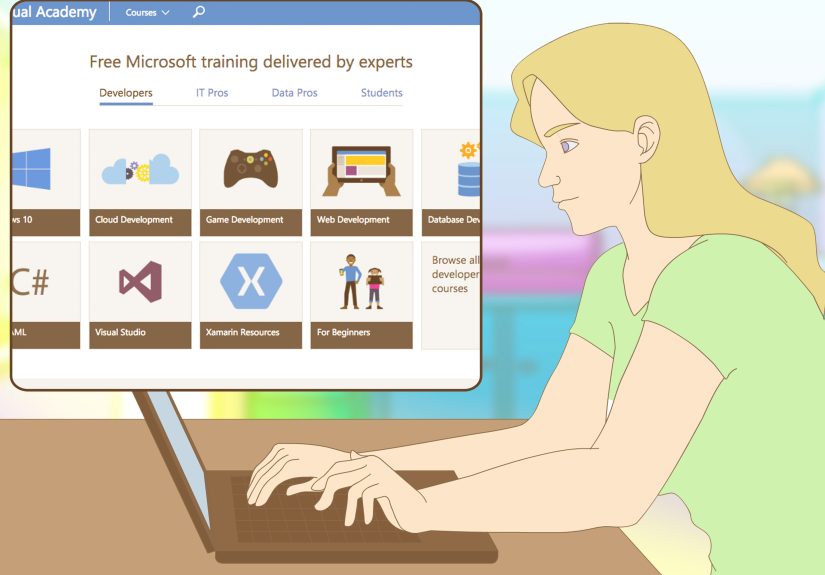
You asked “where to start,” so here’s the practical answer: choose one structured intro course, one practice platform,
and one documentation hub. Mix them like a balanced diet. (Yes, this means you can’t live on dessert tutorials alone.)
Structured Intro Courses (Choose One)
- Intro to computer science for broad foundations and problem-solving.
- Intro programming in Python for practical projects and fast momentum.
- Web development basics for visible output and modern skills.
Practice & Projects (Choose One)
- Project-based certifications where you build and submit real work.
- Small weekly builds that solve a problem in your life or job.
Reference & Docs (Non-Negotiable)
Make a habit of checking official documentation whenever you learn a new concept. Over time, you’ll stop feeling
dependent on step-by-step tutorialsand that’s a major “genius” milestone.
Common Traps (And How to Avoid Them Without Becoming a Monk)
Trap: “I’ll Learn After I Watch One More Video”
If you watch three tutorials and build nothing, you’re doing entertainment, not education. Set a rule:
every learning session ends with something you run.
Trap: Tool Obsession
Mechanical keyboards, fancy IDE themes, and a 47-tab browser workflow do not equal skill.
Use simple tools, build skill, upgrade later.
Trap: Avoiding Hard Topics Forever
You don’t need advanced math to start programming, but you do need the habit of tackling confusion.
When something feels hardalgorithms, networking, memorytouch it anyway. Tiny doses. Repeatedly.
Wrap-Up: Your “Computer Genius” Starter Plan in One Sentence
Pick a lane, learn fundamentals, practice deliberately, build real projects, use version control, read documentation,
and treat confusion like a normal part of progress.
The world doesn’t need more people who can recite jargon. It needs people who can think, build, and adapt.
That’s the real definition of computer geniusand you can absolutely start today.
of Real-World “This Is What It Feels Like” Experiences on the Journey
Here’s what beginners (and honestly, experienced developers too) commonly experience on the road to “computer genius.”
If any of this sounds like you, congratulations: you’re not brokenyou’re learning.
1) Week One: The Confidence Roller Coaster
Day 1 feels amazing. You print “Hello, world!” and briefly consider adding “Software Engineer” to your email signature.
Day 2 introduces errors. Day 3 introduces errors with attitude. You’ll Google things like “why doesn’t my loop loop”
and wonder how the internet survives. This is normal. Your brain is building new pathways, and it complains while remodeling.
2) The First “I Actually Fixed It” Moment
Eventually you find a bug, isolate it, and fix it using logicnot luck. That’s a turning point. You start trusting the process:
reproduce, reduce, inspect, fix, prevent. The win isn’t the fix; it’s realizing you can systematically get unstuck.
3) The Documentation Panic (And the Cure)
The first time you open official docs, it can feel like walking into a library where every book is written in polite robot.
The trick is to stop reading like it’s a novel. Skim headings, find examples, run the smallest snippet, then tweak one variable.
Over time, docs go from “scary” to “powerful.” That shift is a hidden superpower.
4) The “I Built a Thing” Identity Upgrade
Your first real projectsomething you can show, use, or sharechanges how you see yourself. It’s no longer “I’m learning to code.”
It becomes “I can make computers do useful things.” Even a tiny tool (like a script that organizes your downloads folder)
delivers a huge psychological boost because it connects learning to reality.
5) Hitting the Plateau (And Why It’s Good News)
Progress doesn’t feel linear. You’ll improve fast, then feel stuck. Often that plateau means your standards got higher.
You notice more problems because your understanding is deeper. The fix is boring but effective: keep building, keep practicing,
keep reflecting. Plateaus are where “genius” quietly formslike muscle that grows during rest, not during the lift.
6) The Collaboration Wake-Up Call
The first time you use Git branches, make a pull request, or review someone else’s code, you realize programming isn’t a solo sport.
It’s communication. Version control becomes your safety net and your teamwork engine. You stop fearing mistakes because you can always
roll back, compare changes, and recover. That’s not just a technical skillit’s confidence in a system.
If you take one lesson from these experiences, take this: feeling confused isn’t evidence you’re bad at computers.
It’s evidence you’re doing the work. Keep going. The “genius” part is mostly showing upand practicing in a way that actually changes you.