Table of Contents >> Show >> Hide
- Why Your Water Bottle Gets Gross So Fast
- How Often Should You Clean Your Water Bottle?
- What You Need to Clean a Water Bottle Properly
- Step-by-Step: Daily Cleaning Routine
- How to Deep Clean a Water Bottle
- What to Do If You Find Mold in Your Water Bottle
- Different Materials, Different Care
- Tips to Prevent Germs, Mold, and Buildup Long Term
- Conclusion: A Clean Bottle Is a Simple Health Upgrade
- Real-Life Experiences and Extra Tips for Sparkling-Clean Bottles
- 1. The “End of the Day” Habit That Changes Everything
- 2. Kids’ Bottles: Mold Magnets in Disguise
- 3. Gym Bottles and Protein Shakes: Don’t Wait
- 4. Travel and Office Bottles: “Backup Bottle” Strategy
- 5. When to Admit Defeat and Replace Your Bottle
- 6. Little Upgrades That Make Cleaning Easier
- 7. The Mindset Shift: It’s Just Part of Hydrating
If you’re reading this while sipping from a reusable bottle you
“can’t remember” the last time you washed properly… this one’s for you.
Reusable water bottles are fantastic for the planet, but if you don’t
clean them correctly, they can quietly turn into tiny portable
science experiments full of germs, mold, and funky-smelling buildup.
The good news: keeping your water bottle clean and safe doesn’t
require fancy products or a degree in microbiology. With a simple
routine, some basic supplies, and the right deep-cleaning tricks,
you can keep your favorite bottle fresh, clear, and totally
un-disgusting.
Why Your Water Bottle Gets Gross So Fast
It’s tempting to think, “It’s only water, how dirty can it be?”
Actually… surprisingly dirty. Every time you drink, bacteria from your
mouth, skin oils from your hands, and tiny food particles can
transfer onto the bottle, lid, and straw. Given moisture, warmth,
and time, those microbes can multiply and form a slimy layer called
a biofilm on the inner surfaces.
That biofilm, plus leftover sugars from flavored drinks, coffee,
tea, or electrolyte mixes, creates a perfect environment for bacteria
and mold. Health experts warn that moldy bottles can contribute to
symptoms like coughing, throat irritation, congestion, and allergy
flare-ups, especially in people with asthma or weakened immune
systems.
Even if your bottle “looks clean,” biofilms and microscopic mold
spores can still be hanging out in:
- Threaded lids and caps
- Flip tops, spouts, and straws
- Rubber gaskets and silicone seals
- Textured interiors or narrow necks
That’s why regular cleaning and occasional disinfecting are essential
if you want your reusable bottle to be a health helper, not a health hazard.
How Often Should You Clean Your Water Bottle?
Cleaning frequency depends a bit on how you use your bottle, but
hygiene experts and cleaning pros generally recommend:
- Daily (or after each use): Wash with warm water, a small amount of dish soap, and a bottle brush.
- At least weekly: Do a deeper clean, especially if you use your bottle for anything other than plain water.
- Immediately: If you see visible mold, smell something funky, or notice cloudy buildup or slime.
If you fill your bottle with sugary drinks, smoothies, protein shakes,
or flavored powders, treat it like any other food container and
wash it thoroughly as soon as you’re done. Don’t let those sweet
residues sit around and throw a bacteria party.
What You Need to Clean a Water Bottle Properly
You don’t need a cabinet full of specialty cleaners. A basic cleaning
kit for your reusable water bottle can include:
- Mild dish soap: Cuts grease and removes everyday germs.
- Hot water: Helps dissolve residue and improves cleaning power.
- Bottle brush: Essential for reaching the bottom and scrubbing off biofilm.
- Straw or spout brush: For cleaning inside narrow straws and caps.
- White distilled vinegar: Great for odor removal and mold control.
- Baking soda: Mild abrasive and deodorizer.
- Unscented household bleach (optional): For occasional disinfecting when needed.
- Clean drying rack or towel: So your bottle can air-dry completely.
If you have a dishwasher-safe bottle (check the manufacturer’s
instructions), the top rack can handle some of the hard work for you.
But even “dishwasher-safe” bottles often have lids, straws, or
gaskets that still need manual cleaning.
Step-by-Step: Daily Cleaning Routine
Here’s a simple everyday routine to clean a reusable water bottle and
prevent germs, mold, and buildup from taking over.
Step 1: Take Everything Apart
Remove:
- Lid or cap
- Straws or inner straws
- Silicone gaskets or seals (if removable)
- Any removable mouthpieces or spouts
The more you can disassemble, the more you can actually clean.
Mold loves to hide under seals and inside straws, so don’t skip
this step just because you’re in a rush.
Step 2: Wash with Hot, Soapy Water
Fill your sink or a basin with warm to hot water and a few drops of dish soap.
Then:
- Fill the bottle partway with the soapy water.
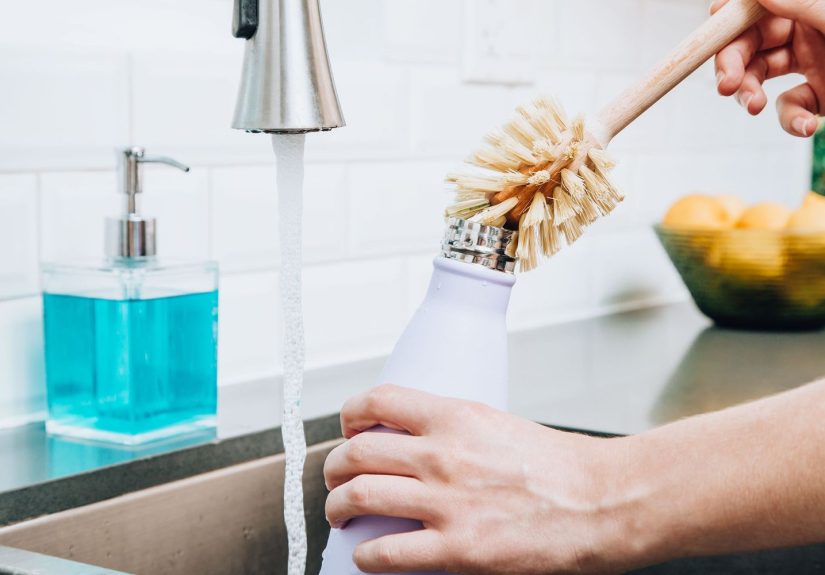
- Use a bottle brush to scrub the bottom, sides, and neck.
- Use a smaller brush for straws, caps, threads, and tiny nooks.
- Pay special attention to where your mouth touches the bottle.
The physical scrubbing is key. Soap alone won’t remove sticky biofilm;
you actually need to disturb that slimy layer with friction.
Step 3: Rinse Thoroughly
Rinse each part under clean, running water until no soap bubbles
remain. This helps remove both the cleaning solution and loosened
germs and debris. Soap residue can also affect the taste of your
water, so don’t rush this step.
Step 4: Air-Dry Completely
Shake off excess water and let the bottle and all parts air-dry
completely before reassembling. The best setup is:
- Bottle upside down on a drying rack
- Lid, straw, and gaskets laid out separately to dry
Mold loves moisture, so putting a damp lid on a damp bottle is basically
sending it a formal invitation to move in.
How to Deep Clean a Water Bottle
Even with daily washing, it’s smart to deep clean your bottle at least
once a week or whenever it starts to smell “off.” Here are several
effective methods. Always check your bottle’s care instructions and
spot test if you’re worried about finishes, prints, or special coatings.
Method 1: Vinegar Soak (Great for Odors and Mild Mold)
- Fill the bottle halfway with equal parts white vinegar and warm water.
- Swirl it around so the solution touches all surfaces.
- Let it soak for 10–20 minutes (for stubborn smells, up to a few hours).
- Scrub with a bottle brush if needed.
- Rinse thoroughly with clean water and air-dry.
Vinegar helps break down mineral deposits, deodorize, and disrupt
mold growth. It’s especially helpful for stainless steel and glass
bottles when they start to smell like “yesterday’s coffee.”
Method 2: Baking Soda Paste or Soak
Baking soda works well for stubborn stains and lingering smells.
For a soak:
- Add 1–2 tablespoons of baking soda to the bottle.
- Fill with hot water.
- Let it sit for a few hours or overnight.
- Scrub and rinse thoroughly.
For a paste:
- Mix baking soda with a little water to form a thick paste.
- Use a bottle brush or sponge to scrub problem areas.
- Rinse well to remove all residue.
Avoid using baking soda on some plastic bottles if the manufacturer
advises against abrasive cleaners. On stainless steel and glass,
it’s usually safe and very effective.
Method 3: Dishwasher (When Allowed)
If your bottle is dishwasher-safe:
- Place the bottle on the top rack, upside down.
- Secure the lid, straw, and small pieces in the utensil basket.
- Use a standard cycle with hot water and detergent.
Avoid putting insulated, painted, or certain plastic bottles in the
dishwasher if the manufacturer warns against it, as heat can damage
seals or coatings and create new places for bacteria to hide.
Method 4: Diluted Bleach for Serious Disinfection (Occasional Use)
For heavy mold, if someone in your household has been sick, or you
want a one-time deep disinfecting, a properly diluted bleach solution
can be effective on hard, nonporous parts like lids and some bottle
interiors. Always use unscented household bleach and follow safety
guidance.
- Mix a sanitizing solution similar to those used in childcare or
food settings: about 1 tablespoon of unscented household bleach per gallon of water. - Make sure the bottle material is bleach-safe (usually not recommended for aluminum or some plastics).
- Soak the interior and removable parts for a few minutes, ensuring all surfaces are in contact with the solution.
- Rinse thoroughly with clean water until there is no smell of bleach.
- Air-dry completely.
Use this method sparingly and only when needed. Never mix bleach with
vinegar, ammonia, or other cleaners, and always work in a well-ventilated area.
What to Do If You Find Mold in Your Water Bottle
Discovering black, green, or fuzzy spots in a bottle you’ve been
drinking from is… unsettling, to put it nicely. Don’t panic, but
do take it seriously.
Step 1: Stop Using the Bottle Immediately
Pour out the contents and don’t drink from it again until it’s been
thoroughly cleaned and disinfected. If you’ve been feeling unwell
(coughing, sore throat, congestion, or stomach issues) and suspect
mold exposure, check in with a healthcare professional.
Step 2: Disassemble and Pre-Rinse
Take the bottle apart completely and rinse away as much visible mold
as possible with hot water. Avoid inhaling directly over the moldy
area and consider wearing cleaning gloves if you’re sensitive.
Step 3: Use a Deep-Clean Method
Combine a vigorous scrub with a disinfecting step:
- Wash thoroughly with hot, soapy water and a bottle brush.
- Follow with a vinegar soak or a properly diluted bleach solution for hard, nonporous parts.
- Scrub and flush straws and small crevices until everything looks clear.
If mold stains won’t come off, the silicone has turned permanently
discolored, or you just can’t shake the “ick” factor, it may be time
to replace the bottle or at least the lid and gaskets.
Different Materials, Different Care
Not all water bottles are created equal. Here’s how to care for
common types while preventing germs, mold, and buildup.
Stainless Steel Bottles
- Generally durable, easy to clean, and resist odors with proper care.
- Handle daily washing with hot, soapy water and a brush very well.
- Safe with vinegar and mild baking soda soaks.
- Check if insulated bottles are dishwasher-safe before tossing them in.
Glass Bottles
- Don’t hold onto odors and are usually dishwasher-safe.
- Need protection from drops (silicone sleeves help).
- Clean lids, caps, and seals with the same care as other bottles.
Plastic Bottles
- Can scratch more easily, creating tiny grooves where bacteria hide.
- Avoid harsh abrasives or very hot water unless labeled safe.
- Follow the manufacturer’s instructions for dishwasher use.
- If plastic becomes cloudy, cracked, or smells even after cleaning, replace it.
Tips to Prevent Germs, Mold, and Buildup Long Term
- Don’t “top off” old water. Empty the bottle before refilling so water doesn’t sit for days.
- Let it breathe. Don’t store your bottle sealed and damp; leave the lid off during drying.
- Rotate bottles. If you have multiple bottles, rotate them so each gets fully cleaned and dried between uses.
- Replace worn parts. Swap out old gaskets, straws, and lids that stay slimy or stained.
- Don’t rely on looks alone. A clear bottle isn’t automatically a clean bottle; biofilms can be nearly invisible.
Conclusion: A Clean Bottle Is a Simple Health Upgrade
Your reusable water bottle is supposed to support your health, not
sabotage it. The combination of daily washing, regular deep cleaning,
and smart drying habits is usually enough to keep germs, mold, and
buildup under control. No need to obsessjust treat your bottle like
any other dish that touches your mouth every day.
If you make cleaning part of your routine (right when you get home,
or before bed), it quickly stops feeling like a chore and starts
looking more like what it is: a tiny investment in staying healthy,
hydrated, and not accidentally drinking mold soup.
SEO Wrap-Up for Publishers
mold, and buildup with simple daily and deep-cleaning steps.
sapo:
Reusable water bottles are great for your health and the planetbut
only if they’re actually clean. From everyday washing to deep-clean
routines with vinegar, baking soda, and safe disinfecting methods,
this guide shows you exactly how to clean a water bottle to stop
germs, mold, and slimy buildup in their tracks. Learn how often to
wash, what products to use, how to handle moldy bottles, and how to
care for stainless steel, glass, and plastic so every sip tastes
fresh and stays safe.
Real-Life Experiences and Extra Tips for Sparkling-Clean Bottles
Knowing how to clean a water bottle is one thing. Actually
doing it consistently in real lifebetween work, kids, commutes, and
the eternal question of “What’s for dinner?”is another story. Here
are some experience-based insights, habits, and little hacks that make
clean-bottle living a lot more realistic.
1. The “End of the Day” Habit That Changes Everything
One of the easiest routines to stick to is pairing bottle cleaning
with something you already do every daylike loading the dishwasher
or brushing your teeth. When you walk in the door or finish dinner,
empty the bottle, pop the lid and straw off, and wash it right then.
It takes under two minutes when there’s no dried residue involved.
People who wait “until tomorrow” tend to discover that “tomorrow”
mysteriously turns into “three days later,” and by then you’re
scrubbing mystery slime. A quick daily rinse and scrub keeps things
from ever getting truly gross.
2. Kids’ Bottles: Mold Magnets in Disguise
Parents quickly learn that kids’ water bottles are a different level
of chaos. Juice, milk, sticky fingers, forgotten lunch boxes… it’s a
perfect recipe for mold. Many parents find that fully disassembling
lids (including prying out tiny silicone valves and gaskets) once or
twice a week is non-negotiable.
A practical hack: keep a small mesh bag or container just for bottle
parts. Toss tiny pieces, valves, and straw tips into the bag before
washing so they don’t escape down the drain or disappear into the
dishwasher abyss. Label it if you have multiple kids, because
apparently every household has at least one “That’s MY lid!” argument.
3. Gym Bottles and Protein Shakes: Don’t Wait
If you use your bottle for pre-workout, electrolytes, or protein
shakes, the number one rule is: Do not leave it in your gym bag.
Residue from these drinks can smell unbelievably bad if left in a warm
car or locker and can be harder to clean the longer it sits.
A smart move is to rinse the bottle with hot water immediately after
finishing your drink, even if you can’t fully wash it yet. Just
getting most of the residue out will make the full wash later much
easier and reduce your chances of discovering a new life form when
you eventually open it.
4. Travel and Office Bottles: “Backup Bottle” Strategy
Many people find it easier to maintain good hygiene when they own
more than one bottle. A “backup” bottle allows you to leave one
drying at home while another goes to work, the gym, or in the car.
Rotating bottles means each one gets time to fully air-dry, cutting
down on moisture and mold risk.
For office life, keeping a tiny cleaning kit at worka travel-size
dish soap and a compact bottle brushcan be a game changer. Even a
quick soapy rinse at the end of the workday beats bringing home a
full day’s worth of desk germs.
5. When to Admit Defeat and Replace Your Bottle
Sometimes, the most hygienic move is to let a bottle go. Consider
replacing your water bottle or its components when:
- Plastic is deeply scratched, cloudy, or permanently stained.
- Silicone seals stay discolored or slimy even after deep cleaning.
- You can’t get rid of a musty smell no matter how you clean it.
- The interior coating is flaking or damaged.
A worn-out bottle can become harder to clean effectively, and tiny
cracks or scratches make perfect hiding spots for germs. Considering
how much you use it and that it touches your mouth daily, replacing
a problem bottle is often a very reasonable investment.
6. Little Upgrades That Make Cleaning Easier
A few small purchases can make the whole “clean my water bottle
regularly” thing feel far less tedious:
- A good bottle brush set: One large brush plus small straw and spout brushes covers all bottle types.
- A dedicated drying spot: A simple rack or mat just for bottles keeps them upside down and well-ventilated.
- Extra gaskets and straws: Some brands sell replacement parts; swapping them every so often helps keep things fresh.
- Clear bottles for visual checks: Seeing the inside can remind you to clean more often and spot buildup early.
7. The Mindset Shift: It’s Just Part of Hydrating
Finally, the biggest experience-based insight: don’t treat cleaning
your water bottle as a separate chore. Think of it as part of the
hydration processjust like refilling it. You drink, you rinse, you
wash, you dry. When that rhythm becomes automatic, you spend less
time worrying about germs and more time actually enjoying cold,
clean water.
Once you’ve had the unpleasant experience of discovering mold in your
bottleand most frequent users will, at least onceyou quickly learn
that two minutes of cleaning is a tiny price to pay to avoid that
again. Your future self (and your immune system) will thank you.