Table of Contents >> Show >> Hide
- Quick Answer: How Does Boldore Evolve?
- Step 1: Catch or Obtain a Boldore
- Step 2: Prepare Boldore for the Trade
- Step 3: Trade Boldore to Another Player
- Step 4: Trade Gigalith Back If You Want to Keep It
- Can You Evolve Boldore Without Trading?
- What Is Gigalith?
- Why Evolve Boldore Into Gigalith?
- Common Mistakes When Evolving Boldore
- Best Tips for a Safe Boldore Trade
- Boldore Evolution in Different Pokémon Games
- Is Gigalith Worth Using?
- Frequently Asked Questions About Evolving Boldore
- Extra Experience: What It Feels Like to Evolve Boldore in Real Gameplay
- Conclusion
Note: This guide is based on real Pokémon game mechanics and established Pokédex information. It is written for web publishing in standard American English, with source links intentionally omitted for clean publication formatting.
Boldore is one of those Pokémon that looks like it wandered out of a geology exam and decided to become a professional bodyguard. It is sturdy, angular, crystal-covered, and just dramatic enough to make you wonder whether your backpack now needs a mining permit. But if you are here, you probably have one big question: how do you evolve Boldore into Gigalith?
The simple answer is this: in the main Pokémon games where Boldore is available, Boldore evolves into Gigalith when it is traded. No level requirement. No shiny pebble. No mysterious mountain ritual under a full moon. Just trade it to another player, and Boldore should evolve after the trade is completed.
Of course, Pokémon evolution is rarely as emotionally simple as “just trade it.” You may be playing Pokémon Sword and Shield, Pokémon Black and White, Pokémon Sun and Moon, Pokémon Ultra Sun and Ultra Moon, Pokémon GO, or another game where the Roggenrola line appears. You may be worried about whether your friend will trade it back. You may be wondering if Boldore needs to hold an item. Or you may be staring at your screen thinking, “Wait, did I just send my rock monster into the digital void?” Relax. This guide breaks it all down in four clear steps.
Quick Answer: How Does Boldore Evolve?
Boldore evolves into Gigalith by being traded. In the traditional mainline Pokémon games, the evolution happens after Boldore is traded to another player. Unlike some trade evolutions, Boldore does not need to hold a special item such as a Metal Coat, King’s Rock, Protector, or Dragon Scale. The trade itself is the trigger.
The full evolution line is:
- Roggenrola evolves into Boldore starting at level 25.
- Boldore evolves into Gigalith when traded.
That means if you still have Roggenrola, level it up first. Trading Roggenrola will not instantly make it become Gigalith in the mainline games. It must already be Boldore before the trade evolution can happen.
Step 1: Catch or Obtain a Boldore
The first step is getting Boldore onto your team or into your Pokémon storage. Depending on the game, you can usually do this in one of two ways: catch Boldore directly or evolve Roggenrola into Boldore.
Option A: Evolve Roggenrola First
Roggenrola is the first Pokémon in this rocky evolution family. It evolves into Boldore at level 25, which is fairly manageable in most games. If you caught a low-level Roggenrola, simply battle with it, use experience items if your game allows them, or keep it in your party while you progress through routes, gyms, trials, raids, or other story content.
Once Roggenrola reaches level 25, it evolves into Boldore. At that point, you are ready for the trade evolution step. Think of Roggenrola as the tiny stone nugget, Boldore as the ambitious construction boulder, and Gigalith as the full “do not park here” mountain.
Option B: Catch Boldore Directly
In several games, Boldore can be found in caves, mines, rocky areas, or special encounter zones. Availability changes by title, so the exact location depends on which Pokémon game you are playing. For example, Boldore is available in games such as Pokémon Black and White, Black 2 and White 2, Sun and Moon, Ultra Sun and Ultra Moon, and Sword and Shield. It is not available in every modern title, so players should always check the Pokédex or encounter list for the specific game they are using.
If you catch Boldore directly, you can skip the Roggenrola leveling step. This is usually the fastest path if your game gives you access to wild Boldore at a useful level.
Step 2: Prepare Boldore for the Trade
Before trading, make sure the Pokémon you are sending is actually Boldore. This sounds obvious, but Pokémon boxes have a funny way of turning into cluttered rock gardens. Check the name, level, and species before starting the trade.
Here is the good news: Boldore does not need to hold any item to evolve into Gigalith. Some trade evolutions require items, such as Scyther needing a Metal Coat to evolve into Scizor or Poliwhirl needing a King’s Rock to evolve into Politoed. Boldore is less complicated. It is a pure trade evolution.
However, you should still prepare carefully. If you want to keep your original Boldore, trade with someone you trust and ask them to trade the evolved Gigalith back. This is often called a “tradeback” or “touch trade.” It is common among players completing a Pokédex, but it does require trust. Do not hand your beloved Boldore named “Sir Pebbles III” to a random stranger unless you are comfortable with the risk.
Before Trading, Double-Check These Details
- Boldore is in your party or box and ready to trade.
- You are trading with a trusted friend or reliable trade partner.
- You have agreed whether Gigalith will be traded back.
- Boldore is not holding an item you accidentally want to keep.
- Your game supports trading for the version you are playing.
If your Boldore is holding a valuable item, remove it before trading unless you specifically want the item to go with it. The evolution does not require a held item, so there is no need to risk sending away something rare.
Step 3: Trade Boldore to Another Player
Now comes the big moment. Start a trade with another player and send Boldore. In the mainline Pokémon games where Boldore’s evolution method is active, it should evolve into Gigalith after the trade is completed.
The exact trading process depends on the game. Older Nintendo DS titles use local wireless or older connection systems. Nintendo 3DS games use Festival Plaza or related communication features. Pokémon Sword and Shield use Link Trade through the Y-Comm system, either locally or online. The interface changes from generation to generation, but the core idea remains the same: Boldore must be traded.
Does Boldore Evolve Immediately After Trade?
Yes, in standard mainline games, Boldore evolves as a result of being traded. Once the other player receives it, the evolution sequence should begin. The receiving player will see Boldore evolve into Gigalith. If you arranged a tradeback, they can then trade Gigalith back to you.
If the evolution does not happen, check whether you are playing a special version, fan game, ROM hack, spin-off, or modified ruleset. Some nonstandard games replace trade evolutions with items, friendship, or other methods. In official mainline games, however, the trade is the key.
Step 4: Trade Gigalith Back If You Want to Keep It
If your goal is to keep Gigalith in your own game, ask your trade partner to send it back after Boldore evolves. This is the part where friendship is tested more seriously than any Gym Leader battle.
To make the process smooth, many players use a tradeback arrangement: you send Boldore, it evolves into Gigalith, and the other player sends Gigalith back. Sometimes both players trade evolution Pokémon at the same time. For example, one player sends Boldore while the other sends Machoke, Haunter, Gurdurr, or another trade-evolution Pokémon. Everybody evolves something, nobody cries, and the Pokédex gets a little happier.
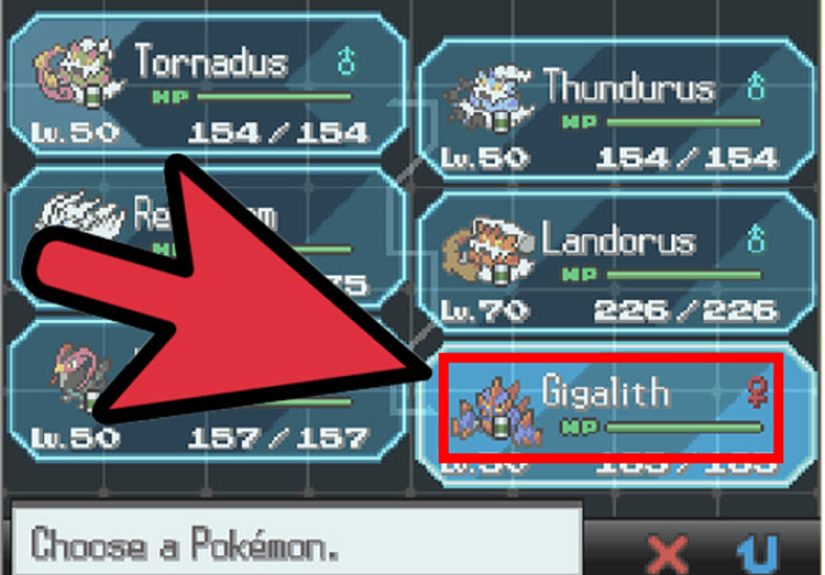
Once Gigalith returns to your game, check its summary page. You should see its Rock typing, updated stats, and powerful final-stage appearance. Congratulations: your Boldore has officially become the kind of Pokémon that looks like it should have its own zip code.
Can You Evolve Boldore Without Trading?
In most mainline Pokémon games, no. Boldore’s traditional evolution method is trading. If the game follows standard evolution rules, Boldore will not evolve by leveling up beyond a certain point. You can raise it to level 50, level 70, or level 100, and it will still remain Boldore unless the trade requirement is met.
That said, there are a few important exceptions and alternatives to understand.
Alternative 1: Catch Gigalith Directly
Some games allow players to find Gigalith in the wild or through special encounters. For example, Pokémon Sword and Shield include ways to obtain Gigalith without personally evolving Boldore, depending on the area, weather, raid availability, or expansion content. If you cannot trade, catching Gigalith directly may be your best workaround.
Alternative 2: Pokémon GO Uses a Different System
Pokémon GO handles Boldore differently from the traditional mainline games. In Pokémon GO, Boldore can evolve into Gigalith with Candy, but trading an eligible Boldore can reduce the Candy cost for evolution. This makes trading very useful, but the mobile game’s mechanics are not identical to the Nintendo console games.
In Pokémon GO, Roggenrola evolves into Boldore with Candy, and Boldore can evolve into Gigalith with a large Candy cost or through trade-evolution benefits. Players who want to save Candy often trade Roggenrola or Boldore strategically. Just remember that Pokémon GO trades cannot be traded again, so plan carefully before swapping.
Alternative 3: Fan Games and ROM Hacks May Use Link Stones
Some fan-made Pokémon games, ROM hacks, and custom formats remove normal trading and replace trade evolutions with special items such as a Link Stone. These rules are not universal. If you are playing a modified game, check that game’s documentation. Boldore may evolve through an item, friendship, or another custom method instead of a regular trade.
What Is Gigalith?
Gigalith is the final evolution of Roggenrola and Boldore. Like the rest of the line, it is a pure Rock-type Pokémon. It was introduced in Generation V, the same generation that brought players to the Unova region.
Gigalith is known for strong physical stats, especially Attack and Defense. It is not fast, which should surprise absolutely no one. This Pokémon looks like a walking mineral deposit with crystal cannons. Speed was never the brand promise.
In battle, Gigalith often fits best as a bulky physical attacker. It can take hits from many physical moves and strike back with powerful Rock-type attacks. Depending on the game and available moves, it may use options such as Rock Slide, Stone Edge, Rock Blast, Earthquake, Heavy Slam, Stealth Rock, or Explosion. Move availability changes by generation, so always check the game you are playing before planning a final moveset.
Why Evolve Boldore Into Gigalith?
There are several good reasons to evolve Boldore. The first is simple: Gigalith is stronger. As a final-stage Pokémon, it has better overall stats and becomes more useful in battles, raids, and Pokédex completion.
The second reason is collection. If you are completing the Pokédex, you will need Gigalith registered. Since trade evolutions can be annoying, getting this one done feels especially satisfying. It is the Pokémon equivalent of finally untangling a drawer full of charging cables.
The third reason is team style. Gigalith has a bold design, strong Rock-type identity, and a rugged battle presence. It is not the flashiest Pokémon, but it has a dependable, heavy-hitting feel that many players enjoy.
Common Mistakes When Evolving Boldore
Mistake 1: Trying to Level Up Boldore Forever
Boldore does not evolve into Gigalith by reaching a higher level in the standard mainline games. Once Roggenrola becomes Boldore at level 25, the next evolution requires trading. If you have been leveling Boldore and waiting for something to happen, you are not alone. Many players have done the same thing. Boldore is patient. Too patient.
Mistake 2: Trading Roggenrola Instead of Boldore
Roggenrola evolves into Boldore by level, not trade. If you trade Roggenrola, it will not immediately become Gigalith in traditional games. Make sure you evolve Roggenrola into Boldore first, then trade Boldore.
Mistake 3: Thinking Boldore Needs a Held Item
Boldore does not need a held item to evolve. The trade itself is enough. This makes it easier than many other trade evolutions, but it also means there is no backup item trick in standard games.
Mistake 4: Trading With Someone You Do Not Trust
If you want your Gigalith back, trade with a friend or a reputable player. A random trade partner may not return it. Pokémon games are cheerful, colorful, and full of friendship speeches, but the internet is still the internet.
Best Tips for a Safe Boldore Trade
For the smoothest experience, arrange the trade before you open the trade screen. Tell your partner exactly what you need: “I want to trade Boldore so it evolves into Gigalith, then I need it traded back.” Clear communication prevents confusion.
If both players need trade evolutions, trade similar-value Pokémon at the same time. For example, you can send Boldore while your friend sends Gurdurr. Both Pokémon evolve, and then both players trade back. This keeps the exchange balanced and friendly.
You should also save your game before trading when possible. Modern games often autosave or handle trades online in ways that limit manual control, but it is still a good habit to make sure your progress is secure before doing anything important.
Boldore Evolution in Different Pokémon Games
Pokémon Black, White, Black 2, and White 2
Boldore debuted in Generation V. In these games, Roggenrola evolves into Boldore at level 25, and Boldore evolves into Gigalith when traded. This is the classic method and the foundation for how most later mainline games handle it.
Pokémon X, Y, Omega Ruby, and Alpha Sapphire
When the Roggenrola line is available, the evolution method remains the same: trade Boldore to trigger Gigalith. These games support trade evolutions through their generation’s communication features.
Pokémon Sun, Moon, Ultra Sun, and Ultra Moon
Boldore appears in the Alola-era games, and it still evolves into Gigalith through trading. If you are building an Alola Pokédex, plan for at least one tradeback.
Pokémon Sword and Shield
Boldore and Gigalith are available in Pokémon Sword and Shield. Boldore evolves by trade, but players may also be able to encounter Gigalith through wild-area-style gameplay, special areas, or raids depending on conditions and content. If you cannot trade, look for direct Gigalith encounters as a practical alternative.
Pokémon Scarlet and Violet
Boldore and Gigalith are not part of every Scarlet and Violet Pokédex environment. Availability can differ across modern games, downloadable content, transfer rules, and compatibility updates. If you are specifically playing Scarlet or Violet, check current in-game Pokédex availability and Pokémon HOME compatibility before planning a Boldore evolution project.
Pokémon GO
Pokémon GO uses Candy and trade-evolution benefits rather than the exact same evolution system as the mainline games. Boldore can evolve into Gigalith with Candy, while trading can reduce or remove the Candy cost for eligible Pokémon. The big warning is that Pokémon GO only allows a Pokémon to be traded once, so you cannot trade Boldore away and then receive that same Boldore back.
Is Gigalith Worth Using?
Gigalith can be worth using if you want a tough Rock-type Pokémon with strong physical presence. It is especially appealing for players who like slower, tankier Pokémon that can hit hard. Its main drawbacks are its low Speed and Rock typing weaknesses. Rock-type Pokémon are weak to Water, Grass, Fighting, Ground, and Steel moves, so Gigalith needs smart matchups.
In casual playthroughs, Gigalith can be very satisfying. It can handle many physical threats and punish opponents with heavy Rock-type damage. In competitive play, its usefulness depends heavily on the generation, ability availability, format, team support, and move options. Some versions of Gigalith can support sand-based strategies, while others are better treated as straightforward bulky attackers.
Frequently Asked Questions About Evolving Boldore
What level does Boldore evolve?
Boldore does not evolve by level in standard mainline Pokémon games. Roggenrola evolves into Boldore at level 25, but Boldore evolves into Gigalith when traded.
Does Boldore need an item to evolve?
No. Boldore does not need a held item. Trade Boldore, and it should evolve into Gigalith.
Can I cancel Boldore’s evolution?
In many Pokémon games, pressing the correct cancel button during an evolution can stop the evolution sequence. However, if your goal is Gigalith, there is usually no reason to cancel it unless you are doing a specific challenge run.
Can I evolve Boldore by using a Rare Candy?
No. Rare Candy can help Roggenrola reach level 25 and evolve into Boldore, but Rare Candy will not evolve Boldore into Gigalith in the standard mainline games.
Can I evolve Boldore offline?
If your game supports local trading and you have another system and compatible game, you may be able to trade offline locally. If you have no trading access at all, you generally cannot evolve Boldore in standard mainline games unless Gigalith can be caught directly.
Extra Experience: What It Feels Like to Evolve Boldore in Real Gameplay
Evolving Boldore is one of those small Pokémon milestones that sounds easy on paper and somehow becomes a mini social event. You start with a simple goal: get Gigalith. Five minutes later, you are texting a friend, checking whether your Nintendo subscription is active, clearing box space, and wondering why a fictional rock has created more logistics than your last vacation.
In a normal playthrough, Boldore often becomes a reliable teammate before it evolves. It is not flashy like a starter Pokémon or mysterious like a legendary, but it does its job. It takes hits. It throws rocks. It looks like it has never once worried about taxes. By the time you are ready to evolve it, you may already be attached to it, especially if it helped you survive tough caves, Electric-type opponents, or random trainers who had no business being that confident.
The trade itself can be surprisingly fun when done with a friend. There is a little suspense as Boldore leaves your game. Then the evolution animation triggers on the other screen, and suddenly your chunky cave companion becomes Gigalith, a much larger crystal beast with serious “final boss in a quarry” energy. If your friend trades it back immediately, the whole process feels like a tiny cooperative victory.
The best personal strategy is to plan trade evolutions in batches. Instead of trading only Boldore, gather every Pokémon that needs a trade evolution. Maybe you have Haunter, Machoke, Gurdurr, Pumpkaboo, Phantump, or another evolution waiting in the wings. Set up one trading session and evolve several Pokémon at once. This saves time and makes the tradeback process feel less like a chore.
For solo players, Boldore can be a little frustrating because the evolution depends on another person. That is the eternal trade-evolution debate. On one hand, it encourages connection. On the other hand, sometimes you just want your rock monster to evolve while sitting on the couch in pajama pants. Fair enough. If trading is not available, look for games where Gigalith can be caught directly, or check whether the title you are playing has alternate mechanics.
In Pokémon GO, the experience is different. Because Candy matters so much, the trade-evolution benefit can feel like finding a coupon for a very expensive boulder. Saving 200 Candy is a big deal, especially if you do not catch Roggenrola often. But Pokémon GO has its own catch: traded Pokémon cannot be traded again. That means you should not expect to send Boldore to a friend and get that same one back. Instead, Pokémon GO players often mirror trade Roggenrola or Boldore and then evolve the one they receive.
One practical lesson is this: do not rush. Before trading, decide whether you care about nature, IVs, nickname, shininess, ribbons, marks, or sentimental value. If the Boldore is special, trade only with someone you trust. If it is just for Pokédex completion, you can be more flexible. Either way, a few seconds of preparation can prevent a lot of “wait, where did my Pokémon go?” panic.
Once you finally have Gigalith, it feels worth it. The design has weight. The stats feel stronger. The Pokédex entry is complete. And your team now has a Pokémon that looks like it could block a highway and win the argument. Whether you use it in battle or simply keep it as part of your collection, evolving Boldore is a classic Pokémon moment: a little teamwork, a little planning, and one very dramatic rock.
Conclusion
To evolve Boldore into Gigalith, follow four simple steps: obtain Boldore, prepare it for trading, trade it to another player, and trade Gigalith back if you want to keep it. The most important thing to remember is that Boldore evolves by trade in the mainline Pokémon games. It does not need a held item, and it does not evolve by level after becoming Boldore.
If you are playing Pokémon GO, the rules are different: Candy and trade-evolution benefits matter, and traded Pokémon cannot be traded again. If you are playing a fan game or ROM hack, check that game’s custom evolution rules. But for the standard Pokémon experience, the answer remains wonderfully direct: trade Boldore, get Gigalith, celebrate your new walking rock fortress.