Table of Contents >> Show >> Hide
- What Is a Triangular Prism?
- The Surface Area Formula at a Glance
- How to Find Surface Area of a Triangular Prism in 12 Steps
- Step 1: Identify the triangular base
- Step 2: Write down every given measurement
- Step 3: Find the area of one triangular base
- Step 4: Multiply by 2 for both triangular bases
- Step 5: Find the perimeter of the triangular base
- Step 6: Identify the prism’s length
- Step 7: Find the lateral area
- Step 8: Add the two base areas and the lateral area
- Step 9: Keep units consistent
- Step 10: Solve carefully with parentheses if needed
- Step 11: Check whether your answer is reasonable
- Step 12: Label the final answer correctly
- Worked Example 1: A Right Triangular Prism
- Worked Example 2: A Triangle with a Missing Side
- Common Mistakes to Avoid
- Why the Formula Works
- When You Should Use a Net Instead
- of Real-World Experience with Triangular Prism Surface Area
- Final Thoughts
If geometry has ever made you feel like a triangular prism personally wronged you, take a deep breath. This shape looks fancy, but the math is much friendlier than its pointy little face suggests. Once you understand what pieces make up a triangular prism, finding its surface area becomes more like assembling a sandwich than solving a mystery. A very angular sandwich, but still.
In plain English, the surface area of a triangular prism is the total area covering every outside face of the solid. That includes two triangular bases and three rectangular side faces. Your mission is to find the area of all five faces and add them together without accidentally turning square units into chaos. This guide breaks the process into 12 simple steps, includes examples, points out common mistakes, and gives you a few real-world learning experiences so the formula actually sticks.
What Is a Triangular Prism?
A triangular prism is a three-dimensional figure with:
- Two congruent triangular bases
- Three rectangular lateral faces
- A constant length connecting the two triangles
If you unfolded it into a net, you would see two triangles and three rectangles. That net is your best friend when you are trying to understand where the surface area formula comes from.
The Surface Area Formula at a Glance
The quickest formula for the surface area of a triangular prism is:
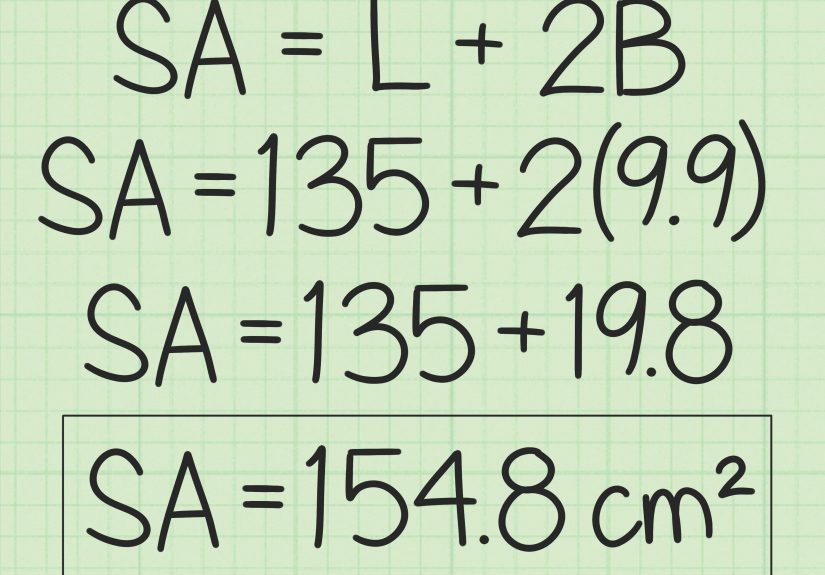
Surface Area = 2B + Ph
Where:
- B = area of one triangular base
- P = perimeter of the triangular base
- h = length of the prism
This works because you have two matching triangles and three rectangles whose total area equals the perimeter of the triangle multiplied by the prism’s length.
How to Find Surface Area of a Triangular Prism in 12 Steps
Step 1: Identify the triangular base
Start by locating the triangle at either end of the prism. That triangle is the base used in the formula. Do not confuse the triangular base with one of the rectangular side faces. Geometry loves a labeling trick, so stay alert.
Step 2: Write down every given measurement
List the side lengths of the triangle and the prism’s length. If the diagram gives you a base and triangle height, great. If it gives you all three side lengths instead, also great. Just write everything down before doing any calculations. Wandering into a formula half-prepared is how calculators end up being blamed for human decisions.
Step 3: Find the area of one triangular base
Use the triangle area formula:
Area of triangle = 1/2 × base × height
This means you need a base of the triangle and the perpendicular height to that base. The height must form a right angle. A slanted side is not the height unless the problem specifically tells you so.
Step 4: Multiply by 2 for both triangular bases
Because a triangular prism has two congruent triangular ends, double the base area:
2 × area of one triangle
This gives you the combined area of the front and back triangular faces.
Step 5: Find the perimeter of the triangular base
Add the three side lengths of the triangle:
P = a + b + c
This perimeter is important because it helps you find the total area of the three rectangular side faces all at once.
Step 6: Identify the prism’s length
The prism’s length is the distance between the two triangular bases. It is not the height of the triangle. These are different measurements, and mixing them up is one of the most common errors in prism problems.
Step 7: Find the lateral area
The lateral area is the combined area of the three rectangles. Instead of finding each rectangle one by one, use this shortcut:
Lateral Area = P × h
That means perimeter of the triangle times prism length. Faster math, fewer opportunities to lose your will to continue.
Step 8: Add the two base areas and the lateral area
Now combine everything:
Surface Area = 2B + Ph
This is the total outside area of the triangular prism.
Step 9: Keep units consistent
If one measurement is in inches and another is in feet, stop right there and convert first. Surface area must use the same unit throughout. The final answer should be written in square units, such as square inches, square centimeters, or square feet.
Step 10: Solve carefully with parentheses if needed
When plugging values into the formula, use parentheses to keep the order clear. For example:
SA = 2(24) + (6 + 8 + 10)(12)
It looks cleaner, reduces arithmetic mistakes, and makes your teacher less likely to stare at your paper like it just insulted algebra.
Step 11: Check whether your answer is reasonable
Your final answer should be larger than the area of one face and smaller than something wildly unrealistic. If the prism is modest in size and your answer is 9,000,000 square inches, that is a clue. A bad clue, but a clue.
Step 12: Label the final answer correctly
Always end with a clear statement such as:
The surface area of the triangular prism is 336 square inches.
Do not write cubic units. Surface area covers the outside. Volume fills the inside. Different jobs. Different units. Different chances to get marked wrong.
Worked Example 1: A Right Triangular Prism
Suppose the triangular base is a right triangle with side lengths 6 inches, 8 inches, and 10 inches. The length of the prism is 12 inches.
Find the area of one triangle
Since 6 and 8 are the legs of a right triangle:
B = 1/2 × 6 × 8 = 24 square inches
Double the base area
2B = 2 × 24 = 48 square inches
Find the perimeter of the triangle
P = 6 + 8 + 10 = 24 inches
Find the lateral area
Ph = 24 × 12 = 288 square inches
Add everything
SA = 48 + 288 = 336 square inches
Final Answer: 336 square inches
Worked Example 2: A Triangle with a Missing Side
Now suppose the triangular base has a base of 10 centimeters, a triangle height of 12 centimeters, and the prism length is 9 centimeters. The two slanted sides of the triangle are not given directly.
Find the area of one triangular base
B = 1/2 × 10 × 12 = 60 square centimeters
Find the missing sides
If the triangle is isosceles, the height splits the base into two 5-centimeter segments. Use the Pythagorean theorem:
side = √(5² + 12²) = √169 = 13 centimeters
Find the perimeter
P = 10 + 13 + 13 = 36 centimeters
Find lateral area
Ph = 36 × 9 = 324 square centimeters
Find total surface area
SA = 2(60) + 324 = 444 square centimeters
Final Answer: 444 square centimeters
Common Mistakes to Avoid
- Using the slanted side as triangle height: The triangle height must be perpendicular to the base.
- Forgetting one triangular base: There are two, not one.
- Mixing up triangle height and prism length: They are different dimensions.
- Using cubic units: Surface area is always in square units.
- Adding the wrong sides for perimeter: Use all three sides of the triangular base.
Why the Formula Works
The formula 2B + Ph is not random geometry wizardry. It comes directly from the net of the prism. The two triangles contribute 2B. The three rectangular faces together have areas that can be written as:
(side 1 × prism length) + (side 2 × prism length) + (side 3 × prism length)
Factor out the prism length and you get:
(side 1 + side 2 + side 3) × prism length = P × h
That is why the formula is efficient. You are still finding every face. You are just doing it without writing three separate rectangle calculations every single time.
When You Should Use a Net Instead
If the problem gives unusual dimensions, hidden labels, or a weird-looking diagram, draw the net. A net helps you visualize every face and reduces confusion. It is also helpful when teaching younger students or checking your own work. Sometimes the formula is fastest. Sometimes the net saves you from confidently being wrong. Choose peace.
of Real-World Experience with Triangular Prism Surface Area
One of the most helpful ways to understand how to find surface area of a triangular prism is to connect it to actual learning experiences instead of treating it like a formula that appeared out of nowhere in a textbook. Students often remember this topic best when they physically see the shape, touch a model, or make a mistake they never want to repeat again.
A common classroom experience happens during the first time a teacher unfolds a prism into a net. Suddenly, the mysterious 3D figure becomes two triangles and three rectangles sitting flat on paper. That is usually the moment when students stop saying, “I don’t get prisms,” and start saying, “Oh, wait, that’s it?” It turns out the hardest part is often the appearance of the shape, not the math itself. Once the faces are visible, the problem becomes a familiar area exercise.
Another real experience comes from building projects. Students making a cardboard model for math class, engineering club, or a science fair often have to calculate how much material they need. If the model is shaped like a triangular prism, finding the surface area tells them how much paper, cardboard, or decorative material is required to cover the outside. In that setting, the formula suddenly matters because nobody wants to cut too little cardboard and discover the project now has one exposed rectangle of shame.
Tutoring sessions also reveal a pattern. Many students do not struggle with arithmetic; they struggle with identifying which measurement belongs where. They see two heights in one diagram and instantly lose trust in the universe. The triangle’s height belongs in the triangle area formula. The prism’s length belongs in the lateral area part. Once that distinction is practiced a few times, confidence rises fast. The math did not change. The labeling just stopped being sneaky.
Real-life experiences also show that examples matter. A student may forget an abstract worksheet problem, but they often remember a tent, roof beam, Toblerone-style package, or long wedge-shaped box. These objects help make sense of triangular prisms because they show that surface area is about covering the outside, not filling the inside. When students imagine painting, wrapping, or building the object, they naturally understand why square units are used.
There is also a test-day experience that nearly every math student knows: finishing a problem, feeling triumphant, and then realizing the answer is written in cubic centimeters. That tiny detail teaches a lasting lesson. Surface area uses square units because it measures covering. Volume uses cubic units because it measures space inside. It is a small correction, but it tends to stick forever after one dramatic red mark.
Perhaps the best experience is the moment the shortcut formula finally makes sense. Instead of memorizing 2B + Ph like a robot with emotional baggage, students see where it comes from. Two bases. Perimeter times prism length. Every face accounted for. That moment turns geometry from a list of commands into a logical system. And honestly, that is when triangular prisms stop being annoying and start being weirdly satisfying.
Final Thoughts
Finding the surface area of a triangular prism is all about organization. Identify the triangle, find the area of the two bases, calculate the perimeter, multiply by the prism’s length, and add the results. That is the whole game. Once you know what each measurement represents, the process becomes repeatable, fast, and much less dramatic than it first appears.
So the next time you face a triangular prism on homework, a quiz, or a worksheet that looks like it was designed by someone who enjoys tiny labels, you will know exactly what to do. Follow the 12 steps, keep your units straight, and let the prism know who is in charge.