Table of Contents >> Show >> Hide
- What Is the Midpoint of a Line Segment?
- The Midpoint Formula Explained Without the Drama
- How to Find the Midpoint of a Line Segment: 9 Steps
- Step 1: Identify the Two Endpoints
- Step 2: Label the Coordinates Clearly
- Step 3: Write Down the Midpoint Formula
- Step 4: Add the x-Coordinates
- Step 5: Divide the x-Sum by 2
- Step 6: Add the y-Coordinates
- Step 7: Divide the y-Sum by 2
- Step 8: Write the Midpoint as an Ordered Pair
- Step 9: Check That the Point Really Is Halfway
- Example 1: A Basic Midpoint Problem
- Example 2: Midpoint with Negative Numbers
- Example 3: Midpoint with Fractions
- Why the Midpoint Formula Works
- Common Mistakes to Avoid
- Real Uses for Midpoints in Math
- Quick Practice Questions
- Extra Experience and Practical Learning Notes
- Conclusion
If geometry has ever made you feel like a detective trapped in a room full of rulers, relax: the midpoint is one of the friendliest clues in the whole case. A midpoint is simply the point exactly halfway between two endpoints on a line segment. That is it. No smoke machine, no dramatic violin music, no advanced wizardry. Just a neat, balanced point sitting right in the middle like it paid rent to both sides equally.
Still, knowing how to find the midpoint of a line segment matters more than it first appears. It shows up in coordinate geometry, graphing, circles, triangles, algebra, and plenty of word problems designed to test whether you panic when you see parentheses. The good news is that the midpoint formula is simple, logical, and very hard to mess up once you understand why it works.
In this guide, you will learn the midpoint formula, walk through 9 clear steps, see examples with positive numbers, negatives, and fractions, and pick up a few sanity-check tricks so your answer does not wander off the graph like it forgot where home is.
What Is the Midpoint of a Line Segment?
The midpoint of a line segment is the point that divides the segment into two equal parts. If point A and point B are the endpoints, the midpoint lands exactly halfway between them. On a number line, that means finding the average of two numbers. On a coordinate plane, it means finding the average of the x-values and the average of the y-values.
That “average” idea is the whole secret sauce. The midpoint is not found by guessing, eyeballing, or hoping the graph paper feels generous that day. It is found by taking the middle value in each direction: horizontally and vertically.
The Midpoint Formula Explained Without the Drama
If the endpoints of a line segment are (x1, y1) and (x2, y2), the midpoint formula is:
Midpoint = ((x1 + x2) / 2, (y1 + y2) / 2)
In plain English: add the x-coordinates and divide by 2, then add the y-coordinates and divide by 2. That gives you the coordinates of the point halfway between the two endpoints.
Think of it like splitting a bill, except instead of dinner, you are splitting distance. Fairly. Mathematically. Without anyone pretending they “just had a salad.”
How to Find the Midpoint of a Line Segment: 9 Steps
Step 1: Identify the Two Endpoints
Start by locating the coordinates of the two endpoints of the line segment. These are usually written as ordered pairs, such as (2, 4) and (8, 10). If the problem is drawn on a graph, read each point carefully. Do not rush this part. A midpoint problem only looks easy until you copy one coordinate wrong and spend five minutes blaming algebra.
Step 2: Label the Coordinates Clearly
Assign the first endpoint as (x1, y1) and the second as (x2, y2). For example, if your points are (2, 4) and (8, 10), then:
x1 = 2, y1 = 4, x2 = 8, y2 = 10
This labeling makes substitution easier and helps prevent the classic error of mixing an x-value with a y-value. Coordinates are not mystery grab bags. Keep them in their proper lanes.
Step 3: Write Down the Midpoint Formula
Before plugging in numbers, write the formula neatly:
((x1 + x2) / 2, (y1 + y2) / 2)
Writing the formula first slows you down just enough to stay accurate. It also helps if you are solving a test problem and want partial credit, because math teachers enjoy seeing evidence that your brain attended the meeting.
Step 4: Add the x-Coordinates
Take the two x-values and add them together. Using our example:
2 + 8 = 10
This sum represents the combined horizontal position of the two endpoints. You are preparing to find the halfway point between them.
Step 5: Divide the x-Sum by 2
Now divide that x-sum by 2:
10 / 2 = 5
This result gives you the x-coordinate of the midpoint. In other words, the midpoint sits at x = 5 horizontally.
Step 6: Add the y-Coordinates
Next, do the same thing for the y-values:
4 + 10 = 14
You are now finding the vertical halfway point between the two endpoints.
Step 7: Divide the y-Sum by 2
Take that y-sum and divide by 2:
14 / 2 = 7
This gives you the y-coordinate of the midpoint, so now you know the midpoint sits at y = 7.
Step 8: Write the Midpoint as an Ordered Pair
Combine the averaged x-value and averaged y-value into one ordered pair:
(5, 7)
That is your answer. The midpoint of the line segment connecting (2, 4) and (8, 10) is (5, 7).
Step 9: Check That the Point Really Is Halfway
This final step separates confident math from “I hope this looks believable.” Ask yourself:
- Is the x-value between the two original x-values?
- Is the y-value between the two original y-values?
- Does the answer make visual sense on a graph?
In our example, 5 is between 2 and 8, and 7 is between 4 and 10. Perfect. The midpoint passed the vibe check and the math check.
Example 1: A Basic Midpoint Problem
Find the midpoint of the line segment with endpoints (1, 3) and (7, 9).
Step 1: Use the formula:
((1 + 7) / 2, (3 + 9) / 2)
Step 2: Add and divide:
(8 / 2, 12 / 2)
Step 3: Simplify:
(4, 6)
So, the midpoint is (4, 6).
Example 2: Midpoint with Negative Numbers
Find the midpoint of (-2, 5) and (6, -3).
Use the formula:
((-2 + 6) / 2, (5 + -3) / 2)
Simplify:
(4 / 2, 2 / 2) = (2, 1)
Negative numbers scare people more than they should. Just treat them carefully, keep the signs straight, and remember that adding a negative is not the same as inventing a new math system in the middle of the problem.
Example 3: Midpoint with Fractions
Find the midpoint of (1/2, 3) and (5/2, 7).
Apply the midpoint formula:
(((1/2 + 5/2) / 2), ((3 + 7) / 2))
Simplify the x-part first:
1/2 + 5/2 = 6/2 = 3
Now divide by 2:
3 / 2 = 3/2
Simplify the y-part:
(3 + 7) / 2 = 10 / 2 = 5
The midpoint is (3/2, 5).
This is why patience matters. Fractions are not hard; they are just very committed to making sure you show your work.
Why the Midpoint Formula Works
The midpoint formula works because a midpoint is the average location of the two endpoints. On a number line, the midpoint between 2 and 8 is 5 because 5 is the average of 2 and 8. The same idea applies on a coordinate plane, except now you do it in two directions: left-to-right and up-and-down.
If you move halfway from one point to the other horizontally, and halfway vertically, you land exactly in the middle. That is why averaging the coordinates works so neatly. It is less of a magic trick and more of a “geometry being suspiciously reasonable for once” situation.
Common Mistakes to Avoid
Forgetting to Divide by 2
This is the heavyweight champion of midpoint errors. Students add the coordinates and proudly stop there. Nice effort, but you found the sums, not the midpoint. Always divide both sums by 2.
Mixing x-Values and y-Values
Average x with x, and y with y. Never cross the streams. If you average an x-coordinate with a y-coordinate, your answer may still look like math, but it will not be the right math.
Dropping Negative Signs
A missing negative sign can launch your midpoint into a totally different quadrant. Write carefully and use parentheses if needed.
Ignoring Whether the Answer Makes Sense
The midpoint should lie between the two endpoints. If your midpoint is farther left than both points, or above both when it should be in the middle, something went wrong.
Real Uses for Midpoints in Math
The midpoint is not just a random classroom exercise. It shows up in plenty of useful math situations:
- Finding the center of a segment or diameter
- Graphing geometric figures on the coordinate plane
- Working with triangles, medians, and symmetry
- Analyzing circles when the endpoints of a diameter are known
- Checking whether a point lies halfway between two others
- Extending the same idea into 3D coordinate geometry
In short, if geometry wants the “middle” of something, the midpoint formula often enters the chat.
Quick Practice Questions
1. Find the midpoint of (0, 0) and (10, 4).
Answer: (5, 2)
2. Find the midpoint of (-5, -1) and (3, 7).
Answer: (-1, 3)
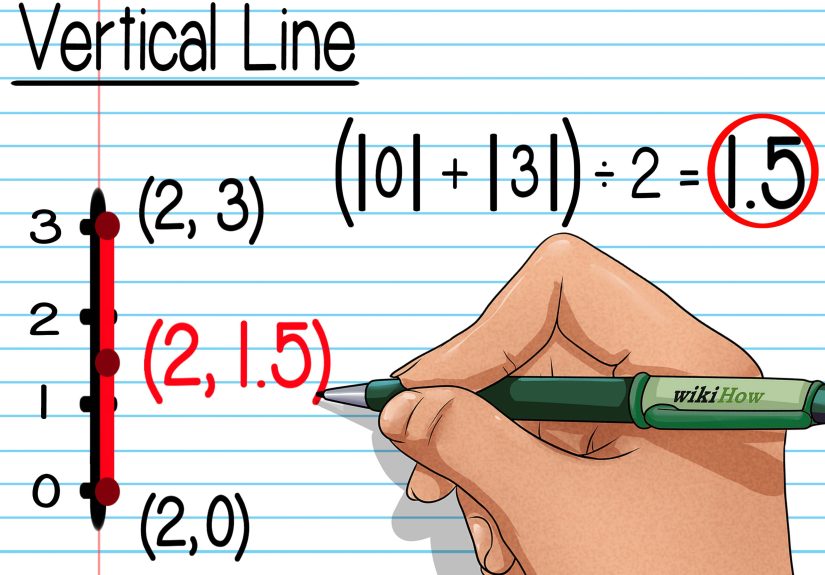
3. Find the midpoint of (4, 2) and (4, 12).
Answer: (4, 7)
That last one is a good reminder: if the x-values are the same, the midpoint keeps that same x-value. Vertical segments have feelings too.
Extra Experience and Practical Learning Notes
One of the funniest things about learning how to find the midpoint of a line segment is that the idea feels almost too simple once it clicks. Before that moment, though, students often treat it like a trap. They stare at two points, squint suspiciously at the graph, and wonder whether the teacher has hidden a trick somewhere in the coordinates. Then they discover the midpoint formula is just averaging, and suddenly geometry looks a lot less like a villain.
In real learning situations, the midpoint often becomes a confidence-builder. A student who struggles with larger geometry topics can still master midpoint problems because the process is structured and repeatable. First identify the points, then average the x-values, then average the y-values. There is comfort in that routine. It rewards careful work more than flashy intuition, which is great news for anyone who prefers logic over guessing.
Tutors and teachers also notice that midpoint problems reveal small habits that matter across all of math. Do you copy coordinates accurately? Can you keep negative signs under control? Do you slow down long enough to substitute correctly? Can you check whether your answer is reasonable? Midpoint exercises are almost like mini training sessions for mathematical discipline. They look tiny, but they quietly strengthen bigger skills.
There is also something satisfying about the visual side of midpoint problems. When students graph two endpoints and then plot the midpoint, they can literally see balance happen on the coordinate plane. The point lands in the center, and the segment splits into two equal parts. That picture helps the formula feel less abstract. It is not just numbers in parentheses anymore; it is a location with geometric meaning.
Another common experience is realizing that midpoint connects old math to new math. If you already know how to find an average, then you already understand the heart of the midpoint formula. That realization can be incredibly helpful for students who think geometry and algebra live on different planets. Midpoint proves they are actually neighbors who borrow tools from each other all the time.
And then there is the practical classroom experience of discovering that midpoint problems scale nicely. Start with simple integers. Move to negatives. Then try fractions, decimals, word problems, and even three-dimensional coordinates. The same pattern holds. That consistency makes midpoint one of those rare math topics that grows with the learner instead of changing personalities halfway through the semester.
Perhaps the best experience tied to midpoint is the moment a student stops memorizing the formula and starts understanding it. Once you know the midpoint is just the point halfway across and halfway up, the formula becomes common sense. At that point, you are not just solving a problem. You are understanding a geometric relationship. And that is the kind of progress that sticks long after the worksheet, quiz, or textbook chapter has been retired to the backpack graveyard.
Conclusion
Finding the midpoint of a line segment is one of the most useful basic skills in coordinate geometry. Once you know that a midpoint is simply the average of the endpoints, the process becomes straightforward: add the x-values and divide by 2, add the y-values and divide by 2, then write the answer as an ordered pair. Whether you are working with whole numbers, negatives, or fractions, the same logic applies every time.
Better yet, the midpoint formula is not just something to memorize for a quiz and forget by lunch. It helps you understand symmetry, centers, graphing, and how points relate to each other on the coordinate plane. Learn the steps, practice a few examples, and the midpoint will stop feeling like a formula to survive and start feeling like a tool you actually own.