Table of Contents >> Show >> Hide
- Meet the Culprit: Sawfly Larvae (AKA “Rose Slugs”)
- Timing Is Everything: When Rose Sawflies Show Up
- Step 1: Inspect Like You Mean It (Early Detection Wins)
- Prevention That Actually Helps (Without Turning Your Yard Into a Chemistry Lab)
- Best Controls for Sawfly Larvae on Roses (Ranked)
- 1) Hand-picking (oddly satisfying, highly effective)
- 2) A strong water spray (the “garden bouncer” method)
- 3) Insecticidal soap (great for small larvae, low drama)
- 4) Horticultural oil or neem oil (coverage matters)
- 5) Spinosad (powerful, but use carefully)
- 6) Conventional insecticides (last resort for heavy infestations)
- 7) Systemic soil drenches (use with extra caution)
- Common Mistakes (AKA “How to Accidentally Feed Sawflies Better”)
- A Quick 7-Day Rescue Plan
- Long-Term Strategy (So Next Spring Isn’t a Repeat Episode)
- FAQ
- Garden Stories & Practical Lessons (Real-World Experiences, About )
You wake up, stroll outside to admire your roses, andsurpriseyour leaves look like someone tried to make lace with a tiny set of teeth.
If the damage has a “windowpane” or “skeletonized” look, you’re probably dealing with sawfly larvae (often called rose slugs).
The good news: they’re beatable. The better news: you don’t need to torch your whole yard to do it.
This guide walks you through identification, timing, prevention, and the most effective controlsranked from “gentle” to “okay, we’re done playing.”
We’ll keep it practical, bee-friendly when possible, and focused on what actually works in real American gardens.
Meet the Culprit: Sawfly Larvae (AKA “Rose Slugs”)
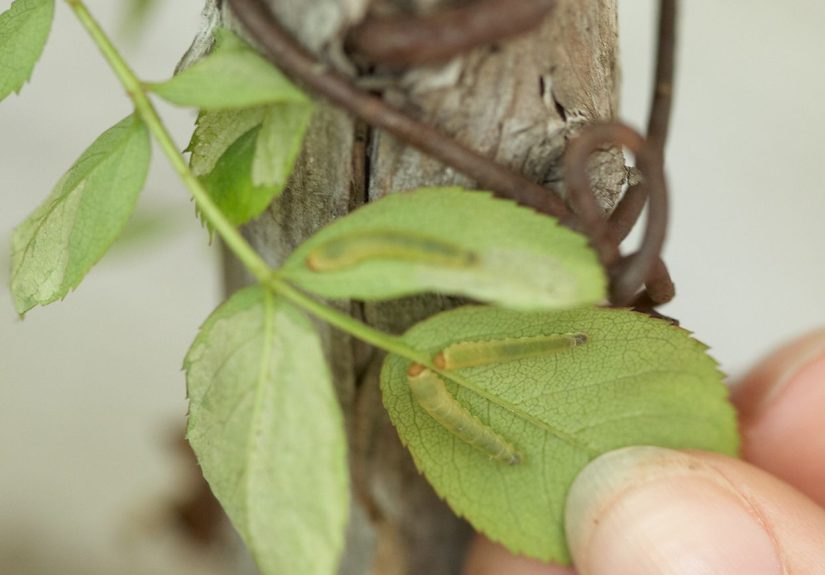
Despite the nickname, rose slugs aren’t slugs. They’re the larval stage of sawfliesstingless, wasp-like insects. The larvae are usually pale green to yellow-green,
sometimes with bristles (on “bristly roseslug”), and they love feeding on rose leavesoften on the underside where they can snack in peace like tiny leafy ninjas.
What the damage looks like
- Windowpane damage: the leaf looks translucent in patches, as if the surface layer was scraped away.
- Skeletonization: soft tissue disappears while veins remain, leaving a “leaf skeleton.”
- Later-stage chewing: larger larvae can make holes or chew bigger sections, sometimes leaving the midrib.
Sawfly larvae vs. caterpillars (why it matters)
This matters because a popular “caterpillar fix” (Bacillus thuringiensis, a.k.a. Bt) doesn’t work on sawflies. Sawfly larvae aren’t caterpillars.
If your plan was “spray Bt and walk away,” sawflies will accept your offering and continue eating anyway.
Quick clues (not perfect, but helpful):
- Sawfly larvae often feed on the underside and are harder to spot.
- They may look slimy or shiny (“slug-like”) or have fine bristles depending on species.
- Damage tends to be surface scraping/skeletonizing early on.
Timing Is Everything: When Rose Sawflies Show Up
In many regions, roseslug larvae appear in mid-to-late spring (often around May), with feeding picking up quickly as leaves expand.
Some species have one main generation, while othersespecially bristly roseslugcan cycle multiple times through the growing season.
Translation: you may win one battle and still need to stay alert for sequels.
Where they go when they “disappear”
When larvae finish feeding, they drop off the plant and pupate in the soil. That’s why you’ll sometimes see heavy damage,
then suddenly no larvaelike a garden magic trick you didn’t request.
Step 1: Inspect Like You Mean It (Early Detection Wins)
The single biggest reason sawflies get out of control is that they’re easy to miss early. Start scouting in spring as new growth flushes:
check the underside of leaves, especially lower foliage where humidity and shade make a nice snack bar.
A simple scouting routine
- Weekly check in spring: flip leaves over and look for tiny green larvae and fresh windowpane damage.
- After rain or rapid growth: check again. Lush leaves are basically a buffet invitation.
- Focus on “hot spots”: the same plants often get hit year after year.
Prevention That Actually Helps (Without Turning Your Yard Into a Chemistry Lab)
“Prevention” doesn’t mean your roses will never see a bug. It means you keep problems small, short-lived, and unlikely to ruin bloom season.
The goal is an IPM approach (Integrated Pest Management): monitor, act early, choose the least disruptive effective control, and avoid making new problems (like mite outbreaks).
Keep roses vigorous (so they bounce back fast)
- Water at the base when possible; avoid constantly wetting foliage late in the day.
- Prune for airflow and remove badly damaged leaves when practical.
- Avoid overdoing high-nitrogen fertilizer during peak pest windows; ultra-tender growth can invite more chewing pests.
Protect your built-in pest control team
Birds, beneficial beetles, parasitic wasps, and even naturally occurring diseases can help sawfly populations crash.
Broad-spectrum insecticides can wipe out these helpers and leave your roses vulnerable to follow-up pests.
Best Controls for Sawfly Larvae on Roses (Ranked)
Choose based on infestation size, your comfort level, and whether your roses are blooming (bee safety matters).
Whatever you use, coverage is keyespecially on the underside where larvae often feed.
1) Hand-picking (oddly satisfying, highly effective)
If you catch them early, this is fast and reliable. Wear gloves if you’d rather not raw-dog garden larvae.
Drop them into a cup of soapy water. For small plantings, this alone can solve the problem.
2) A strong water spray (the “garden bouncer” method)
A forceful spray from a hose can knock larvae off leaves. Aim above and below foliage.
Once dislodged, many larvae struggle to get back up to the plant, and you reduce feeding immediately.
3) Insecticidal soap (great for small larvae, low drama)
Insecticidal soap works best when larvae are small and you get direct contact. It’s not a magical force field
you have to hit the pests. Spray thoroughly, especially leaf undersides. Repeat as needed per label directions.
4) Horticultural oil or neem oil (coverage matters)
Oils can help control sawfly larvae when applied correctly. They’re often considered less disruptive than many conventional options,
but they can still affect some beneficials and can cause plant stress if misapplied (think hot sun + oil = crispy leaves).
Apply when temperatures are moderate and follow label guidance.
5) Spinosad (powerful, but use carefully)
Spinosad is widely recommended for sawflies and other chewing pests and is often effective when soaps/oils aren’t enough.
However, it can harm bees and certain beneficial insects if misused. A practical rule:
don’t spray spinosad on blooming plants or when pollinators are active.
If you need it, apply at dusk and follow the product label exactly.
6) Conventional insecticides (last resort for heavy infestations)
Several contact insecticides labeled for roses can kill sawfly larvae, including some pyrethroids and other broad-spectrum products.
They can also be harsh on beneficial insects and may contribute to secondary issues like spider mite flare-ups.
If you go this route:
- Choose a product specifically labeled for roses and the pest.
- Spray when bees are not foraging (evening is often safer).
- Cover both sides of leaves; treat while larvae are present.
- Use only as neededmore isn’t “more effective,” it’s just “more.”
7) Systemic soil drenches (use with extra caution)
Some guidance notes that certain systemic products can control sawfly larvae when applied as soil drenches or granules.
Systemics can pose risks to pollinators depending on product, timing, and whether plants are flowering.
If you consider a systemic, treat it as a “rare emergency tool,” follow the label precisely,
and avoid applications when roses are blooming or when pollinator exposure is likely.
Common Mistakes (AKA “How to Accidentally Feed Sawflies Better”)
Mistake: Using Bt
Bt targets caterpillars (moth/butterfly larvae). Sawfly larvae are different. Bt won’t control rose slugs.
Mistake: Spraying only the top of the plant
Sawfly larvae often feed on the underside. If your spray never reaches where they are, congratulations:
you’ve just moisturized your roses.
Mistake: Treating after they’re gone
Once larvae drop to pupate, foliar sprays won’t help. You need to treat while larvae are actively feeding.
Mistake: Going nuclear too soon
Broad-spectrum insecticides can knock down helpful predators and parasitoids, sometimes making future outbreaks more likely.
Start with scouting and the gentlest effective option.
A Quick 7-Day Rescue Plan
If you just discovered fresh windowpane damage and you want a clear, sane plan:
- Day 1: Inspect undersides. Hand-pick what you can. Prune off heavily infested leaves (bag and trash them).
- Day 1 (after picking): Hose the plant thoroughly, aiming under leaves.
- Day 2–3: Re-check. If larvae persist, apply insecticidal soap (or oil/neem) with full underside coverage.
- Day 4–5: Re-check again. If infestation is still heavy, consider spinosad only if roses are not in bloom and pollinators won’t be exposed.
- Day 7: Inspect. If larvae are gone, stop spraying and keep monitoring weekly.
Long-Term Strategy (So Next Spring Isn’t a Repeat Episode)
- Scout early: Begin checks in spring as soon as foliage expands.
- Spot-treat: Control small outbreaks quickly instead of waiting for “proof” (the proof is the holes).
- Reduce pupation success: Light raking/cultivation around the base (careful of roots) and keeping the area tidy can help disrupt pupae in some gardens.
- Encourage beneficials: Diverse plantings and fewer broad-spectrum sprays often mean fewer repeated outbreaks.
- Accept minor cosmetic damage: Healthy roses usually recover. The goal is “managed,” not “sterile.”
FAQ
Will sawfly larvae kill my roses?
Usually no. The damage is often cosmetic, but heavy or repeated defoliation can weaken plants and reduce blooming.
Early control prevents the “weak and sad” phase.
Why do my roses get sawflies every year?
Sawflies pupate in soil and can overwinter near host plants. If conditions are favorable in spring, populations rebound.
That’s why scouting early is the best long-term “preventative.”
Are sawflies dangerous to people or pets?
They don’t sting (they’re sawflies, not social wasps), and the larvae don’t pose a typical household hazard.
The bigger risk is applying pesticides incorrectlyso always follow labels and store products safely.
Do I need to treat the soil?
Usually, no. Foliar control while larvae are feeding is the most direct approach. Basic garden hygiene and light disturbance around the base
can help in some situations, but soil treatments should be approached cautiously and only when warranted.
Garden Stories & Practical Lessons (Real-World Experiences, About )
The best sawfly advice often comes from what gardeners notice in the momentbecause sawflies don’t send calendar invites.
Below are a few common, true-to-life scenarios (composite examples from typical rose-growing situations) that show what works
when the leaves start looking like a tiny paper-punch party.
1) “I sprayed once. Why are they still here?”
A classic scenario: a gardener spots windowpane damage, grabs a spray, hits the top of the rose bush, and calls it a day.
Two mornings later, damage has doubled and frustration has tripled. The fix wasn’t “stronger chemicals”it was better coverage.
Sawfly larvae frequently feed on the underside of leaves, so the winning move was flipping leaves, spraying underneath,
and repeating a few days later. Once the underside got treated, the feeding stopped quickly.
2) The “hosed-off and done” surprise
Another gardener didn’t want to spray anything at all. They tried a forceful hose spray every other day for a week,
targeting both leaf surfaces. It felt almost too simple, but it worked because the infestation was caught early.
The larvae were small, and repeated knockdowns reduced feeding pressure until the cycle passed.
The lesson: early detection turns low-tech methods into high-impact results.
3) The bloom-season dilemma
Sometimes sawflies show up right when roses are blooming and pollinators are active. In these cases, the “best” product on paper isn’t always the best choice in practice.
One gardener used hand-picking plus a hose spray, then followed with insecticidal soap on non-blooming portions only.
They avoided higher-risk sprays on open flowers and still brought the problem under control.
The takeaway: you can usually protect blooms and still manage sawflies by combining physical removal + targeted, low-impact sprays.
4) “They came back. I thought I won.”
In areas where bristly roseslug cycles multiple times, it’s common to see a second wave later in summer.
A gardener who won the first round in May got blindsided in July. What changed the outcome was a simple habit:
a 60-second weekly underside check. The second wave was caught when larvae were tiny, so the gardener went back to quick hand removal
and avoided any broad-spectrum spraying. The lesson is boringbut effective: consistency beats intensity.
5) The “I used the wrong bug solution” moment
A frequent frustration is using a caterpillar-targeting product and getting zero results. That experience usually ends the same way:
a gardener learns that sawfly larvae aren’t caterpillars, switches to a control option known to work for sawflies (soap, oil/neem, or spinosad when appropriate),
and finally sees progress. The bigger lesson is about identification: a 2-minute confirmation step (underside inspection + damage pattern)
prevents a week of ineffective spraying and a rose bush that looks like it lost an argument with a cheese grater.
Across these experiences, the pattern is consistent: scout early, target the underside, start gentle, escalate only if needed, and stop spraying once larvae are gone.
Your roses don’t need perfectionthey need timely, smart intervention.