Table of Contents >> Show >> Hide
- Pool pH 101: What pH Means (and Why Your Pool Cares)
- Before You Add Anything: Test Like You Mean It
- How to Raise Pool pH: Three Practical Options
- The Safe, No-Drama Step-by-Step Plan
- Why Your Pool pH Keeps Dropping
- What If the Water Turns Cloudy After Raising pH?
- Quick Cheat Sheet: Raise Pool pH the Right Way
- Conclusion: Balanced Water = More Swim, Less Stress
- Experiences From the Pool Deck: Real-Life pH Lessons (Extra )
Your pool’s pH is basically the “mood ring” of your water. When it’s too low, everything gets cranky:
swimmers complain about stinging eyes, metal parts start dreaming about corrosion, and your sanitizer can
stop performing like it should. The good news? Raising pool pH is usually a straightforward fixassuming
you don’t try to wing it with random scoops like you’re seasoning a soup.
This guide walks you through how to raise the pH in a pool safely and effectively, with clear steps, smart
troubleshooting, and a few “pool owner reality checks” so you don’t end up chasing your chemistry in circles.
(Because nobody bought a pool to earn a second job as a part-time water scientist.)
Pool pH 101: What pH Means (and Why Your Pool Cares)
The sweet spot: where comfort meets clean
pH measures how acidic or basic your water is. Pool water that’s too acidic (low pH) can irritate eyes and skin,
corrode ladders and heaters, and mess with how your sanitizer performs. Most pool guidance puts the ideal
“happy swim zone” around the mid-7scommonly 7.2 to 7.8, with many pros aiming closer to 7.4–7.6 for comfort.
pH vs. total alkalinity: the pool chemistry buddy-cop duo
If pH is your pool’s current mood, total alkalinity (TA) is its emotional stability. TA helps buffer
pH so it doesn’t swing wildly after rain, heavy swimming, or chemical additions. When TA is low, pH can “crash”
and bounce around like a toddler after a juice box. When TA is high, pH can feel stubbornharder to move without
side effects.
That’s why the best approach isn’t just “raise pH!” It’s: test first, check TA, pick the right method, and make
small adjustments with patience. (Yes, patience. Chemistry has no respect for your weekend plans.)
Before You Add Anything: Test Like You Mean It
Step 1: Confirm the pH (and don’t guess)
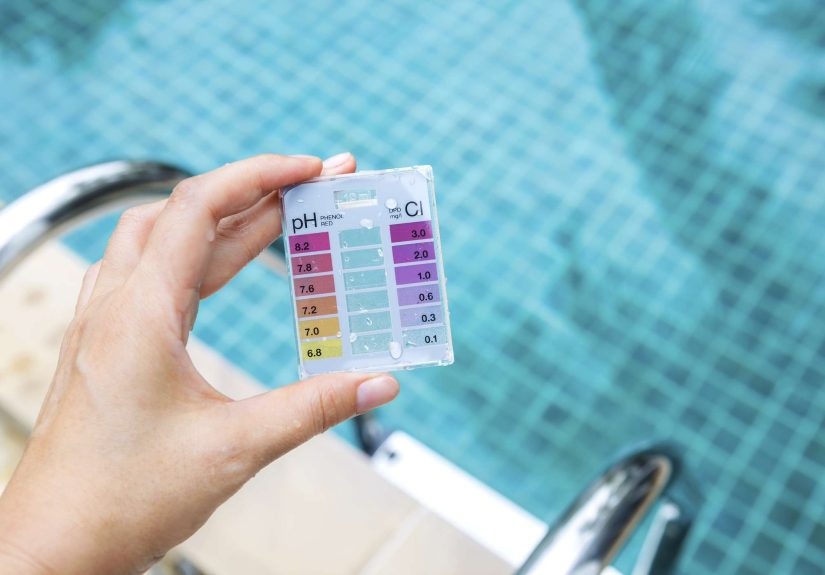
Start with a reliable test. Strips are fast, but drop-based kits often give more precise readings. If you’re
troubleshooting a stubborn low pH problem, accuracy mattersbecause adding the wrong product for the wrong
problem is how pool water goes from “refreshing” to “mysterious.”
- Test pH (obvious, but important).
- Test total alkalinity (because it controls how stable your pH will be).
- Check sanitizer level (because chemistry works as a team sport).
Step 2: Look at total alkalinity before you try to “fix” pH
Many pools run best when TA is in a typical range (often around 80–120 ppm, depending on pool type and local conditions).
If TA is low, your pH can keep dropping no matter how many times you bump it up. If TA is already high, the wrong pH-raising
product can push TA even higher and create new issues like cloudy water.
Translation: don’t treat pH like it exists alone. It doesn’t. Pools are relationship drama.
How to Raise Pool pH: Three Practical Options
Option A: Use pH increaser (soda ash) for a faster pH boost
The most common way to raise pH in a pool is a product labeled pH increaser or pH up,
typically made from sodium carbonate (also called soda ash or washing soda). It raises pH efficientlyand
it usually raises TA too.
Best for: pools with low pH and low-to-moderate alkalinity, or when you need a noticeable pH increase.
Not ideal for: pools where alkalinity is already high and you’re trying to raise pH without pushing TA up further.
How to use it safely (high-level): Run the pump, add in small doses per the product label, allow time to circulate,
then retest and repeat if needed. Avoid dumping a huge amount in one spotbig swings can cause temporary cloudiness and make your
pool chemistry harder to control.
Example scenario:
Your 15,000-gallon pool tests at pH 7.0. You want to nudge it into the mid-7s. Many product instructions and dosing charts
scale by pool volume and desired change. A smart approach is to start with a partial dose, circulate for several hours, then
retest before adding more. This reduces overshooting and helps prevent side effects like water haze.
Option B: Use baking soda when alkalinity is low (and pH is also low-ish)
Sodium bicarbonate (baking soda) primarily raises total alkalinity and tends to move pH only slightly.
That makes it a great tool when the real issue is low TA causing unstable pH.
Best for: low alkalinity (especially when pH is low and keeps falling).
Reality check: if you only need to raise pH quickly, baking soda is usually not the fastest route.
Think of it like this: soda ash is the elevator (fast pH change), baking soda is the staircase (stability and buffering).
Sometimes you need the elevator; sometimes you need better stairs so you stop falling down them.
Option C: Raise pH without chemicals using aeration (the “free” method)
Want to raise pool pH with minimal impact on alkalinity? Aeration can help. When you agitate wateraim return jets up,
run water features, turn on spa jets, or create splashingcarbon dioxide (CO2) can leave the water. That shift commonly
causes pH to rise over time, especially if your TA is already decent.
Best for: when pH is low but TA is already high, or when you want a gentle pH climb without adding more “stuff” to the water.
Tradeoff: it can take longer than soda ash, and your results depend on circulation, water features, and starting chemistry.
- Aim return jets toward the surface to create ripples.
- Run fountains, waterfalls, bubblers, or spillways if you have them.
- Turn on spa jets or an air blower (if your system supports it).
- Encourage “highly scientific” cannonballs. (Kidding. Mostly.)
The Safe, No-Drama Step-by-Step Plan
1) Test pH and total alkalinity
Confirm your pH reading. Then check TA so you understand whether your pH is likely to swing or resist change.
2) Decide what you’re actually correcting
- Low pH + low TA: address alkalinity first (often with alkalinity increaser / baking soda), then fine-tune pH.
- Low pH + normal TA: use pH increaser (soda ash) in small doses and retest.
- Low pH + high TA: lean toward aeration (or get expert help for a plan that doesn’t spike TA further).
3) Add the product carefully and follow label directions
This is important: pool chemicals are not “more is better.” Use the dosing chart on your product, scale it to your pool’s gallons,
and add in smaller steps. Let the pump circulate the water, then retest before adding more.
Smart pacing: a gradual approach helps you avoid overshooting, keeps the water clearer, and makes your next adjustment easier.
4) Circulate, wait, retest, repeat (if needed)
After you add a pH-raising product, keep the pump running and allow time for full mixing. Then retest. If the pH is still low,
repeat with another small, measured dose. The goal is steady progressnot a roller coaster.
Why Your Pool pH Keeps Dropping
Common causes of low pool pH
- Low alkalinity: without enough buffering, pH can dip quickly.
- Acidic chlorine products: some stabilized chlorine types can push pH down over time.
- Heavy rain or refill water changes: new water can shift balance, especially if it’s naturally acidic.
- Overcorrecting: adding too much “pH down” (or similar acid-based products) earlier can create a long rebound.
- High bather load: sweat, sunscreen, and “everything else” adds demand to your chemistry.
If you’re raising pH repeatedly and it keeps slipping, your pool is telling you the same thing over and over:
“Check alkalinity and your sanitizer routine.” Water chemistry is petty like that.
What If the Water Turns Cloudy After Raising pH?
Cloudiness is often a “too much, too fast” sign
If you add a large dose of soda ash quicklyespecially in water with higher calcium hardnessyou may see temporary cloudiness.
The fix is usually boring but effective: keep the pump running, brush the pool, clean/backwash the filter as needed, and let
the system catch up. Then adjust in smaller increments moving forward.
If cloudiness doesn’t improve, test your full balance (pH, TA, calcium hardness, sanitizer). Sometimes the real issue is overall
water balance, not just pH.
Quick Cheat Sheet: Raise Pool pH the Right Way
- pH low + TA low: raise alkalinity first, then fine-tune pH.
- pH low + TA normal: use soda ash/pH increaser in small doses, circulate, retest.
- pH low + TA high: use aeration to lift pH with minimal TA increase.
- Always: follow product labels, add slowly, and retest before you add more.
Conclusion: Balanced Water = More Swim, Less Stress
Raising the pH in a pool isn’t complicatedbut it does reward the calm, measured approach. Test first. Check total alkalinity.
Choose the right method (soda ash for speed, baking soda for stability, aeration for a gentler lift). Add in small steps, circulate,
retest, and you’ll land in that comfortable mid-7 range where swimmers are happy and your equipment doesn’t silently plot revenge.
And remember: if you’re constantly battling low pH, it’s usually not a “bad pool” problem. It’s a “your pool needs a better balance
plan” problemwhich is a much nicer problem to have.
Experiences From the Pool Deck: Real-Life pH Lessons (Extra )
Pool chemistry advice often sounds simple on paper: “Add pH increaser, circulate, retest.” In real life, pool owners tend to meet
pH problems in messy, very human waysusually while juggling guests, weather, and the strong belief that the pool should maintain
itself out of gratitude.
The “It was fine yesterday” surprise
One of the most common experiences is the sudden low pH reading right before a swim day. The pool looked clear yesterday, nobody
changed anything, and yet today the test shows pH dipping under the comfortable range. This scenario often happens after heavy rain,
a big top-off with hose water, or a week of higher chemical demand (hot days, lots of swimmers, more sunscreen, more debris). The lesson:
pH doesn’t always drift slowly. Sometimes it moves like it got a text it didn’t like.
The “I fixed pH… now alkalinity is weird” moment
Another classic: you add soda ash to raise pH, it worksgreat!but the next day alkalinity is higher than expected and pH feels like it
wants to stay elevated. This is where pool owners learn the difference between adjusting pH and managing the entire balance. The fix
usually isn’t panic; it’s better pacing and better testing. Smaller adjustments over a couple days are often easier than one dramatic
correction that creates a new issue. Pools love moderation. Humans… less so.
The aeration “why didn’t anyone tell me this?” discovery
People who try aeration for the first time often describe it like finding a secret menu item. They aim their return jets upward,
run their waterfall longer, or switch on spa jets, and over time the pH starts creeping upwithout adding much chemical product.
It’s not instant, but it feels oddly satisfying because it’s a “do less, win more” solution. The practical takeaway is that aeration
can be a great tool when alkalinity is already on the higher side and you don’t want to push it further.
The “cloudy water panic” that usually resolves
Cloudiness after adding pH increaser is a surprisingly emotional event. The water can go from sparkling to slightly hazy, and suddenly
everyone is Googling “did I ruin my pool” with the intensity of a detective solving a crime. In most cases, the haze clears with circulation,
filtration, and timeespecially if the pool was already close to balanced and the dose wasn’t extreme. Owners who go through this once
usually become “small dose” people forever. They learn to add, wait, retest, and only then add again.
The best experience: when your pool finally feels “easy”
The most satisfying moment for many pool owners is when they stop reacting and start maintaining. They test at consistent times, keep TA
in a stable range, and make tiny corrections instead of emergency fixes. The pool becomes predictable: pH stays steady, chlorine behaves
better, and swimmers stop complaining about irritation. That’s when the pool becomes what it was always supposed to befun, not a chemistry
pop quiz. The big lesson is that raising pH is only part of the story; building a routine that prevents pH problems is what gives you the
low-stress pool life everyone brags about.