Table of Contents >> Show >> Hide
- Why Teaching an Adult to Ride a Bike Is Different
- Step 1: Choose the Right Learning Location
- Step 2: Use a Bike That Fits the Rider
- Step 3: Start With Safety Gear
- Step 4: Remove the Pedals for Balance Practice
- Step 5: Teach Braking Before Pedaling
- Step 6: Add Steering and Turning
- Step 7: Reinstall the Pedals
- Step 8: Practice Starting and Stopping
- Step 9: Build Confidence With Repetition
- Step 10: Introduce Real-World Riding Skills
- Common Mistakes When Teaching an Adult to Ride a Bike
- How Long Does It Take an Adult to Learn to Ride a Bike?
- Real-World Experiences: What Teaching Adults to Ride a Bike Really Feels Like
- Conclusion
Teaching an adult to ride a bike is not just about pedals, handlebars, and a hopeful smile. It is about confidence, balance, patience, and creating a learning environment where the rider does not feel like everyone in the parking lot is secretly judging their wobble. The good news? Adults can absolutely learn to ride a bike. In fact, many adults learn faster than expected once the lesson focuses on balance first instead of the old “just pedal and pray” method.
This step-by-step guide explains how to teach an adult to ride a bike safely, calmly, and effectively. Whether you are helping a friend, spouse, parent, student, or yourself, the process is the same: start with the right bike setup, build balance, add steering, practice braking, then introduce pedaling. No dramatic hill launches. No shouting “You’ve got it!” while secretly holding the seat. And definitely no training wheels unless your goal is to make learning harder than assembling furniture without instructions.
Why Teaching an Adult to Ride a Bike Is Different
Adults bring a few things to the lesson that children usually do not: stronger awareness of risk, a busier brain, and sometimes years of embarrassment about not knowing how to ride. That means the instructor’s job is part coach, part safety manager, and part emotional support snack table.
Many adults are afraid of falling, looking awkward, or losing control. They may also overthink every movement. Children often throw themselves into motion with wild optimism. Adults prefer a full risk assessment, emergency exit plan, and maybe a weather report. This is why adult bike lessons should move slowly, with clear steps and lots of small wins.
Step 1: Choose the Right Learning Location
The best place to teach an adult to ride a bike is a flat, open, quiet area with smooth pavement. A school parking lot after hours, an empty basketball court, a paved park path, or a low-traffic community space can work well. Avoid busy streets, gravel, steep hills, narrow sidewalks, and places with too many curious spectators.
A very slight slope can help during the balance stage, but it should be gentle enough that the rider does not gain speed quickly. Think “lazy shopping cart roll,” not “movie stunt ramp.” The learner should feel in control from the first minute.
What to Look for in a Practice Area
- Smooth pavement without potholes or loose sand
- Plenty of open space for wide turns
- No car traffic during practice
- Minimal distractions, dogs, children, or skateboarders
- Room to stop safely without panic
Step 2: Use a Bike That Fits the Rider
A properly fitted bike makes learning much easier. The rider should be able to sit on the saddle and place both feet flat on the ground at the beginning. This lower seat position is not ideal for long-term cycling efficiency, but it is excellent for learning because it gives the rider instant control. If they wobble, they can simply put a foot down.
Choose a bike that is not too tall, too heavy, or too aggressive in design. A comfortable hybrid bike, cruiser, or simple city bike is often better than a road bike with drop handlebars or a mountain bike with complicated suspension. Keep things simple. This is not the time to introduce 21 gears, clip-in pedals, or the phrase “aero position.”
Basic Bike Setup
- Lower the seat so both feet touch the ground
- Check that the brakes work before every lesson
- Make sure tires are properly inflated
- Remove bags, baskets, or accessories that affect balance
- Use flat pedals when the rider is ready to pedal
Step 3: Start With Safety Gear
A helmet is not optional. The rider should wear a properly fitted bicycle helmet every time they practice. The helmet should sit level on the head, low on the forehead, and snug enough that it does not slide around. The chin strap should be secure but comfortable.
Closed-toe shoes are also important. Sneakers are perfect. Flip-flops, sandals, dress shoes, and anything with a slippery sole should stay home and reflect on their choices. Comfortable clothing is best, but avoid loose pant legs or long coats that can catch in the chain or wheels.
Recommended Safety Gear
- Properly fitted bicycle helmet
- Closed-toe athletic shoes
- Comfortable clothing that allows movement
- Gloves, if the rider wants extra grip or hand protection
- Bright clothing if practicing near shared paths
Step 4: Remove the Pedals for Balance Practice
The easiest way to teach an adult to ride a bike is to remove the pedals temporarily and turn the bicycle into a balance bike. This method lets the rider focus on the most important skill first: balance. Pedaling comes later. Balance is the foundation. Without it, pedaling is just frantic foot poetry.
With the pedals removed and the seat lowered, the rider sits on the bike and walks it forward using both feet. At first, they may take tiny steps. That is fine. The goal is comfort, not speed. After a few minutes, encourage them to take longer strides, then lift both feet briefly and coast.
Balance Drill: Walk, Glide, Repeat
- Have the rider sit on the saddle with both feet flat on the ground.
- Ask them to walk the bike forward slowly.
- Encourage longer steps as confidence grows.
- Have them push off gently and lift both feet for one or two seconds.
- Repeat until coasting feels natural.
Tell the rider to look ahead, not down at the front wheel. The bike tends to go where the eyes go. If they stare at the ground, the bike will become very interested in visiting the ground.
Step 5: Teach Braking Before Pedaling
Before the rider pedals, they must know how to stop. Braking gives adults confidence because it answers the big question: “What happens if this thing starts moving faster than my life plan?”
Teach the rider how the brakes work. If the bike has hand brakes, explain which lever controls which brake. Many bikes in the United States have the right lever for the rear brake and the left lever for the front brake, but this can vary. The learner should practice squeezing gently, not grabbing suddenly. Smooth braking prevents skids and helps the rider stay balanced.
Simple Braking Practice
- Have the rider walk the bike forward and squeeze the brakes slowly
- Practice stopping from a gentle coast
- Teach them to put one or both feet down after stopping
- Remind them not to panic-grab the brakes
- Repeat until stopping feels predictable
Step 6: Add Steering and Turning
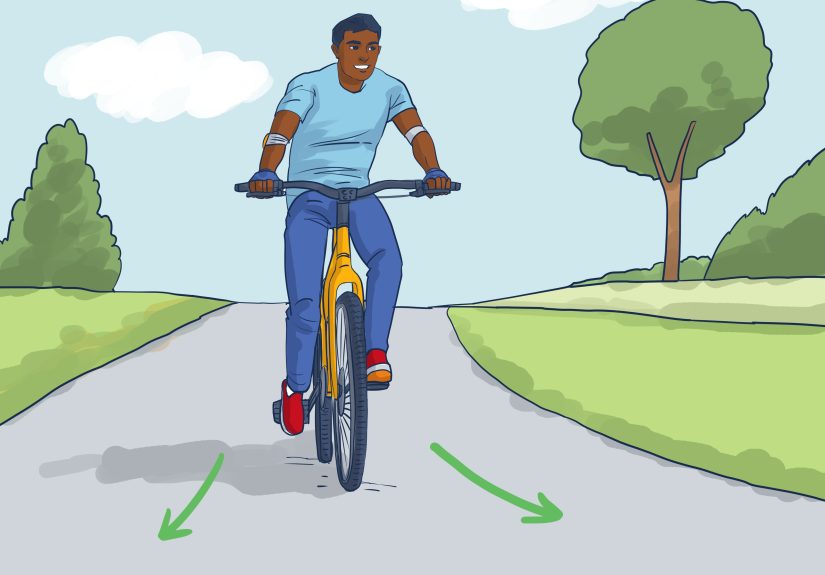
Once the rider can coast and stop, introduce steering. Start with wide, gentle turns. Tight turns can wait. At this stage, the rider should practice looking where they want to go and making small handlebar movements. Most beginner steering mistakes come from overcorrecting. The bike wobbles, the rider panics, the handlebars swing too far, and suddenly everyone is negotiating with gravity.
Set up simple markers using cones, water bottles, or chalk. Ask the rider to coast toward a marker, steer around it, and stop. Keep the speed low and the turns wide. Celebrate small improvements. Adults appreciate encouragement that sounds real, not like a children’s television host trapped in a parking lot.
Good Steering Habits
- Look ahead toward the path, not at the front tire
- Keep arms relaxed and elbows slightly bent
- Use small steering corrections
- Practice wide turns before tight turns
- Slow down before turning, not in the middle of the turn
Step 7: Reinstall the Pedals
When the rider can glide, steer, and brake with confidence, it is time to reinstall the pedals. Keep the seat low at first so they can still touch the ground. Later, when they are riding comfortably, the seat can be raised to a more efficient height.
Teach the “power pedal” position. One pedal should be slightly forward and up, around the two o’clock position. The rider places one foot on that pedal, pushes down firmly, and uses the other foot to help launch. This gives the bike enough movement to balance. A bicycle is easier to balance when it is moving than when it is creeping along like it forgot why it came into the room.
First Pedaling Drill
- Set one pedal high and slightly forward.
- Have the rider push down on that pedal.
- Ask them to bring the second foot onto the other pedal.
- Encourage gentle, steady pedaling.
- Have them stop after a short distance using the brakes.
Keep the first rides short. A successful 20-foot ride is better than a chaotic 200-foot adventure ending near a trash can.
Step 8: Practice Starting and Stopping
Starting and stopping are often harder than riding in a straight line. Many adult beginners can pedal once moving, but they struggle with the first push-off. Practice starts repeatedly until the movement becomes automatic.
Use short drills: start, pedal five to ten strokes, brake smoothly, put a foot down, reset. This builds muscle memory without overwhelming the rider. The instructor should avoid holding the seat or handlebars unless absolutely necessary. Holding the bike can make the rider depend on outside support. Instead, stand nearby and offer calm verbal cues.
Helpful Coaching Phrases
- “Look ahead.”
- “Relax your shoulders.”
- “Small steering corrections.”
- “Brake gently.”
- “Put your foot down when you stop.”
Step 9: Build Confidence With Repetition
Adult bike lessons should be short, positive, and repeatable. A 30- to 60-minute practice session is usually enough. Stop before the rider becomes exhausted, frustrated, or convinced the bicycle has a personal grudge. Learning improves when the brain has time to process new movements between sessions.
Plan several practice sessions instead of expecting instant success. Some adults learn in one afternoon. Others need a few days or weeks. Both are normal. The goal is not speed. The goal is safe, independent control.
Step 10: Introduce Real-World Riding Skills
After the rider can start, pedal, steer, and stop in a quiet space, begin teaching practical cycling skills. These include scanning ahead, riding in a straight line, signaling turns, checking behind, shifting gears, and understanding basic road rules. Do not rush into traffic. A new rider should first practice on quiet paths, empty lots, and low-stress neighborhood streets.
Skills to Practice Before Riding Near Traffic
- Riding in a straight line without drifting
- Looking over one shoulder while maintaining control
- Using hand signals for turns
- Stopping at signs and intersections
- Understanding right-of-way basics
- Riding predictably and visibly
New cyclists should also learn to avoid common hazards such as wet leaves, sand, potholes, sewer grates, parked car doors, and distracted drivers. The rider should wear visible clothing and use lights when conditions are dim. Confidence is wonderful, but visibility is what helps other people notice that confidence before they accidentally interrupt it.
Common Mistakes When Teaching an Adult to Ride a Bike
Starting With Pedaling Too Soon
Pedaling before balance usually creates fear and wobbling. Teach balance first, then steering, then braking, then pedaling.
Using a Bike That Is Too Big
If the rider cannot put both feet down during early lessons, the bike may feel intimidating. Lower the seat or use a smaller bike.
Practicing in a Busy Area
Noise, traffic, and people watching can increase pressure. Choose a quiet practice location where mistakes feel private and safe.
Over-Coaching
Too many instructions can overload the rider. Use short, simple cues. Let the body learn through repetition.
Expecting One Perfect Lesson
Learning to ride a bike as an adult is a process. Progress may come in bursts. One day the rider wobbles like a shopping cart with opinions; the next day everything clicks.
How Long Does It Take an Adult to Learn to Ride a Bike?
Many adults can learn the basics in a few hours when using the balance-first method. Others may need several practice sessions. The timeline depends on comfort level, physical coordination, fear of falling, bike fit, and lesson environment. The best approach is to measure progress by skills, not by the clock.
A good beginner milestone is not “ride five miles.” It is “start smoothly, ride straight, turn gently, brake safely, and stop without panic.” Once those skills are stable, distance and speed can grow naturally.
Real-World Experiences: What Teaching Adults to Ride a Bike Really Feels Like
Teaching an adult to ride a bike often begins with a confession. The learner may say, “I never learned as a kid,” “I tried once and fell,” or “Please do not laugh if I scream.” The best response is calm reassurance. Adults need to know they are not unusual. Plenty of intelligent, capable, successful people never learned to ride a bike. Nobody is born knowing how to balance on two wheels. Even professional cyclists began as tiny wobble machines.
One of the most common experiences is the moment when the rider first glides with both feet off the ground. It may last only two seconds, but it changes everything. Their face usually says, “Wait, did I just do that?” That tiny glide is the doorway to real riding. As an instructor, you should notice it, name it, and celebrate it. Say something specific like, “That was balance. You coasted without touching the ground.” Specific praise helps the learner understand what worked.
Another common experience is the fear spike that happens right after success. The rider glides, realizes they are balancing, and immediately puts both feet down like the pavement sent a legal notice. That is normal. Success can feel surprising. Let them repeat the same drill until the surprise fades. Confidence is built through familiar repetition, not dramatic speeches.
Adult learners also tend to apologize too much. They may apologize for stopping, wobbling, laughing nervously, or taking longer than expected. A good teacher removes that pressure quickly. Say, “No apologies. This is exactly how learning looks.” That sentence can relax the entire lesson. The learner does not need to perform; they need to practice.
There is also a beautiful shift when the rider stops fighting the bike. At first, many adults grip the handlebars tightly, lock their elbows, and steer like they are trying to negotiate a business merger. Then, after enough gliding, their shoulders drop, their arms soften, and the bike starts moving more smoothly. This is when you can gently remind them that balance is not about being stiff. It is about making small adjustments.
Some adults learn best with humor. A light joke can break tension, as long as the joke is never at the learner’s expense. You can say, “The bike is not the boss of you,” or “That turn was dramatic, but still legal.” Humor works when it makes the rider feel safe, not silly.
The final memorable moment is the first independent ride. It may be across a parking lot, down a quiet path, or around a big lazy circle. The rider pedals, turns, brakes, and stops. Nobody is holding the bike. Nobody is rescuing the handlebars. The adult who arrived saying “I can’t ride” suddenly has proof that they can. That moment is bigger than cycling. It is a reminder that learning does not expire with age.
Conclusion
Teaching an adult to ride a bike is a step-by-step process built on safety, trust, and balance. Start with the right location, a properly fitted bike, and a helmet. Remove the pedals so the rider can learn to glide without fear. Add braking, steering, and pedaling only when the learner is ready. Keep lessons short, encouraging, and practical.
The best instructors do not rush, shout, or turn the lesson into a heroic sports documentary. They create calm conditions where the rider can succeed one small skill at a time. With patience and the right method, an adult beginner can move from nervous first steps to smooth, confident riding. And once they do, the bicycle becomes more than a machine. It becomes freedom with handlebars.