Table of Contents >> Show >> Hide
- Why Your “About Me” Page Matters More Than You Think
- What a Perfect “About Me” Page Should Include
- How to Write a Perfect “About Me” Page Step by Step
- “About Me” Page Examples You Can Learn From
- A Simple About Me Page Template
- Common Mistakes to Avoid
- How to Make Your About Me Page Better for SEO
- Final Thoughts
- Real-World Experiences With Writing an “About Me” Page
- SEO Tags
An “About Me” page is one of the most visited pages on a personal website, portfolio, blog, or freelance business site. That makes perfect sense. After people see your homepage, read a blog post, or stumble across your work from search, they want to answer one very human question: Who are you, and should I trust you?
That is where many people freeze. Writing an About Me page can feel like being asked to give a TED Talk about yourself while also pretending you are totally casual about it. Too stiff, and you sound like a corporate robot in a blazer. Too vague, and you sound like a mysterious fog bank with Wi-Fi. The sweet spot is clarity, personality, and usefulness.
A perfect About Me page does not brag nonstop, list your life story from second grade, or throw random adjectives around like confetti. It gives visitors a clear picture of who you are, what you do, who you help, why your work matters, and what they should do next. It also sounds like a real person wrote it, which is still a wildly underrated feature on the internet.
In this guide, you will learn how to write a strong, search-friendly, reader-friendly About Me page that builds credibility and connection. You will also get examples, a simple structure you can copy, and practical tips for turning an awkward self-introduction into a page that actually works.
Why Your “About Me” Page Matters More Than You Think
An About Me page is not filler. It is a trust page. People use it to figure out whether you are credible, relatable, experienced, and relevant to their needs. For freelancers, creators, consultants, coaches, job seekers, and small business owners, this page can influence whether a visitor subscribes, books, buys, or bounces.
A strong About Me page helps you:
- Introduce your personal brand in a way that feels clear and memorable
- Explain your expertise without sounding like you swallowed a résumé whole
- Show your values, voice, and personality
- Connect your story to the reader’s needs
- Guide visitors toward a specific next step
It also supports SEO when it is written with helpful, people-first content in mind. That means using natural language, descriptive headings, and terms your audience would actually search for, such as “freelance writer bio,” “about me page examples,” or “portfolio about page.” In other words, write for humans first, and let search engines appreciate your good manners afterward.
What a Perfect “About Me” Page Should Include
The best About Me pages usually include the same core ingredients. The exact tone may change depending on your industry, but the structure is surprisingly consistent.
1. A Clear Opening That Says Who You Are
Your first few lines should quickly explain who you are and what you do. Do not make visitors solve a riddle. “Helping B2B startups turn confusing ideas into clear website copy” is stronger than “Storyteller. Dreamer. Coffee enthusiast.” Plenty of people enjoy coffee. That does not make them hireable.
2. A Reader-Focused Value Statement
This is where you explain who you help and how. Visitors are not just looking for your biography. They want to know whether your experience connects to their problem, goal, or curiosity.
3. A Short, Relevant Story
Your origin story matters, but only the relevant parts. Share how you got into your field, what shaped your perspective, or what problem led you here. A good About Me page uses storytelling to create connection, not to recreate every season of your life.
4. Proof That You Know Your Stuff
Include selected wins, credentials, years of experience, client outcomes, featured work, media mentions, certifications, or testimonials. You are not showing off. You are reducing doubt.
5. Personality
This is the difference between “competent” and “memorable.” Your voice, humor, values, quirks, and point of view help readers feel like there is a real person behind the page. Authenticity beats generic professionalism every time.
6. Strong Visuals
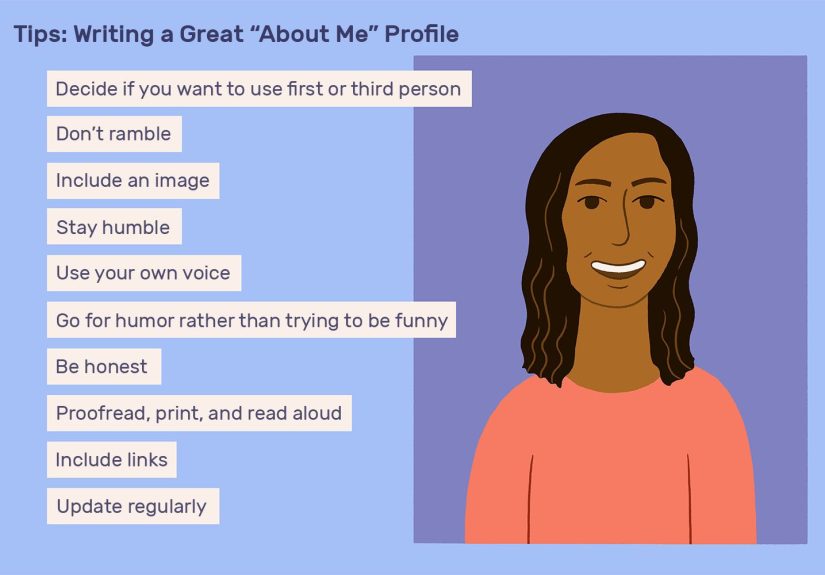
A good headshot, behind-the-scenes photo, workspace image, or brand-consistent design can make your page feel more trustworthy and more human. People connect with people, not floating paragraphs in the void.
7. A Call to Action
What should the reader do after they finish your page? Contact you? View your portfolio? Book a discovery call? Read your blog? Join your email list? A great About Me page does not just wave politely from across the room. It opens the door.
How to Write a Perfect “About Me” Page Step by Step
Step 1: Know Exactly Who the Page Is For
Before writing, define your audience. Are you speaking to potential clients, employers, collaborators, readers, or customers? Your tone, examples, and proof should match that audience.
For example, a designer seeking freelance clients might emphasize results, process, and testimonials. A job seeker might focus on achievements, skills, and career direction. A blogger might highlight personality, niche expertise, and community.
Step 2: Start With a Sharp Intro
Lead with one or two lines that answer the basics fast. Name, role, specialty, and value. Think of it as your verbal handshake.
Example:
“Hi, I’m Maya, a UX writer who helps SaaS companies turn confusing interfaces into clear, helpful experiences that users actually enjoy.”
That works because it is specific, useful, and easy to understand. No smoke machines required.
Step 3: Tell a Story With a Purpose
Now add context. Explain how you got here, what you care about, and why your work matters. Keep it concise, but not robotic. A story helps people remember you.
Example:
“I started in customer support, where I saw the same confused questions pop up every day. That pushed me toward UX writing, where I could solve the problem before users ever had to send a frustrated email.”
This kind of detail gives your page heart. It also makes your expertise feel earned rather than claimed.
Step 4: Add Specific Proof
This section should answer the question, “Why should I believe you?” Include relevant achievements, not every gold star you have collected since middle school.
- Years of experience
- Types of clients or employers
- Project results
- Publications or speaking engagements
- Professional certifications
- Testimonials or case-study highlights
Example:
“Over the last six years, I’ve written website copy, onboarding flows, and product messaging for startups, agencies, and growing tech brands. My work has helped clients improve sign-up conversions, reduce support friction, and clarify their positioning.”
Step 5: Let Your Personality Show
People do business with people they like and remember. Add details that make you sound human, but keep them relevant to your brand. A little warmth goes a long way.
Example:
“I like plain English, organized systems, and websites that do not make users feel like they need a map and a flashlight.”
That line reveals tone, expertise, and a point of view. Much better than “Results-driven professional with a passion for excellence,” which could describe almost anyone and therefore describes no one.
Step 6: Make It Easy to Scan
Online readers scan before they commit. Use short paragraphs, clear headings, bullet points, and thoughtful spacing. Your page should feel inviting, not like a dense wall of autobiographical cement.
Good web writing also means front-loading important information. Put the strongest message near the top. Do not hide your value behind three paragraphs of throat-clearing.
Step 7: End With a Clear Next Step
Finish with a call to action that matches your goal.
Examples:
- “Want help with your website copy? Let’s talk.”
- “Browse my portfolio to see recent projects.”
- “Hiring for a content role? I’d love to connect.”
- “Subscribe for weekly tips on personal branding and career growth.”
“About Me” Page Examples You Can Learn From
Example 1: Freelancer
Opening: “I’m Jordan, a freelance email copywriter helping e-commerce brands turn subscribers into loyal customers.”
Why it works: It immediately states the role, audience, and value. No fluff. No dramatic fog. Just useful clarity.
Example 2: Coach or Consultant
Opening: “I help first-time managers build confident teams, lead better meetings, and stop feeling like they’re improvising every Monday morning.”
Why it works: It names the audience and the pain point in simple language. It also sounds human, which matters.
Example 3: Portfolio Website for a Job Seeker
Opening: “I’m Elena, a data analyst who turns messy information into clear decisions, dashboards, and action plans.”
Why it works: It highlights a concrete professional benefit instead of just listing software skills like a lonely spreadsheet.
Example 4: Blogger or Creator
Opening: “Welcome I’m Chris, and I write practical guides for people who want their homes to feel better without spending their entire weekend at the hardware store.”
Why it works: It sets the tone, defines the audience, and hints at the content promise all at once.
A Simple About Me Page Template
If you want a structure you can plug your own details into, use this:
Paragraph 1: Who you are, what you do, and who you help.
Paragraph 2: Your story how you got here and why you care.
Paragraph 3: Your proof experience, results, credentials, or featured work.
Paragraph 4: Your personality, values, or working style.
Paragraph 5: A clear call to action.
Mini template:
“Hi, I’m [name], a [role] who helps [audience] do [result]. I got into this work because [short origin story]. Since then, I’ve [proof or achievement]. I’m known for [style, approach, or values]. If you’re looking for [service/opportunity], [CTA].”
Common Mistakes to Avoid
Making It All About You
Yes, the page is called “About Me,” but the reader still wants to know what your story means for them. Connect your background to their needs.
Writing Too Much, Too Soon
Long pages can work, but they need structure. If your opening section takes forever to reveal what you actually do, visitors may leave before they get there.
Sounding Generic
Phrases like “hardworking professional,” “passionate individual,” and “dedicated team player” are not evil, but they are tired. Be specific instead.
Forgetting Proof
Warmth matters. So does evidence. A page with personality but no credibility can feel charming and unconvincing at the same time.
Skipping the CTA
If readers finish your page and have no idea what to do next, you are leaving value on the table.
How to Make Your About Me Page Better for SEO
If this page will be published on the web, make it useful for both readers and search engines.
- Use your main keyword naturally in the title, heading, intro, and one or two subheadings
- Include related phrases such as “About Me page examples,” “personal bio,” “professional bio,” and “portfolio about page” where relevant
- Write descriptive headings that match search intent
- Keep paragraphs readable and easy to scan
- Use people-first content that answers real questions clearly
- Add internal links later to your portfolio, blog, services, or contact page
Good SEO is not about stuffing the same phrase into every corner until the page starts sweating. It is about clarity, relevance, and usefulness.
Final Thoughts
A perfect About Me page is not perfect because it sounds fancy. It is perfect because it feels clear, useful, trustworthy, and unmistakably human. It tells visitors who you are, what you do, why you do it, and how that helps them. It balances story with strategy, personality with proof, and confidence with readability.
If your current page sounds like a résumé wearing a party hat, do not panic. Start with a clear introduction, tell a relevant story, add real proof, show some personality, and end with a simple next step. That alone will put you ahead of a surprising amount of the internet.
Real-World Experiences With Writing an “About Me” Page
One of the most common experiences people have when writing an About Me page is realizing that talking about yourself is oddly harder than explaining quantum physics, taxes, or why your dog only barks during video calls. Many smart, accomplished people sit down to write this page and immediately become either too formal or too vague. They start with confidence and end up with something like, “I am a results-driven creative professional with a passion for innovation,” which sounds polished but reveals almost nothing. That experience is normal.
In real-world website rewrites, the biggest shift usually happens when the writer stops asking, “How do I describe myself?” and starts asking, “What does my reader need to understand in the first 15 seconds?” That change alone transforms the page. Suddenly, instead of listing traits, the writer leads with a useful message. Instead of “I’ve always loved helping people,” the page becomes “I help nonprofit teams write grant proposals that are clearer, stronger, and easier to fund.” The second version is not colder. It is kinder to the reader.
Another frequent experience is discovering that the most effective About Me pages are often shorter and more focused than expected. People assume they need to include every degree, every job title, every pivot, and every inspiring childhood anecdote. But once they edit the page down to the pieces that actually support their current goals, the writing gets stronger. Readers do not need your entire autobiography. They need the right chapter.
Many professionals also find that adding one honest, specific detail makes the page feel dramatically more engaging. A consultant might mention that she built her first systems while trying to rescue a chaotic family business. A designer might explain that he got obsessed with accessibility after watching his father struggle with confusing online forms. A food blogger might admit that his early recipes were so bad that even the smoke alarm lost faith. These details create memory, trust, and voice.
There is also a practical confidence boost that comes from adding proof. People often feel awkward about highlighting achievements, but once they frame those details as useful context for the reader, it becomes easier. A testimonial, a measurable result, or a line about industries served can turn an About Me page from “pleasant” into persuasive. Readers are not judging you for being credible. They are looking for a reason to feel comfortable moving forward.
Finally, one of the best experiences people report after rewriting an About Me page is that other parts of their brand get easier too. Their homepage copy improves. Their LinkedIn summary gets clearer. Their email introductions become simpler. Their pitch stops rambling. That is because a strong About Me page forces you to define your value, voice, and audience in one place. Once you know those things, the rest of your messaging stops wandering around like it forgot why it opened the tab.