Table of Contents >> Show >> Hide
- We’ve Already Built Big in Space (And It Worked)
- The Fairing Problem: Space Has a Carry-On Policy
- ISAM: The Toolkit That Makes Space Megastructures Possible
- What Are These “Biggest Machines,” Exactly?
- 1) Giant Space Telescopes That Don’t Have to Fold Like Origami
- 2) Space-Based Solar Power: The Kilometer-Scale “Power Plant in the Sky”
- 3) Mega-Antennas and Space Radar You Can’t Launch in One Piece
- 4) Propellant Depots and Orbital “Gas Stations”
- 5) Commercial Space Stations and Habitats That Grow Over Time
- How We’ll Actually Build These Monsters
- The Hard Parts Nobody Can Meme Away
- A Plausible Timeline: From “Demo” to “Dockyard”
- Conclusion: The Biggest Machines Won’t LaunchThey’ll Grow
- Experience: What It “Feels Like” When Humanity Starts Building Big in Orbit (500+ Words)
Every generation has its “wow, we actually built that” moment. The pyramids. The Panama Canal. The internet (yes, we built itthen immediately used it to argue about pineapple on pizza).
Our next “wow” won’t sit on Earth at all. It’ll orbit above us, quietly daring gravity to do something about it.
Here’s the punchline: the largest machines humans ever buildtruly enormous telescopes, kilometer-scale solar power stations, giant antennas, propellant depots, even early “shipyards”
won’t be launched as single pieces. They’ll be assembled, manufactured, and upgraded in space.
Not because it sounds cool (it does), but because physics, economics, and rocket fairings have all teamed up like an unbeatable trio.
We’ve Already Built Big in Space (And It Worked)
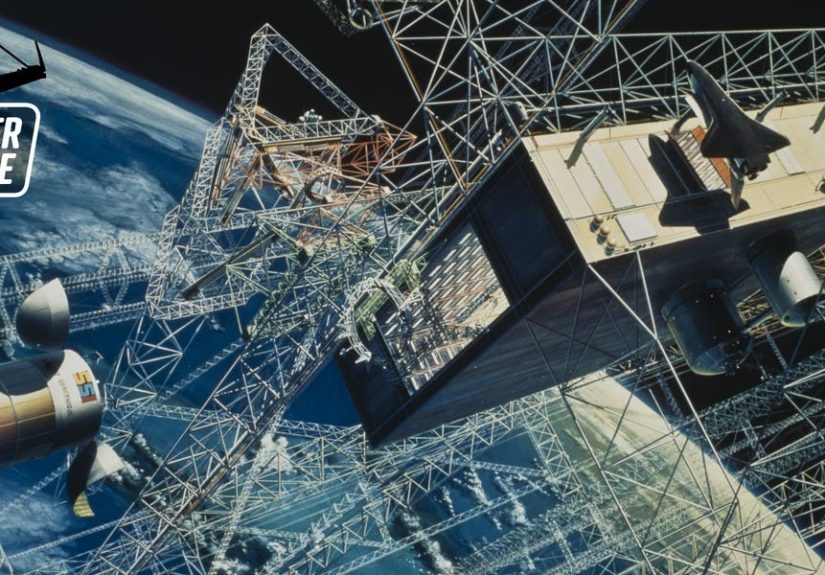
Before we talk about the future, let’s give credit where it’s due: we’ve already assembled the largest human-made object in orbitthe International Space Station.
It was built piece by piece, docked and bolted together over many missions, with astronauts performing spacewalks that look like slow-motion construction work while wearing a life-support backpack.
The ISS is proof of concept for orbital construction. Not a perfect proofspace is still brutally expensive and logistically annoyingbut it’s enough to show that “build it up there” isn’t science fiction.
It’s a strategy with a track record.
The Fairing Problem: Space Has a Carry-On Policy
Rockets have a hidden tyrant: the payload fairing. It’s basically the universe’s strictest carry-on luggage rule.
If your spacecraft doesn’t fit inside the rocket’s protective nose cone, it’s not goingno matter how brilliant your design is.
That’s why today’s biggest space systems often rely on folding, origami-style deployment, and complicated “please don’t jam” mechanisms.
The James Webb Space Telescope is the poster child for this: it had to fold up tightly to survive launch and then deploy with a long sequence of steps in space.
Deployment works, but it’s nerve-wrackinglike assembling a chandelier while parachuting.
The solution is obvious once you say it out loud: stop trying to fly a fully built machine through a tiny door.
Send up modules. Send up raw materials. Send up robots. Then assemble the final structure in orbit, where it can be as large as it needs to be.
ISAM: The Toolkit That Makes Space Megastructures Possible
The umbrella term you’ll hear more and more is in-space servicing, assembly, and manufacturingoften shortened to ISAM.
Think of it as the industrial revolution… but with vacuum, radiation, and absolutely no hardware store down the street.
ISAM includes four big capabilities:
- Servicing: refueling, repairing, upgrading satellites and platforms
- Assembly: building large systems from launched modules
- Manufacturing: producing parts in orbit (including 3D printing and composite fabrication)
- Autonomy + robotics: the hands, eyes, and brains that do the work when humans can’t (or shouldn’t)
The trend is clear: even when specific missions change, the broader direction doesn’t.
The space economy wants systems that are modular, serviceable, and scalablebecause “launch a new one every time something breaks” is not a mature business model.
What Are These “Biggest Machines,” Exactly?
When people say “machines,” they picture gears and engines. In space, the biggest machines will often look like delicate architecture:
thin trusses, huge reflective surfaces, sprawling solar arrays, and distributed systems spread across hundreds or thousands of meters.
They’re machines in the sense that they do workcollecting light, generating power, moving propellant, transmitting data, and supporting humans.
Let’s break down the first wave of orbital megaprojects that will push us into true large-scale space construction.
1) Giant Space Telescopes That Don’t Have to Fold Like Origami
From “deploy once” to “build, align, upgrade”
Astronomy loves aperture. Bigger mirrors capture more light, see dimmer objects, and resolve finer detail.
The problem is that big mirrors don’t like rocket fairings. So far, we’ve either accepted smaller aperturesor built insanely complex deployment systems.
In-space assembly changes the game. Instead of a single fragile deployment event, you can:
- Launch mirror segments and structural components separately
- Assemble and align them robotically in orbit
- Design for serviceability from day one (swap instruments, replace components)
- Scale up to apertures that would be impractical to deploy as one piece
This isn’t just theory. NASA has studied robotically assembled telescope concepts and the tradeoffs involvedcost, risk, alignment precision, and operational complexity.
The long-term payoff is huge: a future flagship observatory could be built like a space-era cathedralincrementally, deliberately, and with the ability to improve over time.
2) Space-Based Solar Power: The Kilometer-Scale “Power Plant in the Sky”
Why it’s so big it practically demands orbital construction
Space-based solar power (SBSP) has one irresistible advantage: sunlight in orbit is abundant and steady compared to the day-night weather roulette on the ground.
The tradeoff is brutal: to generate meaningful power, you need massive collecting areathe kind that makes even a football field look like a sticky note.
That’s why SBSP is a poster child for building in space. Launching a single monolithic power station is unrealistic.
But launching modular panels and assembling them into a lightweight, scalable array? That’s a plan with a fighting chance.
Recent demonstrations have focused on the building blocks: deployable structures, lightweight materials, and power transmission experiments.
The near-term goal is not “power the planet tomorrow,” but “prove the core physics and engineering in the real environment.”
Once those pieces are validated, scaling becomes an industrial problemstill hard, but no longer mystical.
3) Mega-Antennas and Space Radar You Can’t Launch in One Piece
Whether you’re communicating with deep-space probes, tracking objects in Earth orbit, or building next-generation Earth observation,
bigger antennas matter. High gain and high bandwidth often come down to geometry: bigger dish, better performance.
But a truly large antenna is awkward cargo. So the future looks like:
- Truss structures assembled robotically
- Thin, deployable or manufactured reflectors
- On-orbit 3D printing of structural elements and antenna components
- Distributed “phased arrays” built from many coordinated modules
This is also where ISAM delivers immediate value: if you can assemble large structures, you can also repair and upgrade them.
That turns satellites from disposable gadgets into maintainable infrastructure.
4) Propellant Depots and Orbital “Gas Stations”
Want to make space operations cheaper? Stop treating every mission like a one-time road trip with no refueling stops.
An orbital propellant depotespecially for cryogenic fuelsis one of the most practical megastructure ideas because it improves everything downstream:
reusable tugs, deep-space missions, lunar logistics, and flexible architectures that don’t require a single giant launch.
Depots don’t need to be flashy. They need to be reliable: storage tanks, transfer systems, thermal control, docking interfaces, and careful operations.
But the moment you can store and transfer propellant at scale, you’ve unlocked something bigger than a structure:
you’ve unlocked a space transportation network.
5) Commercial Space Stations and Habitats That Grow Over Time
Low Earth orbit is moving toward commercially operated stations designed for research, manufacturing, tourism, and national space agency partnerships.
Even if early stations aren’t “mega” by sci-fi standards, the pattern matters: modular growth, upgraded capabilities, and bigger footprints over time.
Some concepts lean on expandable or inflatable modules to create large internal volume from a compact launch package.
Combine that with orbital assembly and servicing, and you get stations that aren’t just destinationsthey’re platforms that evolve.
How We’ll Actually Build These Monsters
“Robots will build it” is true in the same way “you’ll just cook dinner” is truetechnically accurate, but missing the chaos of the middle.
Large-scale construction in space depends on a handful of practical engineering principles.
Design for assembly, not just launch
Spacecraft have historically been designed like glass ships in bottles: crammed into a fairing, deployed once, and never touched again.
Megastructures flip this. Parts must be easy to handle, align, connect, and verify. That means standardized interfaces, repeatable processes,
and built-in metrology so robots can measure what they’re building.
Use manufacturing where it actually helps
In-space manufacturing isn’t about printing entire starships tomorrow. It’s about printing and forming the parts that are most painful to launch:
long beams, trusses, booms, and structural elements that are lightweight but voluminous.
Manufacturing in orbit can turn a “launch volume” problem into a “raw material” problemwhich is often easier to scale.
Make inspection and repair routine
On Earth, big machines last because we maintain them. Space systems will need the same mindset.
Inspection cameras, robotic arms, replaceable components, and upgrade paths turn a fragile one-shot mission into infrastructure.
The Hubble servicing era proved how transformative this can be: modularity plus access equals longevity.
The Hard Parts Nobody Can Meme Away
Space megastructures are inevitable if we solve a few stubborn problems:
Precision
Big telescopes and antennas require alignment that’s measured in tiny fractions of a millimeter.
“Close enough” is a phrase that belongs in carpentry, not diffraction-limited optics.
Robotics, sensing, and control have to be extremely goodand provably repeatable.
Thermal and structural dynamics
In orbit, sunlight and shadow swing temperatures dramatically. Large, lightweight structures flex and vibrate.
Engineering the structure is only half the battle; modeling and controlling how it behaves over time is the other half.
Debris and resilience
The more infrastructure we place in orbit, the more we must manage collision risk.
Future big platforms will need smart operations, fault tolerance, and repair strategiesbecause even a tiny impact can mean a big headache.
Economics
The real reason megastructures will happen is that they eventually become cheaper than the alternative.
Once launch costs, robotics, and in-orbit operations hit the right threshold, “build in space” stops being exotic and starts being obvious.
That’s when scale kicks in.
A Plausible Timeline: From “Demo” to “Dockyard”
The pathway to humanity’s biggest machines in space isn’t one giant leapit’s a ladder:
- Robotic servicing + inspection becomes routine for high-value satellites
- Modular assembly builds larger platforms than any single launch could deliver
- In-space manufacturing produces long structural elements and specialized components
- Persistent platforms (stations, depots, tugs) enable repeat operations
- Megastructures become the logical result: telescopes, power arrays, massive antennas, and beyond
In other words: first you learn to change a tire in orbit. Then you build a garage. Then, one day, you’re running a full-blown space machine shop and wondering
why you ever tried to cram everything into a single rocket.
Conclusion: The Biggest Machines Won’t LaunchThey’ll Grow
The future of space engineering looks less like a single heroic launch and more like a construction schedule.
Modular parts, robotic assembly, in-space manufacturing, and planned servicing turn space hardware into something we can scale and improve.
And when you can scale, you can build the truly enormous: telescopes that rewrite astronomy, power stations that redefine energy, antennas that change communications,
and platforms that make space travel feel less like a stunt and more like transportation.
Humanity’s biggest machines won’t be built for space. They’ll be built in spacebecause that’s where they finally fit.
Experience: What It “Feels Like” When Humanity Starts Building Big in Orbit (500+ Words)
If you want a preview of the emotional arc of building giant machines in space, try this experiment:
assemble an IKEA wardrobe in your living roomthen imagine you’re doing it in a winter coat, wearing ski gloves, with a helmet on,
while your tools float away if you blink too hard. Congratulations, you now understand why orbital construction will be mostly robotic.
The first experience lesson is that space punishes improvisation. On Earth, if a bolt doesn’t fit, you can grab a different one.
In orbit, “grab a different one” translates to “wait for the next cargo flight,” which is not a vibe.
That’s why the best space construction feels almost boring on paper: standardized connectors, repeatable procedures, obsessive labeling,
and designs that assume something will go wrong and still keep working.
The second lesson is that deployment anxiety is real. Anyone who watched the James Webb Space Telescope’s deployment unfold knows the feeling:
every step is a cliffhanger. Folded structures save launch volume, but they introduce single-point failure risks.
In-space assembly changes the psychology. Instead of one long “do not mess this up” sequence, you get many smaller operations:
attach this truss, align that panel, test this actuator, verify that sensor. It’s still hard, but it’s hard in a way that allows checkpoints
and checkpoints are how engineers sleep at night.
Third: alignment becomes a lifestyle. Big space machinesespecially telescopes and antennasneed precision that feels unfair.
You’re not just building a large structure; you’re building a large structure that must behave like a single, coherent instrument.
That means metrology, calibration targets, sensors, and software that constantly asks, “Is reality still where we left it?”
In orbit, sunlight heats one side, shadow cools the other, and suddenly your beautiful structure is doing tiny thermal yoga poses.
A future space construction team will talk about microns the way carpenters talk about inches.
Fourth: the “construction crew” will be a hybrid of humans and machines. Astronauts are incredible at dexterous, creative work.
But they are also expensive, time-limited, and fragile compared to a robot that can operate for months without needing snacks or sleep.
The likely workflow is humans supervising, planning, and handling the rare tasks that demand judgmentwhile robots do the repetitive assembly,
inspection, and maintenance. Think: foreperson and power tools, except the power tools have cameras and a PhD-level attitude about error bars.
Fifth: the win isn’t just building itit’s being able to fix it. Hubble’s servicing story is the best argument for designing space systems like infrastructure.
When you can swap components and upgrade instruments, the platform becomes more valuable over time instead of less.
That mindset will spread. A space station that can be repaired, a depot that can be upgraded, or a solar array that can be expanded
turns “space hardware” into “space assets.” And assets attract investment.
Finally, the most surprising experience is how quickly “impossible” becomes “normal.”
The ISS went from audacious to routine. Satellite docking went from unthinkable to increasingly common.
The first truly huge in-space-assembled telescope or power array will feel miraculousand then, a decade later,
people will complain online about the next one being delayed. (Humanity is consistent like that.)
When construction in space becomes ordinary, scale follows. And scale is how humanity builds its biggest machinesone module, one beam,
one carefully aligned panel at a timeuntil the sky contains structures so large they make a rocket fairing look like a coin slot.