Table of Contents >> Show >> Hide
- What Makes a Balloon Animal “Realistic”?
- The Tools Behind Realistic Balloon Animals
- How I Plan a Realistic Balloon Animal
- The Main Techniques Used in Realistic Balloon Sculpture
- Why Realistic Balloon Animals Are So Hard
- Popular Realistic Balloon Animals to Create
- Balloon Animals as Art, Entertainment, and Storytelling
- Safety and Responsibility in Balloon Art
- Experience: What Creating Realistic Balloon Animals Has Taught Me
- Conclusion: The Serious Joy of Realistic Balloon Animals
Most people hear “balloon animal” and immediately picture a squeaky dachshund made at a birthday party by someone wearing suspenders and a suspiciously cheerful hat. I respect the classic balloon dog. It is the golden retriever of party crafts: friendly, dependable, and always slightly lopsided. But realistic balloon animals live in a different corner of the inflatable universe. They are part sculpture, part engineering experiment, part comedy routine, and part cardio workout for your fingers.
Creating realistic balloon animals means trying to make a fish look like it has gills, a bird look like it might flap away, or a frog look judgmental enough to sit on a lily pad and question your life choices. The medium is simple: latex balloons, air, twists, pressure, color, and patience. The result, when everything goes right, is a creature that makes people lean closer and say, “Wait… that’s made entirely from balloons?” That sentence is basically applause with eyebrows.
Balloon art has grown far beyond carnival souvenirs. Today, balloon artists create wearable costumes, giant installations, fantasy creatures, realistic insects, ocean animals, birds, reptiles, and sculptural pieces that belong in galleries as much as party halls. The best realistic balloon animals are not just cute; they reveal how much design, anatomy, balance, and problem-solving can fit inside something that may pop if you look at it with bad intentions.
What Makes a Balloon Animal “Realistic”?
A realistic balloon animal is not simply a more complicated balloon animal. It is a sculpture that borrows visual clues from the real creature: body proportions, posture, color pattern, texture, movement, and expression. A standard balloon dog tells you, “I am a dog.” A realistic balloon dog tries to tell you, “I am a terrier who has opinions about the mail carrier.”
Realism in balloon sculpture depends on controlled exaggeration. Balloons are naturally round, glossy, and playful, so the artist has to use those qualities instead of fighting them. A penguin’s smooth body works beautifully because balloons already have that sleek, rounded shape. A shrimp can be built from repeating segments. A spider benefits from long, narrow balloons that create legs with instant drama. A porcupine, however, is where the balloon artist begins negotiating with physics like a tired lawyer.
The Difference Between Cute and Convincing
Cute balloon animals rely on recognition. Give something ears, eyes, a tail, and enough optimism, and the human brain will happily call it a puppy. Convincing balloon animals require observation. Where does the neck connect? How long is the snout? Are the legs tucked under the body or stretched forward? Does the animal have a hunched back, a tapered abdomen, or a round belly? These tiny decisions turn a balloon object into a creature with character.
For example, a realistic chameleon needs more than a green body. It needs a curled tail, angular head, small feet, raised eyes, and a body that looks ready to grip a branch. A realistic owl needs a broad face, layered wings, a compact posture, and eyes that say, “I know what you did at 2:13 a.m.” Details matter.
The Tools Behind Realistic Balloon Animals
The core tools are simple, but the choices are surprisingly important. Most balloon artists use long twisting balloons in several sizes. The popular 260-style balloon is commonly used because it is long, flexible, and versatile. Smaller balloons help with thin legs, antennae, eyes, claws, and layered details. Larger balloons create bodies, heads, shells, wings, and dramatic shapes.
A good hand pump is essential. Some performers inflate by mouth, but for complex work, a pump gives better control and keeps the artist from turning purple during a six-balloon lobster. Scissors, a sizing template, storage bags, and a clean work surface also help. Many realistic balloon artists prefer to avoid markers, tape, glue, and extra decorations because the challenge is to build everything from balloons alone. That limitation is frustrating, elegant, and occasionally responsible for dramatic staring into the distance.
Why Balloon Size Matters
Balloon size changes the entire sculpture. A thin balloon can become whiskers, toes, or delicate insect legs. A medium balloon can form limbs, tails, or body segments. A larger balloon can create a rounded torso, shell, or head. Using only one size is like trying to paint a portrait with a mop. It can be done, but the nose is going to suffer.
Realistic work often combines multiple balloon sizes to mimic anatomy. A crab might use a larger center body, medium claws, and thin legs. A bird might need a compact body, layered wing feathers, a narrow beak, and tiny feet. A fish may require fins that look thin and flowing, even though they are made from trapped air inside rubber. The goal is not perfect realism; it is believable illusion.
How I Plan a Realistic Balloon Animal
Before twisting anything, I study the animal. I look at photos, sketches, and sometimes videos to understand how the creature holds itself. A standing horse has a different energy from a resting cat. A swimming turtle has a different silhouette from a walking turtle. A praying mantis is basically a tiny alien with elbows, and ignoring those elbows would be artistic negligence.
I break the animal into shapes. The head might be an oval, wedge, or dome. The body might be a tube, sphere, teardrop, or segmented chain. Legs might be straight, jointed, tapered, or curved. Once the animal becomes a set of shapes, the sculpture becomes possible. Balloon art is not magic, although the number of accidental pops may suggest dark forces are involved.
Step 1: Choose the Animal’s Strongest Feature
Every animal has a visual signature. A giraffe has its long neck. A toucan has its oversized beak. A seahorse has its curled tail. A frog has its wide mouth and folded legs. When creating realistic balloon animals, I start with the feature people will recognize first. If that part works, the audience forgives small imperfections elsewhere. If the toucan’s beak fails, nobody cares how excellent its ankles are.
Step 2: Build the Skeleton
Realistic balloon sculpture needs structure. The first balloons often act like a skeleton, setting the length of the body, position of the head, and angle of the legs. If this foundation is weak, the final animal may slump, rotate, or slowly transform into an abstract emotional problem.
Twists must be firm but not over-tight. A balloon is under pressure, and each twist redistributes that pressure. Leave too much air, and the balloon becomes stiff and likely to burst. Leave too little, and the sculpture looks tired. The secret is leaving enough uninflated tail at the end of the balloon so air has room to move as the sculpture grows.
Step 3: Add Personality Through Posture
Posture is where realism becomes storytelling. A standing meerkat should be upright and alert. A curled snake should feel tense and balanced. A resting fox should look compact and calm. A balloon animal can look alive without moving if the posture feels natural.
This is why realistic balloon animals often take longer than party designs. A basic sword or dog can be made quickly. A realistic owl may need repeated adjustments so the face, wings, feet, and body all face the right direction. Balloons do not politely stay where you want them. They twist back, squeak, rotate, and occasionally behave like inflatable toddlers.
The Main Techniques Used in Realistic Balloon Sculpture
Most realistic balloon animals are built from basic twisting techniques used in advanced ways. The basic twist creates sections. The lock twist holds groups together. The pinch twist makes ears, joints, toes, eyes, and anchor points. Loop twists can become wings, petals, fins, or rounded ears. Weaving balloons together can create volume, texture, and strength.
Complex designs often use layers. A fish may have a body underneath, fins attached to the sides, and smaller balloons woven across the top for stripes or scales. A bird may have one layer for the torso, another for wings, and another for feather-like details. A realistic insect may use dozens of small sections to suggest armor plates, joints, and antennae.
Color Is More Than Decoration
Color helps sell the illusion. A red-and-white clownfish, a green tree frog, a black-and-yellow bee, or a blue tang becomes recognizable almost instantly. But color can also create shadow and texture. A darker balloon under a lighter balloon can suggest depth. A small black balloon can create an eye without using marker. A pale balloon layered over a darker body can create a belly, throat, or wing patch.
The challenge is that balloon colors are limited compared with paint. You may not find the exact dusty gray of a harbor seal or the perfect rusty orange of a fox. So you choose the closest color family and rely on shape to do the rest. In balloon art, anatomy often has to carry what the color palette cannot.
Why Realistic Balloon Animals Are So Hard
The hardest part is that balloons are both material and structure. In clay, wire, or foam, you can add support, carve details, or patch mistakes. With balloons, everything depends on air pressure and tension. One wrong twist can change the entire shape. One overinflated section can pop. One underinflated limb can droop like it just received disappointing news.
Time is another challenge. Balloons slowly lose air and shine. Latex oxidizes, which creates a matte or cloudy surface. For some animals, that softening can look natural, especially for fur or skin. For others, it changes the crispness of the design. A realistic balloon animal is temporary by nature, which gives it charm. It is art with an expiration date, like a sandwich with ambition.
The Pop Factor
Popping is part of the job. A balloon may burst because it was overinflated, twisted too aggressively, exposed to heat, rubbed against a rough surface, or simply woke up and chose violence. Experienced balloon artists learn to stay calm. The first few pops feel personal. Later, they become punctuation.
When a balloon pops in a complex sculpture, repair depends on where it happens. If it is a surface detail, the piece can often be saved. If it is part of the main structure, the whole animal may need rebuilding. This is why planning matters. A strong design allows repairs without turning a majestic eagle into a confused windsock.
Popular Realistic Balloon Animals to Create
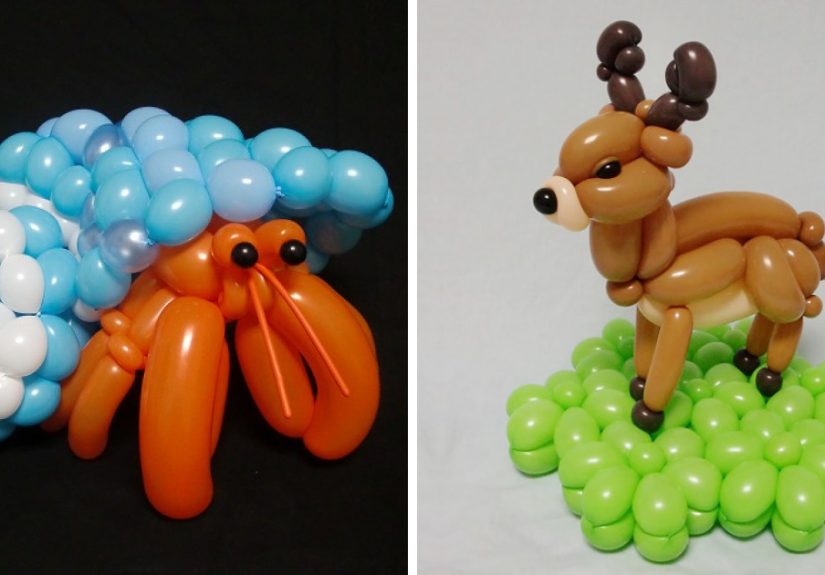
Some animals translate especially well into balloons. Fish are excellent because their bodies are rounded and their fins can be stylized. Birds are popular because wings, beaks, and tails offer strong shapes. Insects are surprisingly effective because their segmented bodies match the natural rhythm of balloon twisting. Reptiles also work well, especially snakes, lizards, turtles, and crocodiles.
Mammals are trickier because fur, facial structure, and subtle body proportions are harder to show with glossy balloons. Still, a realistic rabbit, fox, monkey, dog, or koala can be stunning when the artist captures the right posture and expression. The trick is choosing the animal’s most recognizable traits and exaggerating them just enough.
Best Beginner-Friendly Realistic Designs
For beginners who want to move beyond the classic dog, a fish is a great starting point. It teaches body shape, fins, eyes, and color blocking. A turtle is another strong choice because the shell gives structure and the limbs can be simple. A bee teaches stripes, wings, and antennae. A frog teaches wide proportions and folded legs. These designs build confidence without requiring the emotional resilience of a realistic peacock.
Balloon Animals as Art, Entertainment, and Storytelling
Realistic balloon animals sit at the intersection of art and performance. People enjoy the finished sculpture, but they also love watching it come to life. The squeaking, twisting, stretching, and sudden transformation create suspense. A pile of long balloons becomes a creature one section at a time, and the audience gets to witness the reveal.
That performance element makes balloon art different from many other sculpture forms. The artist does not simply show the final piece; the process is part of the fun. Children gasp at the first recognizable shape. Adults pretend to be calm, then take photos from four angles. Someone always asks, “How long did that take?” and someone else always says, “I can’t even tie a balloon.” Both comments are welcome.
Why People Love Realistic Balloon Animals
Realistic balloon animals are delightful because they combine contradiction. They are fragile but detailed, silly but skillful, temporary but memorable. They make familiar animals feel new. They also invite wonder because everyone understands what a balloon is. The material is ordinary, so the transformation feels extraordinary.
A realistic balloon octopus is not impressive because people have never seen an octopus. It is impressive because they have seen balloons. They know balloons are slippery, squeaky, and stubborn. Seeing that material become tentacles, eyes, and body shape makes the brain do a tiny backflip.
Safety and Responsibility in Balloon Art
Balloon art should be fun, but it also requires responsibility. Balloons can be choking hazards for small children and pets, especially broken pieces. Artists should clean up scraps immediately and avoid giving balloons to children too young to use them safely. Outdoor balloon releases are also harmful because balloons and ribbons can become litter and endanger wildlife.
Responsible balloon artists do not release balloons into the sky. They secure decorations, dispose of broken pieces properly, and educate clients when needed. Realistic balloon animals are best enjoyed up close, indoors, and under supervision, not floating into a tree like a confused rubber ghost.
Experience: What Creating Realistic Balloon Animals Has Taught Me
Creating realistic balloon animals has taught me that patience is not a personality trait; it is a survival tool. The first time I tried to make a realistic bird, I was confident. Too confident. I had reference photos, fresh balloons, and the reckless optimism of a person who had not yet been humbled by latex. Twenty minutes later, the bird had one excellent wing, one mysterious shoulder, and a face that looked like it had just heard bad economic news.
That failure was useful. It taught me that realistic balloon art begins before the first twist. Now, I sketch the animal in simple shapes. I decide what must be accurate and what can be stylized. If I am making a crab, the claws and leg placement matter most. If I am making a parrot, the beak, posture, and tail carry the design. If I am making a frog, the eyes and squat body do most of the talking. The more clearly I understand the animal, the less I fight the balloons.
One of my favorite experiences was creating a realistic sea turtle. The shell took several attempts because it needed to feel rounded but not bulky. The flippers had to look broad and graceful, not like four deflated spoons. I used darker balloons for the shell and lighter ones for the underside, then adjusted the head so it pointed slightly forward. That tiny angle changed everything. Suddenly, it looked like the turtle was swimming instead of waiting in line at the DMV.
Another memorable piece was a balloon praying mantis. Insects are wonderful subjects because balloon segments naturally resemble joints and body sections. But the mantis also required attitude. Its front legs had to fold in that famous hunting pose, and the head needed to tilt just enough to feel alert. When it finally worked, it looked elegant, strange, and slightly judgmental. In other words, a successful mantis.
The funniest part of making realistic balloon animals is the audience reaction. Children often accept the magic immediately. They see a balloon fish and simply believe in it. Adults inspect the sculpture like airport security. They look for glue, tape, marker, wires, secret support rods, government involvement, anything. When they realize it is made only from balloons, they usually smile in a way that says their inner child has just kicked open a door.
I have also learned that mistakes are not always disasters. A slightly oversized head can become a baby animal. A strange curve can become motion. A color mismatch can become a creative species nobody has discovered because it wisely avoids humans. Balloon art rewards flexibility. You may start with a fox and end up with a red panda. Honestly, worse things have happened.
The craft has changed how I look at animals. I notice silhouettes more than before: the slope of a rabbit’s back, the way a duck’s neck meets its chest, the triangular face of a cat, the layered body of a beetle. I also notice how expressive small changes can be. Move an eye higher, and the animal looks alert. Lower the head, and it looks shy. Angle the legs differently, and it changes from standing to creeping, resting, or preparing to cause trouble.
Most of all, realistic balloon animals remind me that art does not need permanent materials to matter. A sculpture can last a day and still make someone laugh, stare, ask questions, or remember a moment. That is the beauty of balloons. They are temporary, but the surprise sticks around. They prove that creativity can be light, squeaky, and full of airand still be taken seriously.
Conclusion: The Serious Joy of Realistic Balloon Animals
Realistic balloon animals are more than party tricks. They are miniature engineering projects, character studies, and playful sculptures built from one of the most unpredictable materials available. To create them well, an artist needs observation, planning, technique, color sense, gentle hands, and the emotional maturity to forgive a balloon that explodes at the worst possible time.
Whether it is a curled snake, a bright fish, a watchful owl, or a tiny insect with suspiciously accurate legs, each sculpture proves that creativity thrives under limits. Balloons cannot do everything, but in the right hands, they can do far more than most people expect. That is what makes realistic balloon animals so charming: they turn simple air and latex into creatures with shape, personality, and a little bit of inflatable magic.
Note: This article is written as original, publication-ready web content based on real balloon art practices, known balloon twisting techniques, responsible balloon-use guidance, and documented examples of realistic balloon sculpture.