Table of Contents >> Show >> Hide
- The Beginning: A Drawing Born During Recovery
- What Is The Infinite Drawing?
- From Instagram Feed to Augmented-Reality Exhibition
- The Environmental Message Behind the Whimsy
- Why The Infinite Drawing Became So Shareable
- The Instagram Grid as a Canvas
- A Work That Keeps Traveling
- Why the “Infinite” Idea Still Feels Fresh
- The Human Side of a 15-Meter Drawing
- Experiences Inspired by The Infinite Drawing
- Conclusion: A Drawing Without an Exit Sign
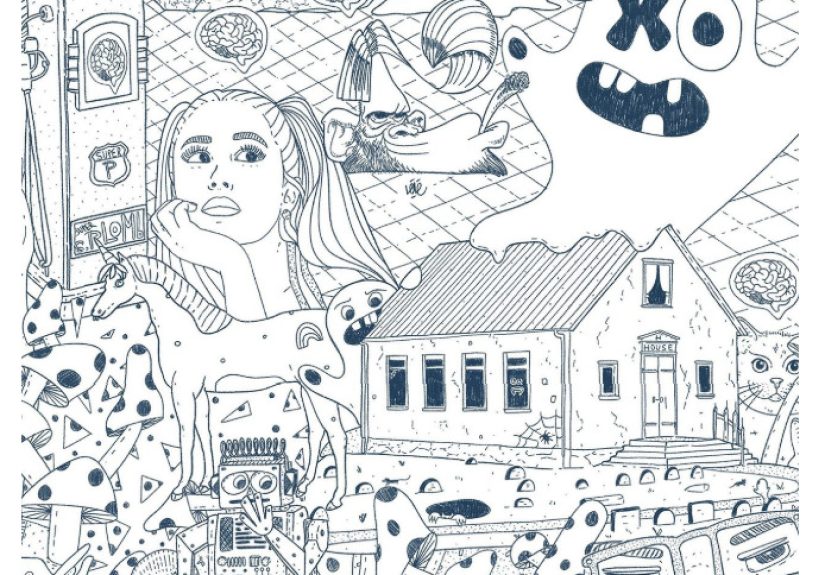
Some people open Instagram to post brunch. Some post gym selfies. Elly Oldman, a French illustrator from Rennes, chose a slightly more ambitious plan: start a drawing that refuses to end. Since 2017, her project known as The Infinite Drawing has grown from a personal creative experiment into a sprawling visual universe, stretching more than 15 meters and spilling beyond Instagram into exhibitions, augmented reality, environmental storytelling, and public imagination.
At first glance, the idea sounds simple: draw, post, continue, repeat. But simple ideas often have the sneaky habit of becoming extraordinary when someone commits to them with enough patience, curiosity, and stubborn joy. Oldman’s work is not merely a long illustration. It is a living diary, a digital fresco, a playful world, and a reminder that art does not always need a final frame. Sometimes, the best border is no border at all.
The Beginning: A Drawing Born During Recovery
The story of The Infinite Drawing began in spring 2017, when Elly Oldman was recovering after an accident. Stuck in bed, she turned to drawing as both occupation and escape. Instead of treating Instagram as a gallery wall with separate little squares, she imagined the platform as a continuous scroll where one drawing could grow from post to post.
That idea was clever because it used Instagram’s grid against itself. Most social posts are designed to be consumed quickly, admired for three seconds, and then buried beneath recipes, memes, and someone’s dog wearing sunglasses. Oldman’s project asked viewers to slow down. Each post became one piece of a larger map. Scroll long enough, and the feed transformed into a connected world.
What Is The Infinite Drawing?
The Infinite Drawing is exactly what the name promises: a drawing designed to keep expanding. It is a continuous illustrated universe filled with characters, strange landscapes, tiny visual jokes, imagined creatures, and narrative fragments. The work has the energy of a sketchbook that escaped the table and started building its own city.
Rather than presenting one finished image, Oldman’s project grows through sequence. Every new section has to speak to what came before it while still opening space for what might come next. That is harder than it looks. A one-off illustration can be dramatic, balanced, and complete. An infinite drawing must be flexible. It needs doors, tunnels, bridges, and narrative elbows. It must be able to turn left without crashing into last week’s robot goat.
A Digital Fresco With a Handmade Soul
The charm of the project comes from its contrast. It lives online, but it feels handmade. It spreads through a digital platform, yet it keeps the warmth of ink, line, and imagination. This is why the work stands out in the world of Instagram art. It does not simply use the app as a place to display finished pieces. It turns the app itself into part of the artwork.
That makes the project especially interesting for artists, illustrators, and content creators. Instead of asking, “How do I beat the algorithm?” Oldman’s project asks a more creative question: “What kind of artwork could only exist because this platform exists?” That shift is powerful. It moves social media from being a promotional tool into becoming an artistic material.
From Instagram Feed to Augmented-Reality Exhibition
As The Infinite Drawing grew, it eventually moved beyond the phone screen. With the support of Electroni[k], the project evolved into La Grande Histoire du Dessin Sans Fin, often translated as The Great Story of the Infinite Drawing or The Great Story of the Endless Drawing. This version became a giant interactive fresco that could be experienced physically and digitally.
In exhibition form, the drawing appears as a large-scale installation, sometimes presented on the wall and as a puzzle-like arrangement on the floor. Visitors can explore the illustrated world with a smartphone or tablet, using augmented reality to unlock animated layers and hidden scenes. In other words, the drawing does not just sit there looking pretty. It gets up, waves, and says, “Congratulations, you are now inside the chaos.”
Why Augmented Reality Works So Well Here
Augmented reality fits The Infinite Drawing because the project already feels like a world with more going on beneath the surface. AR allows viewers to discover extra movement, story, and meaning. It turns spectators into explorers. Instead of staring at a single image, they hunt for clues, follow characters, and interact with the artwork as if it were a game, a comic, and a museum visit all sharing one very busy backpack.
This hybrid format also makes the project accessible to younger audiences. Children and teens who might politely shuffle through a traditional exhibition suddenly have a reason to investigate. They can search, tap, move, compare, and participate. The artwork becomes less like homework and more like a treasure hunt with better linework.
The Environmental Message Behind the Whimsy
The Infinite Drawing may look playful, but it is not empty decoration. The exhibition version carries ecological and environmental themes, especially around plastic pollution and care for wetlands. The app connected to the project invites users to locate areas overrun by plastic and help characters clean the landscape.
This is one of the smartest parts of Oldman’s approach. She does not deliver an environmental lecture with a raised finger and a very serious font. Instead, she builds a strange, funny, crowded universe where the issue becomes part of the story. The viewer learns by exploring. The message arrives through curiosity rather than guilt.
Art That Teaches Without Turning Into a Brochure
Environmental art can sometimes feel heavy, and understandably so. The planet is not exactly sending us “all good, no notes” emails. But Oldman’s project shows another way to talk about ecological responsibility. It uses humor, color, fantasy, and character-driven storytelling to make the subject approachable.
That matters because the best educational art does not only tell people what to think. It invites them to care. By giving plastic pollution a place inside a larger illustrated adventure, The Infinite Drawing makes the problem visible without flattening the viewer under despair. It says: look closer, notice more, and maybe clean up your corner of the world while you are here.
Why The Infinite Drawing Became So Shareable
There are several reasons this project works so well online. First, it has a strong concept that can be explained in one sentence: a French artist has been creating one endless drawing on Instagram since 2017. That is instantly understandable. It also creates a natural question: how long can it get?
Second, the project rewards return visits. Every update matters because the drawing is cumulative. Followers are not just seeing random new posts; they are watching an expanding universe. That gives the audience a reason to come back, the same way people return to a favorite comic series, web novel, or long-running animated show.
Third, the project has visual surprise. Infinite drawings are built for discovery. A viewer can zoom into a small detail and find a character, joke, symbol, or unexpected scene. The format turns looking into searching, and searching into engagement.
The Instagram Grid as a Canvas
Instagram is usually built around fragments: one photo, one video, one caption, one moment. Oldman’s genius was to treat those fragments as tiles in a larger mosaic. That approach changes the meaning of the grid. Instead of being a gallery of separate images, it becomes a connected surface.
This is valuable for digital artists because it proves that platforms can be bent creatively. Social media often pressures creators to produce fast, trendy, disposable content. The Infinite Drawing does the opposite. It is slow, cumulative, and stubbornly personal. It turns the feed into a place of continuity.
Lessons for Artists and Creators
For artists looking to build an online presence, the project offers several lessons. A memorable concept matters. Consistency matters. A strong visual identity matters. But perhaps most importantly, commitment matters. The internet loves novelty, but it also respects dedication when the idea is good enough to grow over time.
The Infinite Drawing also proves that personal limitations can become creative structures. Oldman began the project while recovering. That context did not shrink the work; it shaped it. Sometimes creativity begins not because conditions are perfect, but because they are difficult and the imagination needs somewhere to go.
A Work That Keeps Traveling
The Infinite Drawing has not stayed quietly in one place. Exhibition versions have appeared in multiple cultural contexts, with the project presented through festivals, French cultural networks, digital art events, and interactive installations. Its movement from Instagram to public spaces shows how digital art can travel without losing its original spirit.
This matters because the boundary between online and offline art is increasingly thin. A project can begin on a phone, become a physical exhibition, return through an app, and continue evolving online. The artwork is no longer one object. It is an ecosystem.
Oldman’s project fits perfectly into this new model. It is part illustration, part digital experience, part environmental story, part social media experiment, and part public artwork. Trying to place it in one box is like trying to store soup in a sock: technically memorable, but not very practical.
Why the “Infinite” Idea Still Feels Fresh
The word “infinite” is not just a marketing flourish. It captures something important about modern creativity. Online art is rarely finished in the traditional sense. It can be updated, remixed, expanded, animated, printed, projected, and reinterpreted. The Infinite Drawing makes that condition visible.
There is also something emotionally satisfying about a project that keeps going. In a culture obsessed with quick results, an endless drawing feels almost rebellious. It says that art can grow slowly. It can change shape. It can carry yesterday’s marks into tomorrow’s ideas. It can be patient in a very impatient world.
The Human Side of a 15-Meter Drawing
Behind the impressive length and digital innovation, the most compelling part of the project is human. It began with one person drawing during a vulnerable period. It became a daily practice. Then it became a public journey. That transformation is why the work connects with people beyond the art world.
Many people understand the need to make something during a hard time. Some bake bread. Some rearrange their room at 2 a.m. Some start journaling and immediately buy six notebooks. Oldman drew, and kept drawing, until the drawing became bigger than the situation that produced it.
That is the quiet magic of the project. It is not only about scale. It is about persistence. A 15-meter drawing does not appear in one grand heroic moment. It appears line by line, day by day, post by post. The project reminds us that large creative achievements are often made from small repeated acts.
Experiences Inspired by The Infinite Drawing
Spending time with a project like The Infinite Drawing changes how you think about creative practice. It makes you realize that an idea does not have to arrive fully dressed in a tuxedo. Sometimes it shows up wearing socks that do not match, and your job is simply to invite it in. The important thing is not perfection at the start. The important thing is movement.
Imagine sitting down to begin your own “infinite” project. Maybe it is not a drawing. Maybe it is a poem that grows one line every morning, a photo series of the same street corner, a comic about a character who never quite finds the right bus, or a notebook filled with tiny observations from ordinary days. At first, it may feel small. Too small, even. But small things become powerful when they repeat with intention.
The experience of following an endless artwork also trains the eye to notice connections. You begin to see how one image can lead to another, how a tiny corner can become the seed of a future scene, how a mistake can become a doorway. That is useful far beyond illustration. Writers, designers, teachers, students, and creators of every kind can learn from this rhythm. Instead of asking, “Is this finished?” we can ask, “What can this become next?”
There is also a practical lesson in patience. Online culture often makes creators feel as if every post must be a masterpiece, a viral moment, and a personal branding seminar wrapped in confetti. The Infinite Drawing suggests a kinder approach. A post can be part of a larger path. Not every section needs to shout. Some parts can whisper, connect, support, or set up the next surprise.
For viewers, the experience is equally refreshing. Looking at a long, evolving drawing gives permission to wander. You do not have to consume it like a checklist. You can drift through it, notice one character, miss another, return later, and find something new. That is closer to how we experience real places. Cities, forests, neighborhoods, and memories are not absorbed all at once. They reveal themselves slowly.
The most inspiring takeaway is that creativity can be both personal and public. Oldman began with her own circumstances, but the project expanded into something others could enter. That is one of art’s best tricks. It starts in one person’s hand and somehow makes room for many people’s imaginations. Not bad for a drawing that began with a line and then politely refused to stop.
Conclusion: A Drawing Without an Exit Sign
Elly Oldman’s Infinite Drawing is more than a long illustration on Instagram. It is a case study in how digital platforms can become artistic spaces, how personal recovery can lead to public creativity, and how playful visuals can carry serious environmental meaning. The project is funny, strange, ambitious, and deeply human.
Its success comes from the fact that it feels alive. It grows, travels, transforms, and invites viewers to participate. In a world where so much content disappears almost as soon as it appears, The Infinite Drawing keeps extending itself into the future. It is a reminder that the internet can still hold wonder, especially when an artist decides that one square is not enough and 15 meters is just a warm-up.