Table of Contents >> Show >> Hide
- How does cervical cancer immunotherapy work?
- When is immunotherapy used for cervical cancer?
- What testing may be needed before treatment?
- What happens during pembrolizumab treatment?
- How effective is immunotherapy for cervical cancer?
- What side effects should patients expect?
- How do doctors decide whether treatment is working?
- Practical questions to ask the oncology team
- The real-world treatment experience: a practical 500-word perspective
- What research is exploring next?
- Conclusion
Immunotherapy has changed the cervical cancer treatment conversation. It is not a magic wand, and it does not work for every tumor, but it can help the immune system recognize cancer cells that have become unusually talented at hiding. For some people with locally advanced, persistent, recurrent, or metastatic cervical cancer, adding immunotherapy can delay disease progression, improve tumor response, and extend survival.
The immunotherapy drug most firmly established in U.S. cervical cancer care is pembrolizumab, commonly known by the brand name Keytruda. Depending on the cancer stage, previous treatment, and biomarker results, pembrolizumab may be combined with chemoradiotherapy, given with chemotherapy and possibly bevacizumab, or used by itself. Current U.S. indications differ considerably, so the details on a pathology report matter almost as much as the drug name on the infusion bag.
How does cervical cancer immunotherapy work?
The immune system is built to identify threats, but it also needs safeguards that prevent it from attacking healthy tissue. One safeguard involves checkpoint proteins such as PD-1 on T cells and PD-L1 on other cells. Think of the checkpoint as a brake pedal: useful during normal driving, inconvenient when cancer steals the car.
Some cervical cancer cells display PD-L1 or manipulate related signals to tell immune cells, “Nothing suspicious here.” Pembrolizumab blocks PD-1, interfering with that message and allowing T cells to respond more aggressively. This class of treatment is called an immune checkpoint inhibitor.
Immunotherapy does not attack tumor cells in the same way chemotherapy does. Chemotherapy directly interferes with rapidly dividing cells. Radiation damages cancer-cell DNA in a specific treatment area. Checkpoint immunotherapy removes an immune-system restraint. Combining these approaches can be useful because each one pressures the cancer differently.
When is immunotherapy used for cervical cancer?
The phrase “immunotherapy for cervical cancer” can describe several distinct treatment situations. Eligibility is based on stage, whether the cancer is newly diagnosed or has returned, previous therapies, general health, and tumor biomarkers.
Newly diagnosed stage III to IVA cervical cancer
For patients with FIGO 2014 stage III to IVA cervical cancer, the FDA has approved pembrolizumab in combination with chemoradiotherapy. This generally means external-beam radiation, brachytherapy, and concurrent cisplatin, with pembrolizumab started during chemoradiation and continued afterward. PD-L1 positivity is not listed as a requirement for this stage III to IVA indication.
This regimen is intensive. Immunotherapy does not replace radiation or cisplatin; it joins them. The treatment calendar may resemble a small group project in which every therapy insists on scheduling its own meeting.
Persistent, recurrent, or metastatic cervical cancer
For persistent, recurrent, or metastatic cervical cancer, pembrolizumab may be combined with paclitaxel and either cisplatin or carboplatin. Bevacizumab, a targeted drug that interferes with tumor blood-vessel development, may also be included. For this FDA-approved combination, the tumor must express PD-L1 with a combined positive score, or CPS, of at least 1 on an authorized test.
Pembrolizumab after previous chemotherapy
Pembrolizumab can also be used alone for recurrent or metastatic cervical cancer that has progressed during or after chemotherapy when the tumor has a PD-L1 CPS of at least 1. In certain advanced solid tumors, other biomarkerssuch as microsatellite instability-high, mismatch repair deficiency, or high tumor mutational burdenmay create an additional tumor-agnostic reason to consider pembrolizumab.
What testing may be needed before treatment?
Before recommending cervical cancer immunotherapy, the oncology team reviews the pathology, treatment history, scans, symptoms, medications, and overall health. Testing may include:
- PD-L1 testing: A laboratory calculates a combined positive score based on PD-L1 expression in tumor and immune cells.
- Broader tumor profiling: Testing may identify MSI-H, dMMR, TMB-H, or another alteration that affects treatment choices.
- Blood tests: Complete blood counts and kidney, liver, electrolyte, and thyroid tests establish a baseline.
- Imaging: CT, MRI, or PET imaging documents where the cancer is located before treatment begins.
- Pregnancy assessment: Pembrolizumab can harm a developing fetus, so pregnancy prevention and fertility questions should be discussed early.
Patients should tell the care team about autoimmune disorders, organ or stem-cell transplants, lung disease, liver problems, hormone disorders, and medicines that suppress immunity. Major pembrolizumab trials generally excluded people who required significant systemic immunosuppression, which means these situations require especially individualized risk assessment.
What happens during pembrolizumab treatment?
Infusion schedule
Intravenous pembrolizumab is commonly given at 200 milligrams every three weeks or 400 milligrams every six weeks. Treatment may continue until the cancer progresses, side effects become unacceptable, or approximately 24 months have been completed, depending on the indication and clinical circumstances. When pembrolizumab and chemoradiotherapy are administered on the same day, pembrolizumab is given first.
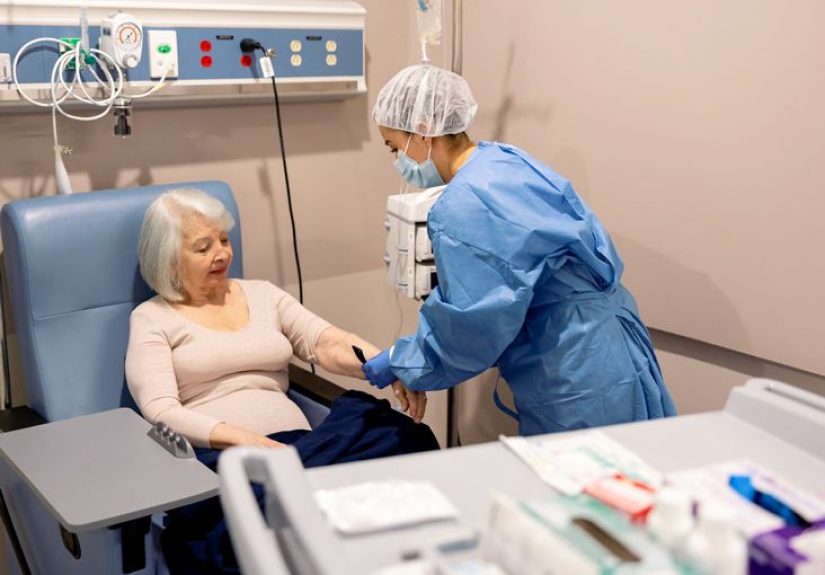
The infusion itself is often completed in about 30 minutes, but an appointment usually lasts longer because of laboratory work, nursing assessment, pharmacy preparation, and conversations about symptoms. Patients receiving chemotherapy at the same visit should expect a substantially longer day.
Monitoring between treatments
Before each cycle, the team asks about bowel changes, breathing, skin symptoms, appetite, fatigue, pain, urination, headaches, vision, and other changes. Blood testing checks for low blood counts, infection, dehydration, and inflammation involving organs such as the liver, kidneys, or thyroid.
Scans are commonly repeated every two to three months during active systemic treatment, although the exact schedule varies. The team compares tumor measurements over time and considers symptoms, examination findings, and laboratory results rather than judging efficacy from a single scan.
How effective is immunotherapy for cervical cancer?
Efficacy depends heavily on the treatment setting. Results from newly diagnosed stage III to IVA disease cannot be directly compared with results from heavily pretreated metastatic disease. Those are different patient populations with different goals, tumor burdens, and accompanying treatments.
Results in stage III to IVA cervical cancer
The phase 3 KEYNOTE-A18 trial evaluated pembrolizumab with chemoradiotherapy followed by pembrolizumab maintenance. In the FDA analysis of patients with stage III to IVA disease, the risk of death was approximately 35% lower in the pembrolizumab group than in the chemoradiotherapy-only group. At 12 months, progression-free survival was 81% with pembrolizumab plus chemoradiotherapy and 70% with chemoradiotherapy alone.
With longer follow-up in the full high-risk, locally advanced study population, the reported 36-month overall survival rate was 82.6% with pembrolizumab plus chemoradiotherapy, compared with 74.8% with chemoradiotherapy alone. The results established a meaningful survival advantage, although they do not guarantee that an individual patient will remain cancer-free.
Results in persistent, recurrent, or metastatic disease
KEYNOTE-826 compared chemotherapy, with or without bevacizumab, against the same treatment plus pembrolizumab. Among patients whose tumors had a PD-L1 CPS of at least 1, median overall survival was 28.6 months in the pembrolizumab group and 16.5 months in the control group. Median progression-free survival was 10.4 months versus 8.2 months.
The objective response rate was 68% with pembrolizumab-containing treatment and 50% with the control regimen. Complete responses occurred in 23% and 13% of patients, respectively. Responses also tended to last longer when pembrolizumab was included.
A median is not an expiration date. It is the point at which half the study group has experienced the measured event and half has not. Some people progress sooner, while others remain stable or responsive for considerably longer.
Results with pembrolizumab alone after chemotherapy
In the KEYNOTE-158 cohort used to support single-agent pembrolizumab for previously treated PD-L1-positive cervical cancer, the objective response rate was 14.3%. The complete response rate was 2.6%. Although the overall response rate was modest, 91% of responding patients had a response lasting at least six months at the time of analysis.
This illustrates an important immunotherapy pattern: many tumors may not shrink, but a smaller group of patients can experience durable benefit. Unfortunately, doctors still cannot predict that benefit perfectly.
What side effects should patients expect?
The side effects experienced during cervical cancer treatment depend on the entire regimen. Someone receiving pembrolizumab alone may have a very different week from someone receiving pembrolizumab, paclitaxel, carboplatin, bevacizumab, and supportive medications.
Common pembrolizumab-related symptoms
Frequently reported symptoms include fatigue, itching, rash, nausea, reduced appetite, diarrhea or constipation, fever, cough, and muscle or joint discomfort. Infusion reactions are uncommon but can cause chills, flushing, dizziness, rash, breathing difficulty, fever, or a drop in blood pressure.
Immune-related adverse events
Because pembrolizumab stimulates immune activity, it can cause the immune system to inflame healthy organs. These reactions may occur during treatment, after several uneventful cycles, or occasionally after treatment has ended.
Potential immune-related complications include:
- Colitis, which may cause frequent diarrhea, blood in the stool, or abdominal pain
- Pneumonitis, which may cause a new cough, chest pain, or shortness of breath
- Hepatitis, which may cause abnormal liver tests, dark urine, or yellowing of the skin
- Thyroid, pituitary, or adrenal dysfunction, which may cause unusual fatigue, headaches, dizziness, temperature sensitivity, or weight changes
- Nephritis, which can affect kidney function and urination
- Severe skin reactions involving blistering, peeling, or painful sores
- Rare inflammation of the heart, nervous system, eyes, muscles, or other organs
Early reporting matters. Many immune-related reactions can be controlled with treatment interruption, corticosteroids, hormone replacement, or specialist care. Waiting until symptoms become dramatic can turn a manageable problem into an emergency.
Side effects from the accompanying treatments
Chemotherapy may cause low blood counts, infection risk, nausea, hair loss, neuropathy, appetite changes, and fatigue. Pelvic radiation can cause diarrhea, bladder irritation, skin changes, vaginal discomfort, and longer-term bowel, urinary, sexual, or fertility effects. Bevacizumab can raise blood pressure and increase the risk of bleeding, blood clots, poor wound healing, gastrointestinal perforation, or fistula formation in selected patients.
The care team should explain which warning signs are associated with which treatment. Patients are not expected to become amateur oncologists, but knowing whom to calland calling promptlyis an extremely useful skill.
How do doctors decide whether treatment is working?
Response is assessed using several pieces of information:
- Whether tumors shrink, remain stable, or grow on imaging
- Whether new cancer sites appear
- Changes in bleeding, pain, appetite, energy, or organ function
- Physical examination findings
- Laboratory trends and treatment tolerance
Immunotherapy can occasionally create unusual imaging patterns, but true pseudoprogressiontemporary tumor enlargement caused by immune-cell activityis uncommon. A worsening scan should not automatically be dismissed as an immune effect. Oncologists may repeat imaging when the patient is clinically stable, but rapidly progressive symptoms generally require action.
Practical questions to ask the oncology team
- What is the exact stage and treatment goal?
- Has the tumor been tested for PD-L1, MSI, mismatch repair status, and tumor mutational burden?
- Will pembrolizumab be combined with radiation, chemotherapy, or bevacizumab?
- How long is treatment expected to continue?
- Which side effects require a same-day call or emergency care?
- How might treatment affect fertility, menopause, sexual health, or pregnancy plans?
- What happens if the first scan shows stable disease rather than shrinkage?
- Are clinical trials available if the cancer progresses?
The real-world treatment experience: a practical 500-word perspective
The following is a composite description based on common treatment routines, not the story of a specific patient. Individual experiences vary widely.
Before the first infusion
The weeks before treatment can feel surprisingly busy. There may be pathology reviews, scans, radiation planning, blood tests, insurance calls, pharmacy education, and conversations about ports, transportation, work, fertility, and family responsibilities. Many patients expect the first treatment to be the frightening part, only to discover that coordinating the calendar is the opening boss battle.
At the first infusion visit, the nurse reviews medications and symptoms, checks vital signs, and explains when to call. Pembrolizumab itself may be relatively quick, but chemotherapy premedications and additional drugs can extend the visit for several hours. Bringing water, a snack, headphones, a phone charger, and an extra layer of clothing is practical rather than glamorousand practical wins many treatment days.
The first few weeks
Some patients feel almost normal after pembrolizumab alone. Others notice fatigue, mild nausea, itching, or joint discomfort. When chemotherapy or pelvic radiation is given at the same time, symptoms are often more noticeable. Energy may decline gradually. Food preferences can change. Diarrhea or urinary irritation may appear as radiation progresses. A person may feel reasonably well one morning and need an unexpected nap that afternoon.
Keeping a short symptom log can help. Recording the number of bowel movements, temperature, pain level, appetite, and new rashes gives the oncology team more useful information than saying, “I felt kind of strange sometime last week.” A phone photograph can also document a rash that fades before the next appointment.
Learning not to “tough it out”
One of the biggest adjustments is learning that reporting symptoms is not complaining. A new cough might be an ordinary infection, but it could also be pneumonitis. Diarrhea might come from radiation, chemotherapy, diet, infection, or immune-related colitis. Profound fatigue might reflect treatment, anemia, dehydration, or a thyroid or adrenal problem.
The patient does not have to solve the mystery. The job is to report the clue. The medical team decides which tests are needed.
Waiting for scans
The first response scan often brings a special form of anxiety sometimes called “scanxiety.” Symptoms alone cannot reliably predict the result. Feeling tired does not mean treatment is failing, and feeling energetic does not guarantee that every tumor is shrinking.
Results may show a complete response, partial response, stable disease, mixed response, or progression. Stable disease can still be a meaningful outcome in advanced cancer, particularly when symptoms are controlled and stability lasts. When progression occurs, the team may recommend a different systemic treatment, localized radiation, a clinical trial, or care focused more heavily on symptom relief and quality of life.
Maintenance and life between appointments
For patients who continue pembrolizumab after chemotherapy or chemoradiotherapy, the schedule may eventually feel more predictable. Visits every three or six weeks create a rhythm. Some people continue working with adjustments; others need extended leave. Fatigue may improve after chemotherapy or radiation ends, although immune-related hormone changes can require long-term medication.
Life during immunotherapy is rarely divided neatly into “cancer time” and “normal time.” Birthdays, grocery shopping, family arguments, television shows, bills, and infusion appointments all coexist. Many patients find that the goal is not to feel inspirational every day. The goal is to communicate symptoms, accept useful support, attend follow-up, and make room for ordinary life whenever treatment allows.
What research is exploring next?
Researchers are studying therapeutic HPV vaccines, new checkpoint combinations, antibody-drug conjugates, personalized biomarkers, and strategies designed to overcome resistance. Trials are also testing whether other immune-directed combinations can produce deeper or longer responses without adding unacceptable toxicity.
Clinical trials may be particularly important for patients whose cancer has progressed after pembrolizumab or whose tumors do not qualify for an approved immunotherapy regimen. Trial eligibility can depend on previous drugs, tumor type, laboratory values, disease location, and autoimmune history.
Conclusion
Immunotherapy has become an important part of cervical cancer treatment, but its role changes by disease setting. Pembrolizumab with chemoradiotherapy has improved outcomes for stage III to IVA disease. In PD-L1-positive persistent, recurrent, or metastatic cervical cancer, adding pembrolizumab to chemotherapy has produced longer survival and higher response rates than chemotherapy-based treatment alone. Pembrolizumab monotherapy after chemotherapy has a lower overall response rate, yet responses can be durable for the patients who benefit.
The trade-off is a distinct set of immune-related risks. Fatigue or a mild rash may be manageable, while inflammation involving the lungs, intestines, liver, kidneys, glands, or other organs can become serious. Prompt symptom reporting, consistent laboratory monitoring, and close coordination with a gynecologic oncology team are essential.
Note: Medical guidance and drug approvals evolve. This content reflects U.S. evidence and regulatory information available at the time of writing and should be medically reviewed before publication or used for treatment decisions.