Table of Contents >> Show >> Hide
- Why 2025 is a “watch closely” year
- Fast “Spot It & Stop It” checklist
- Invasive insect species to watch out for in 2025
- 1) Spotted Lanternfly (Lycorma delicatula)
- 2) Yellow-Legged Hornet (Vespa velutina)
- 3) Emerald Ash Borer (Agrilus planipennis)
- 4) Asian Longhorned Beetle (Anoplophora glabripennis)
- 5) Spongy Moth (Lymantria dispar dispar)
- 6) Hemlock Woolly Adelgid (Adelges tsugae)
- 7) Asian Citrus Psyllid (Diaphorina citri)
- 8) Brown Marmorated Stink Bug (Halyomorpha halys)
- 9) Exotic fruit flies (Mediterranean fruit fly & Mexican fruit fly)
- 10) Japanese Beetle (Popillia japonica)
- 11) Redbay Ambrosia Beetle (Xyleborus glabratus) & Laurel Wilt
- What to do if you think you found an invasive insect
- Field Notes: Experiences people commonly have with invasive insects (and what they learn)
- Conclusion
- SEO Tags
If you’ve ever walked outside, looked at your favorite plant, and thought, “Wow, this used to look alive,” you already understand the emotional
arc of invasive insects. They don’t arrive wearing villain capes. They show up as “just one weird bug,” then quietly recruit their cousins, move
into your trees, and start charging rent in honeydew.
In 2025, the U.S. is juggling multiple invasive insect species at oncesome spreading into new counties, some triggering quarantines, and some
turning ordinary errands (like moving firewood) into a biosecurity decision. The good news: you don’t have to become an entomologist. You just
need to know what to look for, why it matters, and what helps most when you spot something suspicious.
Why 2025 is a “watch closely” year
Invasive insects thrive on three modern superpowers: global trade, easy travel, and warmer, more variable weather. Once established, they spread
through everyday actionsmoving outdoor furniture, hauling yard waste, transporting untreated wood, or sharing homegrown fruit with friends across
county lines. Add the fact that many invasives have wide host ranges (they aren’t picky eaters), and you get a problem that can jump from forests
to farms to backyards in a single season.
The trendline is clear: many high-impact pests are now confirmed across dozens of states, while others are still in the “contain it fast” stage.
That mix is exactly why awareness in 2025 mattersearly detection and smart movement choices are some of the most effective tools homeowners and
gardeners have.
Fast “Spot It & Stop It” checklist
- Don’t move firewood long distances (local wood = fewer hitchhikers).
- Inspect outdoor items before traveling: patio furniture, trailers, grills, lawn gear, kids’ toys.
- Know your high-risk plants (grapes, fruit trees, ash, maple, hemlock, citrus, avocado/sassafras in some regions).
- Report early to your state agriculture department or extension officephotos help.
- Respect quarantines (they’re annoying for a reason: they work).
Invasive insect species to watch out for in 2025
1) Spotted Lanternfly (Lycorma delicatula)
The spotted lanternfly is the poster bug for “How did this get so widespread so fast?” It feeds on many plantsespecially grapevines, hops,
fruit trees, and hardwoodsand it loves its favorite host, tree-of-heaven. As it feeds, it produces sticky honeydew that can lead to sooty mold,
making patios, decks, and plants look like someone spilled soda everywhere (because, basically, a bug did).
What to watch for: adults with gray wings dotted with black spots; flashes of red underwings; and egg masses that look like grayish mud smears on
tree trunks, stones, outdoor furniture, and vehicles. The “sneaky egg mass” factor is a big reason this insect spreads via human movement.
Practical move: remove tree-of-heaven where feasible (it’s invasive too), scrape and destroy egg masses when you find them, and check anything you
transportespecially from late summer through fall.
2) Yellow-Legged Hornet (Vespa velutina)
This one is on the “take seriously, don’t DIY” list. The yellow-legged hornet is a predator of honeybees and other pollinators and has caused
major impacts in places where it’s established. In the U.S., it has been confirmed in the Southeast, and agencies are monitoring and attempting
to stop it from spreading.
What to watch for: large hornets (bigger than many common wasps), dark body with lighter banding, andtrue to the nameyellowish legs. Nests can
be high in trees or on structures. If you suspect it, don’t try to remove a nest yourself. Report sightings to state authorities.
Practical move: beekeepers should stay alert to unusual “hawking” behavior (hornets hovering near hives). Everyone else: take clear photos from a
safe distance and report promptly.
3) Emerald Ash Borer (Agrilus planipennis)
The emerald ash borer (EAB) remains one of the most destructive tree-killing invasive insects in North America. The larvae tunnel under ash bark
and disrupt water and nutrient movement. Result: declining canopy, dieback, and eventual death for many untreated ash trees.
What to watch for: thinning canopy, bark splitting, “blonding” patches where woodpeckers feed, and distinctive D-shaped exit holes on the trunk.
The easiest way EAB spreads into new areas is still the classic: moving infested ash firewood.
Practical move: if you have ash trees, learn local treatment options (often most effective when started early) and avoid transporting firewood.
4) Asian Longhorned Beetle (Anoplophora glabripennis)
The Asian longhorned beetle (ALB) targets hardwoodsespecially maplesand can kill trees by tunneling deep into the wood. The U.S. has had
long-running eradication programs, and regulated areas (quarantines) can change based on detections and progress.
What to watch for: perfectly round exit holes, sawdust-like frass, and oval pits where females lay eggs. Adult beetles are large with long
black-and-white banded antennaehard to miss if you see one, but easy to never see if it’s inside your tree.
Practical move: if you live in or near a regulated area, follow rules on moving firewood, logs, and woody debris. When eradication is possible,
public reporting is a big part of success.
5) Spongy Moth (Lymantria dispar dispar)
Formerly known by another common name, the spongy moth is a defoliatorits caterpillars feed on the leaves of hundreds of tree and shrub species.
Repeated heavy defoliation can weaken trees and contribute to mortality, especially when combined with drought or other stress.
What to watch for: caterpillars and defoliation in spring/early summer, plus egg masses laid on almost anything outdoorsfirewood stacks, trailers,
lawn furniture, and more. That “eggs on stuff you move” habit is why this pest can leapfrog into new places.
Practical move: inspect outdoor gear before traveling or moving; if you see egg masses, remove and destroy them in a safe, recommended way.
6) Hemlock Woolly Adelgid (Adelges tsugae)
If you have eastern or Carolina hemlocks, this pest is a must-know. Hemlock woolly adelgid (HWA) feeds on sap at the base of needles, stressing
trees and potentially killing them over a span of years. In many places it has reshaped forests, changing shade, stream temperatures, and habitat.
What to watch for: tiny, white “cotton ball” masses along the underside of hemlock branchesoften easiest to spot in colder months when other
foliage drama dies down. Decline can look like thinning needles and branch dieback.
Practical move: for high-value hemlocks, professional treatments can help. Also, be mindful that tiny crawlers can hitch rides on clothing, pets,
and vehicles when brushing through infested branches.
7) Asian Citrus Psyllid (Diaphorina citri)
The Asian citrus psyllid matters because it spreads citrus greening disease (huanglongbing/HLB), one of the most serious citrus diseases. Infected
trees can produce misshapen, bitter fruit and decline over time, creating major challenges for both backyard citrus lovers and commercial growers.
What to watch for: tiny psyllids on new citrus growth and signs of HLB such as uneven fruit ripening and tree decline. Because disease management
is complex, this is a “work with local guidance” situation.
Practical move: don’t move citrus plants, budwood, or clippings from unknown sources. Follow state guidance on purchasing and transporting citrus.
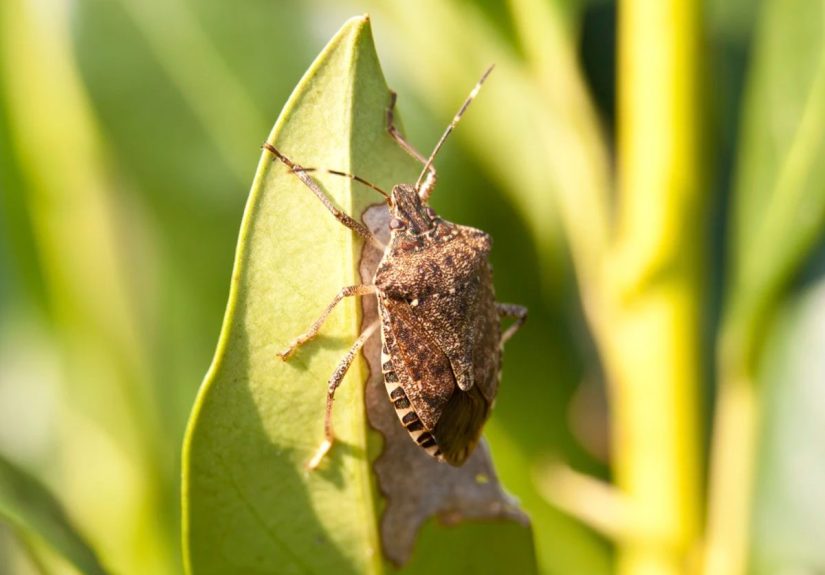
8) Brown Marmorated Stink Bug (Halyomorpha halys)
This invasive stink bug is both an agricultural pest and a household nuisance. It feeds on many crops and ornamentals and is famous for trying to
overwinter in homesshowing up in windows, attics, and behind curtains like an uninvited roommate who also smells bad when startled.
What to watch for: shield-shaped mottled brown bugs, often gathering on warm exterior walls in fall. Indoors, you’ll notice them because… well,
you’ll notice them.
Practical move: focus on exclusion (sealing entry points) and careful removal indoors. In gardens and orchards, use locally recommended IPM
strategies rather than panic-spraying everything that moves.
9) Exotic fruit flies (Mediterranean fruit fly & Mexican fruit fly)
Fruit flies in the wrong place can trigger quarantines quicklybecause they threaten a huge range of fruits and vegetables. In practice, that can
mean restrictions on moving certain homegrown produce out of regulated areas, plus coordinated eradication responses.
Mediterranean fruit fly (Ceratitis capitata): In 2025, California documented an active response in the San Jose area after dozens
of adult flies were trapped and a larva was detectedevidence of a breeding population. Emergency measures can remain in effect long enough to cover
multiple life cycles, which is exactly how eradication programs aim to break the reproduction loop.
Mexican fruit fly (Anastrepha ludens): In Texas, APHIS and the state agriculture department have repeatedly established, expanded,
and removed quarantine areas based on detections and successful eradication timelines. This is what “containment in real time” looks like: strict
movement controls plus surveillance and treatment until multiple generations pass without detection.
Practical move: if your area is under a fruit fly quarantine, follow guidance on harvesting, disposing, and transporting fruit. If you spot
maggots in fruit or suspect fruit fly activity, report itthese programs rely on fast information.
10) Japanese Beetle (Popillia japonica)
In much of the U.S., Japanese beetles are an established headache. But in parts of the West, the story is still “prevent establishment.” Several
states continue trapping and eradication effortsbecause once Japanese beetles settle in, they can damage turf and skeletonize leaves on hundreds
of plant species (roses, grapes, lindens, you name it).
What to watch for: metallic green beetles with coppery wing covers feeding in groups; grubs in turf causing dead patches that peel back like carpet.
Some western programs have reported substantial annual trap counts, which helps target treatment and reduce spread.
Practical move: don’t move potentially infested soil, sod, or nursery stock across regions without guidance. If you’re in an area running a survey
program, participatetrapping data is how agencies stay ahead.
11) Redbay Ambrosia Beetle (Xyleborus glabratus) & Laurel Wilt
This is a two-part problem: the invasive redbay ambrosia beetle and the fungus it vectors, which causes laurel wilt. It threatens trees and shrubs
in the laurel familysuch as redbay, sassafras, and avocado in some regionsleading to rapid decline and death in affected hosts.
What to watch for: sudden wilting and discoloration, branch dieback, and small boring holes or sawdust-like tubes on trunks and limbs. Because
identification can be tricky, confirmed reporting through forestry or extension channels is important.
Practical move: don’t move infected wood, mulch, or firewood from host species out of affected counties. Keep high-value trees healthy and consult
local experts if laurel wilt is known in your area.
What to do if you think you found an invasive insect
- Take a clear photo (include something for scale if you can, like a coinjust don’t get too close to stinging insects).
- Note the location (city/county, and what plant or surface it was on).
- Report it to your state department of agriculture, local extension office, or the appropriate state program.
- Don’t transport the suspect item (firewood, infested branches, outdoor furniture) to a new area.
- Follow official guidanceespecially for quarantines and regulated pests.
For fruit flies specifically, quarantine programs often provide hotlines and reporting instructions; in California, for example, residents can use
official reporting channels for invasive fruit fly concerns.
Field Notes: Experiences people commonly have with invasive insects (and what they learn)
Here’s the part nobody puts on the seed packet: invasive insects don’t just damage plantsthey change routines. People describe it as a slow
realization that “normal” has shifted. The first sign is often small and dismissible: a sticky patio table that needs cleaning more than usual, a
tree that looks tired despite watering, or a strange bug on a trunk that disappears before you can grab your phone. Then the season moves on, and
the pattern repeatsonly louder.
Homeowners in lanternfly areas often talk about the “hitchhiker surprise.” You load the car for a weekend trip, and later notice an egg mass on a
cooler, a folding chair, or the underside of a bumper. It’s not dramatic; it’s just sneaky. The lesson people learn fast: you don’t need to be
traveling far to help a pest travel far. A quick visual check becomes a habit, like buckling a seatbelttiny effort, big downside avoided.
With tree-killers like emerald ash borer or hemlock woolly adelgid, the experience is more like watching a favorite landmark fade. People describe
the emotional whiplash of noticing canopy thinning “all at once,” even though it happened gradually. In neighborhoods with mature ash, the shift
can feel like someone turned down the shade. For hemlocks, the first time someone sees the white woolly masses up close, the reaction is usually:
“That’s… on every branch.” It’s the moment the problem becomes real, and it often prompts the next stepcalling an arborist or extension office
instead of guessing.
Fruit fly quarantines create a different kind of story: the “wait, I can’t bring my own fruit to my sister?” moment. Gardeners and backyard
orchard folks often learn quarantine rules through a sign at a market, a neighborhood mailer, or a notice on social media. At first it feels
inconvenient. Then someone explains the stakeshow a breeding population can ripple into commercial agricultureand the inconvenience starts to
feel more like a civic chore. People adapt by sharing produce locally, freezing what they can, and paying closer attention to official updates.
And then there are the nuisance invasives, like brown marmorated stink bugsthe ones that don’t kill a tree overnight but do make your living room
feel like a bug-themed timeshare. People often report the same arc: “A few showed up,” then, “Why are there twenty?” The practical wisdom that
spreads neighbor-to-neighbor is surprisingly consistent: seal entry points early, fix screens, and avoid crushing them unless you want your home
to smell like regret. It’s not glamorous, but it works.
The most common takeaway across all these experiences is hopeful: once people know what to look for, they get better outcomes. Early reporting can
trigger faster response. Smarter movement choices reduce spread. And small seasonal habitschecking outdoor items, buying local firewood, following
quarantine rulesstack into real, measurable protection for gardens, forests, and farms. In other words: you don’t have to do everything. You just
have to do the few things that matter a lot.
Conclusion
Invasive insect species aren’t just a “somewhere else” issue anymore. In 2025, they’re a practical reality across much of the United Statesfrom
vineyards watching for lanternfly, to neighborhoods managing ash decline, to communities navigating fruit fly quarantines. The upside is that the
most effective interventions often start at home: inspect what you move, respect quarantines, report early, and use local guidance rather than
guesswork. The insects may be relentless, but so is a well-informed homeowner with a phone camera and a healthy sense of suspicion.